The short answer
Bloodhound puppies are scarce in Australia: Dogs Australia's figures list no Bloodhounds registered in 2024 or 2025. If it has to be a purebred puppy, contact Dogs Australia registered breeders directly, expect to wait or travel, and ask for the parents' hip and elbow scores, cardiologist heart check and DM DNA result. We found no published breeder price, so ask what the price includes. If you are open to an adult or a Bloodhound cross, adopt: general rescues charge their standard fee, for example $500 for a dog over 12 months at RSPCA NSW. That is a reference figure read on 11 November 2026, not a quote; fees change, so check with the rescue. Either way, plan for a big dog with a strong nose, plenty of slobber and a life of around 8 to 12 years.
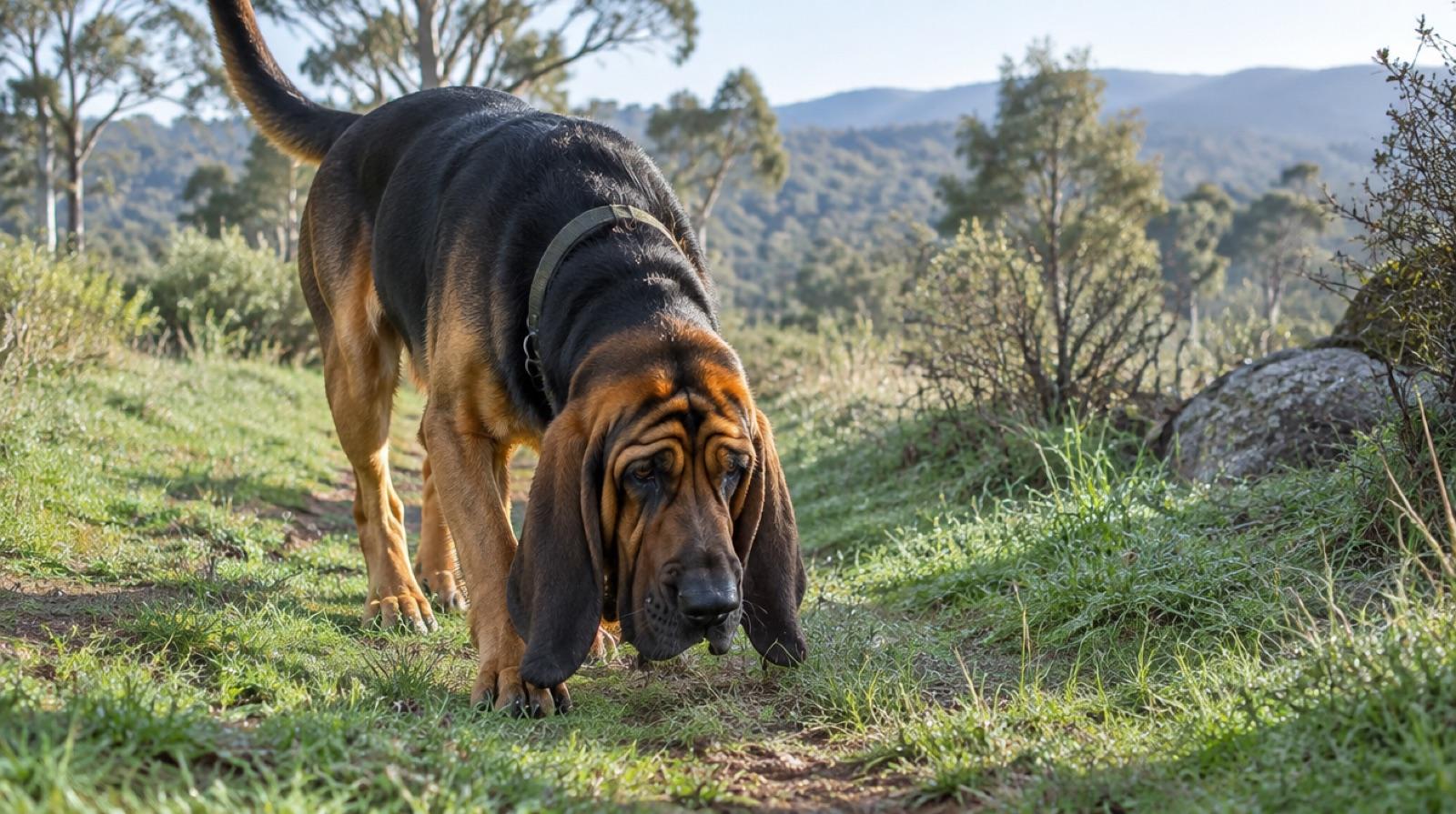
Should you adopt or buy a Bloodhound?
For most people, the honest answer is to watch the rescue listings and talk to registered breeders at the same time, because neither route is quick. Dogs Australia's national registration analysis lists 46 Bloodhounds registered from 2018 to 2025, and none in 2024 or 2025. Purebred Bloodhounds are also rare across the rescues we aggregate, so an adult may take a while to come up.
The RSPCA Australia Knowledgebase suggests the RSPCA or a reputable rescue first, and if you go to a breeder, making sure they are registered, visiting where the puppies were born and meeting the parents. Our guide to adopting a dog in Australia covers the rescue process step by step.
| Route | Reference cost | What you usually get | Main risk |
|---|---|---|---|
| Dogs Australia registered breeder | No breeder website we could open publishes a price; ask | A purebred puppy with a pedigree, ideally from hip, elbow, heart and DM tested parents | Very few registered; long waits or interstate travel |
| General rescue or pound | The standard fee, for example $500 for a dog over 12 months at RSPCA NSW | Bloodhounds and hound crosses, desexed, microchipped and vaccinated | Purebreds are rare; unknown parent health |
| Classified ad or social media | Anything | Anything from an untested litter to a puppy that does not exist | Scams, papers you cannot check |
Reference only, not quotes. Figures read on 11 November 2026; breeders and rescues set their own prices and change them, so check with them.
How much is a Bloodhound puppy from a registered breeder?
There is no published figure to quote. In November 2026 we looked for the own websites of the Australian Bloodhound breeders we could find through the state bodies. The one active Bloodhound breeder website we could open shows past litters and contact details but no price, and another kennel's site now shows only a different breed. We could not find an Australian Bloodhound breed club website. Prices on listing sites are left out, because we cannot check who is selling.
| Who published it | Reference figure | Read |
|---|---|---|
| Member breeders, own websites | No price published | 11 Nov 2026 |
| RSPCA NSW, dog over 12 months | $500 | 11 Nov 2026 |
| RSPCA NSW, puppy under 12 months | $620 | 11 Nov 2026 |
Reference only, not quotes. Fees change, so check with the rescue. RSPCA NSW says its fees ensure pets are desexed, microchipped, vaccinated and health-checked.
Registrations show how thin supply is. The Dogs Australia figures by year are 10 (2018), 13 (2019), 0 (2020), 8 (2021), 13 (2022), 2 (2023), 0 (2024) and 0 (2025). Dogs Victoria suggests contacting the breed club or Dogs Victoria for information about available puppies, and your own state body can tell you which members breed Bloodhounds.
Which health tests should a Bloodhound breeder show you?
Hips, elbows, heart and a DNA test. Dogs Victoria and Dogs NSW both say all reputable registered breeders should health test breeding animals through the ANKC ORCHID scheme for hips and elbows, have cardiac screening done by a cardiologist (echo preferred, because the breed can be affected by SAS, subaortic stenosis) and DNA test for DM, degenerative myelopathy.
| Check | Who asks for it | What to ask for |
|---|---|---|
| Hips and elbows | Dogs Victoria and Dogs NSW, through the ANKC ORCHID scheme | Both parents' scores |
| Heart (subaortic stenosis) | Dogs Victoria and Dogs NSW: cardiologist, echo preferred | Who did the check and the result |
| Degenerative myelopathy (DM) | Dogs Victoria and Dogs NSW: DNA test | Both parents' DNA results |
| Eyelids | Dogs Victoria and Dogs NSW name entropion and ectropion; the standard penalises any obvious eye irritation | Whether the parents or earlier litters have needed eyelid treatment |
Sources: Dogs Victoria, Dogs NSW and the Dogs Australia standard, read 11 November 2026. This is a buying checklist, not veterinary advice. Our Bloodhound health guide covers what these conditions mean once you own one.
The breed's loose skin is part of the picture. Entropion is an eyelid that rolls inwards and ectropion one that droops outwards, and both Dogs Victoria and Dogs NSW name them as problems for the breed. The Dogs Australia standard asks for eyes “free from any interference from the eyelashes” and says signs of any obvious eye irritation must be heavily penalised. Dogs NSW adds that skin problems can occur because of the abundance of skin folds, so daily management is advised.
See the Bloodhounds listed right now
Bloodhounds and Bloodhound crosses from the rescues, shelters and council pounds we aggregate, with each rescue's notes on children, other pets, fencing and time alone. Every listing links to the rescue, where you apply directly.
Do Bloodhounds get bloat, and how long do they live?
Retching with nothing coming up, a swollen or tight belly, restlessness or drooling can be bloat. This is an emergency: call or go to your nearest vet now.
Bloat is a known risk. Dogs Victoria says that, like most deep-chested dogs, bloat can be a concern, and the standard asks for a chest “well let down between forelegs forming a deep keel”. In a US study that followed 1,914 dogs of 11 large and giant breeds, Bloodhounds among them, the seven large breeds had 23 cases of bloat per 1,000 dog-years (Glickman and others, 2000). The Bloodhound Club in the UK says its breed surveys show the biggest causes of death are cancer and bloat. Our dog bloat (GDV) guide covers the signs and what to ask your vet about prevention.
| Source | Lifespan figure |
|---|---|
| Dogs Victoria | Average life span 8 to 12 years |
| Dogs NSW | Eight to 12 years, when bred responsibly |
| McMillan and others (2024), 584,734 UK dogs | Median 9.3 years, among the shortest of 155 breeds; the median for all dogs was 12.5 years |
That has two practical meanings. A puppy gives you the most years, but fewer than many breeds. An adult from rescue gives you fewer years, with the size, manners and habits already known. Neither choice is wrong, and our senior dog adoption guide covers what to expect when you take on an older dog.
How big does a Bloodhound get?
Large and powerful. The Dogs Australia standard describes a “noble and dignified expression, characterised by solemnity, wisdom and power” on a hound that is “very powerful, standing over more ground than is usual with hounds of other breeds”.
| Trait | Dogs Australia standard |
|---|---|
| Height | Adult dogs 66 cm, bitches 61 cm; dogs usually 63 to 69 cm, bitches 58 to 63 cm |
| Weight | Mean 41 kg for dogs and 36 kg for bitches; dogs reach 50 kg, bitches 45.5 kg |
| Colour | Black and tan, liver and tan (red and tan) and red |
| Coat | Smooth, short and weatherproof |
| Temperament | Affectionate, neither quarrelsome with companions nor with other dogs; somewhat reserved and sensitive |
What is daily life with a Bloodhound like?
Nose first. Dogs Victoria says the breed can follow a trail up to several days old, and that a Bloodhound needs a fully fenced yard with a minimum height of about 5 feet (about 1.5 metres) and regular daily exercise. Let it off lead only in a secure area. Our Bloodhound scent drive and recall guide covers training and escape-proofing.
Then the care. Dogs NSW says the long ears and deep folds need daily attention, suggests a snood at meal times to keep the ears clean, and recommends drying under the neck and dewlaps to help keep fungal infections away. It also advises trimming nails every fortnight from an early age, because Bloodhounds find it particularly unpleasant. Dogs Victoria warns that young dogs can be extremely clumsy around the house and that an adult can fling slobber for metres.
Heat needs planning too. The RSPCA Knowledgebase on heatstroke says to exercise dogs at the coolest times of day, give shade and water at all times, keep dogs lean and never leave a dog in a car. Our dogs in hot weather guide has the full first aid.
What do Bloodhounds in rescue look like?
Mostly adults, and often crosses. Across the rescues, shelters and council pounds we aggregate, a purebred Bloodhound is rare. An alert on the Bloodhound breed page matters more than checking once. If a cross is listed, read the rescue's notes on fencing, other pets and time alone: a hound that follows its nose needs the same secure yard whether it is purebred or not.
An adult has finished growing, so you can see its full size, how it behaves in a house and how it gets on with children and other pets. With a breed this rare to buy, that is worth a lot.
How do Bloodhound puppy scams work?
Never send money for a puppy you have not seen with its mother. Dogs Australia registered no Bloodhounds in 2024 or 2025, so a Bloodhound puppy that is ready now and easy to buy deserves extra checks.
Scamwatch says scammers set up fake websites and fake social media and marketplace profiles to sell popular breeds and pets that do not exist, and that a very cheap pet is likely a scam. Watch for these signs:
- Papers you cannot check. Ask for the breeder's Dogs Australia membership number and check it with the state body yourself, not through a link the seller sends.
- No health results. A breeder who cannot show hip and elbow scores, a heart check and DM results is not doing what Dogs Victoria and Dogs NSW say reputable breeders should.
- No breeder number. The Queensland Government says not to buy a puppy from a person who does not have a valid breeder identification number (BIN). NSW, Victoria, South Australia and the ACT also require an identifying number in puppy ads. Look it up on the official register, not through a link the seller sends.
- Pressure to pay now for a puppy you cannot visit.
Our guide to puppies for sale in Australia has the full state-by-state table of breeder numbers and what to do if you have already paid.
When is a registered breeder the better choice?
Rescue is not right for everyone. A registered breeder makes sense if you want a puppy from parents with known hip, elbow, heart and DM results, if you want to track or show, or if you have watched the rescue listings for months and no adult has suited your home.
- Registration. Check the membership number with Dogs Australia or your state body, and your state's breeder number on the official register.
- Health results for both parents: hips, elbows, a cardiologist heart check and DM.
- The mother, in person, and where the puppies are raised.
- A breeder who will take the dog back or help rehome it if you cannot keep it.
Is a Bloodhound the right dog for you?
Dogs Victoria says the breed is usually very good with families and other animals, but is not for everyone. Be honest about four things.
| Question | What the sources say |
|---|---|
| Fencing | Fully fenced yard, minimum height about 5 feet (Dogs Victoria) |
| Toddlers | Care needed, as a young hound can knock them over (Dogs Victoria) |
| Daily care | Ears and folds need daily attention; nails every fortnight (Dogs NSW) |
| Lifespan | 8 to 12 years (Dogs Victoria); UK median 9.3 years (McMillan 2024) |
Not sure a big scent hound fits? The what dog breed is right for me quiz and the adoption readiness check each take a few minutes, and big dog breeds compares large dogs side by side.
Find a Bloodhound near you
Bloodhounds and Bloodhound crosses listed by rescues, by city:
- Bloodhounds for adoption in Sydney
- Bloodhounds for adoption in Melbourne
- Bloodhounds for adoption in Brisbane
- Bloodhounds for adoption in Perth
- Bloodhounds for adoption in Adelaide
Local guides to adopting a Bloodhound, with the rescues that serve each city: Sydney, Melbourne, Brisbane, Gold Coast, Perth, Adelaide.
Weighing up other scent hounds? Our Basset Hound and Beagle guides cover the same questions in smaller packages. The large dogs in Sydney and in Melbourne are worth a look too.
Frequently asked questions
Should I adopt or buy a Bloodhound puppy?▼
Very few Bloodhound puppies are registered in Australia: Dogs Australia's National Animal Registration Analysis 2018 to 2025 lists none for 2024 or 2025. If it has to be a purebred puppy, contact Dogs Australia registered breeders directly, join a waiting list and ask for the parents' hip, elbow, heart and DM results. If you are open to an adult or a Bloodhound cross, watch the rescue listings, because an adult's size, manners and habits are already known.
How much is a Bloodhound puppy in Australia?▼
We found no published figure. No Australian Bloodhound club page we could find publishes a price, and the breeder website we could open in November 2026 published none, so ask the breeder what they charge and what it includes. For comparison, RSPCA NSW listed $500 for a dog over 12 months and $620 for a puppy under 12 months. These are reference figures read on 11 November 2026, not quotes; fees change, so check with the rescue.
How many Bloodhounds are bred in Australia?▼
Very few are registered. Dogs Australia's National Animal Registration Analysis 2018 to 2025 lists 46 Bloodhounds registered over those eight years, with none in 2020, 2024 or 2025. The figures count Dogs Australia registrations only. That means waiting lists, travel interstate or a wait for an adult in rescue.
What health tests should a Bloodhound breeder do?▼
Dogs Victoria and Dogs NSW say reputable registered breeders should hip and elbow score breeding dogs through the ANKC ORCHID scheme, have the heart screened by a cardiologist (echo preferred, because the breed can be affected by subaortic stenosis) and DNA test for degenerative myelopathy. Ask to see the results for both parents, and ask about eyelid problems in the line.
How long do Bloodhounds live?▼
Around 8 to 12 years by the Australian breed bodies' figures: Dogs Victoria gives an average life span of 8 to 12 years and Dogs NSW eight to 12. A 2024 UK study of 584,734 dogs (McMillan and others, Scientific Reports) found a median of 9.3 years for Bloodhounds, among the shortest of the 155 breeds studied.
Do Bloodhounds get bloat?▼
Yes, it is a known risk. Dogs Victoria and Dogs NSW say that, like most deep-chested dogs, bloat can be a concern, and The Bloodhound Club in the UK says its breed surveys show the biggest causes of death are cancer and bloat. Signs include retching with nothing coming up, a swollen belly and restlessness: call or go to your nearest vet now.
Are Bloodhounds good family dogs?▼
They can be, in the right home. Dogs Victoria says the Bloodhound is usually very good with families and other animals, but that care is needed with toddlers because a young hound can knock them over, that young dogs can be extremely clumsy, and that adults can fling slobber for metres. The standard describes a dog that is affectionate, somewhat reserved and sensitive.
Can a Bloodhound be let off lead?▼
Only in a secure, fenced area. The Bloodhound is a scent hound bred to follow a trail, and Dogs Victoria says it needs a fully fenced yard with a minimum height of about 5 feet (about 1.5 metres) and regular daily exercise. Our Bloodhound scent drive and recall guide covers training and escape-proofing.
How big does a Bloodhound get?▼
Large. The Dogs Australia standard gives adult dogs 66 cm and bitches 61 cm at the shoulder, with mean average weights of 41 kg for dogs and 36 kg for bitches, and says dogs can reach 50 kg and bitches 45.5 kg.
What care does a Bloodhound need?▼
Daily attention to the ears, folds and eyes. Dogs NSW says the long ears and deep folds need daily attention, suggests a snood at meal times for messy ears, and recommends drying under the neck and dewlaps to help keep fungal infections away. It also advises trimming nails every fortnight from an early age.
Is a Bloodhound puppy advertised online a scam?▼
Be very careful. With no Bloodhounds registered with Dogs Australia in 2024 or 2025, a seller with puppies ready now, no checkable breeder number and payment up front is a red flag. Scamwatch says scammers advertise popular breeds and pets that do not exist and that a very cheap pet is likely a scam. Check the breeder's membership with the state body yourself.
Where can I see Bloodhounds for adoption right now?▼
The Bloodhound breed page on LocalPetFinder shows Bloodhounds and Bloodhound crosses listed by the rescues, shelters and council pounds we aggregate, with a page for each major city. Every listing links to the rescue, where you apply directly. Purebreds are rare across the rescues we aggregate, so set an alert.
Sources
- Dogs Australia: Bloodhound breed standard
- Dogs Australia: National animal registration analysis 2018 to 2025
- Dogs Victoria: Bloodhound
- Dogs NSW: Bloodhound
- The Bloodhound Club (UK): Health information
- Glickman and others (2000), JAVMA: bloat incidence in large and giant breeds
- McMillan and others (2024), Scientific Reports: lifespan of 584,734 UK dogs
- RSPCA Australia Knowledgebase: How can I protect my dog from heatstroke?
- Queensland Government: Puppy farms and puppy scams
- Scamwatch: Buying and selling scams
- RSPCA NSW: Adoption fees
- RSPCA Australia Knowledgebase: Where should I go for a new companion animal?
Keep reading
Bloodhounds listed by rescues
Bloodhounds and Bloodhound crosses listed right now by the rescues and pounds we aggregate across Australia.
Bloodhound scent drive and recall
Why a Bloodhound follows its nose, why off-lead recall fails, and how to secure your yard.
Bloodhound health issues
Bloat, hips, ears and eyes: the conditions Bloodhound owners should know.
Dog bloat (GDV)
The signs of bloat, why it is an emergency, and what to ask your vet about prevention.