The short answer
No, Savannah cats are not legal to import into Australia, and Queensland and South Australia ban keeping them. The federal Live Import List defines the domestic cat as “excluding any specimen of Felis catus derived from cross breeding with: (a) a Leptailurus serval or (b) a Savannah Cat (Felis catus x Leptailurus serval)”, and adds that this excludes “any specimen with any genetic material derived from Leptailurus serval”, whatever the generation. Biosecurity Queensland lists the Savannah as a prohibited invasive animal, and South Australia says it is illegal to keep, transport, sell or release one. Treat anyone offering a Savannah kitten in Australia as offering something unlawful or running a scam. For the spotted look legally, consider a Bengal bred in Australia or a spotted tabby from rescue.
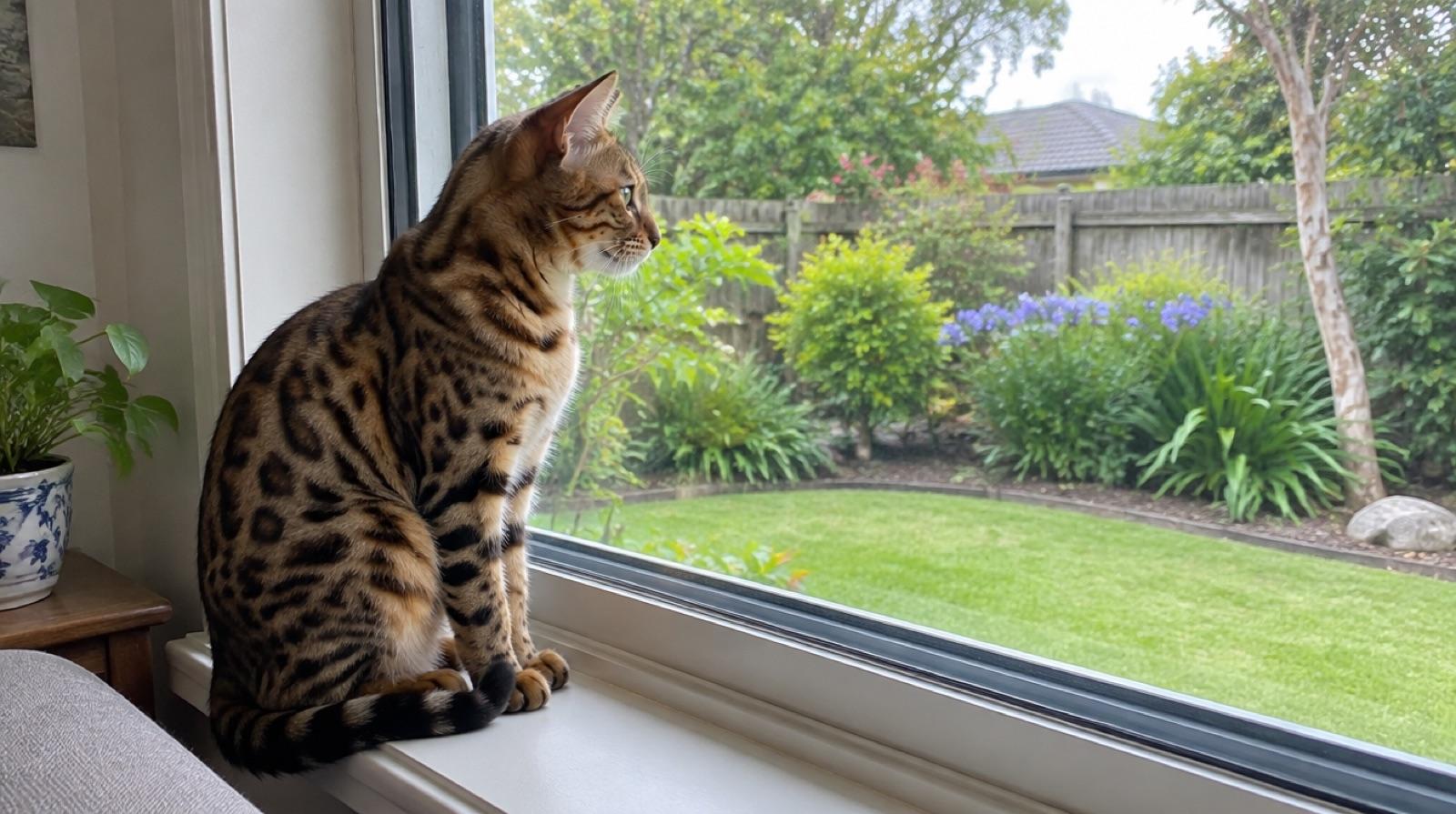
What is a Savannah cat?
A cross between a domestic cat and a serval. The International Cat Association (TICA) describes the Savannah as “a domestic breed which closely resembles its ancestral source the African Serval, but is smaller in stature”, with a tall, lean build, long neck and legs, tall ears and bold dark spots. TICA says the first known Savannah was born on 7 April 1986 to a domestic cat and an African serval, that it accepted the Savannah for registration in 2001 and for championship status in 2012. TICA also notes that the Savannah is still illegal in some states and countries because of its serval ancestry.
Australian law does not follow the registries. The federal environment department's household pets page lists “savannah cats (serval x domestic cat)” as a hybrid and says: “We do not use lists of registered breeds as a basis for import.”
What do F1, F2 and SBT mean?
They describe distance from the serval. TICA's Savannah breed section defines the filial (F) number as how many generations a cat is removed from its serval ancestry: an F1 has a serval parent, an F2 a serval grandparent, an F3 a serval great-grandparent, and so on. SBT (stud book tradition) means the kitten has had Savannah parents for at least three generations.
| Term | Meaning (TICA breed section) | 2008 government assessment | Can it come into Australia? |
|---|---|---|---|
| F1 | A serval parent | Typically 50 percent serval | No |
| F2 | A serval grandparent | 25 percent serval if bred only to domestic cats | No |
| F3 and F4 | A serval great-grandparent, and so on | 12.5 and 6.25 percent on the same assumption | No |
| F5 and later, SBT | Further removed; SBT means three generations of Savannah parents | About 3.13 percent for an F5, but could be much higher if a serval or F1 was used again | No |
Percentages are the theoretical figures in the 2008 final assessment report, which notes that if an F1 Savannah or a serval is used as a parent in an F2 cross, “the percentage of Serval blood can jump to 75 percent”, and that claims of parentage are difficult to substantiate. The import column is from the Live Import List and the department's hybrid guidance.
Size follows generation. The same report gives early generation Savannah cats at 4.5 to 11 kg and later generations usually 3.5 to 7.7 kg, “similar in size to many breeds of Domestic Cat”, against 8.7 to 18 kg for the serval itself.
What does the federal law say?
Only animals on the Live Import List can be imported, and the list's entry for the domestic cat leaves the Savannah out by name. The List of Specimens taken to be Suitable for Live Import (compilation 104, in force from 28 January 2026) lists, in Part 1:
“Felis catus, excluding any specimen of Felis catus derived from cross breeding with: (a) a Leptailurus serval or (b) a Savannah Cat (Felis catus x Leptailurus serval). Note: To avoid doubt, (a) and (b) exclude from the definition of Felis catus any specimen with any genetic material derived from Leptailurus serval.”
The government pages repeat it in plain terms, each read on 11 November 2026:
| Government source | What it says |
|---|---|
| Department of Agriculture, Fisheries and Forestry, cats and dogs FAQ | “Domestic/non domestic hybrids cannot be imported to Australia in accordance with the Environment Protection and Biodiversity Conservation Act 1999.” Hybrid cats include, but are not limited to, the Savannah cat (domestic cat crossed with serval), Safari cat, Chausie and Bengal cat. |
| DCCEEW household pets page (last updated 6 March 2025) | “All hybrid animals, including hybrids kept as domestic pets, must pass a risk assessment for inclusion on the Live Import List. The only hybrid on the Live Import List is the mule/hinny (horse x donkey).” |
| DCCEEW hybrid guidance | “Any cross or hybrid, irrespective of generational distance from the original mating or wild ancestor is prohibited unless specifically listed.” Registration of a hybrid as a breed by a registry “is not accepted by the department as evidence the animal is not a hybrid.” |
| Live Import List page (last updated 4 November 2026) | Penalties of 5 years imprisonment and $364,000 for an individual may apply for the possession of specimens that have been illegally imported. The page also says a “grey list” has no legal status and does not provide a lawful import or possession pathway. |
Quoted from the pages as read on 11 November 2026. The Live Import List page notes that the National Environmental Protection Agency was established on 1 July 2026 and now handles the list. This is a summary of what the government says, not legal advice.
Why did Australia ban Savannah cats in 2008?
Because the government judged the risk to wildlife too high. In 2008 the then Minister for the Environment, Heritage and the Arts, Peter Garrett, proposed amending the Live Import List in relation to Savannah cats. The department put a draft assessment out for public comment from 19 June to 17 July 2008, and its final environmental assessment, dated 24 July 2008, concluded:
“Savannah Cats are rated as an extreme risk of establishing and also an extreme risk of becoming a pest should they establish.”
The report explained why, in its own words: “If Savannah Cats were to become established in the wild, the possibility for the increase in size and hunting prowess due to inheritance of Serval genes would mean they are likely to cause at least the same amount or more damage as that of the established feral Domestic Cat.” It also found it “unlikely that any of the potential conditions or restrictions that could be attached to the importation of Savannah Cats to reduce environmental risk is likely to be effective or enforceable.” The department's later hybrid guidance sums it up: “In the case of the Savannah cat the risk was deemed to be extreme.”
A peer-reviewed review by Dickman, Legge and Woinarski (2019) in the journal Animals records that the Minister proceeded with the amendment on 3 August 2008 and that the Federal Court upheld the ban on 29 June 2012. Assuming Savannah cats would hunt prey similar to both parent species, the authors estimated that 91 percent of Australia's surviving land mammal fauna would likely face some risk of predation from them, including 93 percent of non-flying mammal species with threatened conservation status, and concluded that their results strongly validate the decision.
Can you keep a Savannah cat in your state?
Import is a federal matter; keeping one is also covered by state law. Where we found an official page or the legislation naming the serval or the Savannah, it is quoted below. Where we did not, we say so: check with your state biosecurity agency rather than assuming.
| State or territory | What the official source says |
|---|---|
| Queensland | Business Queensland: “Savannah cat is a prohibited invasive animal under the Biosecurity Act 2014.” You must not keep, feed, move, give away, sell or release one, and must report sightings to Biosecurity Queensland within 24 hours. |
| South Australia | PIRSA: “It is illegal to keep, transport, sell or release savannah cats in South Australia under the Landscape South Australia Act 2019.” |
| New South Wales | The Biosecurity Act 2015, Schedule 3, prohibits dealings with non-indigenous mammals but exempts the cat as “Felis catus (except any specimen with any genetic material derived from Leptailurus serval)”. A cat with serval genes is not covered by that exemption. |
| Victoria | The prohibited pest animal schedule under the Catchment and Land Protection Act 1994 lists the cat family, Felidae, “except Felis catus, Cat-Leopard Cat hybrids (Bengal Cat)” and animals listed in Schedule 2. The Savannah is not one of the named exceptions; ask Agriculture Victoria. |
| Tasmania | Biosecurity Tasmania's permitted matter list, the animals that can be brought into Tasmania without specific permit requirements, includes “domestic cats (excluding feral, wild or hybrid cat species)”. We found no Tasmanian page naming the Savannah; ask Biosecurity Tasmania. |
| Western Australia, Northern Territory, ACT | We could not open an official page naming the Savannah. Ask the WA Department of Primary Industries and Regional Development, NT Parks and Wildlife or the ACT Government. |
Read on 11 November 2026. The NSW wording is from the current version of the Act on the NSW legislation site (in force from 10 July 2026). Laws change; this is not legal advice.
Is someone selling Savannah kittens in Australia a scam?
Do not pay a deposit for a Savannah kitten in Australia. Either the cat does not exist, or it is an animal the law says cannot be imported and, in some states, cannot be kept or sold.
Treat any offer as one or the other. Scamwatch says scammers set up fake websites and profiles and post fake ads, and warns against paying in unusual ways or paying before you have seen what you are buying. A rare, banned cat is exactly the kind of listing that tempts people to skip those checks.
If the cat is real, the law is not on the buyer's side. The federal environment department says possessing illegally imported animals, or their offspring, is an offence under national environment law, and the Live Import List page says how long a species has been in Australia does not by itself establish lawful origin.
- “F5, so it is legal.” It is not. The list excludes any cat with any serval genetic material, whatever the generation.
- “Registered with TICA.” The department says registry recognition is not accepted as evidence an animal is not a hybrid.
- “Born in Australia.” In Queensland and South Australia it still cannot be kept or sold, and possession of illegally imported animals or their offspring is a federal offence.
- A “Bengal” with very tall ears and long legs. If a seller hints a cat has Savannah or serval in it, walk away and report it.
To report a suspected Savannah cat: Biosecurity Queensland on 13 25 23, the South Australian Pest Alert Hotline on 1800 084 881, or the National EPA at exotic.species@nationalepa.gov.au, the contact given on the Live Import List page.
Spotted cats you can adopt right now
Rescues across Australia list spotted and tabby domestic cats, and now and then a Bengal or Bengal cross. Every listing links to the rescue, where you apply directly.
What about Bengal cats?
The Bengal is a hybrid too, but its position is different. Bengals are bred in Australia by cat-council member breeders, and the state rules we checked treat them like domestic cats: Victoria's prohibited pest animal schedule excepts “Cat-Leopard Cat hybrids (Bengal Cat)” from the cat family listing, and Queensland's Biosecurity Regulation 2016 names “domestic cat (Felis catus and Prionailurus bengalensis x Felis catus)” among the non-native animals excepted from its prohibited list.
Bengals can no longer be imported. The federal environment department announced on 10 December 2024 that from 1 March 2025 Bengal cats would no longer be permitted to enter Australia, ending an exemption since 2013 for cats five generations from the Asian leopard cat. A Department of Agriculture import guide, read on 11 November 2026, gives the date as “As of 1 March 2026”; both dates have passed. The Live Import List page (updated 4 November 2026) confirms that “the 5th generation exemption for Bengal cats no longer applies”, and says an application to add the Bengal to the list has been received, with the final decision to be made by the Minister for the Environment and Water. Our Bengal price guide covers what member breeders publish, the health tests to ask about, state rules and scam red flags.
What lawful cats give you the Savannah look?
Think about what drew you to the Savannah, then match it.
| If you want | Lawful option | Where to start |
|---|---|---|
| Spots and a wild look | A Bengal bred in Australia | Bengal breed page and Bengal price guide |
| Spots on a budget | A spotted tabby domestic cat from rescue | Tabby patterns guide and the city listings below |
| A big cat | A large domestic breed such as the Maine Coon | Largest cat breeds |
| An active, clever cat | Depends on the individual; ask rescues about energy levels | What cat breed is right for me |
Whatever you choose, an indoor setup or a secure catio protects wildlife and your cat, which is the same concern behind the Savannah ban. Our cat enclosures and catios guide covers the state and council rules, and adopting a cat in Australia walks through the rescue process.
Find a cat near you
Cats and kittens listed by rescues, shelters and council pounds, by city:
- Cats for adoption in Sydney
- Cats for adoption in Melbourne
- Cats for adoption in Brisbane
- Cats for adoption in Perth
- Cats for adoption in Adelaide
Looking for a kitten? See the kittens in Sydney, Melbourne and Brisbane. The same import law applies to dogs: our wolf dogs guide explains it.
Frequently asked questions
Are Savannah cats legal in Australia?▼
No. Savannah cats cannot be imported: the federal Live Import List defines the domestic cat as excluding any cat derived from cross breeding with a serval or a Savannah cat, and says this excludes any specimen with any genetic material derived from the serval. Queensland lists the Savannah cat as a prohibited invasive animal that must not be kept, and South Australia says it is illegal to keep, transport, sell or release one. Check your own state too.
Why did Australia ban Savannah cats?▼
Because of the risk to wildlife. The federal environment department's final assessment of 24 July 2008 rated Savannah cats as an extreme risk of establishing in the wild and an extreme risk of becoming a pest if they did. It said that if they established, the possible increase in size and hunting prowess from serval genes meant they were likely to cause at least the same amount or more damage than feral domestic cats.
When were Savannah cats banned in Australia?▼
In 2008. The final environmental assessment report is dated 24 July 2008, and a peer-reviewed review (Dickman, Legge and Woinarski, 2019) records that the then Environment Minister, Peter Garrett, proceeded with the amendment on 3 August 2008. The same review records that the Federal Court upheld the ban in 2012.
Is an F5 or later generation Savannah cat allowed?▼
No. The Live Import List excludes any cat with any genetic material derived from the serval, whatever the generation. The environment department's hybrid guidance says any cross or hybrid, irrespective of generational distance from the original mating or wild ancestor, is prohibited unless specifically listed, and that a registry recognising a hybrid as a breed is not accepted as evidence the animal is not a hybrid.
What does F1, F2 or SBT mean for a Savannah?▼
They describe how far a cat is from its serval ancestor. TICA's Savannah breed section says an F1 has a serval parent, an F2 a serval grandparent and an F3 a serval great-grandparent, and that SBT (stud book tradition) means Savannah parents for at least three generations. None of these generations can be imported into Australia.
Can I buy a Savannah kitten in Australia?▼
Treat any offer as unlawful or a scam. Savannah cats cannot be imported, Queensland says you must not keep, give away or sell one, and South Australia says it is illegal to sell one. The federal environment department says possessing illegally imported animals or their offspring is an offence. Do not pay a deposit; report the offer instead.
What happens if someone has a Savannah cat in Australia?▼
The government pages ask you to report it. Biosecurity Queensland asks people who see or have a Savannah cat to contact it within 24 hours on 13 25 23, and South Australia asks for suspected sightings to go to the Pest Alert Hotline on 1800 084 881. The Live Import List page says penalties apply for possessing specimens that were illegally imported.
Are Bengal cats legal in Australia?▼
Bengals bred in Australia are sold by cat-council member breeders, and Victoria and Queensland both treat the Bengal cross like the domestic cat in their pest animal rules. Imports are different: Bengal cats can no longer be brought into Australia, including those five or more generations from the Asian leopard cat. The federal environment department announced on 10 December 2024 that this applied from 1 March 2025; a Department of Agriculture import guide, read on 11 November 2026, gives the date as 1 March 2026. Either way, the Live Import List page (updated 4 November 2026) says the 5th generation exemption no longer applies. An application to add the Bengal to the list has been received, and the Minister will make the final decision.
How big is a Savannah cat?▼
It varies a lot by generation. The 2008 government assessment reported early generation Savannah cats at 4.5 to 11 kg and later generations usually 3.5 to 7.7 kg, compared with 8.7 to 18 kg for the serval. Biosecurity Queensland describes the Savannah as much larger than a domestic cat.
What legal cats look like a Savannah?▼
A Bengal bred in Australia is the obvious lawful spotted breed, and spotted tabby domestic cats share the pattern. If size is the draw, large domestic breeds such as the Maine Coon are lawful too. Rescues also list spotted and tabby cats, so set an alert on the cat listing pages.
Sources
- Federal Register of Legislation: List of Specimens taken to be Suitable for Live Import (compilation 104, 28 January 2026)
- DCCEEW / National EPA: Live Import List (last updated 4 November 2026)
- DCCEEW: Household pets (last updated 6 March 2025)
- DCCEEW: Guidance on the import of live hybrid animals
- DCCEEW: New policy for importing Bengal cats (10 December 2024)
- Department of Agriculture, Fisheries and Forestry: Cats and dogs frequently asked questions
- Department of Agriculture, Fisheries and Forestry: How to bring your cat to Australia from a Group 3 country (read 11 November 2026)
- Department of the Environment, Water, Heritage and the Arts: Final environmental assessment of the Savannah Cat (24 July 2008)
- Business Queensland: Savannah cat
- PIRSA (South Australia): Savannah cat
- NSW Legislation: Biosecurity Act 2015
- Agriculture Victoria: Declared prohibited pest animals (Catchment and Land Protection Act 1994)
- Queensland Biosecurity Regulation 2016 (current as at 27 April 2026)
- Biosecurity Tasmania: Permitted matter
- TICA: Savannah
- TICA Savannah breed section: Filial generations
- Dickman, Legge and Woinarski (2019), Animals: risks to wildlife from free-roaming hybrid cats
- Scamwatch: Buying and selling scams
Keep reading
Bengal cats
The spotted breed bred legally in Australia, with Bengals listed by rescues right now.
Bengal price in Australia
What member breeders publish, the import change, health tests and scam red flags.
Largest cat breeds
The biggest domestic cat breeds you can own in Australia, with sizes from the registries.
Wolf dogs in Australia
Why wolf hybrids and wolfdog breeds cannot be imported, and the legal breeds with the look.