The short answer
Most ginger cats are male because the orange gene sits on the X chromosome: a male needs one copy, a female needs two. In 2025 researchers at Kyushu University and Stanford identified it as a deletion of DNA near the ARHGAP36 gene. The Morris Animal Foundation puts the male share of orange cats at about 80 percent, which fits UK survey data, though we found no Australian count. Every ginger is a tabby genetically, because the gene that makes other cats solid cannot hide the stripes in orange fur. Gingers often develop harmless dark freckles called lentigo. People rate orange cats as friendly, but that is perception, not a measured trait. Most gingers in rescue are moggies, so choose the individual cat.
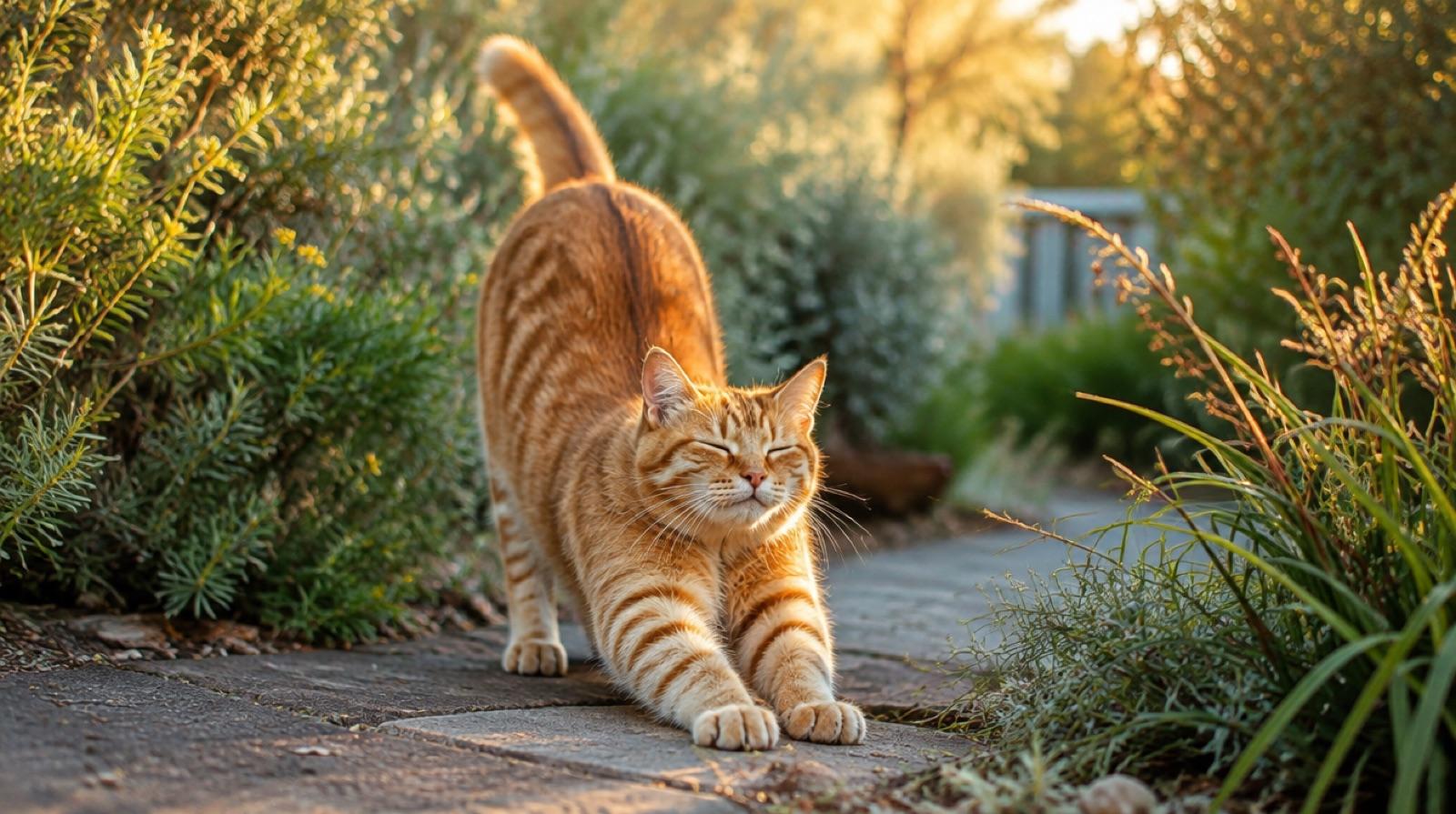
Why are most ginger cats male?
Because the orange gene is on the X chromosome. Scientists suspected this for more than a century, and in 2025 two teams confirmed it by finding the gene itself. Kyushu University sets out the logic plainly:
- Males have one X chromosome. If it carries orange, the cat is ginger. One copy is enough.
- Females have two X chromosomes and need orange on both to be fully ginger. That needs a ginger father and a mother who carries orange, so it happens less often.
- A female with orange on one X only is a tortoiseshell or calico. Early in development one X is switched off at random in each cell, so some patches of skin make orange and others make black.
So the same gene that makes most gingers male makes almost every tortoiseshell and calico female. They are two sides of one coin.
What percentage of ginger cats are male?
About 80 percent is the figure usually given. The Morris Animal Foundation, a US charity that funds animal health research, stated in a 2016 article that about 80 percent of orange tabby cats are male. It does not cite a single population count, so we checked it against survey data.
The best large sample we found is a UK survey published in the Veterinary Record in 1999. It gathered the coat colour and sex of 9,816 cats seen at UK veterinary practices and estimated the frequency of the orange gene at 19.7 percent, about one X chromosome in five. If cats paired at random, a male would be ginger about one time in five, and a female (needing two orange X chromosomes) about one time in 25. That works out at roughly five ginger males for every ginger female, in line with the 80 percent figure.
| Cat | Orange copies needed | Rough chance, at a 1-in-5 gene frequency |
|---|---|---|
| Ginger male | One (on his only X) | About 1 in 5 males |
| Ginger female | Two (one on each X) | About 1 in 25 females |
| Tortoiseshell or calico female | One (on one X only) | About 1 in 3 females |
| Tortoiseshell or calico male | Needs an extra X | 20 of 4,598 males in the UK survey (0.43%) |
The middle rows are arithmetic from the UK survey's gene frequency, assuming random mating, not counts. Real populations vary with local breeding. We found no published count of ginger cats by sex for Australia.
Two caveats. The gene frequency differs between places and over time, so the ratio will too. And a shelter's mix depends on which cats come in, so a given rescue may have more or fewer ginger females than the arithmetic suggests.
What did the 2025 orange gene studies find?
Two independent teams found the same answer and published it together in Current Biology on 15 May 2025.
- Kyushu University (led by Professor Hiroyuki Sasaki) compared DNA from 10 orange and 8 non-orange cats, found a deletion in the ARHGAP36 gene shared by every orange cat, and confirmed it in 49 more. In skin from calico cats, ARHGAP36 was much more active in pigment cells under the orange patches than under black or white ones. Kyushu's summary describes how that activity steers pigment from dark eumelanin to lighter pheomelanin.
- Stanford University (led by Christopher Kaelin and Greg Barsh) narrowed the X chromosome down to a roughly 5,000-letter deletion. In their paper it matched coat colour perfectly in 188 more cats: all 145 orange cats, 6 tortoiseshell or calico cats carrying one copy, and none of 37 non-orange cats.
Three details stand out. The deletion sits outside the part of the gene that codes for the protein, so it changes when and where ARHGAP36 is switched on rather than the protein itself. Stanford reports that the gene is not normally active in pigment cells in mice, humans or non-orange cats, which makes this an unusual way to make an orange coat. And the Stanford paper says the evidence points to a single origin for orange more than 900 years ago, before modern breeds existed.
One honest limit: ARHGAP36 is active in other parts of the body, including areas of the brain. Kyushu's Professor Sasaki notes that owners believe coat colour and personality are linked but says there is no scientific evidence for it yet. Nothing in either paper shows the orange gene changes behaviour.
Are all ginger cats tabbies?
Yes, genetically. In black or brown cats, two copies of the non-agouti gene make the coat look solid by hiding the tabby pattern. In orange fur that switch has no effect. A 2009 study in Genetics tested 55 orange or calico cats from a research colony: all the orange cats showed pattern, including 10 that carried two copies of non-agouti and would have been solid black without the orange gene.
That is why you almost always see the M on a ginger cat's forehead, rings on the tail and some striping, even on a cat a listing calls “solid ginger.” Some gingers show the pattern faintly, especially ticked or heavily shaded coats, but it is there. The four tabby patterns (classic, mackerel, spotted and ticked) all come in ginger; see our guide to every moggy colour and pattern for how to tell them apart.
Pedigree show standards do recognise a “solid red.” The Cat Fanciers' Association Persian standard asks for a red “without shading, markings, or ticking.” That standard rewards the faintest possible pattern, but the genetics underneath has not changed.
Ginger, orange, red, marmalade or cream?
Ginger, orange, red and marmalade are the same colour under different names; cream is a paler version of it.
| Name | Where you see it | Genetics |
|---|---|---|
| Ginger | Everyday name; common on Australian rescue listings | Sex-linked orange |
| Orange | Everyday name; the name of our listing pages | Sex-linked orange |
| Red | Cat registries and show standards (red tabby, solid red) | Sex-linked orange |
| Marmalade | Informal nickname, seen on some listings | Sex-linked orange |
| Cream | Registries and rescues | Orange plus two copies of the dilute gene |
One trap: some breeds call a different colour red. The UC Davis Veterinary Genetics Laboratory lists cinnamon, a version of the brown gene, as “(red)”, and that colour is not sex-linked. So a red cat in a breed that does not allow sex-linked orange is a different gene, with no link to being male.
Which breeds come in ginger?
Many breeds list red among their colours. These are the ones we checked in the Cat Fanciers' Association standards:
- Persian: solid red, red tabby and red smoke (CFA standard).
- British Shorthair: solid red, “deep, brilliant red” (CFA standard).
- Maine Coon: solid red and red smoke, which CFA calls cameo smoke (CFA standard).
- Oriental: solid red and red tabby (CFA standard).
Other breeds do not allow orange at all. The Stanford paper lists the Abyssinian, Bengal, Chartreux, Egyptian Mau, Ocicat, Havana Brown and Toyger as breeds whose standards do not permit orange or calico.
In rescue, almost every ginger is a Domestic Shorthair, Medium Hair or Longhair. A big fluffy ginger is far more likely to be a moggy than a Maine Coon; our Maine Coon guide shows how to tell.
Why do ginger cats get black freckles?
Usually because of lentigo, a harmless build-up of pigment cells. The Merck Veterinary Manual describes lentigo in orange and orange-faced male cats as flat, dark spots that first appear on the lips and eyelids, often before a year of age, and later on the nose and gums. It says the spots are not precancerous and have no medical consequence.
Lentigo spots are flat. A spot that is raised, growing quickly, bleeding, ulcerated or sore is a different matter, so have your vet look at anything that does not fit the pattern.
Are ginger cats really friendlier?
People think so; no study has shown it. What the research measures is perception:
- In a 2012 online survey of 189 people, reported by UC Berkeley, orange cats were the colour most often rated friendly, and white and tortoiseshell cats were rated less friendly. The lead author said there was little evidence these perceived differences actually exist.
- A 2016 UC Davis survey of 1,274 owners linked more reported aggression toward people to tortoiseshells, calicos and torbies (the female orange-carrying coats), and to black-and-white and grey-and-white cats. Ginger males were not among the colours singled out. These were owner reports, not observations of the cats.
- Stanford's Christopher Kaelin told Stanford Medicine he could not rule out an effect of the gene somewhere untested, but thinks orange cats' reputation is more likely due to most of them being male.
That last point is worth a second look. Desexed male and female cats differ only a little on average, as our male or female cat guide explains, so the sex explanation is weak too. The honest summary is that the friendly ginger is a well-loved story that has never been tested on the cats themselves. A shy ginger and a bossy ginger are both perfectly normal.
Does the reputation help gingers find homes? Not reliably. A study at a New York State no-kill shelter found the cats it recorded as yellow (most likely gingers) had the longest stays of any colour (Brown and Morgan), while a University of Sydney study of a Sydney shelter found ginger cats' stays did not differ significantly from black cats' (Miller, Ward and Beatty). Colour is a weak predictor of how fast any cat is adopted.
Adopting a ginger cat: what to ask
Colour tells you the cat's genes, not its character. When you find a ginger you like, ask the rescue or foster carer:
- Is it a lap cat, a sit-beside-you cat or an independent one?
- How does it react to visitors, children, dogs and other cats?
- Does it have any freckles or skin spots the vet has checked?
- When was it desexed and vaccinated, and does it have any health conditions?
- Does it have a bonded friend it should go home with?
For the steps, fees and state laws, read adopting a cat in Australia; budget with what a cat costs; and if you are weighing a kitten, kitten blues covers the first hard weeks honestly.
Find a ginger cat near you
These pages show ginger and orange cats listed by Australian rescues right now, with age, sex and desexing status, and a link straight to the rescue. They are refreshed regularly. Because listings use the shelter's own words, a ginger cat may be described as orange, ginger or marmalade.
- Sydney: ginger cats in Sydney
- Melbourne: ginger cats in Melbourne
- Brisbane: ginger cats in Brisbane
- Perth: ginger cats in Perth
- Adelaide: ginger cats in Adelaide
- Anywhere in Australia: all orange and ginger cats for adoption
Still deciding? Try the dog or cat quiz, the what cat breed am I quiz and the adoption readiness check. Weighing up colours? Our black cat guide covers what shelter studies found about black cats.
Frequently asked questions
Why are most ginger cats male?▼
Because the orange gene sits on the X chromosome. A male cat has one X, so one copy of the orange gene makes him ginger. A female has two X chromosomes and needs the gene on both to be fully ginger; with it on only one, she comes out tortoiseshell or calico instead. Research published by Kyushu University and Stanford in 2025 identified the gene and confirmed this explanation.
What percentage of ginger cats are male?▼
About 80 percent, according to the Morris Animal Foundation, a US animal health charity. That fits the genetics: a UK survey of 9,816 cats at veterinary practices estimated that about one X chromosome in five carries orange, and at that frequency simple arithmetic predicts roughly five orange males for every orange female. We found no published count for Australian cats, so treat it as an estimate.
Can a ginger cat be female?▼
Yes. A female is fully ginger when she inherits the orange gene from both parents, which means her father must be ginger and her mother must be ginger, tortoiseshell or calico. That combination is less common, so ginger females are outnumbered by ginger males, but they are not rare enough to be remarkable.
What gene makes cats orange?▼
A deletion of DNA near a gene called ARHGAP36 on the X chromosome. Two teams, at Kyushu University in Japan and Stanford University in the US, published the finding at the same time in Current Biology on 15 May 2025. The deletion switches ARHGAP36 on in pigment cells, which turns pigment production away from black and toward orange. The Stanford team found it in all 145 orange cats it genotyped.
Are all ginger cats tabbies?▼
Yes, genetically. In a black or brown cat, the non-agouti gene can hide the tabby pattern and make the cat look solid. In orange fur that switch does not work, so the stripes still show. A 2009 study in the journal Genetics found tabby pattern in every orange cat it examined, including 10 that carried two copies of non-agouti. Show standards for solid reds reward faint markings, but the pattern is still there.
Are ginger cats friendlier?▼
People believe they are, but no study has shown it. In a 2012 survey of 189 people by researchers at UC Berkeley and California State University, orange cats were the colour most often rated friendly; the study measured perceptions, not the cats. One of the Stanford researchers suggested the reputation may come from most ginger cats being male. Judge the individual cat.
Is a male ginger cat different from a female ginger cat?▼
Not in any way the coat explains. Once desexed, male and female cats differ only a little on average, mainly in size. A female ginger is simply a cat that inherited two copies of the orange gene. Our male or female cat guide sets out what the research does and does not show about sex differences.
Why does my ginger cat have black spots on its lips and nose?▼
Most likely lentigo, harmless dark freckles that are most common in orange cats. The Merck Veterinary Manual says lentigo shows up as flat dark spots on the lips and eyelids, often before one year of age, later on the nose and gums, and that the spots are not precancerous. Any spot that is raised, growing fast, bleeding or sore needs a vet check.
What is the difference between a ginger, orange, red and marmalade cat?▼
Nothing; they are the same colour. Cat registries use red, so a show standard describes a red tabby or solid red; ginger, orange and marmalade are everyday names, and rescue listings use all of them. Cream is the diluted, paler version of the same orange.
Can a male cat be calico or tortoiseshell?▼
Rarely. A tortie or calico coat needs orange on one X chromosome and non-orange on another, and a normal male has only one X. A UK survey of 4,598 male cats found 20 tortoiseshells, about 0.43 percent; the ones examined mostly had an extra X chromosome or a mix of cell types. The Merck Veterinary Manual describes male tricolour cats as sterile.
Which cat breeds come in ginger?▼
Many breeds accept red, the registry word for ginger. The Cat Fanciers' Association standards for the Persian, British Shorthair, Maine Coon and Oriental all list red. Some breeds do not allow orange at all, including the Abyssinian, Bengal and Chartreux, according to the 2025 Stanford paper. Almost every ginger in Australian rescue is a moggy.
Where can I adopt a ginger cat in Australia?▼
From cat rescues across the country. Our orange cat listing pages for Sydney, Melbourne, Brisbane, Perth and Adelaide show the ginger and orange cats Australian rescues have listed right now, with each cat's age, sex and desexing status and a link straight to the rescue.
Sources
- Kyushu University (2025): Scientists find the mutation that gives cats their orange fur
- Stanford Medicine (2025): Scientists track down mutation that makes orange cats orange
- Kaelin et al. (2025): Molecular and genetic characterization of sex-linked orange coat color in the domestic cat, Current Biology
- Schmidt-Küntzel et al. (2009): Mapping of orange, multiple origins and epistasis over nonagouti, Genetics
- Morris Animal Foundation: Five fun cat genetics facts
- Leaman, Rowland and Long (1999): Male tortoiseshell cats in the United Kingdom, Veterinary Record
- Merck Veterinary Manual: Pigmentary abnormalities in animals (lentigo)
- UC Davis Veterinary Genetics Laboratory: Feline coat color
- Cat Fanciers' Association: Persian, British Shorthair, Maine Coon and Oriental breed standards
- UC Berkeley News (2012): Don't be so fast to judge a cat by its color (Delgado et al., Anthrozoös)
- Stelow, Bain and Kass (2016): Coat color and aggressive behaviors in the domestic cat, JAAWS
- Brown and Morgan (2015): Length of stay of cats at a no-kill shelter, JAAWS
- Miller, Ward and Beatty (2019): Cats adopted from an urban cat shelter and length of stay, Animals (University of Sydney)
Keep reading
Orange and ginger cats for adoption
Ginger cats listed by Australian rescues right now, refreshed regularly.
Black cats: genetics, myths and adopting one
Why black cats are black, why some turn rusty, and what shelter studies found.
Male or female cat?
What the research shows on affection, aggression, size and lifespan.
Every moggy colour and pattern
Tabby, tortie, calico, tuxedo, blue, cream and point, and the genes behind each.