The short answer
Be careful either way, and talk to your council first. No Commonwealth, state or territory list names the American Bully, but every state list covers the American Pit Bull Terrier. In NSW, Victoria and Tasmania a council can declare an individual dog to be a listed breed, in Queensland an authorised person can seize a dog they reasonably believe is a prohibited dog, and NSW, Victoria and Western Australia also cover crosses. Dogs Australia does not recognise the American Bully, so there are no Dogs Australia member breeders or certified pedigrees for it and no member-breeder price for us to quote. If you adopt, a rescue has assessed the dog before offering it and charges its standard fee, for example $500 for a dog over 12 months at RSPCA NSW (read 11 November 2026; reference only, not a quote; fees change, so check with the rescue). The ACT has no restricted breeds.
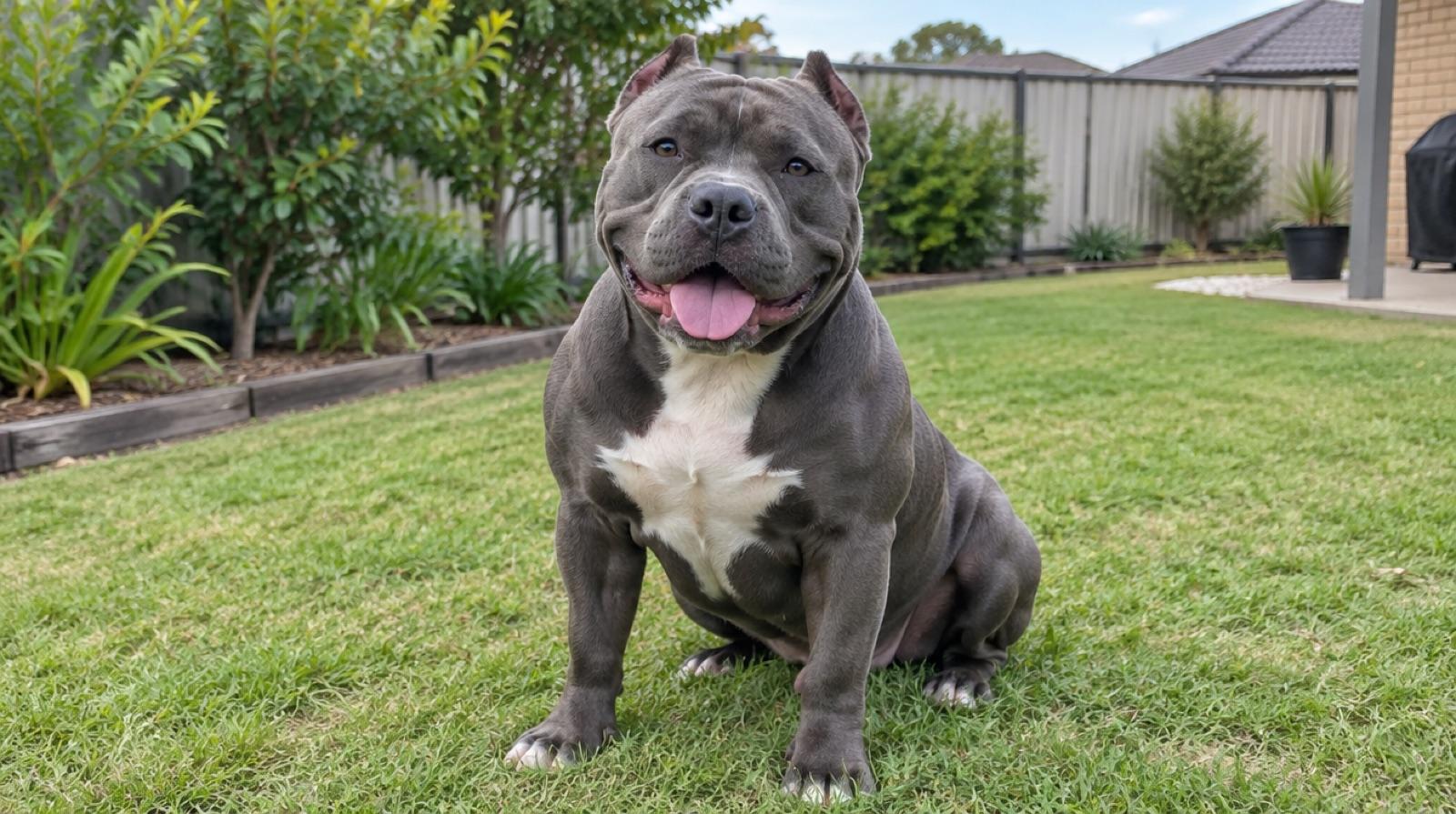
Should you adopt or buy an American Bully?
With this breed the law comes before the route. The American Bully is not on the Dogs Australia breed listing, so the usual advice for a purebred puppy (buy from a Dogs Australia registered breeder and get certified pedigree papers) does not apply. Dogs Australia says other registries are not affiliated with it and cannot issue its certified pedigrees. And because the breed was built on American Pit Bull Terrier foundations, the restricted-breed rules in several states can reach an individual dog even though the breed name appears on no list.
An adult from a rescue has real advantages here. The rescue has assessed the dog before offering it, it can tell you how the dog behaves with people, children and other dogs, and it gives you an adoption record. Whatever you choose, ask your council how it treats bully-type dogs before you commit. Our guide to adopting a dog in Australia covers the rescue process step by step.
| Route | Reference cost | What you usually get | Main risk |
|---|---|---|---|
| General rescue or council pound | The standard fee, for example $395 to $1,000 at the RSPCA rows below | An adult American Bully or bully cross, assessed, desexed, microchipped and vaccinated | The breed label is a visual guess |
| Breeder using another registry | No Dogs Australia member price exists to quote | A puppy with papers from a registry not affiliated with Dogs Australia | Those papers are not Dogs Australia certified pedigrees; council assessment still possible |
| Classified ad or social media | Anything; a cheap price is a scam warning | Anything from an untested litter to a puppy that does not exist | Scams, unknown parents, no history |
Reference only, not quotes. Rescue fees read on 11 November 2026; rescues set their own fees and change them, so check with them.
What is an American Bully?
A modern companion breed. The United Kennel Club, a US registry that recognised the American Bully on 15 July 2013, says the breed “developed as a natural extension of the American Pit Bull Terrier”, with influence from the American Bulldog, English Bulldog and Olde English Bulldogge, and that its appearance “reflects a strong American Pit Bull Terrier foundation”. The standard describes a compact, thick-set, smooth-coated dog with great strength for its size, and three sizes:
| UKC size | Ideal height, mature males | Ideal height, mature females |
|---|---|---|
| 14 to under 17 inches | 13 to under 16 inches | |
| Standard (and Classic) | 17 to 20 inches | 16 to 19 inches |
| XL | Over 20 inches to 23 inches | Over 19 inches to 22 inches |
Heights at the withers as the UKC standard gives them, read 11 November 2026. The Classic measures the same as the Standard with a lighter frame. The standard gives no weights.
On temperament the standard calls the breed “first and foremost, a companion”, gentle and friendly despite its powerful appearance, and says aggressive behaviour towards humans is uncharacteristic and highly undesirable. Names you will see in ads, such as micro or exotic bully, are not sizes in the UKC standard.
Is the American Bully restricted in any state?
Not by name. We read the Commonwealth import list and every state and territory's Act or official page on 11 November 2026, and none names the American Bully, the XL Bully or any bully size. Every state list does cover the American Pit Bull Terrier (or pit bull terrier) and the other import-banned breeds, and in NSW, Victoria, Queensland and Tasmania an officer can act on a particular dog they assess or believe to be a listed breed. That is the part that matters for a breed with pit bull foundations.
| Jurisdiction | What the list covers | American Bully | How an individual dog is decided |
|---|---|---|---|
| Commonwealth (import) | Five pure breeds may not be imported, including the American pit bull terrier or pit bull terrier (Department of Agriculture) | Not named. The Department of Agriculture says the import of mixed breed dogs, including mixes involving the five breeds, is not restricted | The Department of Agriculture's dog import guide says that if an imported dog is identified as possibly being a prohibited breed after arrival, the Australian Border Force may investigate further (DAFF import guide) |
| NSW | Restricted dogs: American pit bull terrier or pit bull terrier and four other breeds, plus any dog a council officer declares restricted (NSW Office of Local Government) | Not named | A council officer can declare a dog restricted. The council first issues a notice of intention; the owner has 28 days from that notice to object and can get a certificate from an approved breed assessor that the dog is not a restricted breed or a cross-breed of one; a dog assessed as a cross can be cleared by an approved temperament assessor |
| VIC | Restricted breed dogs: dogs that fit the approved Standard for the American Pit Bull Terrier (or Pit Bull Terrier) and four other breeds; these may be pure or cross bred (Agriculture Victoria) | Not named on the Agriculture Victoria page or in the Standard | A trained council officer assesses the dog against the Standard and serves written notice within 7 days; the owner can apply to VCAT for review within 14 days |
| QLD | Prohibited dogs: any breed banned from import; for this rule a breed does not include a crossbreed (Animal Management (Cats and Dogs) Act 2008) | Not named | An authorised person who reasonably believes a dog is a prohibited dog can seize it. A council may also make a local law banning a breed in its area, and for that power a breed includes a crossbreed |
| WA | Dangerous dog (restricted breed): a prescribed breed, or a mix of 2 or more breeds one of which is prescribed (Dog Act 1976) | Not named | The definition covers mixes; selling, advertising, buying or breeding a restricted breed dog is an offence. The Act we read sets out no separate breed-assessment process, so ask your local government how it decides |
| SA | Prescribed breeds: American Pit Bull Terrier and four other breeds (Dog and Cat Management Board) | Not named | The Board page does not mention crosses or how breed is decided; prescribed breeds must not be sold, given away or advertised |
| TAS | Restricted breed dogs: American Pit Bull Terrier (or Pitt Bull Terrier) and four other breeds (Tasmanian Government) | Not named | The council declares a dog, using approved identification guidelines; cross-breed dogs are not declared; appeal to the Magistrates Court within 28 days, where the owner must prove the dog is not a restricted breed |
| ACT | No restricted breeds (ACT City Services) | Not applicable | Each dog is assessed on its individual behaviour, history and the circumstances of an incident |
| NT | We found no Northern Territory government page listing restricted breeds; councils make their own by-laws | Not on any list we found | Check with your council |
Acts and official pages read 11 November 2026. General information, not legal advice; follow the link for your state and ask your council before you rely on a detail.
Where looks can decide it. In Victoria, Agriculture Victoria defines restricted breed dogs as dogs that fit the approved Standard for Restricted Breed Dogs and says they “may be pure or cross bred”. The Standard, gazetted on 31 January 2014, sets out conformation and physical criteria for the American Pit Bull Terrier that a trained officer works through; it does not mention the American Bully. Its papers exemption covers dogs certified as American Staffordshire Terriers, so papers from an American Bully registry are not part of it. In NSW, the Office of Local Government describes a declaration process that covers restricted breeds and cross-breeds of them. Queensland's Act says a crossbreed is not a prohibited breed, but lets an authorised person seize a dog they reasonably believe is a prohibited dog, and lets councils make local laws banning a breed, where a breed includes a crossbreed. Tasmania says cross-breed dogs are not declared there.
What a declaration means. The consequences are serious. In NSW it is an offence to sell, advertise, give away or transfer a proposed or declared restricted dog. In Queensland, owning a prohibited dog without a reasonable excuse carries a maximum penalty of 150 penalty units. In Victoria a declared restricted breed dog must not be sold, given away or transferred except by surrender to a council pound or shelter or after the owner dies. The NSW, Victorian and Tasmanian pages linked above explain how to object or seek a review if you receive a notice.
Why looks are an unreliable guide. RSPCA Australia says “pit bull” is a descriptive label given to dogs that loosely share some physical features, not a recognised pure breed. In a 2015 US study at four shelters, staff collectively labelled 62 of 120 dogs (52%) as pit bull-type while DNA breed signatures identified 25 (21%). Any dog of any breed can also be declared dangerous or menacing after an incident. Our Staffy vs pit bull guide has each state's list in full.
How much is an American Bully puppy from a registered breeder?
There is no figure we can quote. Our breed price surveys use only the prices that Dogs Australia member breeders publish on their own websites, and since Dogs Australia does not register the American Bully, there are no member breeders of the breed to survey and no breed club guide price. Prices on listing and marketplace sites are left out, because membership and dates cannot be checked there.
| Who published it | Reference figure | Read |
|---|---|---|
| Dogs Australia member breeders | None: the breed is not on the Dogs Australia listing | 11 Nov 2026 |
| RSPCA NSW | $620 puppy under 12 months; $500 dog over 12 months | 11 Nov 2026 |
| RSPCA ACT | $395 for dogs over 6 months and under 8 years; $650 for popular breeds and mixes with high adoption demand over 12 months and under 8 years (the page does not say which breeds count as popular) | 11 Nov 2026 |
| RSPCA Victoria | $500 to $1,000 for adult dogs | 11 Nov 2026 |
Reference only, not quotes. These are the fees each rescue published on the date shown; fees change and some dogs are priced individually, so check with the rescue. The fee normally covers desexing, microchipping, vaccinations and a vet check. The dog cost calculator covers the first year after that.
What health checks should you ask about?
Because Dogs Australia does not recognise the breed, there is no Dogs Australia breed page or Australian breed council setting minimum health tests for it. The UKC standard is unusually direct about the risks of exaggeration: it says quality is never to be sacrificed in favour of size and mass, cautions judges against rewarding exaggerated specimens, and lists a muzzle so short and blunt as to interfere with normal breathing as an eliminating fault. Whichever route you take, ask a vet to examine the dog, including its breathing, joints and weight, before you commit, and use the dog exercise calculator to plan daily exercise. Our guide to dogs in hot weather covers summer care for heavy-set dogs.
See the American Bullies listed right now
American Bully and bully cross listings from the rescues, shelters and council pounds we aggregate. Every listing links to the rescue, where you apply directly.
What do American Bullies in rescue look like?
Mostly adults and bully crosses. Dogs labelled American Bully, bully cross or bull breed cross are listed by the general rescues and pounds we aggregate. A shelter labels a dog with no history by how it looks, so the label is a guess: read the description, ask how the rescue decided the breed, and keep the adoption record and microchip details with your council registration.
Ask the rescue how the dog behaves with children, visitors, other dogs and cats, how it walks on a lead, and how it copes alone. With a strong dog, those answers matter more than the breed name. If no American Bully is listed near you, browse large dogs as well: Sydney, Melbourne, Brisbane, Perth, Adelaide.
How do American Bully puppy scams work?
Never send money for an American Bully puppy you have not seen with its mother, in person or at least on a live video call, and ask your council about the breed law before you pay anything.
Scamwatch warns that scammers set up fake websites, social media profiles and marketplace listings for pets that do not exist, and that a very cheap pet is likely a scam. Dogs Victoria's puppy scam fact sheet adds that fake ads may display microchip, source or membership numbers lifted from legitimate breeders. What to watch for:
- “Registered” with no detail. Ask which registry. Dogs Australia does not register the American Bully, and it says other registries cannot issue its certified pedigrees.
- No breeder number. NSW, Victoria, Queensland, South Australia and the ACT each require an identifying number in puppy ads. Where your state has a public register, check the number there, not through a link the seller sends.
- Promises about the law. A seller cannot promise that a council will never assess your dog. Only your council and your state's official page can tell you how the rules apply.
- Size and colour premiums. The UKC standard does not include micro or exotic sizes, and warns against exaggerated size and mass.
Our guide to puppies for sale in Australia has the full state-by-state table of breeder numbers and what to do if you have already paid.
When is buying a puppy a reasonable choice?
Rescue is not right for everyone. No Australian list bans the American Bully by name, but that does not settle how your council will see an individual dog. If you do buy, go in with your eyes open:
- Ask your council first how it treats bully-type dogs, and read your state's page in the table above.
- Check the breeder number your state requires on the official register.
- See the mother, in person, and where the puppies are raised, before any deposit.
- Ask a vet to examine the puppy and, if you can, the parents, including breathing and joints.
- Get a written contract covering health, desexing and whether the seller will take the dog back.
Considering a recognised bull breed instead? Our American Staffordshire Terrier, Staffy and Bull Terrier guides cover breeds with Dogs Australia standards and pedigree papers.
Is an American Bully the right dog for you?
Be honest about four things. Strength: even the smaller sizes are powerful, so lead training from day one matters. Training and socialisation: the companion temperament the standard describes still depends on early, ongoing work. Housing: some landlords and strata schemes react to the look, so read our renting with pets guide for your state. And the law: you need to be comfortable with how your council treats bully-type dogs.
Not sure it fits? The what dog breed am I quiz and the adoption readiness check each take a few minutes.
Find an American Bully near you
- American Bullies for adoption in Sydney
- American Bullies for adoption in Melbourne
- American Bullies for adoption in Brisbane
- American Bullies for adoption in Perth
- American Bullies for adoption in Adelaide
Related guides: Staffy vs pit bull, AmStaff, Bull Arab, Shar Pei, Cane Corso and British Bulldog.
Frequently asked questions
Is the American Bully legal in Australia?▼
No Commonwealth, state or territory list we read on 11 November 2026 names the American Bully as restricted, prohibited or prescribed. That is not the end of the question. The lists all cover the American Pit Bull Terrier (or pit bull terrier). In NSW, Victoria and Tasmania a council can declare an individual dog to be a listed breed, and in Queensland an authorised person who reasonably believes a dog is a prohibited dog can seize it. Victoria says restricted breed dogs may be pure or cross bred, NSW's process covers cross-breeds, and Western Australia's Act covers a mix where one breed is restricted. So an individual American Bully can be caught by these laws even though the breed name is not. Check with your council before you commit.
Is the American Bully a pit bull?▼
Not by name in Australian law, but the two are closely linked. The United Kennel Club, which recognised the American Bully on 15 July 2013, says the breed "developed as a natural extension of the American Pit Bull Terrier" and that its appearance "reflects a strong American Pit Bull Terrier foundation". The American Pit Bull Terrier is restricted, prohibited or prescribed in every state. That shared foundation is why the legal question matters for this breed more than for most.
Can a council declare my American Bully a restricted dog?▼
In some states, yes. In NSW a council authorised officer can declare a dog restricted. The NSW Office of Local Government says the council first issues a notice of intention, and the owner has 28 days from that notice to object, including with a certificate from an approved breed assessor. In Victoria a trained council officer assesses a dog against the approved Standard for Restricted Breed Dogs, and the owner can apply to VCAT for a review within 14 days. In Tasmania the council declares, and the owner can appeal to the Magistrates Court within 28 days. In Queensland an authorised person who reasonably believes a dog is a prohibited dog can seize it. The ACT has no restricted breeds.
Does Dogs Australia recognise the American Bully?▼
No. The American Bully is not on the Dogs Australia breed listing we read in November 2026, so a Dogs Australia member breeder cannot register an American Bully litter and there are no Dogs Australia pedigree papers for the breed. Dogs Australia says other registries are not affiliated with it and cannot issue its certified pedigrees.
How much is an American Bully puppy in Australia?▼
We do not quote one. Our price surveys only use prices that Dogs Australia member breeders publish on their own websites, and because Dogs Australia does not register the American Bully there are no member breeders of it to survey. Prices on listing and marketplace sites are not something we report. If you adopt, you pay the rescue's standard fee, for example $500 for a dog over 12 months at RSPCA NSW, read 11 November 2026: reference only, not a quote, and fees change, so check with the rescue.
Is the XL Bully banned in Australia?▼
No Australian list we read names the XL Bully, the American Bully or any of its sizes. The United Kennel Club standard describes the XL as the tallest size, with an ideal height for mature males of over 20 inches to 23 inches at the withers. A large, muscular dog is still assessed as an individual dog where state law allows it, so check with your council, and any dog of any breed can be declared dangerous or menacing after an incident.
Can I adopt an American Bully from a rescue?▼
Yes. Dogs labelled American Bully or bully cross are listed by general rescues, shelters and council pounds we aggregate. Shelters label a dog with no history by how it looks, so ask the rescue how it decided the breed and keep the adoption record. In states that ban the transfer of a declared restricted dog, a rescue cannot rehome one, so ask the rescue how it assessed the dog it is offering.
Can I rent with an American Bully?▼
No state list names the breed, so unless a council has declared the individual dog restricted, registration works as for other dogs, but whether a landlord can refuse a pet depends on your state's tenancy law, and strata by-laws can add rules. Have the dog's registration and adoption record ready with your application. Our renting with pets guide covers each state.
What is the temperament of an American Bully?▼
The United Kennel Club standard calls the American Bully "first and foremost, a companion" and says that despite its powerful appearance its demeanour is gentle and friendly, and that aggressive behaviour towards humans is uncharacteristic of the breed and highly undesirable. It is still a strong dog, so training, socialisation and a secure yard matter. With a rescue dog, the shelter's notes on the individual dog are a better guide than the label.
What health checks should I ask about for an American Bully?▼
There is no Dogs Australia breed page listing health tests for the American Bully, because Dogs Australia does not recognise it. The United Kennel Club standard itself cautions judges against exaggerated specimens, says quality is never to be sacrificed in favour of size and mass, and faults a muzzle so short and blunt as to interfere with normal breathing. Ask a vet to check any dog you are considering, including its breathing, joints and weight.
How do I avoid American Bully puppy scams?▼
Only pay for a puppy you have seen with its mother, in person or at least on a live video call. Scamwatch says scammers set up fake websites, social media profiles and marketplace listings for pets that do not exist, and that a very cheap pet is likely a scam. Dogs Victoria warns that fake ads may show microchip, source or membership numbers lifted from real breeders. Check your state's breeder number on the official register and ask your council about the breed law before you pay.
Sources
- Dogs Australia: Breed listing (August 2026)
- Dogs Australia: How to choose a puppy
- United Kennel Club: American Bully breed standard
- Customs (Prohibited Imports) Regulations 1956, Schedule 1 item 26
- Department of Agriculture, Fisheries and Forestry: Cats and dogs frequently asked questions
- Department of Agriculture, Fisheries and Forestry: Category 2 step-by-step guide for dogs
- NSW Office of Local Government: Restricted dogs (updated 1 July 2024)
- Agriculture Victoria: Restricted breed dogs
- Agriculture Victoria: Standard for restricted breed dogs (Victoria Government Gazette S22, 31 January 2014)
- Queensland Animal Management (Cats and Dogs) Act 2008 (current)
- Queensland Government: Regulated dogs
- WA Dog Act 1976 (version 08-b0-00, as at 28 November 2024)
- Dog and Cat Management Board (SA): Prescribed breeds
- Tasmanian Government: Restricted breed FAQs
- ACT City Services: Dangerous dogs
- RSPCA Australia Knowledgebase: Breed-specific legislation
- Olson et al. (2015), The Veterinary Journal: Inconsistent identification of pit bull-type dogs by shelter staff
- Scamwatch: Buying and selling scams
- Dogs Victoria: A7 Identifying puppy scams and puppy farms (fact sheet)
- RSPCA NSW: Adoption fees
- RSPCA ACT: Adoption process
- RSPCA Victoria: The adoption process
Keep reading
Staffy vs pit bull
Every state’s restricted-breed list, why looks mislead, and the Staffy, AmStaff and pit bull side by side.
AmStaff puppies: adopt or buy?
The American Staffordshire Terrier, a recognised breed that Victoria names as not restricted.
American Bullies for adoption
American Bully and bully cross listings from the rescues we aggregate, refreshed regularly.
Puppies for sale: adopt or buy?
The breeder number each state requires, how to check it, and the full scam checklist.