The short answer
Dogs Australia does not recognise the Alaskan Klee Kai: it is not on the breed listing we read on 13 November 2026, so there are no Dogs Australia registered breeders, pedigree papers or member prices for it here, and Dogs Australia lists no miniature Husky either. The breed is recognised overseas by the United Kennel Club, whose standard describes a curious, active, alert dog that may be aloof with strangers. If you buy, check both parents' Factor VII DNA results and kneecap, heart, eye and thyroid checks yourself, and meet the parents. If you adopt, check the live listings (numbers change daily) and look at other small dogs too. Any fee on this page is a reference read on 13 November 2026, not a quote; fees change, so check with the rescue.
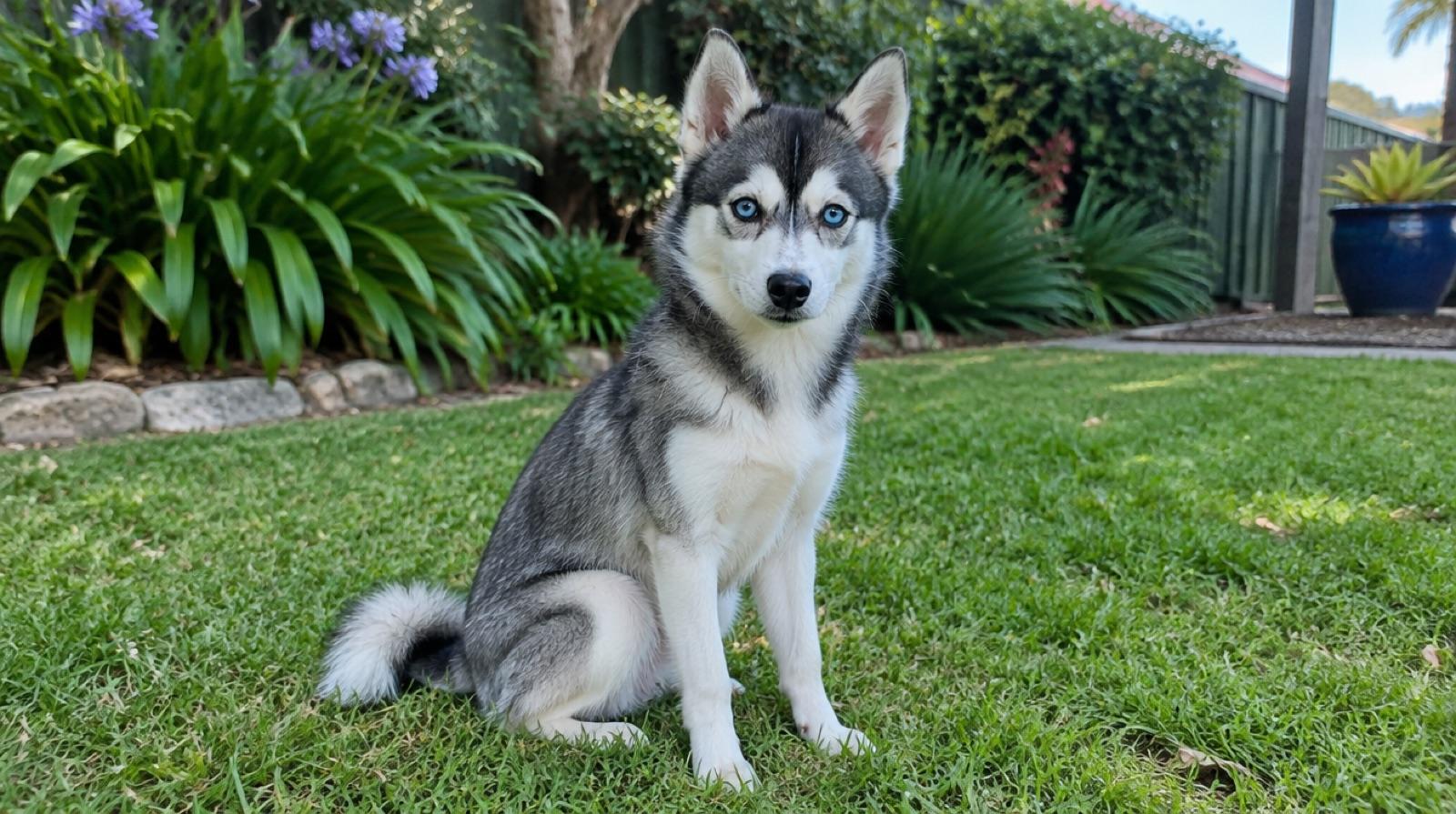
Should you adopt or buy an Alaskan Klee Kai?
Start with the Australian catch: there is no Dogs Australia route. The breed is not on the Dogs Australia breed listing, so the usual advice for a purebred puppy (buy from a Dogs Australia registered breeder with certified pedigree papers) cannot apply. Anyone selling a Klee Kai here is working with another registry or none, and you will need to check the parents' health and temperament yourself.
Then think about what you actually want. If it is a small, smart, alert spitz-type dog, rescue is worth checking first, and so are small breeds that Dogs Australia does register. Rescue is not right for everyone; if you do buy, use the checklist further down this page.
| Route | Reference cost | What you usually get | Main risk |
|---|---|---|---|
| Breeder using another registry, or none | No Dogs Australia member price exists to quote | A puppy with no Dogs Australia papers; ask for both parents' Factor VII DNA results | Unchecked health testing and temperament |
| General rescue or council pound | The standard fee, for example $500 for a dog over 12 months at RSPCA NSW | A Klee Kai, cross or other small dog when one is listed, desexed, microchipped and vaccinated | Background may be unknown |
| “Mini husky” ad with no checkable seller | Anything | Unknown parents, a cross sold as a breed, or a puppy that does not exist | Untested parents and scams |
Reference only, not quotes. The RSPCA NSW fee was read on 13 November 2026. Rescues set their own fees and change them, so check with them.
Does Dogs Australia recognise the Alaskan Klee Kai?
No. We read the Dogs Australia breed listing on 13 November 2026 (its pages are dated 18 March and 1 August 2026). It lists the Siberian Husky and the Alaskan Malamute, but no Alaskan Klee Kai and no miniature Husky, and we found no Dogs Australia breed standard for the Klee Kai.
While the breed is off the listing, no Klee Kai in Australia carries Dogs Australia pedigree papers. Dogs Australia says “All other registries such as the MDBA, ABR, Australian Canine registry, ICBS etc are NOT affiliated with Dogs Australia and CANNOT issue Certified Pedigrees.” Papers from another registry may be genuine, but they are not Dogs Australia papers, and you will need to check that registry yourself. Recognition can change, so check the current listing rather than assume.
Overseas, the United Kennel Club in the US says it recognised the Alaskan Klee Kai on 1 January 1997, places it in its Northern Breed Group, and publishes the standard quoted on this page (revised 1 January 2019).
What is an Alaskan Klee Kai like?
A small, quick, watchful dog. The United Kennel Club standard says the breed was developed in Alaska by Linda Spurlin and her family “to be a companion-sized version of a northern spitz-type of dog often referred to as the Alaskan Husky”. It describes the breed as “very curious, intelligent, active, quick and agile” and says: “Loyalty and alertness make the Alaskan Klee Kai great watchdogs, good at giving alarm, who may be territorial despite their small size. While they are devoted to their owners, and make excellent companions, they may be aloof with strangers.”
| Trait | What the UKC standard says |
|---|---|
| Toy variety | Up to and including 13 inches (about 33 cm) at the withers |
| Miniature variety | Over 13 and up to and including 15 inches (about 33 to 38 cm) |
| Standard variety | Over 15 and up to and including 17 inches (about 38 to 43 cm) |
| Weight | Proportionate to height and bone structure, neither too heavy nor too thin |
| Coat and colour | Double coat; shades of black, grey or red, with a distinct facial mask and lighter contrasting colour underneath |
| Temperament disqualification | Viciousness or extreme shyness |
Source: United Kennel Club official breed standard (revised 1 January 2019), read 13 November 2026. Centimetre figures are our conversions.
The standard is frank about the breed's origins: “Since the Alaskan Klee Kai is a breed developed through miniaturization, attention should be paid to certain faults inherent with this developmental process, especially taking into mind that faults can be perpetuated because of a small gene pool. This includes, but is not limited to, bulging eyes, unacceptable temperament, and extremely fine bone.” That is a good reason to meet both parents. The American Kennel Club breed page describes a small companion dog that is “alert, energetic, and curious, yet reserved with unfamiliar people and situations”, and gives a life expectancy of 13 to 16 years.
Which health checks should a Klee Kai breeder show you?
Start with Factor VII. The Alaskan Klee Kai Association of America says “Factor VII DNA testing needs to be done on all AKK since Factor VII Deficiency has been found within our breed.” Penn Vet's PennGen laboratory at the University of Pennsylvania explains that Factor VII is an essential element in the process by which the body stops bleeding through the formation of clots, that signs show up after surgery or trauma as excessive bleeding and a failure to heal, and that the disorder is inherited as an autosomal recessive trait, so carriers are not expected to show signs but can pass the variant on.
| Check | Who lists it | What to ask for |
|---|---|---|
| Factor VII DNA | Alaskan Klee Kai Association of America; US parent club via the American Kennel Club; optional on the US OFA CHIC list | Both parents' DNA results |
| Patella (kneecap) evaluation | US parent club via the American Kennel Club; US OFA CHIC program | Both parents' results |
| Cardiac (heart) evaluation | US parent club via the American Kennel Club; US OFA CHIC program | Both parents' results |
| Eye examination | US parent club via the American Kennel Club (ophthalmologist evaluation); US OFA CHIC program | Recent eye certificates for both parents |
| Thyroid evaluation | US parent club via the American Kennel Club; US OFA CHIC program (autoimmune thyroiditis) | Whether the parents have been tested |
Sources: American Kennel Club health testing page, the OFA CHIC requirements for the Alaskan Klee Kai, the Alaskan Klee Kai Association of America and PennGen, all in the United States, read 13 November 2026. There is no Australian breed club or Dogs Australia standard to set a list for this breed. This is a buying checklist, not veterinary advice.
See the Klee Kai and small dogs listed right now
Alaskan Klee Kai, crosses and other small dogs from the rescues, shelters and council pounds we aggregate, with each rescue's notes on strangers, children and other pets. Numbers change daily; every listing links to the rescue, where you apply directly.
How much is an Alaskan Klee Kai puppy?
There is no figure we can quote. Our breed price surveys use only the prices that Dogs Australia member breeders publish on their own websites, and since Dogs Australia does not register the Klee Kai, there are no member breeders of it to survey and no Australian breed club guide price. Prices on classified and listing sites are left out, because we cannot check who is selling or when the price was set.
| Who published it | Reference figure | Read |
|---|---|---|
| Dogs Australia member breeders | None: the breed is not on the Dogs Australia listing | 13 Nov 2026 |
| RSPCA NSW, dog over 12 months | $500 | 13 Nov 2026 |
| RSPCA NSW, puppy under 12 months | $620 | 13 Nov 2026 |
Reference only, not a quote. These are the fees RSPCA NSW published on the date shown; fees change and other rescues set their own, so check with the rescue. RSPCA NSW says its fees help ensure pets are desexed, microchipped, vaccinated and health-checked. Read our guide to adopting a dog in Australia.
If you still decide to buy, get the price in writing and compare what it includes: both parents' Factor VII results and health checks, a vet check, vaccination and microchip, desexing terms, and whether the seller will take the dog back. The dog cost calculator gives a first-year budget beyond the purchase.
What about a Klee Kai from rescue?
Our Alaskan Klee Kai breed page shows any Klee Kai and Klee Kai crosses listed by the rescues, shelters and council pounds we aggregate. Numbers change daily, so check the live listings and set an alert: Sydney, Melbourne, Brisbane, Perth, Adelaide.
A dog listed as a Klee Kai, mini husky or husky cross may be any of those, so read the rescue's notes rather than the label. With a breed whose standard says it may be aloof with strangers, ask how the dog greets visitors, how it is with children and other pets, and how it has behaved in foster care.
How do Klee Kai and “mini husky” scams work?
Never pay for a Klee Kai or “mini husky” puppy you have not seen with its mother, in person or on a live video call. A seller who wants money first and will only email or text matches the warning signs the Queensland Government lists.
The Queensland Government's puppy farm page lists low prices for popular or pedigree breeds, being asked for payment before you have met the puppy, a breeder who cannot give a valid breeder identification number (BIN), and a seller who only communicates by email or text. Scamwatch says scammers set up fake websites and profiles for popular breeds and cute puppies, that a very cheap pet is likely a scam, and advises checking the breeder is legitimate and accredited. Watch for these in Klee Kai ads:
- “Dogs Australia registered Klee Kai” or “registered mini husky”. Neither can be true while neither is on the Dogs Australia listing. Check any claim with Dogs Australia yourself.
- No Factor VII answer. A seller of this breed should know both parents' Factor VII results.
- No breeder number. Where your state requires one in ads, check it on the official register, not through a link the seller sends.
- “Friendly with everyone”. The breed's own standard says it may be aloof with strangers, so a seller who promises otherwise is guessing.
Our guide to puppies for sale in Australia has the state-by-state table of breeder numbers, how to check each one, and what to do if you have already paid.
If you do buy, what should you check?
- Which registry, if any. Ask, then check that registry yourself. It will not be Dogs Australia.
- Both parents met in person, with their manner towards you seen, since the standard disqualifies extreme shyness.
- Factor VII DNA results for both parents, plus kneecap, heart, eye and thyroid checks.
- The variety. Ask whether the parents are Toy, Miniature or Standard size and what size the breeder expects the puppy to reach.
- The state breeder number your state requires, checked on the official register.
- A written contract covering health, desexing and whether the seller will take the dog back.
Want papers you can check in Australia? The Siberian Husky, German Spitz, Japanese Spitz and Shiba Inu are all on the Dogs Australia breed listing; each guide covers the breed's health checks and rescue.
Is an Alaskan Klee Kai the right dog for you?
It suits a home that wants an active, alert little dog and will put real work into socialising it. The UKC standard describes a quick, curious watchdog that may be territorial and aloof with strangers, so expect to spend time on visitors, children and new places. Not sure? Try the what dog breed is right for me quiz and the adoption readiness check, and read best apartment dogs in Australia and our Norwegian Elkhound guide for another spitz.
Find a small dog near you
Alaskan Klee Kai listed by rescues, by city:
- Alaskan Klee Kai for adoption in Sydney
- Alaskan Klee Kai for adoption in Melbourne
- Alaskan Klee Kai for adoption in Brisbane
- Alaskan Klee Kai for adoption in Perth
- Alaskan Klee Kai for adoption in Adelaide
Small dogs listed by rescues, by city:
Frequently asked questions
Should I adopt or buy an Alaskan Klee Kai?▼
Think hard before buying. Dogs Australia does not recognise the Alaskan Klee Kai, so there are no Dogs Australia registered breeders or pedigree papers for it here, and you would be relying on another registry or none. If you buy, check the parents' health results yourself and meet them. If what you want is a small, alert spitz-type dog, check the rescue listings too: numbers change daily.
Does Dogs Australia recognise the Alaskan Klee Kai?▼
No. The Alaskan Klee Kai is not on the Dogs Australia breed listing we read on 13 November 2026, and we found no Dogs Australia breed standard for it. That means no Klee Kai in Australia carries Dogs Australia pedigree papers. Dogs Australia says other registries are not affiliated with it and cannot issue its certified pedigrees.
Is an Alaskan Klee Kai a mini husky?▼
No, it is its own breed. The United Kennel Club standard says it was developed in Alaska by Linda Spurlin and her family to be a companion-sized version of a northern spitz-type dog often called the Alaskan Husky, and that it is often referred to as a smaller version of that dog. Dogs Australia lists the Siberian Husky but no miniature Husky, so a dog advertised as a mini husky is not a Dogs Australia registered breed.
Who recognises the Alaskan Klee Kai?▼
The United Kennel Club in the US recognised the Alaskan Klee Kai on 1 January 1997 and places it in its Northern Breed Group. Its official standard was last revised on 1 January 2019. Dogs Australia does not recognise it.
How much is an Alaskan Klee Kai puppy in Australia?▼
We have no figure to quote. Our price surveys only use prices that Dogs Australia member breeders publish on their own websites, and because Dogs Australia does not register the Klee Kai there are none to survey. Prices on classified and listing sites are left out because we cannot check who is selling. If you adopt, you pay the rescue's fee instead.
How big does an Alaskan Klee Kai get?▼
It comes in three sizes. The United Kennel Club standard sets a Toy variety up to 13 inches (about 33 cm), a Miniature variety over 13 and up to 15 inches (about 38 cm), and a Standard variety over 15 and up to 17 inches (about 43 cm) at the withers, with weight in proportion to height and bone. The American Kennel Club breed page gives 6 to 25 pounds (about 3 to 11 kg).
What is an Alaskan Klee Kai like?▼
Curious, alert and sometimes reserved with strangers. The United Kennel Club standard calls the breed very curious, intelligent, active, quick and agile, says loyalty and alertness make it a great watchdog that may be territorial despite its small size, and says that while devoted to its owners it may be aloof with strangers. The American Kennel Club describes it as reserved with unfamiliar people and situations.
What health tests should a Klee Kai breeder show me?▼
Ask for both parents' Factor VII DNA results, a kneecap (patella) check, a heart check, an eye examination and a thyroid check. Those are the tests the American Kennel Club lists as recommended by the US national breed club (the US OFA CHIC program lists the same checks, with Factor VII as optional), and the Alaskan Klee Kai Association of America says Factor VII DNA testing needs to be done on all Klee Kai because the deficiency has been found in the breed.
What is Factor VII deficiency?▼
An inherited bleeding disorder. Penn Vet's genetic testing laboratory at the University of Pennsylvania says Factor VII is an essential part of the process by which the body forms clots, that signs show up after surgery or trauma as excessive bleeding and a failure to heal, and that it is inherited as an autosomal recessive trait, so carriers are not expected to show signs. Ask for both parents' DNA results.
How long do Alaskan Klee Kai live?▼
The American Kennel Club breed page gives a life expectancy of 13 to 16 years. We found no Australian figure, so plan for well over a decade of exercise, training and vet care.
How much does it cost to adopt a small dog like a Klee Kai?▼
You pay the rescue's standard fee. RSPCA NSW listed $620 for a puppy under 12 months and $500 for a dog over 12 months when we read its fee page on 13 November 2026. That is a reference, not a quote; fees change and other rescues set their own, so check with the rescue.
How do I avoid Klee Kai and mini husky scams?▼
Do not pay for a puppy before you have met it with its mother, in person or on a live video call. The Queensland Government lists low prices for pedigree breeds, being asked to pay before meeting the puppy, no valid breeder identification number and a seller who only uses email or text as warning signs. A seller who claims Dogs Australia papers for a Klee Kai or mini husky is a red flag.
Sources
- Dogs Australia: Breed listing (pages dated 18 March and 1 August 2026)
- Dogs Australia: How to choose a puppy
- United Kennel Club: Alaskan Klee Kai official breed standard (revised 1 January 2019)
- American Kennel Club: Alaskan Klee Kai breed page
- American Kennel Club (US): Miscellaneous Class and FSS health testing requirements
- OFA (US): Alaskan Klee Kai CHIC program requirements
- Alaskan Klee Kai Association of America: Health guidelines for puppies
- Penn Vet (University of Pennsylvania) PennGen: Factor VII deficiency test
- Queensland Government: Puppy farms
- Scamwatch: Buying and selling scams
- RSPCA NSW: Adoption fees
Keep reading
Klee Kai listed by rescues
Alaskan Klee Kai and Klee Kai crosses listed right now by the rescues, shelters and pounds we aggregate across Australia.
Siberian Husky: adopt or buy?
A Dogs Australia registered northern breed, with exercise and escape honesty.
German Spitz: adopt or buy?
A small spitz with Dogs Australia papers, in two recognised sizes.
Puppies for sale: adopt or buy?
The breeder number each state requires, how to check it, and rescue puppy fees.