The short answer
As far as we could find, you cannot buy a registered Havana Brown kitten in Australia: neither the CCCA nor the ACF publishes a Havana Brown standard, ANCATS has no Havana Brown profile, and the council breeder directories we checked in November 2026 have no Havana Brown category. The nearest registered option is a chocolate (Havana) Oriental Shorthair from a council-registered breeder; ask for both parents' DNA results. If what you want is a brown, green-eyed companion, check the live brown cat listings (numbers change daily); a rescue cat costs a rescue fee (RSPCA NSW listed $220 for a cat over 6 months on 12 November 2026). Fees change, so check with them; reference only, not a quote.
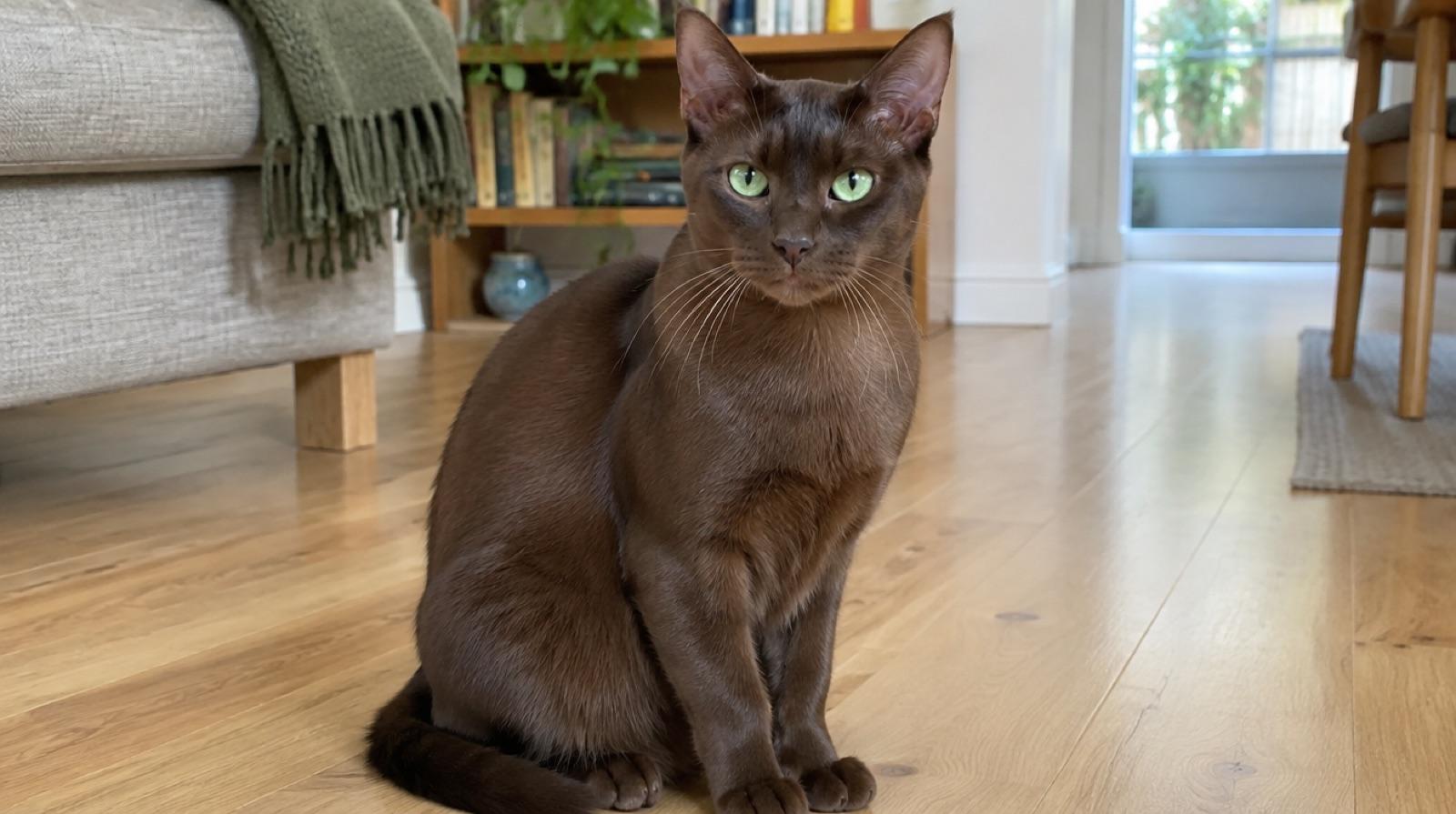
Should you adopt or buy a Havana Brown?
In Australia the honest answer is that buying a registered Havana Brown does not appear to be an option: we found no registry standard and no breeder. That leaves two real choices. If you want papers, known parents and DNA results, a council-registered breeder of chocolate Oriental Shorthairs is the nearest registered route; just know that it is a different standard, with the Oriental's long, svelte body and wedge-shaped head. If what you want is a warm brown cat with a people-focused personality, check the live brown cat listings (numbers change daily); the rescue fee covers desexing, microchipping and vaccination.
The RSPCA Australia Knowledgebase encourages prospective owners to adopt from the RSPCA or another reputable animal welfare, rehoming or rescue organisation. If you buy from a breeder, it suggests at a minimum checking they are registered by the relevant authority in your state or territory, visiting the place where the animal was born, and meeting the parents, especially the mother.
| Route | Reference cost | What you usually get | Main risk |
|---|---|---|---|
| Registered Havana Brown breeder | None found in Australia (November 2026) | Not available through the councils we checked | A seller using the name without a standard behind it |
| Chocolate (Havana) Oriental breeder | See our Oriental guide; ask each breeder | A papered Oriental Shorthair in chocolate, with DNA results | A different standard and look from the US Havana Brown |
| Rescue | A rescue fee; see the examples below | A brown or other cat when one suits you (numbers change daily), desexed, microchipped and vaccinated | Unknown parents; a breed label in a listing describes looks, not papers |
| Online ad or social media | Anything; Scamwatch says a very cheap pet is likely a scam | Anything from a real litter to a kitten that does not exist | Scams, brown moggies sold as “Havana Browns” |
Rescue fees read 12 November 2026 on the pages linked below. Reference only, not a quote: rescues set and change their own fees, so check with them.
Is the Havana Brown recognised in Australia?
Not as a breed in the standards the Australian registries publish. Read on 12 November 2026:
| Registry | Havana Brown? | What it has instead |
|---|---|---|
| CCCA | No Havana Brown standard among its published breed standards | An Oriental standard (issue date November 2023) with a Chocolate colour: “Rich chocolate or chestnut brown, even throughout. Any shade is acceptable, though warmer shades are preferred.” |
| ACF | No Havana Brown standard on its standards page | An Oriental Shorthair standard (standard source FIFe 1987; pages updated 1 November 2024) with “Chocolate (OSH b) (Havana)”: “All shades of warm, chestnut brown permissible, very even, sound to the roots. Not too dark.” Eyes “vivid luminous green” |
| ANCATS | No Havana Brown profile on its breed profiles page | An Oriental Shorthair profile: “originated in England from a cross between a Siamese and an unregistered black longhair”, with brilliant green eyes |
| CFA (US) | Yes: accepted for registration in 1959 and championship status in 1964 | Its own Havana Brown standard |
The cat councils' own breeder directories tell the same story: none of the Cats Victoria, NSW CFA or GCCFSA directories has a Havana Brown category, and the Tasmanian Feline Association's list of recognised breeds does not include it. That is what we could check, not proof that no Havana Brown has ever been imported or bred here.
What makes the US Havana Brown different
The Cat Fanciers' Association says solid brown cats of Siamese type existed in Britain and Europe in the late 1800s, and that the modern breed grew from English fanciers crossing Siamese with black domestic shorthairs after World War II, with some of those cats exported to the United States. It describes a medium-sized, muscular cat with a glistening mahogany coat, brown whiskers, green oval eyes and a head “often described as a corncob stuck into an orange”, and says the body is more substantial than the lean, tubular Siamese. An Australian chocolate Oriental is bred to the Oriental standard instead: long, svelte and wedge-headed.
What does a Havana Brown kitten cost in Australia?
We could not find a published price, because we could not find an Australian Havana Brown breeder. No Australian cat council or club publishes one, and Cats Victoria (GCCFV) says kitten pricing is up to individual breeders and will vary depending on the breed. We do not quote overseas prices, or prices from listing sites or social media. For what Oriental Shorthair breeders publish, see our Oriental Shorthair guide, and ask any breeder whether chocolate kittens are priced differently.
| Route | Reference figure | Read |
|---|---|---|
| Havana Brown breeders | None found in Australia | 12 Nov 2026 |
| Cat councils and clubs | No Havana Brown price published | 12 Nov 2026 |
| RSPCA NSW | $270 kitten under 6 months; $220 cat over 6 months | 12 Nov 2026 |
| Cat Protection Society of NSW | $150 per cat or kitten; $250 for two | 12 Nov 2026 |
Reference figures only, not quotes. Rescues set and change their own fees, so check with them; RSPCA NSW says its animals are desexed, microchipped, vaccinated and health-checked before adoption. Fees in other states are in our guide to kittens for sale in Australia.
Which health tests should a breeder show you?
For a chocolate Oriental Shorthair, the Australian Cat Federation's minimum testing list (October 2025) names three DNA tests, and adds that because Oriental Shorthairs and Longhairs are freely interbred with Siamese, testing for all diseases relevant to the Siamese is recommended. For the US breed, the UC Davis Veterinary Genetics Laboratory lists the PRA (rdAc) test among those it offers for the Havana Brown.
| Test (ACF list, Oriental) | What it screens for |
|---|---|
| Progressive retinal atrophy (rdAc) | An inherited blindness. Langford Vets lists the Oriental Shorthair and Siamese among breeds at risk and says affected cats have normal vision at birth, show signs at 1 to 2 years and are typically blind by 3 to 5 years; carriers have normal vision |
| Mucopolysaccharidosis VI (MPS VI) | An inherited storage disease (listed at one laboratory) |
| PKD 1 | Polycystic kidney disease (listed at one laboratory) |
Sources read 12 November 2026. A test being on a list means breeders should screen for it, not that every line carries it. This is a buying checklist, not veterinary advice; ask your vet about anything that worries you. The ACF also says AB blood group types should be monitored in all breeds. The Siamese tests are in our Siamese guide.
See the brown cats listed right now
Brown and chocolate cats from the rescues and shelters we aggregate, with each rescue's notes on personality and other pets. Numbers change daily. Every listing links to the rescue, where you apply directly.
What is a Havana Brown like to live with?
The Cat Fanciers' Association describes Havana Browns as intelligent, affectionate and gregarious, curious but not intrusive (more likely to wait for you to open a cupboard than to break in), and says they often reach out with a paw to touch their people. It says personalities vary from shy cats devoted to one person to outgoing ones, that they are moderately active and playful, and that they like curling up with another cat or even a dog. Grooming is light: the CFA suggests a soft brush, with a rubber brush and chamois two or three times a month.
- Good fit: a home that wants an affectionate, people-focused shorthair and is open to an Oriental or a rescue cat instead of the US breed.
- Think twice: about paying for a “Havana Brown” that no Australian standard we checked covers.
- Not a reason to choose one: allergies. ASCIA says all cat breeds can cause allergies; our hypoallergenic cats guide covers how to test a cat first.
Not sure what kind of cat suits you? Try the what cat breed am I quiz, and see our cost of owning a cat guide for the ongoing costs.
How do you check a breeder?
Rescue is not right for everyone. If you decide on a chocolate Oriental from a registered breeder:
- Registration. Ask which council the breeder belongs to: ANCATS, a member body of the Australian Cat Federation, or a member council of the CCCA. Check with that council directly.
- The breed on the papers. Expect Oriental Shorthair, chocolate (or Havana). If the papers say Havana Brown, ask which registry issued them.
- DNA results for both parents: PRA (rdAc), PKD and MPS VI, plus the Siamese-relevant tests.
- The mother, in person or on a live video call, before any deposit.
- Age and paperwork. At least 10 weeks old (ANCATS recommends 12), vaccinated, microchipped and desexed or with desexing agreed in writing. Our kittens for sale guide has each state's rules for kitten ads.
What do Havana Brown kitten scams look like?
Never pay for a kitten you have not seen with its mother, in person or at least on a live video call, and never pay a deposit to a seller you cannot verify.
Scamwatch says scammers set up fake websites, and fake social media and marketplace profiles, to get you to pay for popular breeds and pets that do not exist. Its advice: view the pet in person by visiting the breeder or seller, ask to see the pet on a video call with the breeder, verify the breeder is legitimate and accredited, and compare prices, because a very cheap pet is likely a scam. It also warns about being asked to pay by money order, pre-loaded card, or to several different PayIDs or accounts.
- A “Havana Brown” kitten for sale in Australia with no council named. Ask which registry recognises it; we found none here.
- A brown moggy sold as a rare breed. Brown cats exist without a pedigree; the breed is on the papers.
- Copied photos. Run a reverse image search on the kitten photos and search a sentence of the ad.
If you have already paid, contact your bank straight away and report it to Scamwatch.
Where to find a brown cat to adopt
We do not have a Havana Brown breed page, so watch the brown cat and Oriental listings and set an alert. Without papers, treat a solid brown cat in rescue as a Domestic Shorthair or a mix, and that is no reason to pass it over: the personality you want is in the individual cat, and a foster carer can tell you about it.
Brown cats in the big cities
- Brown cats for adoption in Sydney
- Brown cats for adoption in Melbourne
- Brown cats for adoption in Brisbane
- Brown cats for adoption in Perth
- Brown cats for adoption in Adelaide
- Australia-wide: the brown cat page.
Oriental listings
Orientals in Sydney, Orientals in Melbourne, Orientals in Brisbane, Orientals in Perth, Orientals in Adelaide. The Oriental Shorthair and Siamese pages show them Australia-wide.
Before you apply, the adoption readiness check takes a few minutes, and our guide to adopting a cat in Australia walks through the process.
Frequently asked questions
Can you buy a Havana Brown kitten in Australia?▼
Not as a registered breed, as far as we could find. The CCCA and ACF publish no Havana Brown standard, ANCATS has no Havana Brown profile, and none of the council breeder directories we checked in November 2026 has a Havana Brown category. What Australian registries do recognise is the chocolate Oriental Shorthair, which the ACF standard calls Chocolate (Havana). If you want a brown cat, look at the brown cat listings too; numbers change daily, so check the live listings.
How much is a Havana Brown kitten in Australia?▼
We could not find a published price, because we could not find an Australian Havana Brown breeder. No council or club publishes one, and Cats Victoria (GCCFV) says kitten pricing is up to individual breeders. For what Oriental Shorthair breeders publish, see our Oriental guide. A rescue cat costs the normal rescue fee, for example $220 for a cat over 6 months at RSPCA NSW (read 12 November 2026; fees change, so check with them; reference only, not a quote).
What is a Havana Brown?▼
A solid brown breed recognised in the United States. The Cat Fanciers' Association says it is a hybrid breed that grew from English fanciers crossing Siamese with black domestic shorthairs after World War II to produce a self-brown cat, and that it accepted the Havana Brown for registration in 1959 and championship status in 1964. It describes a mahogany brown coat, green eyes and a distinctive head often compared to a corncob stuck into an orange.
Is a chocolate Oriental the same as a Havana Brown?▼
Not under the registries' rules. The Havana Brown has its own CFA standard and head shape. In Australia, the ACF's Oriental Shorthair standard uses Havana as the name of the chocolate colour, Chocolate (Havana), describing all shades of warm chestnut brown, sound to the roots and not too dark, on an Oriental body. The CCCA's Oriental standard lists the same colour as Chocolate. Ask any seller which standard and council the kitten is registered under.
What health tests should a breeder do?▼
For a chocolate Oriental, the Australian Cat Federation's minimum testing list (October 2025) names progressive retinal atrophy (rdAc), PKD 1 and mucopolysaccharidosis VI, and recommends testing for all diseases relevant to the Siamese, because Orientals are freely interbred with Siamese. The UC Davis Veterinary Genetics Laboratory lists the PRA rdAc test among those it offers for the Havana Brown. Ask to see results for both parents.
What is a Havana Brown like to live with?▼
The Cat Fanciers' Association describes Havana Browns as intelligent, affectionate and gregarious, curious without being intrusive, and says they often reach out with a paw to touch their people. It says personalities vary, from shy one-person cats to outgoing ones, and that they are moderately active, playful and compatible with other pets. Every cat is an individual, so ask about the one you meet.
Why is the Havana Brown so hard to find?▼
The CFA itself refers to the breed's rarity: it says that because of the breed's rarity it may not be possible to find a Havana Brown breeder at a show near you, and that in 2019 a regulated outcross program began to widen the gene pool with certain Oriental Shorthairs, seal point or chocolate point Siamese, or unregistered black or blue domestic shorthairs. In Australia we found no registry standard or breeder listing for it.
Are Havana Browns hypoallergenic?▼
No cat breed is. The Australasian Society of Clinical Immunology and Allergy (ASCIA) says that as all cats have sebaceous glands, all cat breeds can cause allergies. A short coat does not change that. If anyone at home is allergic, get medical advice and spend real time with the individual cat first.
Is a brown cat in rescue a Havana Brown?▼
Almost certainly not by pedigree. Without registration papers, a solid brown cat is a Domestic Shorthair or a mix, whatever its listing calls it, and no Australian registry we checked publishes a Havana Brown standard to compare it with. That is no reason to pass it over: the personality you want is in the individual cat, and the rescue or foster carer can tell you about it.
How old should a kitten be when it goes home?▼
At least 10 weeks. ANCATS rules set 10 weeks as the minimum and ANCATS recommends 12, and Cats Victoria (GCCFV) says a kitten must be 10 weeks of age or older, vaccinated, desexed and microchipped before it comes to you.
Sources
- Coordinating Cat Council of Australia: Breed standards list
- Coordinating Cat Council of Australia: Oriental standard (November 2023)
- Australian Cat Federation: Breed standards list
- Australian Cat Federation: Oriental Shorthair standard (pages updated 1 November 2024)
- Australian Cat Federation: DNA health testing by breed (Oct 2025)
- ANCATS: Find a breeder and breed profiles
- ANCATS: Registration rules
- Cat Fanciers' Association: Havana Brown breed profile
- UC Davis Veterinary Genetics Laboratory: Havana Brown tests
- Langford Vets: PRA (rdAc) test
- Cats Victoria (GCCFV): Breeders and buying a kitten
- NSW CFA: Breeder's directory
- GCCFSA: Find a breeder
- Tasmanian Feline Association: Our breeders
- RSPCA Australia Knowledgebase: Where should I go for a new companion animal?
- Scamwatch: Buying and selling scams (pet scams)
- ASCIA: Pet allergy
- RSPCA NSW: Adoption fees
- Cat Protection Society of NSW: Cats for adoption
Keep reading
Oriental Shorthair kittens: adopt or buy?
The breed Australian councils register in chocolate (Havana): price, tests and rescue.
Siamese kittens: adopt or buy?
The Siamese side of the family and the DNA tests that carry across.
Domestic Shorthair colours and patterns
The colours and patterns rescue cats come in, brown included.
Kittens for sale: adopt or buy?
State breeder rules, how to check a seller, and what rescue kittens cost.