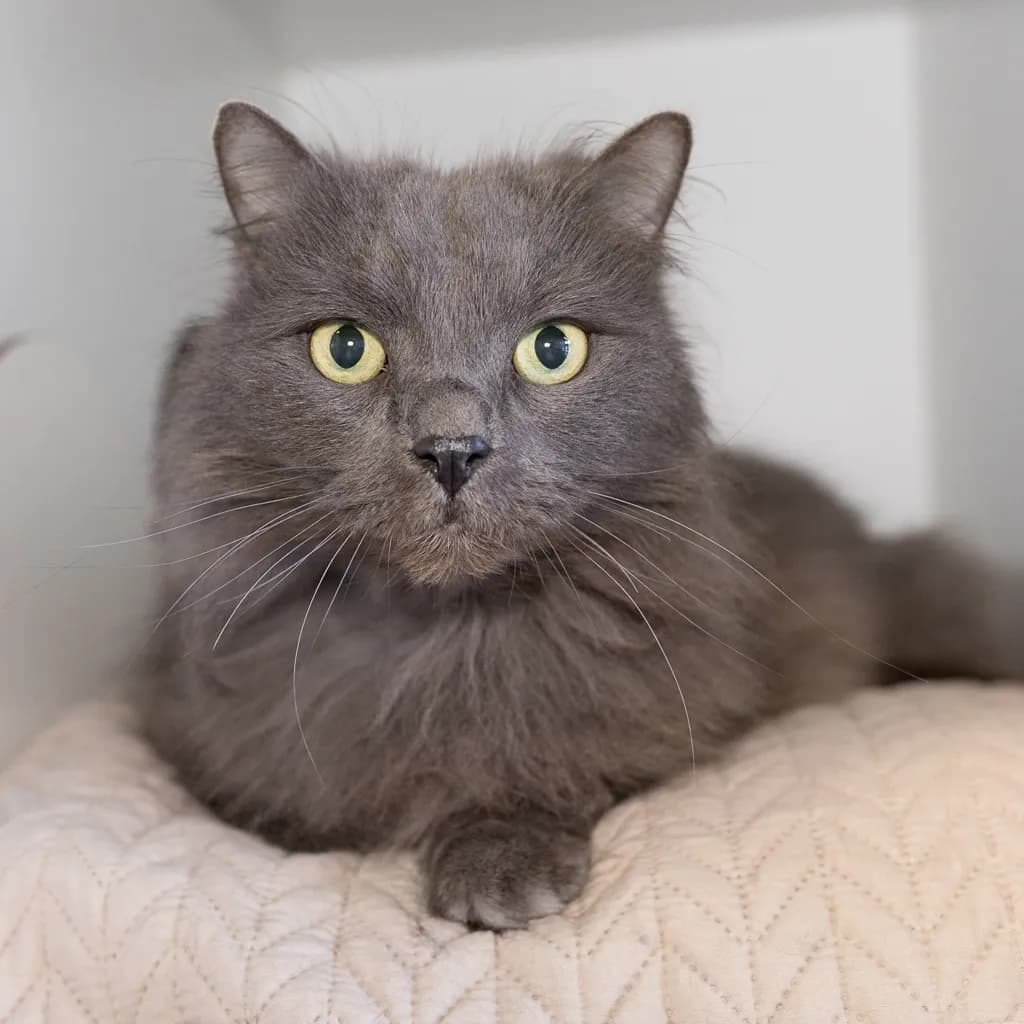
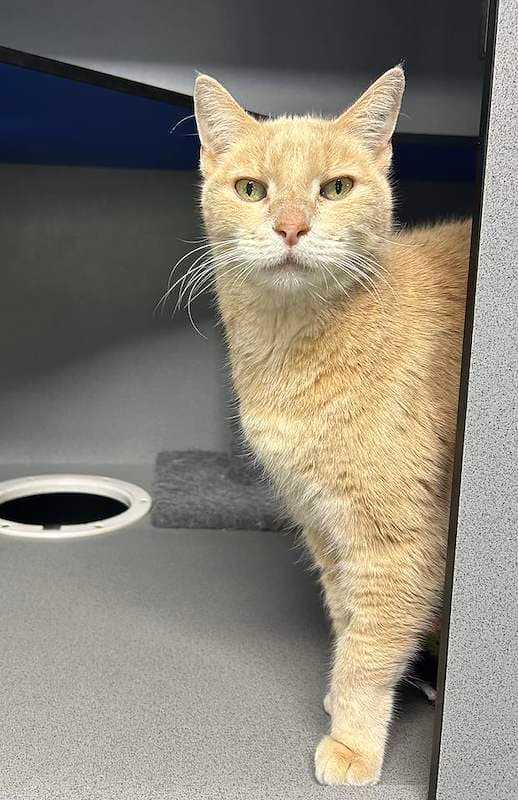
Cujo
11 years 5 months • Domestic Medium Hair
Get notified about new cats in Queensland
We will email you when new rescue cats become available across Queensland, so you can be among the first to meet them.
Senior cats are the most overlooked animals in Queensland shelters, and they make some of the best companions. They are calmer than kittens, already litter-trained, established in their personality so what you see is what you get, and they bond deeply with adopters who give them a chance. The cats below are 10 years and older. Some are 15+, still vibrant, and looking for a quiet retirement home.
Many Queensland rescues reduce or waive adoption fees for senior and special-needs cats, so you can often adopt a healthy senior cat for a small fee, and in some cases at no cost at all. This makes senior cat adoption one of the most accessible and impactful things a Queensland cat lover can do.
Senior cats often arrive in rescue through no fault of their own, whether owner death, allergies developing in a household, divorce, or financial hardship. They are used to people, used to indoor life, and want exactly what most adopters want: a quiet home, regular meals, and someone to nap near.
Why Senior Cats Make Wonderful Companions
A senior cat gives you something a kitten cannot: certainty. What you see is what you get. Their personality is fully formed, their habits are established, and the rescue or foster carer can tell you honestly whether the cat is a lap cat, a quiet observer, or a chatty shadow. For anyone who wants a companion that fits a particular household, an older cat takes the guesswork out of the decision.
Older cats are also far calmer than kittens. They have long since outgrown the furniture-climbing, curtain-shredding phase and are usually content to sleep near you, potter around the house, and greet you at the door. For first-time owners, retirees, people who work, or families who want a gentle presence rather than a whirlwind, a senior cat is often the easier and more rewarding choice.
They tend to bond deeply with the person who adopts them. Many senior cats have had a settled life disrupted and arrive in rescue confused and grieving, so the security of a new permanent home means a great deal to them. Adopters frequently describe an almost immediate attachment, a sense that the cat understands it has been given a second chance and is grateful for it.
Adopting an older cat is also one of the highest-impact things a Queensland cat lover can do. Seniors are consistently the last to be chosen and the most at risk when shelters fill up, so choosing one genuinely changes an outcome. You are not taking on a project or a compromise, you are giving a gentle, house-trained companion the calm retirement they deserve.
Health and Vet Care for Older Cats
Senior cats benefit from more frequent veterinary attention than younger cats, and the general guidance is a checkup twice a year rather than once. Older cats are good at hiding illness, so these visits are how problems get caught early, while they are still cheap and easy to manage. Routine bloodwork at these appointments gives your vet a baseline and flags the common age-related conditions before they become serious.
Several conditions are common in older cats and most are manageable rather than frightening. Kidney changes, thyroid issues, dental disease, arthritis, and weight changes are the usual ones your vet will watch for. Many are controlled with diet, routine monitoring, or ongoing treatment your vet will guide you through, and cats often live comfortably with a managed condition for years. The key is early detection, which is exactly what regular checkups provide.
Day to day, small adjustments keep an older cat comfortable. Softer bedding, a litter tray with a low side that is easy to step into, food and water within easy reach, and a warm, draught-free spot to sleep all help a cat whose joints are stiffening. If your senior cat starts drinking more, eating less, losing weight, or changing their toilet habits, treat it as a reason to call your vet rather than something to wait out.
Pet insurance is harder and more expensive to arrange for a cat that is already old, and pre-existing conditions are usually excluded, so many adopters of senior cats budget directly for routine care instead. Setting aside a small amount each month covers the twice-yearly checkups and the occasional treatment, and the rescue can give you an honest picture of what a particular cat is likely to need before you commit.
Reduced Fees and the Cost of Adopting a Senior
Senior cat adoption is one of the most accessible ways into cat ownership because many Queensland rescues reduce or waive the adoption fee for older and long-waiting cats. Where an adult cat might normally be $150 to $250, a senior is often significantly less, and in some cases free, precisely because rescues want to give these overlooked cats every chance of finding a home.
Even at a reduced fee, the cat still arrives fully vetted. Desexing, vaccination, microchipping, worming, and a FIV check are done before adoption, so the low fee is not a sign of a corner cut. If anything, senior cats have usually had more veterinary attention than younger ones, because the rescue has assessed and treated any age-related issues before listing them.
The ongoing costs of a senior cat are broadly similar to any adult cat, with the main difference being more frequent vet checkups and, for some cats, treatment of a managed condition. Food, litter, and routine parasite prevention are the everyday expenses. Because the rescue discloses any known health issues up front, you can go in knowing roughly what to expect rather than being surprised later.
For anyone on a budget, or anyone who wants their money to do the most good, a senior cat is remarkable value. You get a calm, affectionate, house-trained companion for a small fee, you skip the expensive and demanding first year entirely, and you free up a rescue space for the next cat in need. It is a genuinely win-win choice.
Settling a Senior Cat Into Your Home
Older cats often need a little more time to decompress than kittens, because they are adjusting to the loss of a familiar world as well as the arrival of a new one. Start them in one quiet room with everything they need, a bed, a litter tray, food and water, and a place to hide, and let them come out and explore in their own time. Rushing this stage tends to backfire.
Keep routines predictable in the first weeks. Feed at consistent times, keep the litter tray in the same easy-to-reach spot, and let the household noise stay gentle while the cat finds its feet. Senior cats take comfort in routine, and a stable rhythm helps a grieving or anxious older cat trust that the disruption is over and this is now home.
Sensory changes are common in old age, so approach a senior cat calmly and where they can see you, especially if their sight or hearing is not what it was. Give them consistent furniture to navigate by and avoid rearranging the room while they are still learning it. These small courtesies help an older cat feel secure and confident as it maps out its new surroundings.
Most senior cats settle within a few weeks and reward the patience generously. Because they are already litter-trained, socialised, and past the destructive phase, the settling-in period is usually calm and undramatic. Give an older cat quiet, consistency, and a warm place to sleep, and you will typically have a devoted companion who wants little more than to be near you.
Common Myths About Adopting an Older Cat
The biggest myth is that adopting a senior means only a short time together. In reality, cats commonly live to eighteen or twenty with good care, so a ten-year-old cat may well have the better part of a decade ahead. You are not adopting the end of a life, you are adopting many settled, affectionate years with a cat whose character you already know.
Another myth is that older cats will not bond with a new owner, or are somehow set in their ways beyond reach. Cats are adaptable, and senior cats in particular often form intense attachments to the person who gives them safety and routine again. Far from being aloof, many are more openly affectionate than the younger cats around them, simply because they value the security so highly.
People also worry that a senior cat is a guaranteed pile of vet bills. Plenty of older cats are perfectly healthy and need nothing more than routine care, and where a condition does exist, the rescue discloses it before you adopt so there are no surprises. Many conditions are managed inexpensively, and the twice-yearly checkup habit keeps costs predictable rather than catastrophic.
Finally, there is the assumption that a senior cat cannot fit into a home with children or other pets. Many older cats are wonderful with respectful, gentle children and coexist happily with a calm resident cat, provided introductions are done slowly. The rescue knows each cat's temperament and will match you honestly, which is one of the quiet advantages of adopting an adult over an unknown kitten.
Senior Cats With Children and Other Pets
A settled older cat can be a lovely addition to a family with children, often more so than a boisterous kitten. Senior cats generally prefer gentle, calm interaction over rough play, so they suit households where children are old enough to be respectful. Teach children to let the cat come to them, to pat gently, and to leave the cat alone when it retreats, and a senior cat frequently becomes a patient, affectionate companion.
Very young or boisterous children are a different matter. A senior cat may find constant noise, chasing, or being picked up genuinely stressful, and an older cat with stiff joints will not appreciate rough handling. This is not a reason to rule out a senior cat in a young family, but it is a reason to be honest with the rescue about your household so they can steer you toward a cat that will cope well.
Introducing a senior cat to a resident pet works the same way as any introduction: slowly and in stages. Keep the new cat in its own room at first, let the animals become familiar with each other's scent under the door, and build up to short, supervised meetings. Rushing is the usual cause of lasting friction, whereas a patient introduction over days or weeks gives everyone the best chance of settling.
The great advantage of adopting a senior over an unknown kitten is that the rescue already knows the cat's temperament. They can tell you whether a particular cat has lived happily with children, dogs, or other cats before, which takes much of the guesswork out of the match. Lean on that knowledge, be candid about your own household, and you can place a senior cat into a busy family with real confidence.
Senior Cat Adoption FAQ
Tap a question to expand