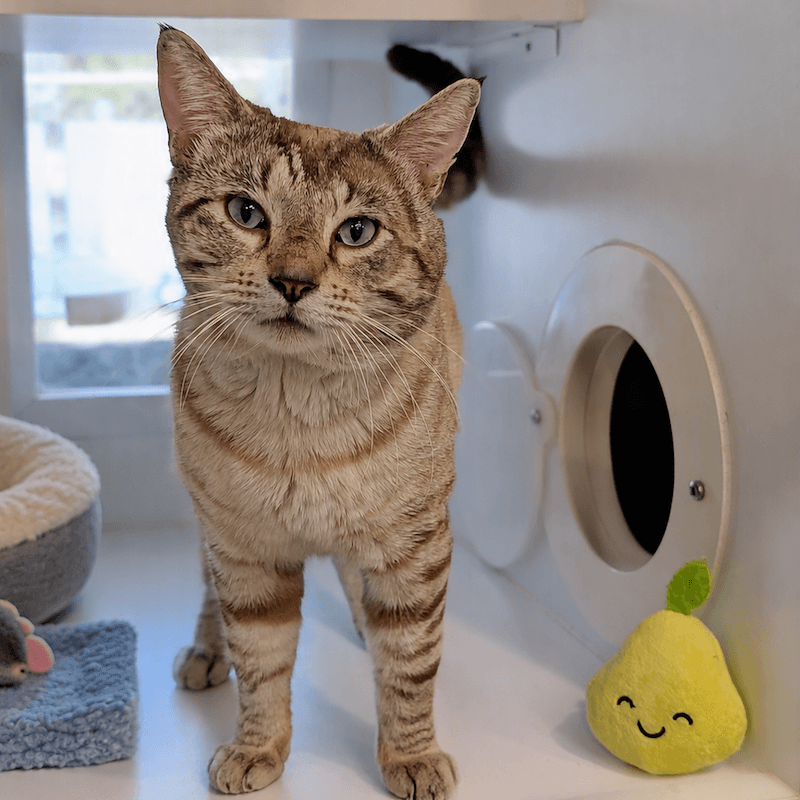
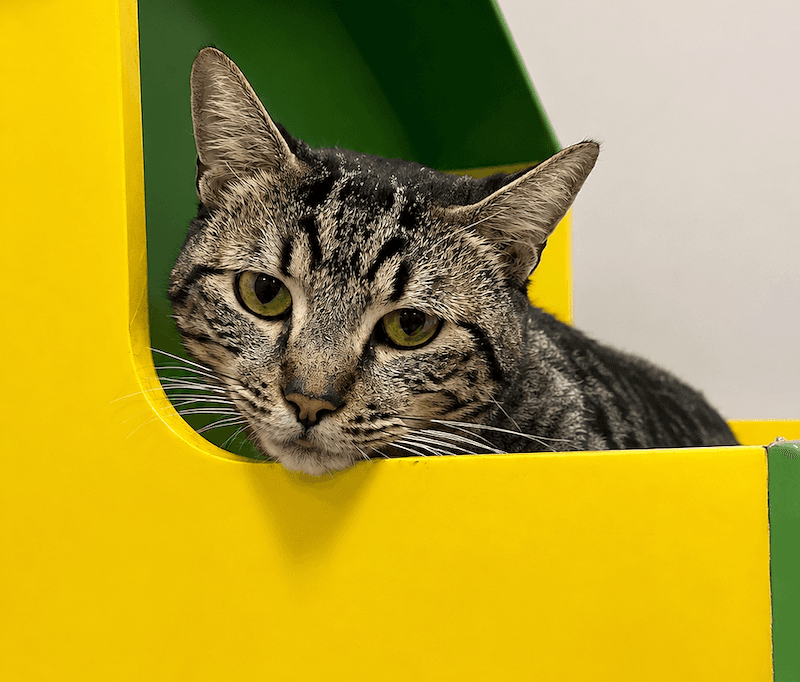
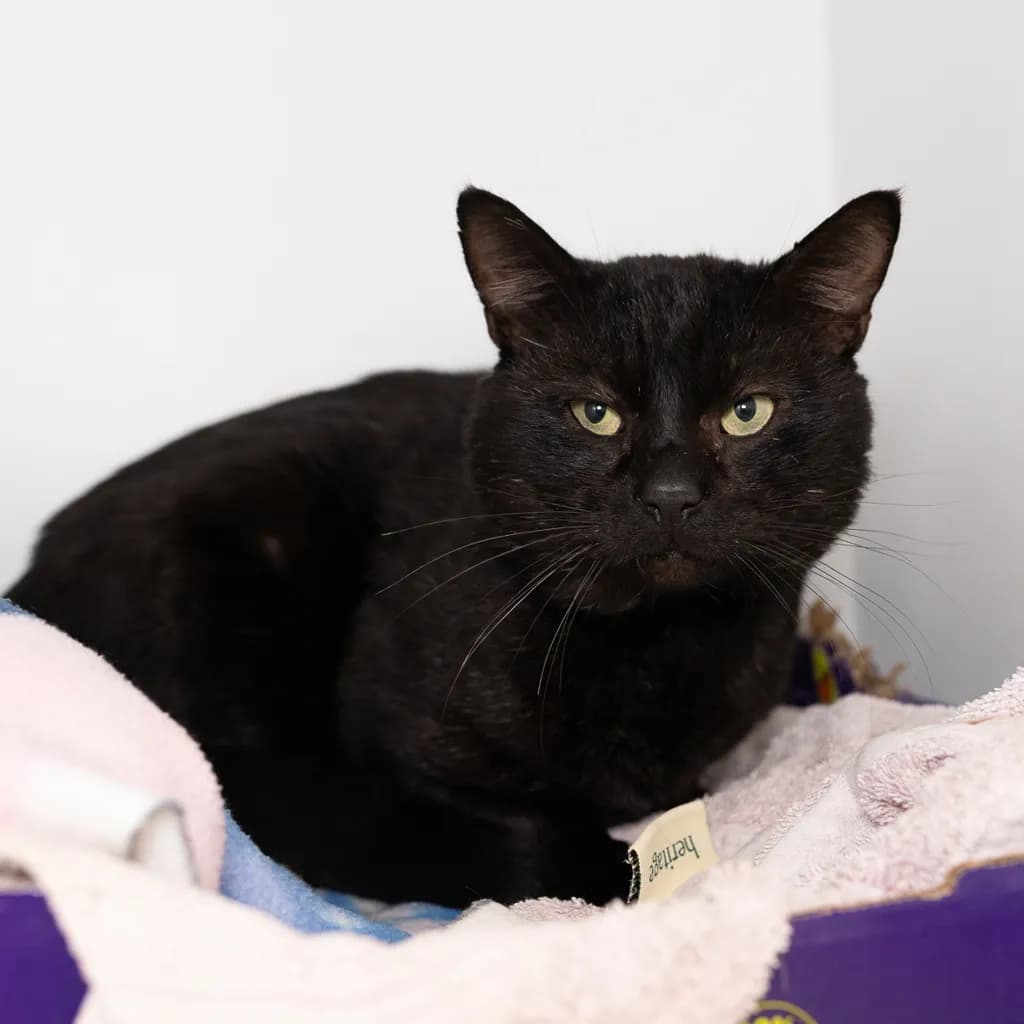
Jacoby
3 years 1 month • Domestic Short Hair
Get notified about new cats in Queensland
We will email you when new rescue cats become available across Queensland, so you can be among the first to meet them.
Special needs covers a wide range of Queensland rescue cats, and most of them are far easier to live with than the label suggests. It includes FIV-positive or FeLV-positive cats, blind or deaf cats, three-legged and amputee cats, cats managing chronic but stable conditions like diabetes, kidney disease, or ongoing dental and skin issues, and cats a rescue has simply flagged as needing a little extra care or a quieter home. When a rescue lists a cat as special needs, the condition is disclosed up front so you know exactly what you are taking on.
FIV-positive cats are the most overlooked of all, and it is largely a misunderstanding. FIV is slow-acting, hard to transmit between cats in a calm household, and an indoor FIV-positive cat frequently lives a full, normal lifespan. Blind and deaf cats map their homes quickly and behave like any other cat once settled. Three-legged cats run, jump, and climb without missing a beat. Across the board, special needs cats tend to be strikingly affectionate, partly because they have often waited longest and bond hard with the person who finally chooses them.
Adopting a special needs cat is an honest commitment, so it is worth being clear-eyed. FIV-positive cats need to be kept indoors to protect them and other neighbourhood cats. A cat with a chronic condition may need ongoing vet care, a prescription diet, or daily medication, and those costs add up over the years. Many Queensland rescues reduce or waive fees for special needs and long-waiting cats to help. Whatever the cat's history, every one listed here arrives desexed, vaccinated, microchipped and vet-checked, with FIV/FeLV status and any condition fully disclosed before you decide.
What Special Needs Actually Covers
Special needs is a broad label, and most of the cats it describes are far easier to live with than the term suggests. It covers FIV-positive and FeLV-positive cats, blind and deaf cats, three-legged and amputee cats, and cats managing a chronic but stable condition such as diabetes, kidney disease, or ongoing dental or skin issues. It also covers cats a rescue has simply flagged as needing a quieter home or a bit of extra patience.
The unifying thread is disclosure, not difficulty. When a Queensland rescue lists a cat as special needs, it is telling you up front about a condition so you can make an informed choice, rather than hiding it. That transparency is a feature: you know exactly what you are taking on, the rescue can explain the day-to-day reality, and there are no unpleasant surprises after the cat comes home.
Many special needs cats need nothing more than an ordinary indoor home and routine care. A three-legged cat, a deaf cat, or a settled FIV-positive cat often lives exactly like any other cat once it is in a stable environment. The label describes something in the cat's history or health record, not a constant burden on the owner, and for a large share of these cats the practical impact on daily life is minimal.
What special needs cats have in common more than anything is that they wait longest for a home. Adopters skim past them out of caution, often based on a misunderstanding of what the condition really means. That makes choosing one genuinely consequential, and it is why these cats so often reward their adopters with striking affection, as if they know they have been given a chance others passed up.
FIV-Positive and FeLV-Positive Cats
FIV-positive cats are the most misunderstood animals in rescue, and the fear around them is largely out of date. FIV is a slow-acting virus that is hard to transmit between cats in a calm household, because it spreads mainly through the deep bite wounds of serious fighting rather than through shared bowls, mutual grooming, or ordinary contact. An indoor FIV-positive cat kept away from fights frequently lives a full, normal lifespan.
This means an FIV-positive cat can often join a home that already has cats, provided the household is calm and the cats are desexed and living indoors, since desexed indoor cats rarely fight seriously. Introduce any new cat slowly, keep everyone indoors, and if you are unsure about your particular mix of cats, talk it through with your vet and the rescue. Plenty of multi-cat homes include an FIV-positive cat with no issue at all.
FeLV, feline leukaemia virus, is a more serious diagnosis than FIV and is transmitted more readily between cats, so an FeLV-positive cat is usually best as an only cat or housed only with other FeLV-positive cats. These cats can still enjoy a good quality of life, but they need attentive care and a realistic understanding of the condition. The rescue will explain what a specific FeLV-positive cat needs before you commit.
For both viruses, the two non-negotiables are keeping the cat indoors, to protect both the cat and other neighbourhood cats, and staying in close contact with your vet for monitoring. Beyond that, an FIV-positive or FeLV-positive cat is affectionate, playful, and rewarding like any other, and adopting one is a genuine act of rescue because these are precisely the cats most often overlooked.
Blind, Deaf, and Three-Legged Cats
Cats with sensory or mobility differences adapt astonishingly well, and first-time adopters are often amazed at how normal these cats seem. A blind cat relies on scent, whiskers, memory, and hearing to map its territory, and once it has learned the layout of a home it moves around with real confidence. The main adjustments are keeping furniture in consistent places and not leaving hazards in unexpected spots.
Deaf cats are, if anything, even easier. A deaf cat behaves like any other cat except that it cannot hear you approach, so the simple courtesy is to let it see or feel you coming rather than startling it. Many owners use gentle vibrations, a light touch, or hand signals to communicate. Because a deaf cat cannot hear traffic or danger, keeping it indoors is essential, which fits the indoor-only norm for rescue cats anyway.
Three-legged and amputee cats run, jump, climb, and play with barely a hint of their missing limb. Cats carry most of their weight on the front and are remarkably good at rebalancing, so a cat that has lost a leg usually gets around so well that visitors do not notice at first. Keeping a three-legged cat at a healthy weight matters, to spare the remaining limbs, and your vet can advise on that, but day to day these cats simply live like any other.
What these cats share is that their difference is mostly a small adjustment for the owner rather than a heavy ongoing burden. Give a blind cat a consistent environment, approach a deaf cat where it can see you, keep a three-legged cat lean and indoors, and you have, in every other respect, an ordinary, affectionate companion. The rescue can walk you through the specific tweaks a particular cat needs.
Chronic Conditions and Ongoing Care
Some special needs cats live with a chronic but stable condition, and this is the category where the honest commitment is greatest, so it deserves clear thinking. Conditions like diabetes, kidney disease, an overactive thyroid, or ongoing dental and skin problems are manageable, and many cats live comfortably with them for years, but they do require consistent care and add cost over time.
Management usually means a combination of things your vet will set up and guide: a prescription diet, regular monitoring and bloodwork, and in some cases daily medication given at home. None of this is beyond an ordinary, committed owner, and rescues match these cats carefully with people who understand the routine involved. The key is that the care is ongoing rather than a one-off, so it suits a settled household that can keep a reliable rhythm.
Because these conditions carry real and continuing costs, budget honestly before you adopt one of these cats. Ongoing prescription food, routine vet visits, and any medication add up across the years, and pet insurance generally excludes a pre-existing condition, so the expense often falls to you directly. The rescue can give you a realistic sense of what a particular cat is likely to need so you can plan for it.
In return, adopters of chronic-condition cats often describe an especially deep bond, forged through the daily care routine and the knowledge that few others would have taken the cat on. If you have the stability, the budget, and the willingness to work closely with your vet, giving one of these cats a managed, comfortable life is one of the most meaningful adoptions on this site.
Costs, Reduced Fees, and the Commitment
The upfront cost of adopting a special needs cat is usually lower than for other cats, not higher. Many Queensland rescues reduce or waive the adoption fee for special needs and long-waiting cats precisely to encourage adopters, and the cat still arrives fully vetted, desexed, vaccinated, microchipped, and with its FIV and FeLV status known. The low fee reflects the rescue's priorities, not any gap in the cat's care.
The real cost question is about ongoing care, and it depends entirely on the condition. An FIV-positive, blind, deaf, or three-legged cat that has settled often costs no more to keep than any other indoor cat, since it simply lives an ordinary life. A cat with a chronic medical condition does carry continuing costs for diet, monitoring, or medication, so those are the cats to budget carefully for before committing.
This is why the disclosure that comes with a special needs listing matters so much. Because the rescue tells you the condition and what it involves up front, you can match the cat to your circumstances honestly, choosing a low-maintenance overlooked cat if your budget is tight, or taking on a chronic-condition cat if you have the stability to manage it. There is a special needs cat to suit a wide range of households.
Above all, adopting one of these cats should be a considered decision rather than an impulse, because the commitment is for the cat's lifetime. Talk to the rescue, be honest about what you can offer, and lean on your vet for the medical side. Do that, and you give a genuinely overlooked animal the secure, loving home it has been waiting longest for, which is exactly what these cats deserve.
Settling a Special Needs Cat Into Your Home
Most special needs cats settle in much like any other cat, with only small adjustments tailored to the individual. Start with the usual calm arrival: a secure carrier, a single quiet room set up with everything the cat needs, and time to explore at its own pace. From there, the specifics depend on the cat, and the rescue will have briefed you on exactly what this particular animal needs to feel secure.
For a cat with a sensory difference, consistency is everything. A blind cat maps its home by memory, so keep furniture in settled places and avoid leaving obstacles in new spots while it learns the layout. A deaf cat cannot hear you coming, so approach where it can see you and use gentle vibration or a light touch rather than startling it. Both adapt quickly once the environment stays predictable.
For a cat with a chronic condition, the priority is building the care routine into your week from the start. Set up the prescription diet, the monitoring, or any home care your vet has prescribed as a steady habit rather than an afterthought, and keep in close contact with your vet in the early weeks. A reliable rhythm helps the cat stay stable and helps you spot any change early, which is exactly what these cats need.
Whatever the cat's needs, patience in the settling-in period pays off. Special needs cats have often waited longest and moved around the most, so the security of a permanent, gentle home means a great deal to them. Give the cat time, keep things calm and consistent, and lean on the rescue whenever you are unsure. Adopters consistently describe these cats as the most affectionate and grateful companions they have ever had.
Special Needs Cat Adoption FAQ
Tap a question to expand