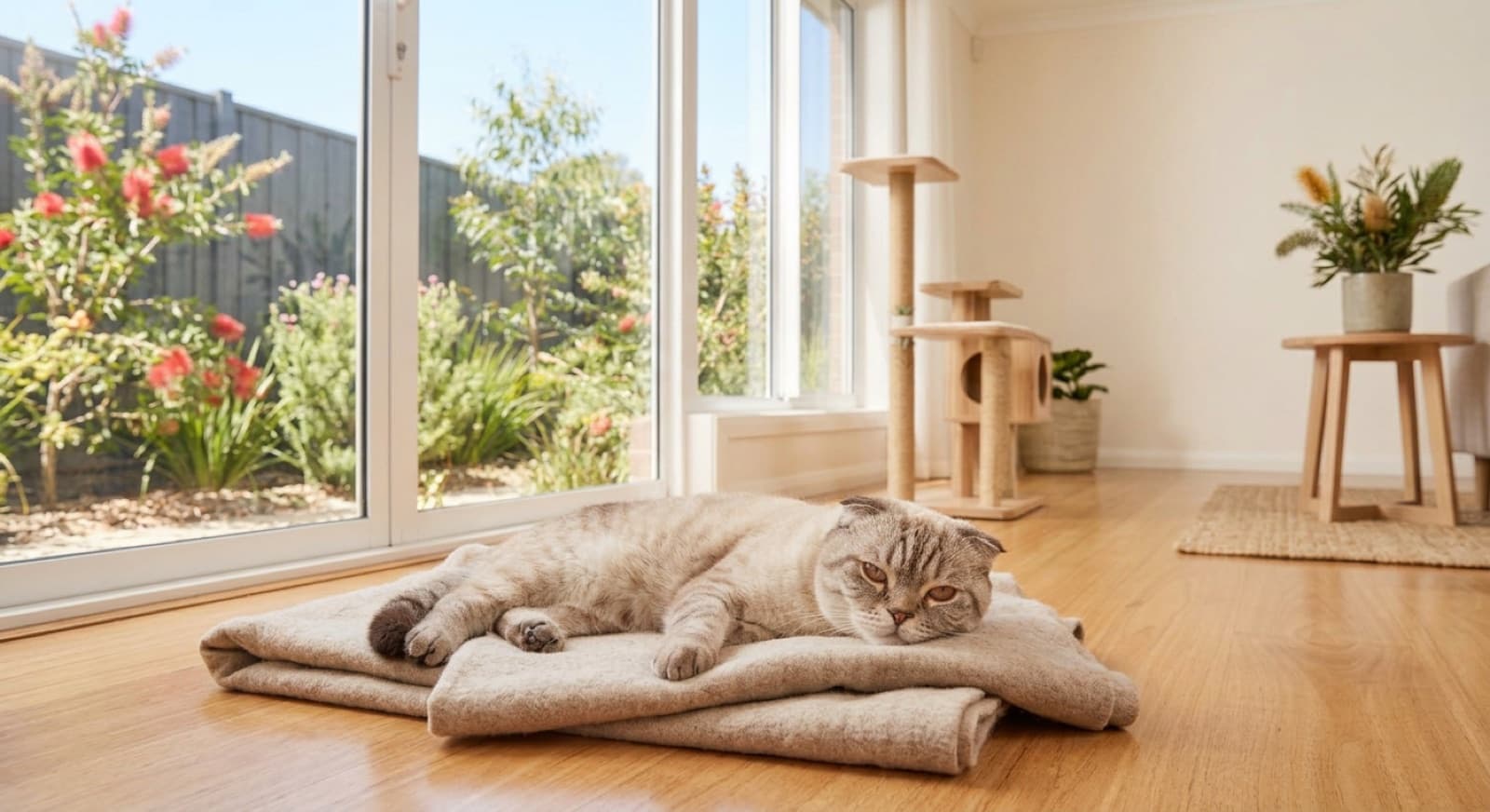
The short answer
The defining Scottish Fold health issue is osteochondrodysplasia, a painful degenerative bone-and-joint disease caused by the same gene that folds the ears, so every folded-ear Fold is affected to some degree. Signs include stiffness, reluctance to jump, an abnormal gait and a short stiff tail, sometimes from a young age. There is no cure, but a vet can manage the pain, support the joints and keep the cat comfortable, and keeping it lean is vital. Straight-eared cats from Fold lines lack the gene and are spared it. Folds can also carry HCM and kidney concerns. This is general information, not veterinary advice. Always speak to your own vet.
There is no gentle way to open this one, so we will be direct. The Scottish Fold is a sweet, affectionate cat, but its signature feature carries a real, lifelong health cost, and understanding it is the most important thing you can do for a Fold, whether you already have one or are deciding. For veterinary guidance alongside this article, the RSPCA Australia Knowledgebase and the Australian Veterinary Association are reliable starting points, and your own vet is always the final word on an individual cat.
Osteochondrodysplasia: the condition behind the ears
The folded ears that define the breed are caused by a dominant gene that disrupts the normal development of cartilage. The catch is that cartilage is not only in the ears, it is throughout the body, in every joint. So the same gene that gently folds the ear cartilage also causes abnormal bone and cartilage development elsewhere, a condition called osteochondrodysplasia, sometimes shortened to SFOCD. Because the ear fold and the joint problem come from one gene, they cannot be separated: to have the folded-ear look is to have the gene that causes the disease.
The result is progressive damage to the joints, most visibly in the limbs and the tail. It can lead to arthritis, stiffness, pain and reduced mobility, and a characteristically short, thick, inflexible tail. Cats produced by breeding two Folds together carry two copies of the gene and are usually severely affected from kittenhood. Cats with a single copy are affected more variably, and the changes can develop gradually, which means a young Fold that looks fine can still stiffen and develop arthritis with age. This is precisely why welfare and veterinary bodies, including the RSPCA, have raised serious concerns about breeding cats for folded ears.
The signs to watch for
Cats are experts at hiding pain, so the signs of osteochondrodysplasia can be easy to write off as a cat simply being lazy or getting older. Take them seriously. The things to watch for are a reluctance to jump up or down, jumping less than the cat used to, a stiff or unusual way of walking, lameness, and a tail that is short, thick and does not move or flex normally. Some cats develop visibly swollen or misshapen ankles or paws.
An affected cat may also be quieter and less active, sit in a hunched position, or object to having its legs or tail touched because it hurts. These signs can show up in a young cat or creep in with age. If you notice any of them in a Scottish Fold, book a vet visit rather than waiting, because your vet can assess the cat, sometimes using x-rays to see the joint changes, and start a management plan early. Reduced jumping is not just a cat slowing down in a breed like this, it can be a real sign of pain.
How the condition is managed
There is no cure, because the abnormal development is written into the cat's genes, but the condition can be managed to keep a cat as comfortable as possible, and this is firmly a job for your vet. Management usually centres on controlling pain, supporting the joints, keeping the cat lean to reduce the load on them, and adapting the home. Your vet will decide what is right for an individual cat and monitor it over time.
A word of caution that matters: never give a cat human pain medication, because many common ones are toxic to cats and can be fatal, and never try to manage joint pain yourself. Everything on the medical side goes through your vet. What you can do at home is make life gentler: provide soft, warm bedding, add low steps or ramps so the cat can reach its favourite spots without big jumps, keep litter trays easy to step into, and keep the cat at a lean weight. With good veterinary care and a kind, adapted home, many affected cats live comfortable, happy lives, but it is lifelong care, and going in prepared for it is part of being a responsible owner.
Considering a Scottish Fold in Sydney?
If you love the breed, adopting an existing Fold, or a healthier straight-eared cat from Fold lines, is the kind choice. A rescue cat arrives desexed, vaccinated, microchipped and vet-checked, with foster notes on how it moves. Check the cats available now.
See Available Scottish Folds →The wider health picture
Beyond the joint disease, Scottish Folds can be affected by conditions seen in many pedigree cats. Hypertrophic cardiomyopathy (HCM), a thickening of the heart muscle and the most common feline heart disease, is recognised in the breed, and polycystic kidney disease has also been associated with it. Both are reasons regular vet checks matter, including listening to the heart and, as the cat ages, monitoring kidney health with blood and urine tests. Treat laboured breathing, sudden weakness or collapse as an emergency, and mention increased drinking, weight loss or reduced appetite to your vet promptly.
Dental disease is common in all cats, so watch for bad breath, drooling or a change in eating, and let your vet check the teeth yearly. Weight deserves a special mention for this breed: keeping any cat lean is good practice, but for a Fold it is important, because every extra gram adds strain to joints that are already compromised. Keeping a folded-ear cat at a healthy weight is one of the most useful everyday things you can do for its comfort. The straight-eared cats from Fold lines, without the fold gene, avoid the joint disease entirely, which is covered in the folded ears guide.
Insurance, and a catch to understand
A folded-ear Fold is likely to need ongoing veterinary care for its joints, so the case for pet insurance is strong. But there is a catch worth knowing before you rely on it. Osteochondrodysplasia is a known, breed-related and often congenital condition, so some insurers may treat it as a pre-existing or excluded condition, particularly once it is present or diagnosed. That does not make insurance pointless, but it changes how you approach it.
Start cover while the cat is young and, if possible, before any joint problem is diagnosed, and read the policy wording carefully to see how it treats hereditary and pre-existing conditions, asking the insurer directly how it handles this breed's known condition. Australian insurers including Bow Wow Meow, Petplan Australia and RSPCA Pet Insurance offer cat cover. Compare the exclusions, the annual limit and the excess, not just the monthly premium.
When to see a vet
Beyond the routine annual check, some signs should prompt a prompt or emergency visit. Book a vet visit for any sign of joint pain or stiffness, reluctance to jump, an altered gait, lameness, or a cat that objects to its legs or tail being touched, because early management makes a real difference. Treat laboured or open-mouthed breathing, sudden weakness or collapse as an emergency, since these can signal a heart problem, and see a vet for increased drinking, weight loss or reduced appetite, for mouth pain, and for suspected tick contact in Sydney, where the paralysis tick is a year-round risk requiring a vet-recommended, cat-safe preventive.
In Sydney, specialty and emergency services such as the Small Animal Specialist Hospital (SASH) provide cardiology and 24/7 emergency care if your vet needs to refer. For the ethics and the fold gene, see the folded ears guide, and for where to adopt responsibly, the Scottish Fold adoption guide.
Frequently Asked Questions
What is the main health problem with Scottish Folds?
The main and defining health problem is osteochondrodysplasia, often shortened to SFOCD, a painful degenerative disease of the bones and cartilage. It is caused by the very same gene that gives the breed its folded ears, because that gene affects cartilage throughout the body, not just in the ears. This is why the condition is not a rare risk but something that affects every folded-ear Scottish Fold to some degree. It can cause arthritis, stiffness, an abnormal gait, a short stiff tail and difficulty jumping, sometimes from a young age. There is no cure, though a vet can manage the pain and support the cat. Straight-eared cats from Fold lines do not carry the fold gene and are spared the condition.
Do all Scottish Folds get joint problems?
To some degree, yes, if they have folded ears. Because the folded ears and osteochondrodysplasia come from the same gene, having the folded-ear trait means having the gene that affects cartilage everywhere in the body. Cats with two copies of the gene, produced by breeding two Folds together, are usually severely and visibly affected from a young age. Cats with a single copy are affected more variably, and changes can develop gradually over time, so a young Fold that seems fine can still develop stiffness and arthritis as it ages. This is why animal-welfare and veterinary bodies raise concerns about breeding for folded ears. A straight-eared cat from the same lines, without the gene, does not have this problem.
What are the signs of osteochondrodysplasia in a Scottish Fold?
Watch for anything that suggests stiff, sore or abnormal joints. Common signs include reluctance to jump up or down, jumping less than it used to, a stiff or altered way of walking, lameness, and a short, thick, inflexible tail that does not move normally. Some cats have swollen or misshapen ankles or paws. Affected cats may be less active, sit in a hunched way, or resist having their legs or tail handled because it hurts. Signs can appear in young cats or develop gradually with age. If you notice any of these in a Fold, see your vet, who can assess the cat, sometimes with x-rays, and put a management plan in place. Do not dismiss reduced jumping or activity as a cat simply slowing down.
Can osteochondrodysplasia in Scottish Folds be treated?
There is no cure, because the abnormal cartilage and bone development is built into the cat's genetics, but the condition can be managed to keep a cat as comfortable as possible, and that is a vet's job. Management typically focuses on controlling pain, supporting the joints, keeping the cat at a lean, healthy weight to reduce strain, and adapting the home with soft bedding and low, easy steps so the cat does not have to jump. Your vet will decide what is appropriate for an individual cat, so never give a cat any human pain medication, as many are toxic to cats, and never medicate joint pain yourself. With good veterinary care and a kind, adapted home, many affected cats live comfortable lives, but it is lifelong care to plan for.
Do Scottish Folds have other health problems?
Alongside the joint disease, Scottish Folds can be affected by the conditions seen in many pedigree cats. Hypertrophic cardiomyopathy (HCM), a thickening of the heart muscle, is recognised in the breed, and polycystic kidney disease has also been associated with it, so regular vet checks matter, including heart checks and, as the cat ages, kidney monitoring. Dental disease is common in all cats, so watch for bad breath or a change in eating. And keeping any cat lean matters, but it matters even more for a Fold, because excess weight adds strain to already-compromised joints. Regular veterinary care is the thread through all of it.
Is pet insurance worth it for a Scottish Fold?
The case for insurance is strong, because a folded-ear Fold is likely to need ongoing veterinary care for joint disease, but there is an important catch to understand. Osteochondrodysplasia is a known, breed-related and often congenital condition, so some insurers may treat it as a pre-existing or excluded condition, especially if it is already present or diagnosed. Start cover while the cat is young and, ideally, before any joint problem is diagnosed, and read the policy wording carefully to see how it treats hereditary and pre-existing conditions. Australian insurers such as Bow Wow Meow, Petplan Australia and RSPCA Pet Insurance offer cat cover. Compare the exclusions, the annual limit and the excess, not just the price, and ask directly how the policy handles this breed's known condition.
Are straight-eared Scottish Folds healthier?
Yes, and this is the most useful thing to understand about the breed's health. The folded ears and the joint disease come from the same gene, so a cat from Fold lines that has straight ears has usually not inherited that gene, and is therefore spared osteochondrodysplasia. These straight-eared cats, sometimes called Scottish Straights, look like a Fold in the face and body and share the sweet, calm temperament, without the built-in joint problem. If you love the Scottish Fold look and are choosing a cat to adopt, a straight-eared one is genuinely the healthier animal, and it is also what you are more likely to find in rescue.
Keep reading
Adoptable Scottish Folds in Sydney
The breed profile and any Scottish Folds, Fold-crosses or straight-eared cats currently listed across Sydney and NSW rescues.
The Folded Ears & the Fold Gene
What causes the ears, why the look and the health cost are inseparable, and the responsible way to choose.
Scottish Fold Adoption in Sydney
Where to adopt a Fold or straight-eared cat responsibly, why adopting beats buying, and what it costs.
Senior Cat Care in Sydney
Keeping an older cat comfortable, including the joint and mobility support that matters most for this breed.