The short answer
You can adopt a Scottish Fold in Sydney, but understand the health reality first: the fold gene also causes osteochondrodysplasia, a painful degenerative joint disease, in folded-ear cats. That is why adopting matters. A Fold already in rescue needs a home whatever you decide, so adopting is a kindness, while buying a Fold kitten pays to breed the condition. Many rescue cats from Fold lines are straight-eared, which is healthier, and they share the same sweet nature. Adoption costs about $100 to $300 all inclusive of vet work. Read the health and folded-ears guides before you decide.
Read this first: the folded ears come at a cost
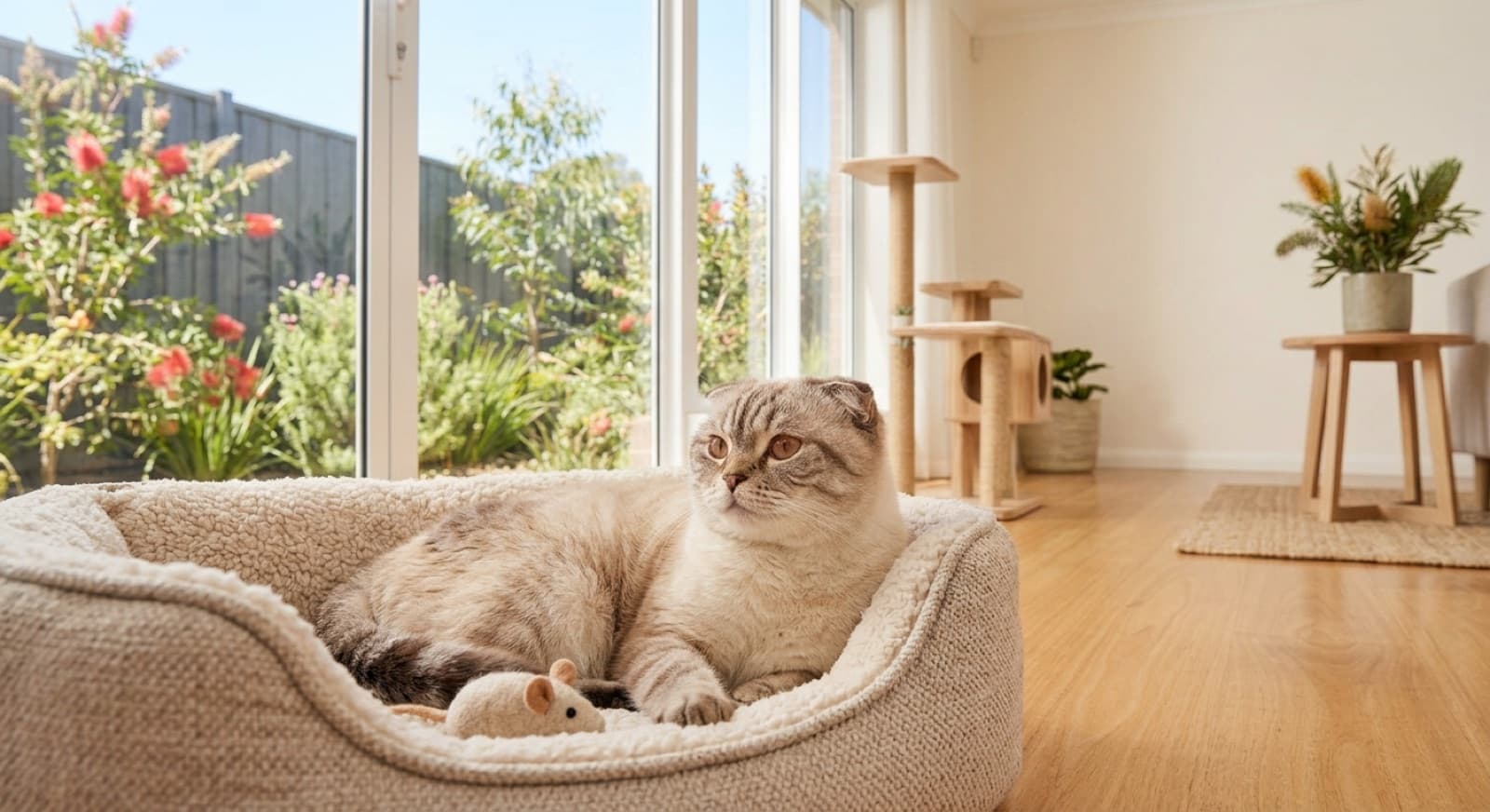
The Scottish Fold is one of the most recognisable cats in the world, with folded ears, a round face and big eyes that give it an owl-like, endearing look, paired with a genuinely sweet, calm and affectionate nature. It is easy to see why people fall for the breed. But there is a hard fact that every honest guide has to lead with: the folded ears are caused by a gene that affects cartilage throughout the cat's body, and that same gene causes osteochondrodysplasia, a painful, progressive joint disease. To some degree it affects every folded-ear Scottish Fold.
This is not a fringe view. Animal-welfare bodies including the RSPCA and veterinary organisations have raised serious concerns about breeding cats for folded ears precisely because of this condition. It does not mean a Scottish Fold cannot be a loved, well-cared-for pet. It does mean the breed comes with a welfare caveat that shapes the responsible way to bring one home. We cover the medical detail in the Scottish Fold health guide and the ears and ethics in the folded ears guide.
Why adopting is the ethical choice for this breed
For most breeds, the case for adoption is about cost and giving a rescue cat a home. For the Scottish Fold there is a stronger, simpler argument on top. Buying a folded-ear Fold kitten from a breeder is paying someone to produce more cats with an inherited, painful joint condition. Every purchase is a vote for more breeding of the fold, and demand is exactly what keeps it going.
Adopting works the other way. A Scottish Fold already living in rescue exists whatever you choose, and it needs a loving, informed home like any cat. Adopting one, or a straight-eared cat from Fold lines, is a genuine kindness that harms nothing and creates no new demand. So if you love the breed, the honest position is this: adopt an existing Fold, or choose a straight-eared cat that does not carry the condition, and do not buy a folded-ear kitten. If a folded-ear look is the only thing you want and you would only ever buy one new, the kindest decision is to reconsider the breed altogether.
Why Scottish Folds turn up in rescue, and what you will find
Purebred folded-ear Scottish Folds are uncommon in Sydney rescue, because most are bought from breeders. They do end up in rescue, though, usually through a life change, an owner moving to a rental that will not allow pets, a new baby, a relationship breaking down or illness, and sometimes because joint problems emerged and an owner could not manage the care. None of that reflects on the cat, which is as gentle as ever and, if anything, needs a committed home more than most.
What you will see more often than a folded-ear purebred is a straight-eared cat from Fold lines, or a Fold-cross. Because the folded ears and the joint disease share one gene, a cat that inherits straight ears has usually not inherited the fold gene, so it looks like a Fold in the face and body, shares the sweet temperament, and is spared the worst of the condition. For anyone who loves the Scottish Fold look, these straight-eared cats are the best outcome, and they are what you are most likely to find in a Sydney rescue.
Where to adopt a Scottish Fold or Fold-cross in Sydney
Because Folds are scarce, watch several established NSW rescues at once, set alerts, and be ready to apply when a suitable cat appears. With this breed, read the foster notes closely for anything known about the cat's joints and mobility. These are the main rescues rehoming cats across Sydney:
Cat Protection Society of NSW
A cat-only adoption centre in Newtown, and a strong first stop. Because they focus entirely on cats, staff know their animals well and can tell you whether a cat's ears are folded or straight and what is known about its health. Every cat is desexed, vaccinated, microchipped and FIV tested. Listings at catprotection.org.au.
Sydney Dogs and Cats Home
The city's oldest shelter, at Strathfield South, taking cats through owner surrender and council contracts. That broad intake is where a surrendered Fold or Fold-cross can surface. Adoption includes desexing, vaccination, microchipping and a vet check. More at sydneydogsandcatshome.org.
RSPCA NSW
The Sydney Adoption Centre at Yagoona plus regional NSW centres rehome a steady stream of cats, with the occasional pedigree or pedigree cross among them. Adoption covers desexing, vaccination, microchipping and a FIV check. Apply at rspcansw.org.au.
AWL NSW
Animal Welfare League NSW runs the Kemps Creek Shelter plus volunteer branches that foster cats in real homes, so you get honest notes on temperament and, importantly for this breed, on how a cat moves and whether it seems comfortable. Adoption includes desexing, vaccination, microchipping and a vet check. Listings on awlnsw.com.au.
Maggie's Rescue
An Inner West rescue in Marrickville using a foster-to-adopt model, so cats are assessed in real homes before rehoming. Detailed temperament and mobility notes are exactly what you want when adopting a breed that can develop joint issues. Information at maggiesrescue.org.
Brighter Future Cat Rescue
A cat-only foster network in Western Sydney. Because every cat lives in a foster home, the rescue can describe exactly how a cat behaves and moves day to day, and how it is with other animals. More at brighterfuturecatrescue.com.
A quick word on searches for a dedicated “Scottish Fold Rescue NSW.” People look for one, but we cannot verify a currently active NSW Scottish Fold-specific rescue by that name. Keep your search on the general rescues above and lean on alerts. For the broader how-to on applying and getting approved, our Sydney cat adoption guide walks through the whole process.
What it costs: adopt versus buy
Adopting a Scottish Fold or Fold-cross through a Sydney rescue costs about the same as any rescue cat:
- Adult cat: about $200 to $220, all inclusive of desexing, vaccination, microchipping and a FIV check.
- Kitten: about $250 to $270, covering the same vet work plus the early vaccination course.
A Scottish Fold from a breeder is a different order of cost, often well over a thousand dollars and sometimes several thousand, and that price buys a cat with none of the vet work done and, for a folded-ear cat, a likely future of joint-related vet care. A breeder price also has 10% GST built in. So adoption is cheaper up front and avoids paying to breed the condition, while the ongoing cost point cuts the other way: budget for veterinary monitoring and joint care over a folded-ear cat's life, and take out pet insurance while it is young. For a fuller breakdown of what a Sydney cat costs across its life, see our cat adoption costs guide, and for the health picture the Scottish Fold health guide.
Browse adoptable Scottish Folds in Sydney
Scottish Folds, Fold-crosses and straight-eared cats from Fold lines turn up in rescue from time to time. Check the live listings, set an alert, and give an existing cat a home rather than buying one.
See Available Scottish Folds →Indoor living and the NSW basics
A Scottish Fold should live indoors, or with contained outdoor access like a catio or harness walks, which matters even more for a breed that can find jumping uncomfortable and is a target for theft. Set the home up kindly: soft, easy-to-reach resting spots, low steps up to favourite perches rather than big leaps, and gentle daily play. Sydney adds heavy traffic, year-round paralysis ticks in bushland areas and native wildlife that free-roaming cats harm, plus a growing number of NSW councils with cat containment rules. Most Sydney rescues already adopt cats out on an indoor or contained basis.
On the paperwork, NSW rules under the Companion Animals Act 1998 require every cat to be microchipped by 12 weeks or before sale, and lifetime registered with your council by six months. A rescue cat is already desexed and microchipped, so you mainly transfer the ownership details on the NSW Pet Registry and pay the one-off registration, which is lower for a desexed cat. Confirm the current fee on the NSW Office of Local Government site, and for general cat-care guidance the Australian Veterinary Association and your own vet are reliable starting points.
Choosing your Scottish Fold responsibly
When a Fold or Fold-cross comes up, a few things make for a responsible, kind adoption. First, favour an adult with a known history, because the rescue or foster carer can tell you how the cat moves, whether it jumps freely or seems stiff, and what vet care it has had. Second, ask directly whether the ears are folded or straight, and lean towards a straight-eared cat if you are open to one, since it is the healthier animal with the same sweet nature.
Third, go in with your eyes open and your budget ready. A folded-ear Fold is likely to need veterinary monitoring and joint care as it ages, so commit to that care, keep the cat lean to protect its joints, and take out insurance while it is young. Done this way, adopting a Scottish Fold is a genuinely good thing: you give an existing cat the informed, committed home it needs, without paying to create more. Read the folded ears guide to understand the full picture before you decide.
Frequently Asked Questions
Where can I adopt a Scottish Fold near me in Sydney?
Start with the main NSW cat rescues and set alerts, because Scottish Folds are scarce in rescue. Cat Protection Society of NSW in Newtown, Sydney Dogs and Cats Home in Strathfield South, RSPCA NSW at Yagoona, AWL NSW at Kemps Creek, Maggie's Rescue in Marrickville and Brighter Future Cat Rescue in Western Sydney all rehome cats, and a Scottish Fold, a Fold-cross or a straight-eared cat from Fold lines turns up in one of them from time to time. Many of the cats you will find are straight-eared crosses, which is genuinely a good thing for their health. Browse current listings, set an alert, and read each cat's foster notes carefully, because with this breed you especially want to know about the individual cat's joints and mobility.
Should I even get a Scottish Fold, given the health issues?
This is the honest question to sit with, and it has a clear answer for anyone drawn to the breed. The folded ears come from a gene that also causes a painful degenerative joint disease in folded-ear cats, so buying a Fold kitten from a breeder pays to create more cats with that condition. Adopting is different: a Fold already in rescue exists and needs a home whatever you decide, so giving it one is a kindness that does not fuel further breeding. So the ethical path, if you love the breed, is to adopt an existing Fold rather than buy one, or to choose a straight-eared cat from Fold lines that does not carry the condition. If a folded-ear look is the only thing you want and you would only buy one new, the kindest choice is to reconsider the breed. Our folded ears guide explains the full picture.
How much does it cost to adopt a Scottish Fold versus buy one?
Adopting a Scottish Fold or Fold-cross through a Sydney rescue costs about $200 to $220 for an adult or $250 to $270 for a kitten, and that fee already covers desexing, vaccination, microchipping, a FIV check, worming and flea treatment and a vet check. A Scottish Fold from a breeder costs far more, often well over a thousand dollars and sometimes several thousand, with none of that vet work done. Beyond the sticker price, remember the ongoing cost: a folded-ear Fold is likely to need veterinary care for joint disease over its life, so budget for that and for pet insurance taken out while the cat is young. Adoption is both far cheaper and, for this breed, the more ethical way to bring one home.
Is there a Scottish Fold rescue in NSW?
People search for a dedicated Scottish Fold rescue in NSW, but we cannot verify a currently active NSW Scottish Fold-specific rescue by that name. The realistic path is the general NSW cat rescues listed above, plus alerts so you hear when a Fold or Fold-cross comes in. Because the breed is scarce in rescue, a single specialist group would rarely have a cat available anyway. Spreading your search across several established rescues and being ready to apply gives you a far better chance than waiting on one name that may not exist.
Why are so many rescue Scottish Folds straight-eared?
Because straight ears are the healthier outcome, and rescue reflects that. The folded ears and the joint disease come from the same gene, so a cat from Fold breeding that inherits straight ears has usually not inherited the fold gene and is spared the worst of the condition. These straight-eared cats, sometimes called Scottish Straights, look like a Fold in the face and body and share the sweet temperament, without the folded-ear health cost. If you love the Scottish Fold look and personality, a straight-eared cat from those lines is arguably the best of both worlds, and you will see more of them in rescue than folded-ear Folds. Ask the rescue whether a cat's ears are folded or straight, since it matters for the cat's health.
Is it safe to buy a Scottish Fold kitten online?
Buying any pedigree kitten online is risky, because high-value kittens attract scammers, and the ACCC Scamwatch has recorded pet scams where a seller takes a deposit for a kitten that does not exist and then disappears. But with a Scottish Fold there is a second, bigger reason to step back: buying a folded-ear kitten pays to breed a cat with a painful inherited joint condition. Rather than buy, consider adopting a Fold or a straight-eared cat that already needs a home, which harms no one and often costs a fraction of the price. If you do want to understand the breed fully first, read our folded ears and health guides before you spend anything.
Should a Scottish Fold be kept indoors?
Yes. A Scottish Fold should live indoors or with contained outdoor access like a catio, secure yard or harness walks, and this matters even more for a breed that can develop joint problems and is poorly equipped for traffic, dogs or cat fights. Sydney also has heavy traffic, year-round paralysis ticks in bushland areas and native wildlife that free-roaming cats harm, and a growing number of NSW councils now have cat containment rules. A Fold does well in a calm indoor home with soft, easy-to-reach resting spots, low steps to favourite perches for a cat that may find jumping uncomfortable, and gentle daily play. Most Sydney rescues now adopt cats out on an indoor or contained basis.
Do I need to register and microchip a Scottish Fold in NSW?
Yes. Under the NSW Companion Animals Act 1998, every cat must be microchipped by 12 weeks of age or before it is sold or given away, whichever comes first, and lifetime registered with your council by six months of age. A rescue cat is already microchipped when you adopt, so your main job is to update the ownership details on the NSW Pet Registry and pay the one-off lifetime registration fee, which is lower for a desexed cat. Registration fees change, so check the current figure on the NSW Office of Local Government site before you pay.
Keep reading
Adoptable Scottish Folds in Sydney
The breed profile and any Scottish Folds, Fold-crosses or straight-eared cats currently listed across Sydney and NSW rescues.
The Folded Ears & the Fold Gene
What causes the ears, why the look and the health cost are inseparable, and the responsible way to choose.
Scottish Fold Health Issues
Osteochondrodysplasia, the joint disease every folded-ear Fold carries, plus the wider health picture and vet care.
Sydney Cat Adoption Guide
How to apply, what rescues look for, and how to get approved to adopt a cat in Sydney and NSW.