The short answer
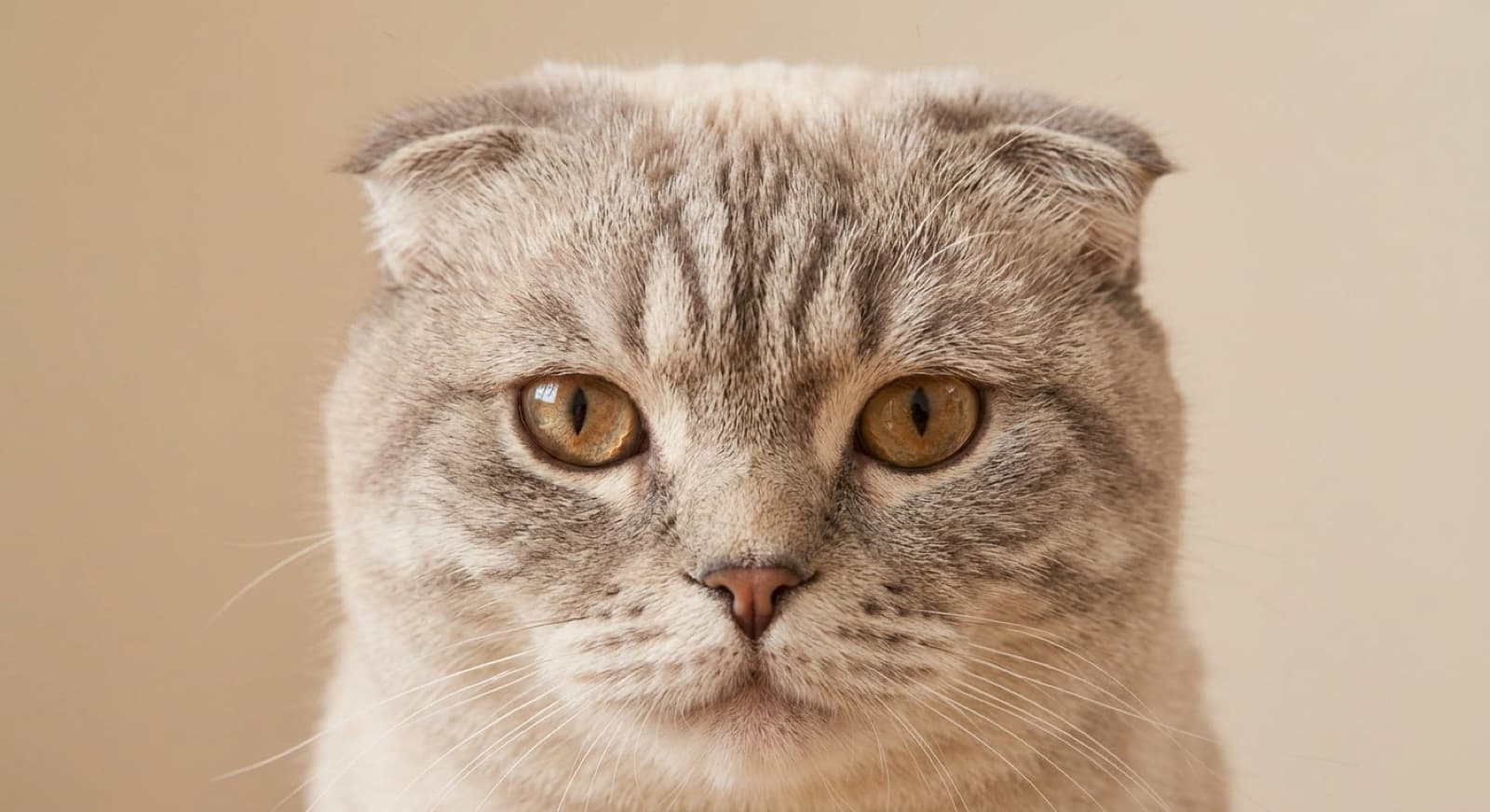
The folded ears come from a single dominant gene that disrupts cartilage development. Kittens are born with straight ears that fold in the first weeks if they carry the gene. Because cartilage is in every joint, the same gene also causes osteochondrodysplasia, a painful joint disease, so the look and the health cost are inseparable. A Scottish Straight, a straight-eared cat from Fold lines, lacks the gene and is spared the condition while keeping the same sweet look and nature. Welfare bodies question breeding Folds, so the responsible choice is to adopt an existing cat or choose a straight-eared one, never to buy a folded-ear kitten.
What the fold actually is
It surprises people to learn that Scottish Fold kittens are not born with folded ears. They arrive with straight ears like any kitten, and in the ones that carry the fold gene, the ears begin to fold forward and down over the first few weeks of life. The fold is caused by a dominant genetic mutation that weakens and reshapes the cartilage in the ear, so the ear can no longer hold itself upright and folds instead. That is the whole mechanism behind the look.
The catch is in the word cartilage. The gene does not target the ears specifically. It affects how cartilage develops across the whole body, and cartilage is a key part of every joint. So the same mutation that gently folds the ear is at work in the limbs, the tail and the other joints, where it causes abnormal bone and cartilage development. The folded ear, in other words, is the visible tip of something happening throughout the cat.
Why the look and the health cost cannot be separated
This is the fact that everything else rests on. Because the folded ears and the joint disease come from one and the same gene, you cannot have one without the other. Every folded-ear Scottish Fold carries the gene, and therefore has some degree of osteochondrodysplasia, the painful joint condition covered in detail in our Scottish Fold health guide. There is no folded-ear cat that escaped the gene, because the ears are the gene made visible.
The severity varies. Cats produced by breeding two Folds together carry two copies of the gene and tend to be badly affected from a young age, which is why that practice is especially criticised. Cats with a single copy are affected more variably and often more gradually. But variable is not the same as absent, and a young folded-ear cat that seems fine can still develop stiffness and arthritis with age. This is why welfare and veterinary bodies, including the RSPCA, view the folded ear as a sign of a genetic condition rather than a harmless feature.
The healthier cat you may not know about: the Scottish Straight
Here is the genuinely useful part. Not every cat from Scottish Fold breeding has folded ears. Some are born with straight, normal ears, and these are sometimes called Scottish Straights. Because the folded ears and the joint disease share one gene, a straight-eared cat has usually not inherited that gene at all, which means it does not fold and is spared osteochondrodysplasia.
What a Scottish Straight keeps is everything people actually love about the breed apart from the folded ears: the round face, the big eyes, and above all the sweet, calm, affectionate temperament. What it loses is the built-in joint problem. For anyone drawn to the Scottish Fold, this is the best of both worlds, a healthy cat with the same lovely nature. And happily, straight-eared cats from Fold lines are more common in rescue than folded-ear Folds, so choosing the healthier cat is also often the easier one to find.
The breeding debate, and the responsible choice
All of this feeds a real ethical debate, and it is worth being clear where the weight of opinion sits. Because folded ears cannot exist without the gene that causes a painful condition, breeding for them means deliberately producing cats with a built-in health problem. That is why organisations such as the Australian Veterinary Association and the RSPCA have raised concerns about breeding cats for extreme or harmful physical features, why some cat registries do not recognise the breed, and why the folded-ear trend on social media, cute as it looks, sits uneasily with many vets. Demand is what drives breeding, and every folded-ear kitten bought is part of that demand.
So what does responsible look like? It is straightforward. If you love the breed, adopt an existing Fold that already needs a home, or choose a straight-eared cat from Fold lines, and do not buy a folded-ear kitten from a breeder. Adopting harms nothing and helps a real cat. A straight-eared cat gives you the look and nature without the health cost. And if a folded-ear appearance is genuinely the only thing you would accept, the most compassionate response is to step back from the breed and give a home to one of the many cats already waiting in rescue. Our Scottish Fold adoption guide covers where to look.
Adopt, don't shop
The kind way to love this breed is to give an existing cat a home. Scottish Folds, Fold-crosses and healthier straight-eared cats from Fold lines turn up in Sydney rescue. Check the live listings and set an alert.
See Available Scottish Folds →If you already have, or adopt, a folded-ear Fold
None of this is a reason for guilt if you already share your life with a Scottish Fold, or if you adopt one that needs a home. A cat that already exists deserves the best, most informed care you can give, and being clear-eyed about its condition is exactly what makes you a good owner. The kindest home for a folded-ear Fold is a gentle one. Keep the cat at a lean, healthy weight, because every extra gram loads joints that are already compromised. Provide soft, warm bedding and low steps or ramps up to favourite spots so the cat is not forced into big jumps, and choose litter trays that are easy to step into.
Watch how the cat moves, and see your vet promptly if you notice stiffness, reluctance to jump or any sign of pain, since early management helps a great deal. Keep up regular vet checks, and never give a cat human pain medication, because many are toxic to cats and all pain relief must come through your vet. Beyond your own cat, the most useful thing you can do is support rescue over breeding and pass on what you have learned, so the next person choosing a cat chooses kindly. The medical side is covered fully in the Scottish Fold health guide. For general cat-care guidance, the RSPCA Australia Knowledgebase and your own vet are reliable starting points.
Frequently Asked Questions
Why do Scottish Folds have folded ears?
The folded ears are caused by a dominant genetic mutation that affects how cartilage develops. Scottish Fold kittens are actually born with straight ears, and in kittens that carry the gene the ears begin to fold forward and down in the first few weeks of life. The gene weakens and reshapes the cartilage in the ear, which is what creates the distinctive folded look. The important thing to understand is that this same gene does not only act on the ears. Cartilage is found in every joint in the body, so the gene that folds the ears also disrupts cartilage elsewhere, which is why the folded ears come bundled with a health condition rather than being a harmless cute quirk.
Are Scottish Fold ears and their health problems linked?
Yes, and this is the single most important fact about the breed. The folded ears and the joint disease, osteochondrodysplasia, are caused by the very same gene, so they cannot be separated. Having the folded-ear look means having the gene that affects cartilage throughout the body, which means some degree of the joint condition. There is no version of a folded-ear Scottish Fold that has the ears without the gene. This is why animal-welfare organisations and vets treat the folded ear not as a cosmetic feature but as an outward sign of a genetic condition. The medical detail is in our Scottish Fold health guide.
What is a Scottish Straight?
A Scottish Straight is a cat from Scottish Fold breeding that has straight, normal ears rather than folded ones. Because the folded ears and the joint disease come from the same gene, a straight-eared cat has usually not inherited that gene, so it does not have the fold and is spared osteochondrodysplasia. Scottish Straights share the round face, big eyes and sweet, calm temperament that people love about the breed, without the built-in health cost. For anyone drawn to the Scottish Fold look and personality, a straight-eared cat is genuinely the healthier choice, and straight-eared cats from Fold lines are also more common in rescue than folded-ear Folds.
Is it ethical to breed Scottish Folds?
It is a genuine ethical debate, and many animal-welfare bodies and vets come down against it. Because the folded ears cannot exist without the gene that causes a painful joint disease, breeding for folded ears means deliberately producing cats with a built-in health condition, which is why organisations such as the RSPCA have raised serious concerns and some cat registries do not recognise or register the breed. Breeding two Folds together, which produces the most severely affected cats, is especially criticised. The social-media popularity of the folded-ear look has driven demand and, with it, more breeding. None of this is a judgement on people who already love and care for a Fold, but it is why the responsible response to loving the breed is to adopt rather than buy.
What is the responsible way to get a Scottish Fold?
If you love the breed, the kind path is clear: adopt an existing Fold that needs a home, or choose a straight-eared cat from Fold lines, and do not buy a folded-ear kitten from a breeder. Adopting harms nothing, because the cat already exists and needs care whatever you decide, while buying pays to breed more cats with the condition. A straight-eared cat gives you the look and temperament without the health cost. And if a folded-ear appearance is the only thing you would accept, and you would only ever buy one new, the most compassionate choice is to reconsider the breed and give a home to one of the many other cats waiting in rescue. Our adoption guide covers where to look.
I already have a Scottish Fold. What should I do?
Love it and care for it well, with no guilt. A Fold already in your home deserves the best life you can give it, and being an informed owner is exactly what it needs. Keep the cat at a lean, healthy weight to protect its joints, set up a gentle home with soft bedding and low steps so it does not have to make big jumps, watch for signs of stiffness or reluctance to move, and see your vet promptly if you notice any, since early management of joint pain makes a real difference. Keep up regular vet checks, and never give a cat human pain medication. The most useful thing you can do beyond that is to support rescue rather than breeding, and to share what you have learned so others choose kindly.
Do folded ears cause hearing or ear problems too?
The folded shape itself does not make Scottish Folds deaf, and the breed is not known for hearing loss simply because of the fold. The bigger health story with the gene is the joint and bone condition, not the ears as ear organs. That said, any cat with folded or heavily furred ears can be a little harder to check and clean, so gentle routine ear checks are sensible, watching for wax build-up, redness, odour or scratching that could point to an ear infection or mites, which need veterinary treatment rather than home cleaning. If you are ever unsure about a Fold's ears, your vet can show you what is normal for that cat and how to keep them healthy.
Keep reading
Adoptable Scottish Folds in Sydney
The breed profile and any Scottish Folds, Fold-crosses or straight-eared cats currently listed across Sydney and NSW rescues.
Scottish Fold Health Issues
Osteochondrodysplasia in detail, the signs, how vets manage it, and the wider health picture.
Scottish Fold Adoption in Sydney
Where to adopt a Fold or straight-eared cat responsibly, why adopting beats buying, and what it costs.
Sydney Cat Adoption Guide
How to apply, what rescues look for, and how to get approved to adopt a cat in Sydney and NSW.