The short answer
Choose the dog, not the sex. Studies find some average differences: males are a little bigger within a breed, score slightly higher on boldness and aggressiveness, and are more likely to urine mark if they are not desexed, while females live slightly longer on average (a median of 12.7 years against 12.4 in a 2024 study of 584,734 UK dogs). But desexing changes more than sex does, and a rescue dog is usually desexed already. The individual dog's age, energy and the foster carer's description of it predict life with you far better than whether it is a boy or a girl. If you already have a dog, a male and female pair is a sensible default, but a meeting between the dogs matters more.
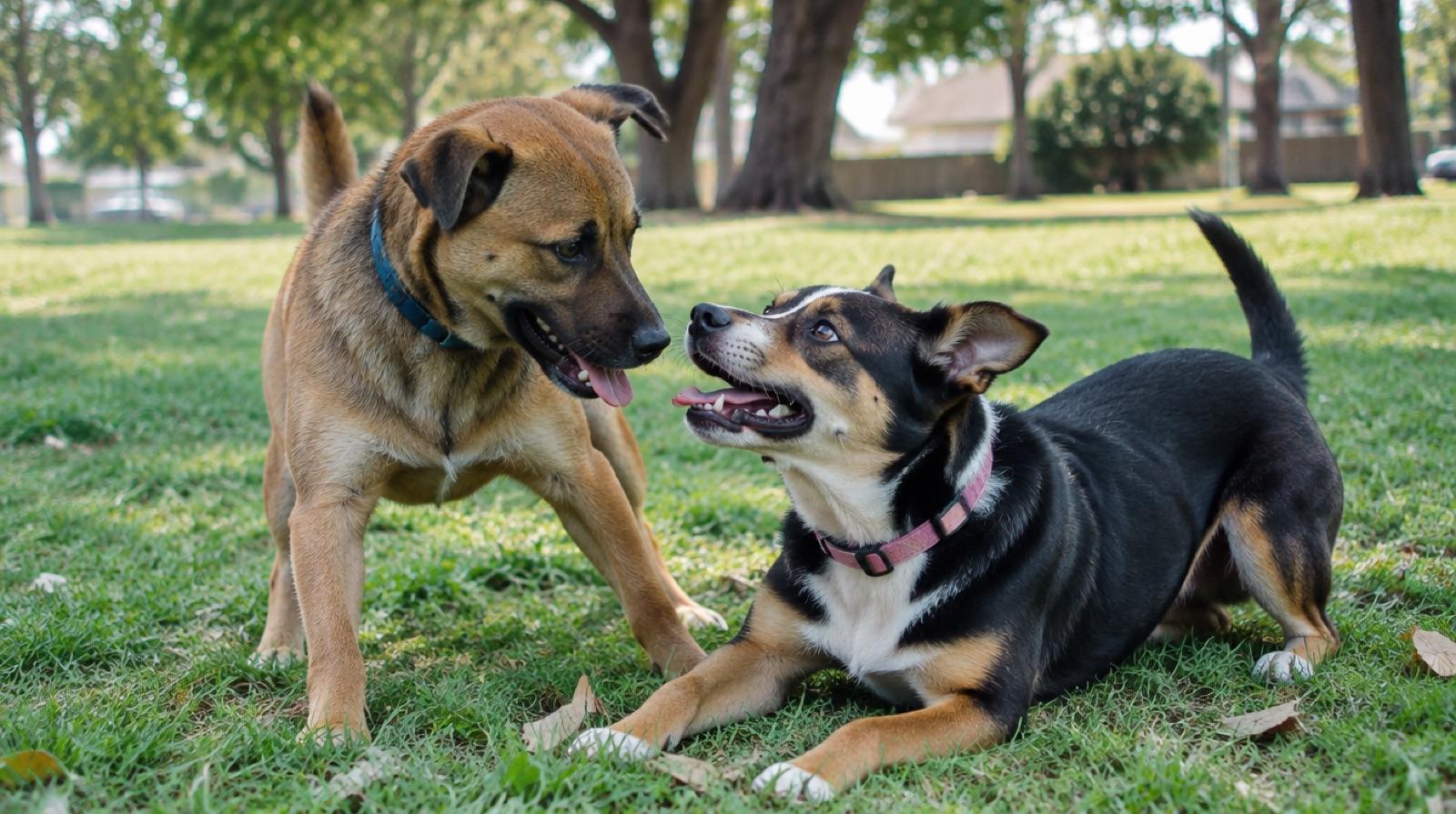
Is a male or female dog better?
Neither, as a rule. The honest summary of the research is that there are some average differences between male and female dogs, and that they are much smaller than the differences between individual dogs of the same sex. Knowing a dog is female tells you a little about the average of all female dogs. It tells you almost nothing about whether this particular dog pulls on the lead, barks at the gate or sleeps through the night.
Two other things change more than sex does. The first is desexing, which removes most of the behaviours people associate with “male” or “female” dogs. The second is age: a calm five-year-old of either sex is a different proposition from a ten-month-old of either sex. Since most dogs adopted from Australian rescues are already desexed, and many are adults, the male-or-female question usually matters least for the dogs you are most likely to adopt.
What does the research say about male and female dog behaviour?
The most useful single source is a 2018 review by Scandurra and colleagues in the journal Animals, which pulled together published studies on sex differences in dog personality, thinking and perception. Its main findings:
- Aggressiveness and boldness were reported as higher in males than females.
- Females seemed more inclined to cooperative tasks with people, while males appeared more inclined to social play.
- Females were rated better at focusing on a single social or physical stimulus.
Read those findings carefully. They describe group averages across many dogs, and the review reports which sex scored higher, not how big the gap is for any one dog. None of it lets you predict which of two dogs in front of you will be bolder or more cooperative. A foster carer who has lived with the dog for a month can.
How strong is the evidence on each claim?
| Common claim | What the research shows | Strength of evidence |
|---|---|---|
| Males are bigger | Yes within a breed: breed standards set larger sizes for males (table below) | Strong, but only within a breed |
| Females live longer | Slightly: a median of 12.7 against 12.4 years in 584,734 UK dogs (McMillan 2024); the gap depends on desexing (Teng 2022) | Strong, but the difference is small |
| Males are more aggressive | Slightly higher on average in a review of studies (Scandurra 2018) | Moderate for averages; useless for one dog |
| Undesexed males urine mark | Castration markedly reduced marking in most adult males that did it (Neilson 1997) | Moderate (57 dogs, owner reports) |
| Females house-train faster | We found no published study comparing the sexes | None found |
| Same-sex pairs fight more | Most household fight cases at one US clinic were same-sex pairs (Wrubel 2011) | Weak (38 cases, no comparison group) |
| Females are more affectionate | Females leaned toward cooperative tasks with people, males toward play (Scandurra 2018) | Weak; “affectionate” is not what was measured |
Our summary of the named studies, checked 10 November 2026. Strength ratings are our editorial judgement of sample size and method, not the authors' words.
Why does desexing matter more than sex?
Most of the behaviours people think of as “male” or “female” are driven by sex hormones, and desexing removes the source. That is why the question changes so much once a dog is desexed.
In males, a 1997 University of California, Davis study (Neilson, Eckstein and Hart, JAVMA) followed 57 adult males castrated after the age of two because of a problem behaviour. For urine marking in the house, mounting and roaming, castration brought an improvement of at least 50% in at least 60% of dogs, and an improvement of at least 90% in 25 to 40% of dogs. For the aggression problems studied, castration brought an improvement of at least 50% in fewer than 35% of dogs, and the authors expected fewer than a third to improve markedly; there was no significant effect on fear of objects or on aggression toward unfamiliar people. In short: desexing reliably reduces the sex-driven habits, and is not a cure for aggression or anxiety.
In females, an undesexed dog comes into season, usually twice a year, although the gap between cycles can range from 4 to 13 months according to the MSD Veterinary Manual. Seasons mean bleeding, attention from every entire male in the street, and a risk of pregnancy. Undesexed females can also develop pyometra, a serious infection of the womb: in a study of insured dogs in Sweden, an estimated 23 to 24% of the insured females had experienced pyometra by 10 years of age, ranging from 10 to 54% across breeds (Egenvall and colleagues, 2001).
Desexing is also linked with longer lives, with a caveat. In UK VetCompass records of 30,563 dogs that died between 2016 and 2020, undesexed females and males had a similar life expectancy at birth (10.50 and 10.58 years), while desexed females (11.98) and desexed males (11.49) had longer ones (Teng and colleagues, 2022). A study of over 40,000 dogs that died at North American veterinary teaching hospitals found the same direction (Hoffman and colleagues, 2013). The Teng authors note that part of the gap may be because a desexed dog has already lived to the age of desexing, and that desexing may also stand in for more responsible ownership and better care, so this is an association, not proof that desexing alone adds years.
Timing is the debated part. A 2020 University of California, Davis study of 35 breeds (Hart and colleagues, Frontiers in Veterinary Science) found that in some large breeds, desexing before a year of age was associated with more joint disorders such as hip dysplasia and cruciate ligament tears, while small breeds showed no increased joint risk. The authors concluded that in most cases the age of desexing can be chosen without raising these risks. The RSPCA Knowledgebase says the right age depends on the species, the individual animal and the circumstances, and that your vet can advise on the benefits and risks for your dog. RSPCA Queensland adds that the idea a female should have one litter before desexing is a myth.
For an adopter, most of this is already settled. The RSPCA Knowledgebase notes that RSPCA animals are desexed as appropriate before adoption, and most rescues do the same. Some states also require it: in the ACT, dogs over 6 months must be desexed unless the owner holds a permit (ACT City Services), and in South Australia desexing rules apply to dogs born after 1 July 2018 (Dog and Cat Management Board). Our adopting a dog guide covers every state, and if you need it done, see dog desexing costs and free and low-cost desexing.
Are male dogs bigger than female dogs?
Within a breed, usually yes. The Dogs Australia breed standards set separate sizes for dogs (males) and bitches (females). The gap is a few centimetres or kilograms, not a different size class.
| Breed | Males | Females |
|---|---|---|
| Labrador Retriever | 56 to 57 cm at the withers | 55 to 56 cm (standard) |
| Golden Retriever | 56 to 61 cm at the withers | 51 to 56 cm (standard) |
| Border Collie | 48 to 53 cm at the withers | 46 to 51 cm (standard) |
| Staffordshire Bull Terrier | 13 to 17 kg | 11 to 15.4 kg (standard) |
From the Dogs Australia breed standards, checked 10 November 2026. A standard describes the ideal dog of a breed; real dogs vary.
Size matters most if you need to physically hold a strong dog on a lead, or if a body corporate or rental has a weight limit. For a cross, which is most of what rescues list, the parents' breeds decide size far more than sex does, and a rescue can usually tell you the dog's actual weight. If size is the deciding factor, the small dogs and large dogs listings filter on it directly.
Do female dogs live longer?
Slightly. The largest study, of 584,734 dogs in the UK drawn from vet records, breed registries, pet insurers and rehoming centres (McMillan and colleagues, Scientific Reports 2024), found a median lifespan of 12.7 years for females and 12.4 years for males, and the female advantage held in both purebreds and crossbreeds. The UK VetCompass life tables (Teng and colleagues, 2022) found a similar gap, 11.41 against 11.07 years of life expectancy at birth, but showed it was tied to desexing: undesexed males and females had similar life expectancy. Australian data is thinner, but points the same way: in VetCompass Australia records of 7,909 Pugs, males were less likely to survive than females and undesexed Pugs died earlier than desexed ones (Wong and colleagues, 2025).
A few months on average is not a reason to choose one sex. Breed, size and face shape make a far bigger difference, which our guide to the healthiest and longest-living dog breeds covers.
Is a female dog easier to house-train?
This is one of the most repeated claims about female dogs, and we could not find a published study that compares how quickly the sexes house-train. Treat it as a myth until someone measures it.
What does differ is urine marking: leaving small amounts of urine on vertical surfaces to leave a scent message. It is a different thing from not being toilet trained, and it is mostly a habit of undesexed males. In the University of California, Davis study, castration markedly reduced marking in the house in most adult males that did it, regardless of the dog's age or how long it had been marking. Lifting a leg is just a posture; a desexed male that lifts its leg outside is not more likely to have accidents inside.
House training depends far more on the dog's history than its sex. An adult dog that has lived in a foster home is often already reliable, which is one of the strongest reasons to adopt an adult. Ask the rescue directly, and see our puppy blues guide if you are taking on a puppy.
Should my second dog be the same sex or the opposite sex?
A male and female pair is the common advice, and there is some evidence behind it, but it is thin. In a 2011 study of 38 households seen at a US veterinary teaching hospital for fighting between their own dogs (Wrubel and colleagues, JAVMA):
- 30 of the 38 cases (79%) involved same-sex pairs.
- 26 of the 38 cases (68%) involved one female or a pair of females.
- Where the instigator was clear, it was most often the younger dog (74%) or the newer arrival (70%).
The limits matter. These were 38 households whose dogs were already being seen at a veterinary teaching hospital, and the study did not compare them with peaceful households, so it cannot tell you how much more likely a same-sex pair is to fight. What it does suggest is useful anyway: the newcomer and the younger dog are where trouble often starts, and fights in that study were triggered by owner attention, food, excitement and found items.
In practice, do this regardless of sex:
- Ask the rescue how the new dog behaves with other dogs in its foster home, around food and toys especially.
- Arrange a meeting between the dogs on neutral ground before adoption. Some shelters require one: RSPCA WA, for example, asks for existing dogs to meet the new dog before adoption.
- Feed separately at first and pick up high-value chews and toys while they settle.
- If your resident dog is older, a calm adult newcomer is usually an easier match than a bouncy adolescent.
Is a male or female dog better with children or as a watchdog?
We found no study showing that either sex is safer with children, better with cats or a better watchdog. These are exactly the questions where the individual dog's history matters most. A dog that has lived calmly with children in foster care is a far safer bet than any average about its sex, and the good with kids and good with cats listings show dogs whose rescues describe them that way. For watchdog and guard questions, see our guard dogs guide.
What matters more than male or female?
If you take one thing from the research, it is that sex is a weak predictor and the individual dog is a strong one. These tell you more, roughly in order:
- A foster carer's description. Someone who has lived with the dog can tell you how it handles being alone, visitors, other dogs and children. Ask what they find hardest about it.
- Age. An adult dog's energy and temperament are visible; a puppy's are a guess. Our senior dog guide covers the calmest option of all.
- Desexing status. Usually done already for rescue dogs, which removes most of the differences people worry about.
- Breed mix and size. These shape exercise needs, coat care and strength on the lead. The what dog breed am I quiz helps match them to your routine.
- Your own setup. Time, space, budget and any resident pets. The adoption readiness check walks through them.
If you have a genuine preference for one sex, that is fine: you will live with the dog for a decade or more, and liking it matters. Just do not let it rule out the dog that fits your life best.
Meet the dogs listed near you
Male and female dogs from the shelters and rescues we aggregate in each city, most of them already desexed.
Male or female when buying a puppy?
If you buy from a breeder, the same logic applies, with one twist: a good breeder who has watched the litter for eight weeks can often tell you more about each puppy's temperament than the sex can. Tell the breeder about your household and let them suggest a puppy rather than insisting on a sex. Buying from a breeder registered with Dogs Australia through its state body is reasonable if you need a breed's predictable size or coat; our puppies for sale guide covers breeder checks and scams state by state. If you are still choosing between species, try the dog or cat quiz.
Frequently asked questions
Is a male or female dog better?▼
Neither, on the evidence. Research finds some average differences between the sexes, such as males scoring a little higher on boldness and aggressiveness in a 2018 review, but they are averages across many dogs and the spread within each sex is far wider than the gap between them. Whether the dog is desexed, its age and its own temperament tell you much more than its sex.
Are female dogs calmer than male dogs?▼
Not reliably. A 2018 review of sex differences in dogs (Scandurra and colleagues, Animals) reported aggressiveness and boldness as higher in males on average, but no study shows that a given female will be calmer than a given male. Energy level is better judged from the dog's age, breed mix and a foster carer's description.
Are male dogs more aggressive?▼
On average, males score slightly higher on aggressiveness in the research, but the difference is small and desexing, age, socialisation and the individual dog all matter more. A 1997 University of California, Davis study found castrating adult males markedly improved aggression in fewer than a third of dogs, so desexing is not a reliable fix for aggression either.
Is a female dog easier to house-train?▼
We could not find a published study showing that one sex house-trains faster. The real difference is urine marking, which is mostly an issue in undesexed males: in a University of California, Davis study, castration markedly reduced marking in the house in most adult males that did it. A desexed dog of either sex can be house-trained the same way.
Do female dogs live longer than male dogs?▼
Slightly, in the largest UK studies. A 2024 study of 584,734 UK dogs (McMillan and colleagues, Scientific Reports) found a median lifespan of 12.7 years for females and 12.4 years for males. A 2022 VetCompass study found the gap depended on desexing: undesexed males and females had similar life expectancy, and desexed dogs of both sexes lived longer.
Are male dogs bigger than female dogs?▼
Usually, within a breed. The Dogs Australia breed standards set different sizes for dogs and bitches: for example, the Golden Retriever standard gives 56 to 61 cm at the withers for males and 51 to 56 cm for females, and the Staffordshire Bull Terrier standard gives 13 to 17 kg for males and 11 to 15.4 kg for females. In a cross, the parents' breeds matter more than sex.
Should my second dog be the opposite sex?▼
It is a sensible default but not a rule. In a 2011 study of 38 households with fighting dogs at a US veterinary teaching hospital (Wrubel and colleagues), 30 cases involved same-sex pairs. That is a small sample of households seen at one clinic, with no comparison group, so it shows a pattern, not a risk figure. A meeting between the dogs, and a foster carer's report on how the new dog behaves with other dogs, tells you more.
Do female dogs have periods?▼
An undesexed female comes into season (heat), usually twice a year, though the gap between cycles can range from 4 to 13 months, according to the MSD Veterinary Manual. Desexing prevents seasons and pregnancy. RSPCA animals are desexed as appropriate before adoption, and rescue dogs usually are too, so this rarely applies to an adopted adult.
Does desexing change a dog's personality?▼
It changes some sex-driven behaviours, not the dog's basic temperament. In a University of California, Davis study of adult males, castration markedly improved urine marking, mounting and roaming in many dogs but had little effect on fear and on aggression toward unfamiliar people. The RSPCA says desexing may reduce some undesirable behaviours and that your vet can advise on your dog.
When should a dog be desexed?▼
Ask your vet, because the right age depends on the breed, size and individual dog. The RSPCA Knowledgebase says the appropriate age depends on the species, the individual animal and the circumstances. A 2020 University of California, Davis study of 35 breeds found early desexing was linked to more joint disorders in some large breeds but not in small breeds. A rescue dog is usually already desexed.
Is a male or female dog better with children?▼
No study we found shows one sex is safer or better with children. Look instead for an adult dog that a shelter or foster carer has seen with children, and supervise every interaction whatever the dog's sex. The good-with-kids listings on LocalPetFinder show dogs whose rescues describe them that way.
Sources
- Scandurra et al. (2018), Behavioral and perceptual differences between sexes in dogs: an overview, Animals
- Neilson, Eckstein and Hart (1997), Effects of castration on problem behaviors in male dogs, JAVMA (PubMed)
- Wrubel et al. (2011), Interdog household aggression: 38 cases, JAVMA (PubMed)
- Teng et al. (2022), Life tables of annual life expectancy and mortality for companion dogs in the UK, Scientific Reports
- McMillan et al. (2024), Longevity of companion dog breeds: those at risk from early death, Scientific Reports
- Hart et al. (2020), Assisting decision-making on age of neutering for 35 breeds of dogs, Frontiers in Veterinary Science
- Egenvall et al. (2001), Breed risk of pyometra in insured dogs in Sweden, J Vet Intern Med (PubMed)
- Hoffman, Creevy and Promislow (2013), Reproductive capability is associated with lifespan and cause of death in companion dogs, PLoS ONE
- Wong, Williamson and Taylor (2025), Demography and causes of mortality of Pugs under primary veterinary care in Australia, Veterinary Sciences
- MSD Veterinary Manual (Australia): Management of reproduction in dogs
- RSPCA Australia Knowledgebase: Should I have my pet desexed?
- RSPCA Queensland: Desexing your pet
- RSPCA Australia Knowledgebase: Where should I go for a new companion animal?
- Dogs Australia: Labrador Retriever breed standard
- Dogs Australia: Golden Retriever breed standard
- Dogs Australia: Border Collie breed standard
- Dogs Australia: Staffordshire Bull Terrier breed standard
- RSPCA WA: The adoption process
- ACT City Services: Your responsibilities as a dog owner
- Dog and Cat Management Board (SA): Desexing
Keep reading
Dog desexing cost in Australia
What desexing a dog costs at charity clinics and private vets, state by state.
Best dogs for first time owners
Why a calm adult rescue dog beats any breed list for a first dog.
What dog breed am I?
Match your lifestyle to the size, energy and coat that suit you.
Adopting a dog in Australia
How adoption works, fees by state, and the desexing and registration rules in every state.