The short answer
Dogs Australia lists the Korea Jindo Dog on its register of FCI breeds it recognises, but the breed is not on its breed listing we read on 13 November 2026 and we found no published Dogs Australia standard, so there are no member breeder prices for us to quote and no Australian breed club health list. The FCI standard calls the Jindo extremely faithful to its master and, on the whole, not fond of other animals, especially males; the UKC standard says it is aloof with strangers. For most homes an adult from rescue, whose manner with people, dogs and fences is already known, is the safer route. Any fee on this page is a reference read on 13 November 2026, not a quote; fees change, so check with the rescue.
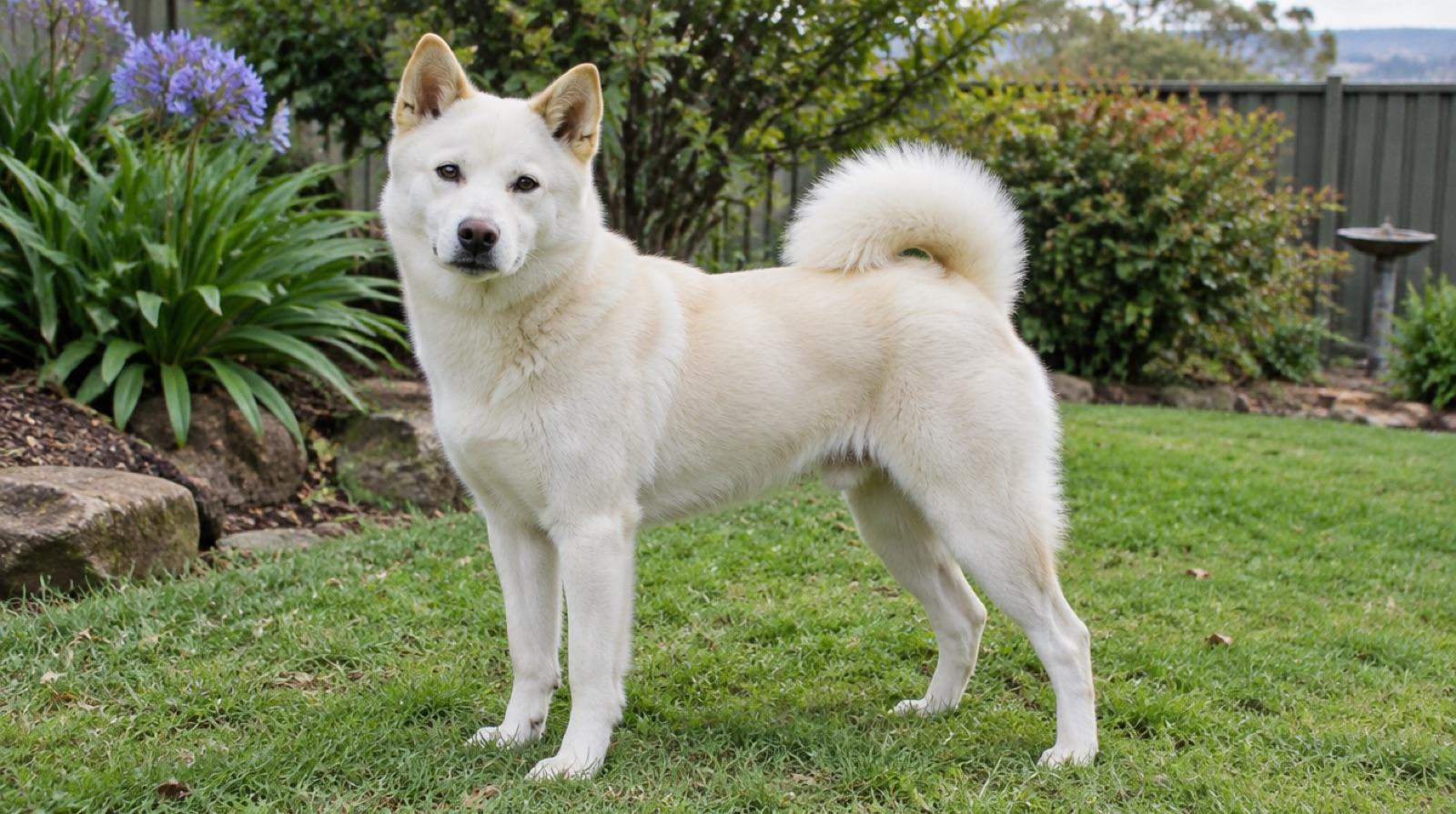
Should you adopt or buy a Korean Jindo?
Start with what the breed is. The FCI standard describes “a well-proportioned medium-sized dog used for hunting and guarding” with “a very strong instinct for hunting”, and says: “On the whole he is not fond of other animals, especially males.” It also calls the Jindo “A one-man dog” that “readily accepts a new master, but never forgets his attachment towards the former master who raised him from puppyhood.”
Then add the Australian picture: there is no published Dogs Australia standard and no member breeder price, and the breed's own standards are frank about other animals. An adult from rescue lets you see how the dog is with strangers, other dogs and your fence before you commit. If you buy a puppy, meet both parents and see how they behave with visitors and other dogs.
| Route | Reference cost | What you usually get | Main risk |
|---|---|---|---|
| Breeder or private seller | No Dogs Australia member price exists to quote | A puppy whose papers, if any, need checking with the registry named | Untested parents, unknown temperament, or a spitz cross sold as purebred |
| General rescue or council pound | The standard fee, for example $500 for an adult dog at RSPCA NSW | A Jindo or Jindo cross when one is listed, desexed, microchipped and vaccinated, with notes on other dogs | Background may be unknown |
| Online ad with no checkable seller | Anything | Unknown parents, a cross sold as purebred, or a puppy that does not exist | Untested parents and scams |
Reference only, not quotes. The RSPCA NSW fee was read on 13 November 2026. Rescues set their own fees and change them, so check with them.
Does Dogs Australia recognise the Korean Jindo?
On paper, yes; in practice, not yet. Here is exactly what the Dogs Australia documents say, read on 13 November 2026:
- It is on the FCI register. Dogs Australia's Register of FCI Breeds that are recognised by Dogs Australia (the file dated 28 July 2026) lists “334 Korea Jindo Dog” in FCI Group 5, Spitz and Primitive Types.
- The rule behind that. Dogs Australia's registration regulations (reg 10.1.1) say: “Dogs Australia recognises all breeds recognised by the FCI whether on the definitive or provisional register. The breed standard will be adopted and published when a specimen of the breed is imported into Australia.”
- It is not on the breed listing. The Dogs Australia breed listing, which sets out each breed's show group, does not include the Jindo in any group, and we found no published Dogs Australia standard for it.
What that means for you: there is no Australian breed standard, Dogs Australia breed club or member breeder price to point to, and Dogs Australia does not say whether any Jindo has been registered here. If a seller says a puppy has Dogs Australia papers, ask for the registration and confirm it with your state Dogs Australia body before you pay. Dogs Australia says “If you have doubts a breeder is registered, contact your Dogs Australia affiliated State Office to confirm.”
Overseas, the FCI accepted the Korea Jindo Dog on a definitive basis on 6 July 2005, the United Kennel Club recognised the Jindo on 1 January 1998, and the American Kennel Club says the breed has been recorded in its Foundation Stock Service since January 2008.
What is a Jindo like?
A clean, athletic, independent spitz. The FCI standard says it is “bold, brave, alert and careful, not tempted easily and impetuous. But most of all he is extremely faithful to his master”, and that “He keeps himself clean and eats sparingly.” The UKC standard adds that Jindos “are renowned for their loyalty to family members and their attachment to their home.”
| Trait | What the standard says |
|---|---|
| Height (FCI) | Males 50 to 55 cm, ideal 53 to 54 cm; females 45 to 50 cm, ideal 48 to 49 cm |
| Weight (FCI) | Males 18 to 23 kg; females 15 to 19 kg |
| Coat (FCI) | Double coat: soft, dense undercoat and a stiff outer coat that stands somewhat off the body |
| Colour (FCI) | Red fawn, white, black, black and tan, wolf grey and brindle |
| Other animals (FCI) | “On the whole he is not fond of other animals, especially males” |
| Other dogs and strangers (UKC) | “watchful of other dogs and may, on their own territory, react aggressively to intruding dogs”; “aloof and suspicious toward strangers” |
| Training (UKC) | Highly intelligent but independent; respond best to positive reinforcement training, preferably from their owner |
Sources: FCI standard No. 334 (13 July 2005) and UKC Jindo standard (revised 1 July 2009), read 13 November 2026.
Fencing and the escape question
The American Kennel Club says Jindos “can easily learn new tricks, including how to open crates and escape yards.” Combine that with a hunting instinct the FCI calls “very strong”, and the practical advice is simple: high, secure fencing with no gaps underneath, a crate or room that latches properly, and on-lead walks wherever wildlife, cats or other dogs are about. Ask any rescue how the dog has handled the foster carer's fence.
Which health checks should a Jindo breeder show you?
There is no set list. In the US, the Orthopedic Foundation for Animals says “Your breed is not yet part of the CHIC program” and that “It should not be interpreted that no health screening tests are appropriate or available.” With no Dogs Australia standard or breed club here either, ask for these:
- Hips for both parents, from a recognised scoring scheme.
- Eyes: an eye check on the parents.
- A vet check on the puppy before it leaves, with the record in writing.
- The parents' temperament, seen in person with visitors and, if possible, another dog. For this breed it matters as much as any test.
Source: OFA CHIC, Jindo, read 13 November 2026. This is a buying checklist, not veterinary advice.
See the Jindos and spitz crosses listed right now
Jindos, Jindo crosses and other mixed breeds from the rescues, shelters and council pounds we aggregate, with each rescue's notes on other dogs, cats, children and fences where known. Numbers change daily; every listing links to the rescue, where you apply directly.
How much is a Jindo puppy from a registered breeder?
There is no figure we can quote. Our breed price surveys use only the prices that Dogs Australia member breeders publish on their own websites, and with no Jindo on the Dogs Australia breed listing and no published standard, we found none to survey and no breed club guide price. Prices on classified and listing sites are left out, because we cannot check who is selling or when the price was set.
If you still decide to buy, get the price in writing and compare what it includes: proof of any registration, the parents' hip and eye checks, a vet check, vaccination and microchip, desexing terms, and whether the seller will take the dog back. The dog cost calculator gives a first-year budget beyond the purchase.
What about a Jindo from rescue?
Our Jindo breed page shows the Jindos and Jindo crosses listed by the rescues, shelters and council pounds we aggregate. Numbers change daily, so check the live listings: Sydney, Melbourne, Brisbane, Perth, Adelaide. Spitz-type crosses that suit the same home may be listed on the mixed breed pages.
With this breed, the rescue's notes are the most useful thing you can read. Ask how the dog is with other dogs (and with males in particular), cats, children and visitors, whether it has tried to escape, how it copes with being handled at the vet or groomer, and how long it took to trust its foster carer.
What does a rescue dog cost?
| Who published it | Reference figure | Read |
|---|---|---|
| Dogs Australia member breeders | None found: the breed is not on the Dogs Australia breed listing | 13 Nov 2026 |
| RSPCA NSW, dog over 12 months | $500 | 13 Nov 2026 |
| RSPCA NSW, puppy under 12 months | $620 | 13 Nov 2026 |
Reference only, not a quote. These are the fees on RSPCA NSW's undated fee page when we read it on the date shown; fees change and other rescues set their own, so check with the rescue. RSPCA NSW says its fees help ensure pets are desexed, microchipped, vaccinated and health-checked. Read our guide to adopting a dog in Australia.
How do Jindo puppy scams work?
Never pay for a Jindo puppy you have not seen with its mother, in person or on a live video call. A seller who wants money first and will only email or text matches the warning signs the Queensland Government lists.
The Queensland Government's puppy farm page lists low prices for popular or pedigree breeds, being asked for payment before you have met the puppy, a breeder who cannot give a valid breeder identification number (BIN), and a seller who only communicates by email or text. Scamwatch says scammers set up fake websites for popular breeds, that a very cheap pet is likely a scam, and warns against paying in unusual ways. Watch for these in Jindo ads:
- “Dogs Australia registered Jindo”. With no Jindo on the breed listing and no published standard, ask for the registration and confirm it with Dogs Australia or your state body before you pay.
- “Great with all dogs and cats” as a breed promise. The FCI and UKC standards say otherwise; only an individual dog's history can tell you that.
- No parents to meet. For a breed this reserved, the parents' temperament is part of what you are buying.
Our guide to puppies for sale in Australia has the state-by-state table of breeder numbers, how to check each one, and what to do if you have already paid.
Is a Jindo restricted anywhere in Australia?
No state or territory restricted or prohibited breed list names the Jindo, but a council officer can still assess an individual dog. The breeds named in state law are the American Pit Bull Terrier, Japanese Tosa, Dogo Argentino, Fila Brasileiro and Perro de Presa Canario; the ACT has no restricted breeds, and the Northern Territory has no territory-wide list, so check with your council. Our Staffy vs pit bull guide sets out the state-by-state law.
Is there a registered alternative?
If what draws you is the look and independence of an Asian spitz, the Shiba Inu and the Akita are both on the Dogs Australia listing, with standards and breeders you can check. Neither is an easy dog either, so read their guides with the same care.
If you do buy a Jindo, check these before you pay:
- Which registry, if any. Ask, then confirm it yourself; for a Dogs Australia claim, ask your state body.
- Both parents met in person, with their manner towards visitors and other dogs seen.
- The parents' hip and eye checks and the puppy's vet check, on paper.
- The state breeder number your state requires, checked on the official register.
- Your fence, checked for height and gaps before the puppy comes home.
- A written contract covering health, desexing and whether the seller will take the dog back.
Is a Jindo the right dog for you?
Only for a patient home that values loyalty over obedience, can keep a clever dog safely contained, and is ready to manage other animals carefully. The standards describe a clean, faithful dog that bonds deeply with its own people, is aloof with strangers and is often not fond of other animals. Given what the FCI standard says about males, ask the rescue before pairing a Jindo with another dog, especially another male.
Not sure? Try the what dog breed is right for me quiz and the adoption readiness check.
Find a Jindo near you
Jindos listed by rescues, by city:
- Jindos for adoption in Sydney
- Jindos for adoption in Melbourne
- Jindos for adoption in Brisbane
- Jindos for adoption in Perth
- Jindos for adoption in Adelaide
Mixed breed dogs, including spitz crosses, listed by rescues, by city:
Frequently asked questions
Should I adopt or buy a Korean Jindo?▼
For most people, an adult from rescue is the safer route, because you can see how the dog is with strangers, other dogs and fences before you commit. The breed standards describe a loyal, independent dog that is often not fond of other animals. Dogs Australia has no published Jindo standard and the breed is not on its breed listing, so a breeder here cannot offer the usual Dogs Australia checks.
Does Dogs Australia recognise the Korean Jindo?▼
On paper, yes; in practice, not yet. The Korea Jindo Dog is on Dogs Australia's register of FCI breeds it recognises, and its regulations say it recognises all FCI breeds, with the standard adopted and published when a dog of the breed is imported. But the Jindo is not on the Dogs Australia breed listing we read on 13 November 2026, and we found no published Dogs Australia standard for it.
How much is a Jindo puppy in Australia?▼
We have no figure to quote. Our price surveys only use prices that Dogs Australia member breeders publish on their own websites, and we found none for the Jindo. Prices on classified and listing sites are left out because we cannot check who is selling. If you adopt, you pay the rescue's fee instead.
Are Jindos rare in Australia?▼
We cannot give a number, and we do not guess one. What we can say is that Dogs Australia publishes a breed standard when a dog of an FCI breed is imported, and we found no published Dogs Australia standard and no Jindo on its breed listing. For dogs in rescue, numbers change daily; check the live Jindo listings.
How big does a Jindo get?▼
Medium. The FCI standard gives a height of 50 to 55 cm for males (ideal 53 to 54 cm) and 45 to 50 cm for females (ideal 48 to 49 cm), with males weighing 18 to 23 kg and females 15 to 19 kg.
Are Jindos good with other dogs and cats?▼
Often not, and the breed standards say so. The FCI standard says the Jindo is on the whole not fond of other animals, especially males, and the UKC standard says Jindos are watchful of other dogs and may react aggressively to intruding dogs on their own territory. Some individuals live happily with other pets; ask the rescue how the dog has behaved.
Is a Jindo a one-person dog?▼
The FCI standard calls it a one-man dog that is extremely faithful to its master, and says that although it readily accepts a new master, it never forgets the person who raised it. The UKC standard says Jindos are devoted to their owner but aloof and suspicious toward strangers. That loyalty is why patient, reward-based training and slow introductions matter.
Do Jindos escape?▼
They can. The American Kennel Club says Jindos can easily learn new tricks, including how to open crates and escape yards. The UKC standard also describes an enthusiastic hunter, so plan for high, secure fencing and on-lead walks in open areas.
What health tests should a Jindo breeder show me?▼
There is no set list. The Orthopedic Foundation for Animals says the Jindo is not yet part of its CHIC health program, and adds that this does not mean no health screening tests are appropriate. Ask for both parents' hip and eye checks and a vet check on the puppy, and ask what health problems the breeder has seen in their dogs.
Is the Jindo a restricted breed in Australia?▼
No state or territory restricted or prohibited breed list names the Jindo, but a council officer can still assess an individual dog. The ACT has no restricted breeds, and the Northern Territory has no territory-wide list, so check with your council.
How much does it cost to adopt a Jindo?▼
You pay the rescue's standard fee. RSPCA NSW listed $620 for a puppy under 12 months and $500 for a dog over 12 months when we read its fee page on 13 November 2026. That is a reference, not a quote; fees change and other rescues set their own, so check with the rescue.
How do I avoid Jindo puppy scams?▼
Do not pay for a puppy before you have met it with its mother, in person or on a live video call. The Queensland Government lists low prices for pedigree breeds, being asked to pay before meeting the puppy, no valid breeder identification number and a seller who only uses email or text as warning signs. Check any claim of Dogs Australia papers with your state Dogs Australia body.
Sources
- Dogs Australia: Breed listing (pages dated 18 March and 1 August 2026)
- Dogs Australia: Register of FCI breeds recognised by Dogs Australia (file dated 28 July 2026)
- Dogs Australia: Regulations Part 6, Registration (effective 1 July 2025)
- Dogs Australia: How to choose a puppy
- FCI: Korea Jindo Dog standard No. 334 (13 July 2005)
- FCI: Korea Jindo Dog breed nomenclature page
- United Kennel Club: Jindo official standard (revised 1 July 2009)
- American Kennel Club: Korean Jindo Dog (Foundation Stock Service)
- Orthopedic Foundation for Animals: CHIC browse by breed (Jindo)
- Queensland Government: Puppy farms
- Scamwatch: Buying and selling scams
- RSPCA NSW: Adoption fees
Keep reading
Jindos listed by rescues
Jindos and Jindo crosses listed right now by the rescues, shelters and pounds we aggregate across Australia.
Shiba Inu puppies: adopt or buy?
A Dogs Australia registered Asian spitz, with breeder checks, health tests and the rescue route.
Akita puppies: adopt or buy?
The larger Asian spitz Dogs Australia registers, with its standard on other dogs and health checks.
Puppies for sale: adopt or buy?
The breeder number each state requires, how to check it, and rescue puppy fees.