The short answer
No, you cannot lawfully get a new Dogo Argentino in Australia. The breed is on the Commonwealth list of dogs whose import is “prohibited absolutely”. Queensland has made it a prohibited dog since 28 August 2024, so owning one without a reasonable excuse is an offence. NSW, Victoria, Western Australia and Tasmania list it as a restricted breed and South Australia as a prescribed breed: owners face strict conditions such as desexing, enclosures and a muzzle in public, selling or giving one away is banned or, in Tasmania, needs council approval, and NSW, Victoria and Western Australia also ban breeding one. The ACT has no restricted breeds and the Northern Territory has no territory-wide list, but neither changes the import ban. Treat any Dogo Argentino puppy for sale as unlawful or a scam, and look at the Bullmastiff, Cane Corso or Boxer instead.
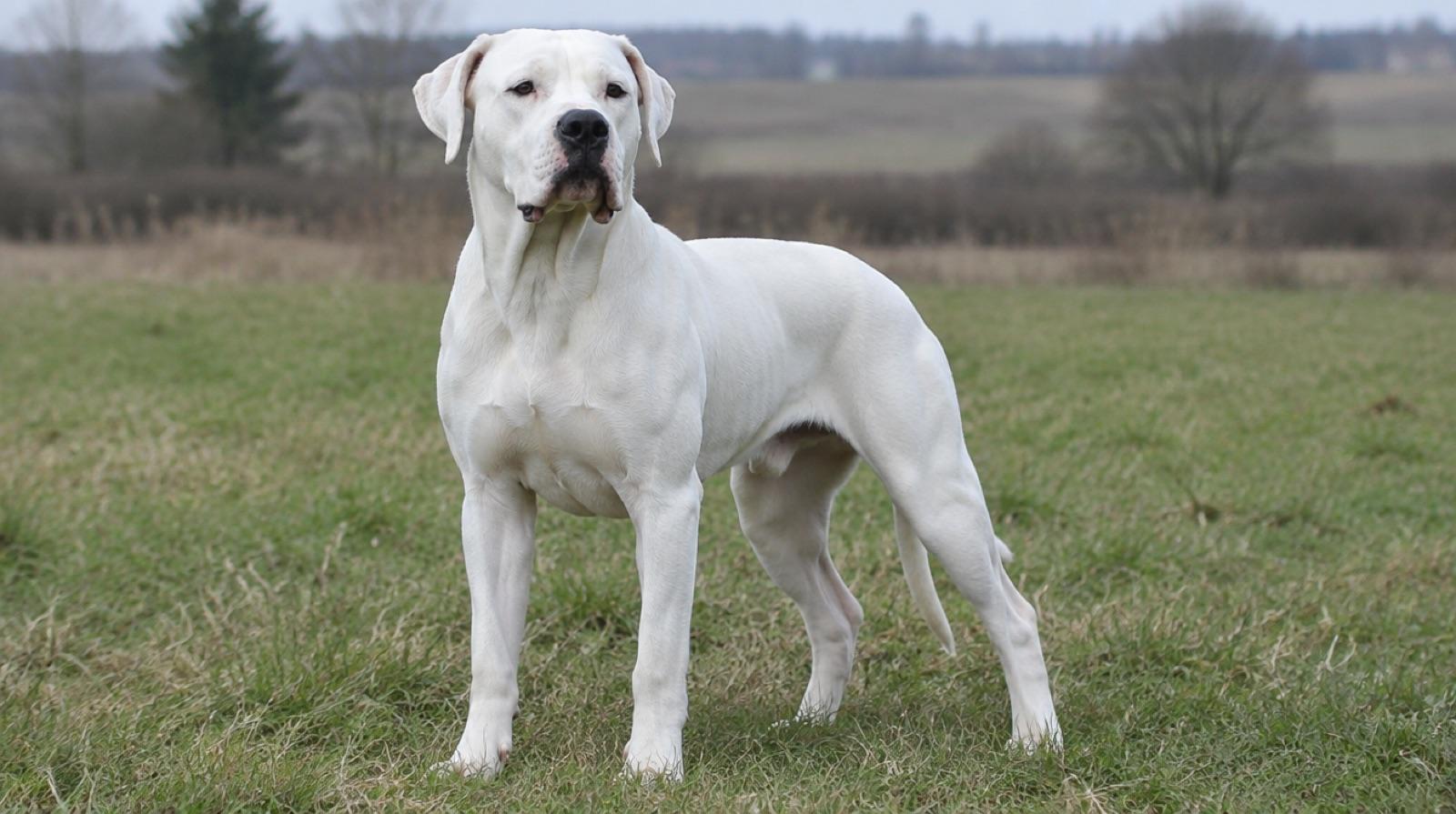
What is a Dogo Argentino?
A large white hunting dog from Argentina. The breed standard published by the international federation FCI (standard No. 292) lists its use as “Big-game hunting dog” and says it was developed in the province of Cordoba by Dr Antonio Nores Martinez, with the breed stabilised by 1947. The standard asks for a coat that is entirely white, with at most one dark patch on the head, a height at the withers of 60 to 68 cm for dogs and 60 to 65 cm for bitches, and a weight of about 40 to 45 kg for males and 40 to 43 kg for bitches. On temperament it says the dog “Should never be aggressive toward humans”.
None of that changes its legal position here. The Dogo Argentino is not on the Dogs Australia breed listing (August 2026), so there are no Dogs Australia pedigrees or member breeders for it, and the law below applies whatever a registry overseas says.
What does each law say about the Dogo Argentino?
Every jurisdiction that names breeds names this one. We read each Act or official page on 12 November 2026; the wording below is quoted as published.
| Jurisdiction | Term used | What the law or official page says |
|---|---|---|
| Commonwealth | Import prohibited absolutely | Schedule 1, item 26: "Dogs of the following breeds: (a) dogo Argentino; (b) fila Brasileiro; (c) Japanese tosa; (d) American pit bull terrier or pit bull terrier; (e) Perro de Presa Canario or Presa Canario" (Customs (Prohibited Imports) Regulations 1956, compilation of 13 July 2026) |
| NSW | Restricted dog | s 55(1): "(c) dogo Argentino", with four other named breeds, any other breed whose import is prohibited, and any dog a council officer declares restricted (Companion Animals Act 1998 (version from 21 December 2024)) |
| VIC | Restricted breed dog | Dogs "that are, or fit the Victorian approved standard for an" American Pit Bull Terrier, Perro de Presa Canario, Dogo Argentino, Japanese Tosa or Fila Brasileiro (Agriculture Victoria (updated 28 July 2026)) |
| QLD | Prohibited dog (since 28 August 2024) | s 103A(1): "A prohibited dog is a dog of a breed prohibited from importation into Australia under the Customs Act 1901 (Cwlth)"; the Queensland Government page lists the Dogo Argentino first of 5 prohibited dog breeds (Animal Management (Cats and Dogs) Act 2008) |
| WA | Dangerous dog (restricted breed) | r 4: "(a) dogo Argentino", with five others and any other breed whose import is prohibited absolutely (Dog Regulations 2013 (version from 24 July 2025)) |
| SA | Prescribed breed | "The five prescribed breeds are: American Pit Bull Terrier; Fila Braziliero; Japanese Tosa; Dogo Argentinia; Presa Canario." The Board also says there are no banned breeds in SA (Dog and Cat Management Board) |
| TAS | Restricted breed (council declares) | s 29A(3): "(a) dogo Argentino", with four others and any other breed whose import is prohibited under the Customs Act 1901 (Dog Control Act 2000) |
| ACT | None | "There are no restricted breeds in the ACT. Each dog is assessed on its individual behaviour, history and the circumstances of an incident." (ACT City Services) |
| NT | No territory-wide list | We found no Northern Territory government page listing restricted breeds. Councils make their own by-laws; the City of Darwin by-laws, for example, set duties for dogs declared dangerous. Check with your council. |
Read 12 November 2026. Spellings are as each source publishes them (South Australia writes “Dogo Argentinia”). The NSW Office of Local Government page describes the breed as “dogo Argentino (Argentinean fighting dog)”. This is a summary of what the official sources say, not legal advice.
The Commonwealth rule is the starting point. Schedule 1 of the Customs (Prohibited Imports) Regulations 1956 covers goods whose importation is prohibited absolutely, and the Department of Agriculture's cats and dogs FAQ says these pure breeds cannot be imported into Australia. NSW, Western Australia and Tasmania also link their lists to the import ban, so any other breed added to it would be caught too.
What does a restriction mean for an owner?
Where a dog is already lawfully kept as a restricted or prescribed breed, the conditions are strict and they differ by state. This table sets out what each official source lists; your council can tell you how it applies to a particular dog.
| State | Keeping the dog | Selling, giving away, breeding |
|---|---|---|
| NSW | Microchipped, registered, desexed; supervised by someone over 18; council-certified enclosure at home; muzzled and securely leashed outside it; prescribed collar; annual permit; "dangerous dog" warning signs | Must not sell, give away, advertise or transfer; offence for someone to accept ownership; must not breed (NSW OLG control requirements (updated 1 July 2024)) |
| VIC | Desexed (unless a vet certifies otherwise); ISO microchip; prescribed collar at all times; warning signs at all entrances; escape-proof housing, 1.8 m perimeter fence, 10 square metres per dog; muzzled and leashed off the premises, with a person 18 or over; no more than 2 without a council permit | Must not be sold, given away or transferred, except surrender to a council pound or shelter or after the owner dies; breeding is a criminal offence (max 6 months jail or 60 penalty units) (Agriculture Victoria) |
| QLD | Owning one without a reasonable excuse is an offence (max 150 penalty units); an assistance animal is a reasonable excuse | Must not supply one, or give or take one for breeding; an owner may surrender the dog to the local government, which must then destroy it (s 103E) (Queensland Act ss 103B to 103E) |
| WA | Must be sterilised once 3 months old (s 33GB) | Must not be advertised, sold, bought or otherwise transferred, except for a deceased estate, a medical certificate that the owner cannot care for it, or a Minister's decision; must not be bred; fines up to $10,000 (Dog Act 1976 ss 33GB to 33GD) |
| SA | Effectively confined to the property; muzzled and physically restrained in public; evidence of desexing if a council officer asks | Must not be sold, given away or advertised for sale or give away (Dog and Cat Management Board) |
| TAS | Once declared: desexed and microchipped within 28 days; in public, muzzled, on a lead of no more than 2 m held by a person over 18, approved collar; warning signs at every entrance; no more than 2 over 6 months old | No sale or transfer without the council general manager's written approval; surrender to a pound or approved animal welfare organisation is not an offence (Dog Control Act 2000 ss 32 to 34C) |
From the pages and Acts linked, read 12 November 2026. Penalties and details change; check the source for your state.
Queensland is different. Since 28 August 2024 the five import-banned breeds have been prohibited dogs under Chapter 4A of the Animal Management (Cats and Dogs) Act 2008, and the Act's former restricted dog permit system was repealed, apart from transitional cases. Section 103B makes owning one without a reasonable excuse an offence; transitional provisions keep a dog that held a restricted dog permit before that date outside the offence while its permit is kept up. Do not read older Queensland guides about permits and enclosures as current rules for new owners.
Declarations and appeals. In NSW the Office of Local Government says the council issues a notice of intention and the owner has 28 days to object. In Victoria, owners can apply to VCAT for a review within 14 days of a declaration, and Agriculture Victoria says the onus is then on the owner to prove the dog is not a restricted breed. In Tasmania an owner may appeal a declaration to the Tasmanian Civil and Administrative Tribunal within 28 days, and the Act puts the onus on the person asserting the dog is not a restricted breed; Western Australia's Dog Act has a similar onus in s 45(2A). If you receive a notice, read it carefully and get legal advice.
What about a dog advertised as a Dogo, a Dogo cross or a white mastiff?
Do not pay for a dog advertised as a Dogo Argentino or a cross of one. Either the dog does not exist, or it is a dog the law in most states says cannot be sold or given away.
Several state laws reach further than the pure breed. Western Australia's Dog Act 1976 defines a dangerous dog (restricted breed) to include a dog that “is a mix of 2 or more breeds, one being a breed prescribed by the regulations to be a restricted breed”. In NSW the declaration process covers cross-breeds of a restricted breed. Queensland's Act says that for prohibited dogs “a breed does not include a crossbreed”, but an authorised person who reasonably believes a dog is a prohibited dog can seize it. The advert itself can be the problem: NSW, Western Australia and South Australia each ban advertising a restricted or prescribed dog for sale.
Labels on dogs of unknown history are also unreliable. In a 2009 US study, DNA found the breed an adoption agency had named as a main breed in only 4 of 16 dogs, and in a 2015 study at four US shelters, staff labelled 52% of 120 dogs as pit bull-type while DNA put 21% in that group. Neither study looked at the Dogo Argentino, but both show why a white coat or a big head in a photo is not evidence of breed either way.
What to do instead: if a dog of uncertain breed interests you, ask your council how it would treat the dog before you take it on, and prefer a rescue or council pound that has assessed the dog and gives you an adoption record. Scamwatch says scammers set up fake websites and profiles for pets that do not exist, and advises viewing a pet in person or on a video call and being wary of a very cheap price. Our guide to what breed your rescue dog is covers what DNA tests can and cannot tell you.
Which large breeds can you legally own instead?
If it is the size, strength or athletic build that draws you, several recognised breeds offer that without the legal risk. Each of these is on the Dogs Australia breed listing and no state or territory list names it, although a council officer can still assess an individual dog and any dog of any breed can be declared dangerous or menacing after an incident.
| Breed | Why consider it | Read more |
|---|---|---|
| Bullmastiff | A large, powerful guardian breed with a Dogs Australia standard | Adopt or buy guide and dogs listed now |
| Mastiff | A giant, calm guardian breed with a Dogs Australia standard | Adopt or buy guide and dogs listed now |
| Cane Corso | An athletic Italian mastiff that Dogs Australia recognises | Adopt or buy guide and dogs listed now |
| Boxer | A muscular, energetic working breed with a Dogs Australia standard | Adopt or buy guide and dogs listed now |
All four are big, strong dogs that need training, socialisation and a secure yard, so read the guide before you decide. Our guard dog guide explains which protective breeds suit family life, and the what dog breed am I quiz can help you narrow it down.
Large dogs you can adopt right now
Large dogs listed by rescues, shelters and council pounds, refreshed regularly. Numbers change daily; every listing links to the rescue, where you apply directly.
Find a large dog near you
- Large dogs for adoption in Sydney
- Large dogs for adoption in Melbourne
- Large dogs for adoption in Brisbane
- Large dogs for adoption in Perth
- Large dogs for adoption in Adelaide
Before you apply, read adopting a dog in Australia and check your housing with our renting with pets guide. For the full state-by-state restricted list, see Staffy vs pit bull; the same import ban applies to the Presa Canario, and the Mastiff guide covers another lawful giant.
Frequently asked questions
Is the Dogo Argentino legal in Australia?▼
Not as a new pet. The Dogo Argentino is on the Commonwealth list of dog breeds whose import is prohibited absolutely. Queensland has made it a prohibited dog since 28 August 2024, so owning one without a reasonable excuse is an offence there. NSW, Victoria, Western Australia and Tasmania list it as a restricted breed and South Australia as a prescribed breed, with strict conditions on owners and bans or limits on selling, giving away and breeding. The ACT has no restricted breeds, and the Northern Territory has no territory-wide list. Laws change, so check your state's page and your council.
Can you import a Dogo Argentino into Australia?▼
No. Schedule 1 of the Customs (Prohibited Imports) Regulations 1956 lists goods whose import is prohibited absolutely, and item 26 names dogs of five breeds, starting with the dogo Argentino. The Department of Agriculture's cats and dogs FAQ repeats that these pure breeds cannot be imported into Australia.
Can I own a Dogo Argentino in Queensland?▼
Generally no. Since 28 August 2024 the Queensland Animal Management (Cats and Dogs) Act 2008 has made the Dogo Argentino a prohibited dog. Section 103B says a person must not own, or be a responsible person for, a prohibited dog unless they have a reasonable excuse, with a maximum penalty of 150 penalty units; the Act says it is a reasonable excuse if the dog is an assistance animal. Supplying one and giving or taking one for breeding are also offences. Transitional rules cover dogs that already held a restricted dog permit; ask your council.
What rules apply to a restricted Dogo Argentino in NSW?▼
The NSW Office of Local Government says the owner must make sure the dog is microchipped, registered, desexed, always supervised by someone over 18, kept in a council-certified enclosure at home, muzzled and securely leashed outside the enclosure, and always wearing the prescribed collar. The owner must pay an annual permit fee through the council, display dangerous dog warning signs, and must not breed from, sell, give away, advertise or transfer the dog.
What rules apply to a restricted breed dog in Victoria?▼
Agriculture Victoria lists desexing, an ISO microchip, a prescribed red and yellow striped collar at all times, warning signs at every entrance, an escape-proof enclosure with a perimeter fence of at least 1.8 metres, and a muzzle and leash outside the premises with a person aged 18 or over. A restricted breed dog must not be sold, given away or transferred, except by surrender to a council pound or shelter or after the owner dies, and breeding one is a criminal offence with a maximum of 6 months jail or 60 penalty units.
Can I buy a Dogo Argentino puppy in Australia?▼
Treat any offer as unlawful or a scam. The breed cannot be imported, Queensland bans supplying one, and NSW, Victoria, Western Australia and South Australia ban selling or giving one away, while Tasmania requires the council general manager's written approval for any transfer. In NSW, Western Australia and South Australia the law also bans advertising one. Do not pay a deposit; Scamwatch says scammers advertise pets that do not exist.
Is a Dogo Argentino cross restricted?▼
It depends on the state. Western Australia's Dog Act 1976 includes a mix of two or more breeds where one is a restricted breed. In NSW a council can declare a dog restricted, and its process covers cross-breeds of a restricted breed. Queensland's Act says that for prohibited dogs a breed does not include a crossbreed, but an authorised person can seize a dog they reasonably believe is a prohibited dog. Ask your council before taking on any dog described as a Dogo cross.
Is the Dogo Argentino legal in the ACT or the Northern Territory?▼
The ACT says there are no restricted breeds and that each dog is assessed on its individual behaviour, history and the circumstances of an incident. We found no Northern Territory government list of restricted breeds; councils make their own by-laws, so ask yours. Neither changes the Commonwealth import ban.
Does Dogs Australia recognise the Dogo Argentino?▼
No. The Dogo Argentino is not on the Dogs Australia breed listing we read in November 2026, so there are no Dogs Australia pedigrees or member breeders for it. The breed standard most often quoted is the one published by the international federation FCI, standard number 292.
What does a Dogo Argentino look like?▼
The FCI standard describes a big-game hunting dog developed in Argentina, entirely white apart from at most one dark patch on the head, standing 60 to 68 cm at the withers for dogs and 60 to 65 cm for bitches, at about 40 to 45 kg for males. A white coat and a muscular build are not proof of breed, because visual breed labels are often wrong.
Which large breeds are legal alternatives?▼
The Bullmastiff, Mastiff, Cane Corso and Boxer are all on the Dogs Australia breed listing, and no state or territory list names them, although a council officer can still assess an individual dog and any dog can be declared dangerous after an incident. Each has its own guide on LocalPetFinder, and rescues list adults of these breeds and their crosses.
Sources
- Customs (Prohibited Imports) Regulations 1956, Schedule 1 item 26 (compilation C147, 13 July 2026)
- Department of Agriculture, Fisheries and Forestry: Cats and dogs frequently asked questions
- NSW Legislation: Companion Animals Act 1998, s 55 (current version from 21 December 2024)
- NSW Office of Local Government: Restricted dogs (updated 1 July 2024)
- NSW Office of Local Government: Control requirements for restricted dogs (updated 1 July 2024)
- Agriculture Victoria: Owning a restricted breed dog (last updated 28 July 2026)
- Queensland Animal Management (Cats and Dogs) Act 2008 (current)
- Queensland Government: Regulated dogs
- WA Dog Act 1976 (version 08-b0-00, from 28 November 2024)
- WA Dog Regulations 2013 (version 01-j0-00, from 24 July 2025)
- Dog and Cat Management Board (SA): Prescribed breeds
- Tasmanian Legislation: Dog Control Act 2000 (current)
- ACT City Services: Dog attacks and dangerous dogs
- City of Darwin: Animal by-laws and infringement offences
- FCI: Dogo Argentino breed standard No. 292 (2 August 2012)
- Dogs Australia: Breed listing (August 2026)
- Voith et al. (2009), Journal of Applied Animal Welfare Science: agency and DNA breed identification
- Olson et al. (2015), The Veterinary Journal: identification of pit bull-type dogs by shelter staff
- Scamwatch: Buying and selling scams
Keep reading
Staffy vs pit bull
Every state’s restricted-breed list in full, why looks mislead, and what it means for a Staffy cross.
Presa Canario in Australia
The other mastiff-type breed on the import ban and every state list, quoted law by law.
Cane Corso puppies: adopt or buy?
An athletic mastiff breed that Dogs Australia recognises and no state list names.
Bullmastiff puppies: adopt or buy?
A large guardian breed with a Dogs Australia standard, health tests and rescue options.