The short answer
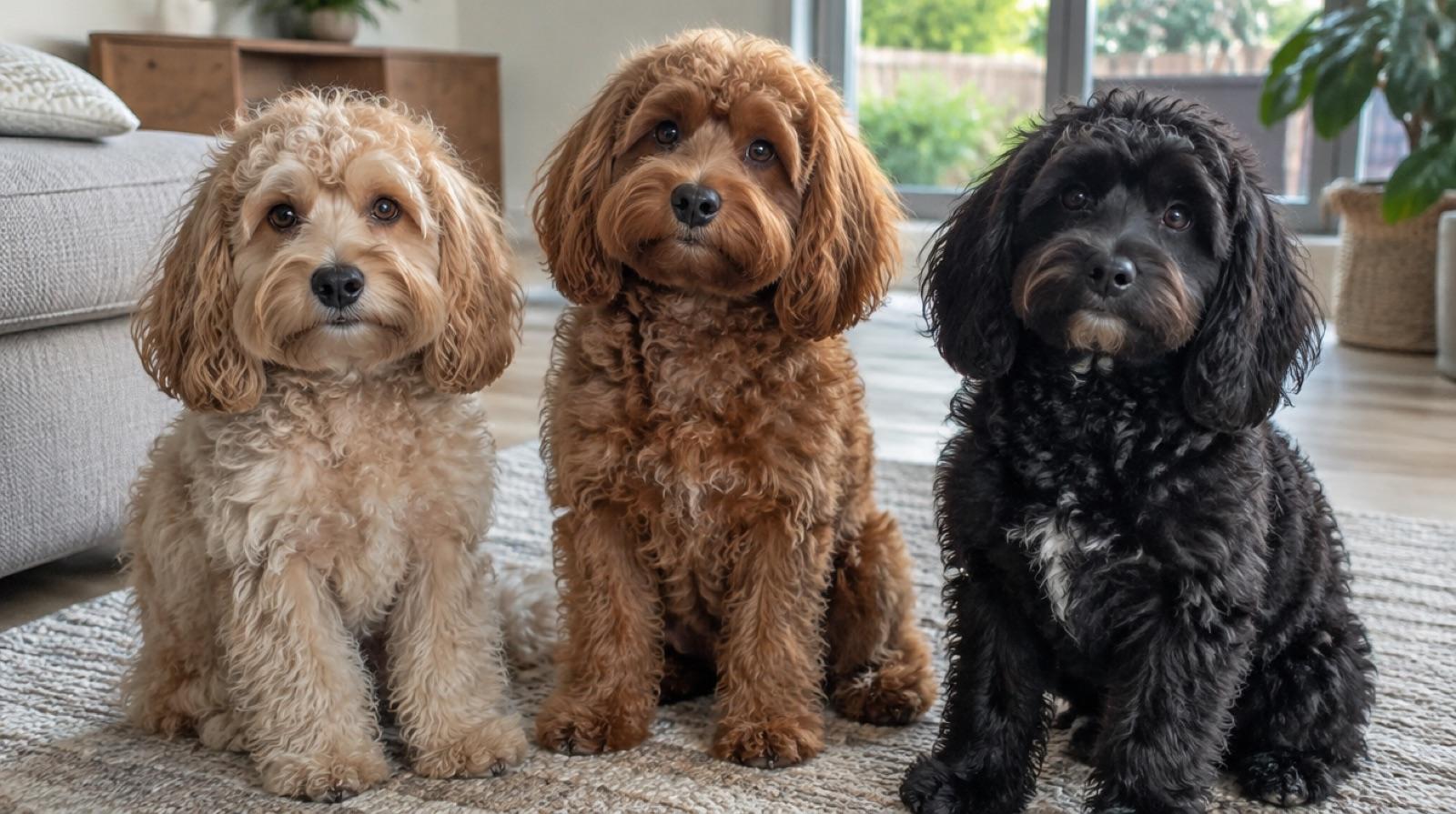
There is no official list of Cavoodle colours, because the Cavoodle is a cross with no breed standard. Colours come from the parents: the Dogs Australia Cavalier standard allows Blenheim (chestnut and white), tricolour, black and tan, and ruby, and the Poodle standard allows all solid colours, naming white, cream, brown, apricot, black, silver and blue. Expect apricot, red, cream, black, chocolate, ruby and white-with-patches Cavoodles. Puppy colours often change: the Poodle standard allows shades to vary until 18 months. Merle is not in either parent breed's standard, so a merle Cavoodle most likely has another breed in its line, and two merle parents risk a double merle puppy prone to hearing and eye defects. Colour says nothing about health or temperament.
Is there an official list of Cavoodle colours?
No. A Cavoodle is a cross between a Cavalier King Charles Spaniel and a Poodle, usually a Toy or Miniature, and it is not on the Dogs Australia breed listing. With no breed standard there is no correct colour, no faulted colour and no colour register. The state canine bodies that make up Dogs Australia also bar members from crossbreeding (the Dogs NSW Code of Ethics is one example), so no Dogs Australia breeder decides what Cavoodle colours should be.
What does exist is a standard for each parent. Every Cavoodle colour you see, apart from merle, is a colour one of those two standards allows, or a mix of them.
What colours can each parent pass on?
The Cavalier standard recognises exactly four colours and says “any other colour or combination of colours highly undesirable”. The Poodle standard, which the Toy and Miniature share, allows “all solid colours” and names seven in its rules for nose and eye colour.
| Parent | Colour | What the standard says |
|---|---|---|
| Cavalier | Blenheim | Rich chestnut markings well broken up on a pearly white ground, evenly divided on the head, leaving room between the ears for the much valued “lozenge” mark or spot |
| Cavalier | Tricolour | Black and white, well spaced and broken up, with tan markings over the eyes, cheeks, inside ears and legs, and under the tail |
| Cavalier | Black and tan | Raven black with bright tan markings above the eyes, on cheeks, inside ears, on chest and legs and under the tail; white marks undesirable |
| Cavalier | Ruby | Whole coloured rich red; white markings undesirable |
| Poodle | All solid colours | Named: white, cream, brown, apricot, black, silver and blue. Particolours (white markings on a coloured Poodle) are a fault |
From the Dogs Australia Cavalier King Charles Spaniel standard (last updated 3 August 2008) and Poodle (Standard) standard (last updated 10 March 2010), both read 10 November 2026. Dogs Victoria lists the same seven Poodle colours.
Notice the difference in approach. Two of the Cavalier's colours are white with coloured patches; the Poodle standard faults white patches entirely. A Cavoodle can inherit either tendency, which is why litters can include both solid and patched puppies.
The colours you will see, and where they come from
- Apricot and red. Apricot is a Poodle colour; a whole red is the Cavalier's ruby. In a Cavoodle the two can be hard to tell apart, and sellers use apricot, red and ruby loosely.
- Cream and white. Both Poodle colours. A white Cavoodle with no patches most likely takes after the Poodle side; a white Cavoodle with patches is a different pattern (see parti below).
- Black. A Poodle colour. A black Cavoodle with tan eyebrows, cheeks and legs has the pattern the Cavalier standard calls black and tan.
- Chocolate or brown. A Poodle colour. The Poodle standard gives brown Poodles a dark liver nose rather than a black one.
- Silver and blue. Poodle colours. The Cavalier standard has neither, so in a Cavoodle they come from the Poodle side.
- Parti, Blenheim-type and tricolour-type. White with coloured patches, like the Cavalier's Blenheim and tricolour. The Poodle can carry white spotting too, though its standard faults it; neither rule applies to a cross.
- Merle. Marbled patches of diluted colour. Neither parent standard includes it; see below.
We have not found a published count of how common each Cavoodle colour is, so we do not rank them. On the rescue side, Cavoodle listings show photos, so you can see the actual colour of each dog before you enquire.
The genetics in brief
Dog coat colour works the same way in a Cavoodle as in any dog. The UC Davis Veterinary Genetics Laboratory explains that dogs make two pigments, black (eumelanin) and red or yellow (phaeomelanin), and a few genes decide which appears and where:
- Red, apricot and cream. A dog with two copies of the recessive red variant at the MC1R gene (the E locus) cannot make black pigment in its coat; the laboratory says these dogs are expected to have coats in shades of cream, yellow and/or red. Two black or chocolate parents that each carry one copy can have red-type puppies.
- Chocolate. Two copies of a brown variant of the TYRP1 gene turn black pigment brown without changing red pigment.
- Blue and lilac. Two copies of a dilute variant (MLPH) turn black to blue and brown to lilac.
- White patches. The patched look of a Blenheim or tricolour comes from white spotting. The laboratory's piebald test lists both the Cavalier and the Poodle among breeds tested, and notes that the genetics of white spotting are complex and vary by breed.
Because many of these variants are recessive, a puppy can show a colour neither parent shows. A DNA colour test of the parents is how breeders predict colours; for a buyer, the parents themselves are the best guide.
Do Cavoodle puppies change colour as they grow?
Often, and this catches buyers out. The Poodle standard says cream, apricot, brown, silver and blue Poodles “may show varying shades of the same colour up to 18 months”. A Cavoodle that inherits one of those colours can change shade the same way as its adult coat grows in.
So a deep apricot eight-week-old may be a lighter adult, and a puppy sold as one colour may settle as another. If colour matters to you, ask to see the parents' adult coats, ask the breeder what earlier puppies from the same parents look like now, or adopt an adult whose colour is already set.
What does a merle Cavoodle tell you?
Merle is not in either parent breed's standard, so a merle Cavoodle most likely has another breed in its line. Before buying one, ask for merle DNA test results on both parents. Never buy a puppy from two merle or merle-carrying parents.
Neither parent breed includes merle. The Cavalier standard lists four colours and calls any other colour highly undesirable. The Poodle standard asks for solid colours, and The Kennel Club in the UK stopped registering merle Poodles in 2020, saying merle “is not a coat colour recognised as historically occurring in Poodles”. Its genetics manager, Dr Tom Lewis, added that the merle variant is dominant, so in most breeds “it cannot have been present ‘under the radar’” and “cannot suddenly ‘emerge’ in a breed after many years”. Putting these together, the likeliest explanation is that a merle Cavoodle got merle from a dog outside the two parent breeds, such as a merle oodle or another merle breed somewhere in its background. That does not make it a worse pet, but it does mean the label “Cavoodle” is not the whole story.
The bigger issue is health. One copy of merle is an established colour in breeds such as the Australian Shepherd. Two copies, a double merle, carry a higher risk of deafness and eye defects: in a 2009 study of 153 merle dogs, 15% of double merles were deaf in both ears against 0.9% of single merles. The UC Davis laboratory warns that dogs with two copies of the smaller merle variants can show little or no pattern (“cryptic merle”), and that breeding two dogs that carry any merle variant may produce double merle puppies. Dogs Australia has prohibited merle to merle matings since 1 January 2015 under its registration regulations, but that rule binds its members, and Cavoodle breeders work outside that system. So the checks fall to you.
Our merle and brindle guide covers the genetics and the research in full, and what to know if you adopt a double merle dog.
Does colour change price, health or temperament?
Price. There is no reference price for a Cavoodle in any colour: no breed club or Dogs Australia breeder publishes one, so every seller sets its own. Some advertise colours as rare and charge more. A Dogs Australia buying guide for another breed, the Pug, warns that non-standard colours get marketed as rare or exotic, and the same sales pattern is worth recognising here. Scamwatch also warns that scammers advertise popular breeds; a “rare colour” puppy at a bargain price is a red flag. Our Cavoodle adopt-or-buy guide covers scams and seller checks.
Health. Apart from merle, we found no published research linking a Cavoodle's colour to its health. Heart, spine, eye and knee risks come from the parent breeds whatever the coat colour, which is why the parents' health tests matter far more. Our Cavoodle health guide explains them.
Temperament and allergies. Neither parent standard links colour to temperament, and colour has nothing to do with allergy. ASCIA says all dog breeds cause allergies, though some shed less dander. Coat type and grooming matter more than colour; see Cavoodle grooming.
See Cavoodles of every colour near you
Cavoodles listed right now by the rescues we aggregate, each with photos so you can see its colour. Set an alert to hear when a new one arrives.
Adopting a Cavoodle in the colour you want
Cavoodles come through Australian rescues in all colours, mostly as young adults and adults, and they are adopted quickly. An adult has one big advantage for a colour-conscious adopter: its coat has finished changing, so what you see in the photos is what you get. Watch the Cavoodle breed page, set an alert, and look at other small Poodle crosses too; our oodle breeds compared guide explains how they differ.
Being flexible on colour is the single easiest way to find the right dog sooner. Temperament, size, coat type and how a dog fits your home will matter every day; colour mostly matters on the first. If you are still choosing between types of dog, try the what dog breed am I quiz or the adoption readiness check.
Frequently asked questions
What colours do Cavoodles come in?▼
Any colour the two parent breeds carry. There is no Cavoodle breed standard, so no official list exists. The Cavalier King Charles Spaniel standard allows Blenheim, tricolour, black and tan, and ruby, and the Poodle standard allows all solid colours, naming white, cream, brown, apricot, black, silver and blue. So you see Cavoodles in apricot, red, cream, black, chocolate, ruby and white-with-patches combinations, among others.
Is there an official Cavoodle colour?▼
No. The Cavoodle is a cross and is not on the Dogs Australia breed listing, so it has no breed standard and no colour that is correct or incorrect. Any colour list for Cavoodles is a breeder's or seller's description, not a rule.
What is an apricot Cavoodle?▼
A Cavoodle with a light orange-gold coat. Apricot is one of the Poodle colours named in the Dogs Australia standard. In dogs generally, the UC Davis Veterinary Genetics Laboratory explains that two copies of the recessive red variant of the MC1R gene stop black pigment forming in the coat, giving shades of cream, yellow and red. The shade can change as the puppy grows.
What is a ruby Cavoodle?▼
A Cavoodle with a whole rich red coat, the colour the Cavalier standard calls ruby: whole coloured rich red, with white markings undesirable. Because the Poodle side can also bring red or apricot, a solid red Cavoodle may be called ruby, red or apricot depending on the seller.
Do Cavoodle puppies change colour?▼
Often, yes. The Dogs Australia Poodle standard says cream, apricot, brown, silver and blue Poodles may show varying shades of the same colour up to 18 months of age, and a Cavoodle can inherit that from its Poodle side. So a puppy's coat at eight weeks is not a reliable guide to its adult shade. The parents' adult coats, or an adult dog, tell you more.
Are merle Cavoodles real?▼
Merle Cavoodles exist, but merle does not come from either parent breed. The Cavalier standard lists four colours and says any other colour is highly undesirable, and the Poodle standard asks for solid colours. The Kennel Club in the UK says merle is not a colour recognised as historically occurring in Poodles. So a merle Cavoodle most likely has a merle-carrying dog of another breed somewhere in its line.
Are merle Cavoodles unhealthy?▼
One copy of the merle gene is an established colour in breeds such as the Australian Shepherd, but two copies, a double merle, carry a higher risk of deafness and eye defects. In a 2009 study of merle dogs, 15% of double merles were deaf in both ears against 0.9% of single merles. Merle can also hide as cryptic merle, so two merle-carrying oodles bred together can produce a double merle without anyone noticing. Ask for merle DNA results on both parents.
Do some Cavoodle colours cost more?▼
Some sellers charge more for colours they call rare, but no breed club or Dogs Australia breeder publishes a Cavoodle price, so there is no reference for colour pricing. A Dogs Australia buying guide for another breed, the Pug, warns that non-standard colours are marketed as rare or exotic. Colour tells you nothing about health; parents' health test results do.
Does a Cavoodle's colour affect its temperament or health?▼
We found no published research linking any Cavoodle colour to temperament, and neither parent breed's standard links colour to temperament. The one colour with a documented health risk is merle, especially double merle. For every other colour, health depends on the parents' health testing, not the coat.
Is a white or cream Cavoodle more hypoallergenic?▼
No. Colour has nothing to do with allergy, and no dog is hypoallergenic. The Australasian Society of Clinical Immunology and Allergy (ASCIA) says all dog breeds cause allergies, although some do not shed as much dander and so spread less allergen. A Cavoodle's coat type matters more than its colour, and the only real test is time with the specific dog.
Can I adopt a Cavoodle in a particular colour?▼
Sometimes, if you are patient. Rescues list Cavoodles of all colours, mostly adults, and each listing has photos so you can see the colour. Setting an alert on the Cavoodle breed page is the easiest way to catch one in the colour you want, but being flexible on colour widens your choice a lot.
Sources
- Dogs Australia: Breed listing (March 2026)
- Dogs Australia: Cavalier King Charles Spaniel breed standard
- Dogs Australia: Poodle (Standard) breed standard
- Dogs Australia: Poodle (Toy) breed standard
- Dogs Victoria: Poodle (Toy) breed profile
- Dogs Australia: Regulations Part 6, Registration (effective 1 July 2025)
- Dogs NSW: Code of Ethics (June 2026)
- Dogs Australia: What to look for when buying a Pug puppy
- UC Davis Veterinary Genetics Laboratory: Dog coat color and type
- UC Davis Veterinary Genetics Laboratory: MC1R (E locus)
- UC Davis Veterinary Genetics Laboratory: Piebald/white spotting (S locus)
- UC Davis Veterinary Genetics Laboratory: Merle
- The Kennel Club (UK): Registration of dogs of merle colouring (9 January 2020)
- Strain et al. (2009), Journal of Veterinary Internal Medicine: Prevalence of deafness in dogs heterozygous or homozygous for the merle allele
- ASCIA: Pet allergy
- Scamwatch: Buying and selling scams
Keep reading
Cavoodles listed by rescues
Cavoodles of every colour listed right now by the rescues and shelters we aggregate.
Cavoodle puppies: adopt or buy?
Generation labels, parent health tests, scam red flags and Cavoodles in rescue.
Merle and brindle dogs
Double merle deafness and eye risk, cryptic merle and the breeds that carry merle.
Poodle sizes and colours
Toy, Miniature and Standard, and every colour the Poodle standard allows.