The short answer
Barely brush a Devon Rex: a hand stroke or a soft damp cloth is enough, and firm brushing causes thin patches. Give it the occasional gentle bath when the skin gets greasy, and wipe the outer ears regularly with a vet-recommended cleaner. Then plan for Melbourne's weather. In winter, provide a heated or self-warming bed in a draught-free spot and a warm room at night. In summer, keep the cat indoors, out of midday sun and cool on heatwave days. Low grooming, but not zero care.
Why the rex coat changes everything
The Devon Rex coat comes from a natural genetic mutation. Most cats have a coat with coarse outer guard hairs over a softer underlayer. A Devon Rex has a short, fine, wavy coat with few guard hairs, so it feels like suede and is often sparse on the chest, belly and behind the ears. Even the whiskers tend to be curly and brittle.
Two things follow from that. First, the coat is delicate, so it tolerates almost no brushing. Second, a sparse coat cannot do the jobs a normal coat does: it does not absorb the skin's oils, and it does not insulate the cat well. So Devon Rex care is less about fur and more about skin, ears and temperature. That last one matters more in Melbourne than in warmer Australian cities.
Brushing: less is more
This catches new owners out. The fine hairs break easily, so a firm brush, a slicker or a deshedding tool damages the coat and can leave thin or bald patches. Most Devon Rex need no real brushing at all.
Stroking the cat with your hand keeps the coat tidy and doubles as the attention this breed loves. If you want to do more, wipe a soft, slightly damp cloth over the coat now and then, or use a very soft brush with the lightest pressure. That is the whole coat routine. Some thinning is normal for the breed, particularly on the belly, but patchy hair loss, flaky skin or redness is worth showing your vet.
Skin, oils and the occasional bath
Because the coat cannot soak up the skin's natural oils, they can build up and leave the cat feeling greasy, sometimes with a faint smell. An occasional bath with a cat-safe shampoo your vet recommends keeps this under control. The key word is occasional. Bathe when the cat is actually greasy, not on a fixed schedule, because over-bathing can irritate the skin.
Melbourne adds one rule: bath time needs warmth. A wet Devon Rex loses heat quickly, and a cool Melbourne day makes that worse. Bathe in a warm bathroom with the door closed, use lukewarm water, towel the cat thoroughly, and let it settle somewhere warm until it is completely dry. Never use human or dog shampoo. If a cat needs frequent baths to stay comfortable, or the skin looks red, sore or smells off, treat it as a vet matter, covered in the Devon Rex health guide.
Ears, chin and claws
Those huge, open ears collect wax faster than a typical cat's. Check them weekly and wipe the outer ear with a vet-recommended cat ear cleaner on a cotton pad. Clean only what you can easily see, and never push anything into the ear canal. Redness, a strong smell, dark discharge or a cat shaking its head and scratching means stop and see your vet, because that is likely an infection rather than wax.
On the chin, feline acne shows as blackheads or small bumps and is a little more likely in an oily-skinned breed. Ceramic, glass or stainless steel bowls washed daily help, since plastic holds bacteria. A red or swollen chin is a vet visit.
Trim the claws every couple of weeks. Some owners notice oily build-up around the nail beds too, which a gentle wipe handles. Start handling the paws early with treats so nail trims stay calm.
A Melbourne year for a thin-coated cat
The Bureau of Meteorology data shows Melbourne's winter highs sit around 14 degrees with nights near 6 to 7, while summer can spike above 40. The weather also swings within a single day. That range is the core challenge for a Devon Rex owner, so plan by season:
| Season | The risk | What to do |
|---|---|---|
| Winter (June to August) | Cold nights and draughty rooms | Heated or self-warming bed, fleece blankets, a warm room overnight, beds off cold tiled floors |
| Spring and autumn | Big swings within one day | Keep warm bedding available year-round so the cat can choose; check the house is not cold after a sunny afternoon |
| Summer (December to February) | Heatwave days above 40, strong sun on thin skin | Indoors in the coolest room, water and shade, fan or air conditioning, no midday sun on windowsills, shaded catio |
| Any day you bathe | Chilling while wet | Warm closed bathroom, thorough towelling, a warm spot to finish drying |
Keeping a Devon Rex warm through a Melbourne winter
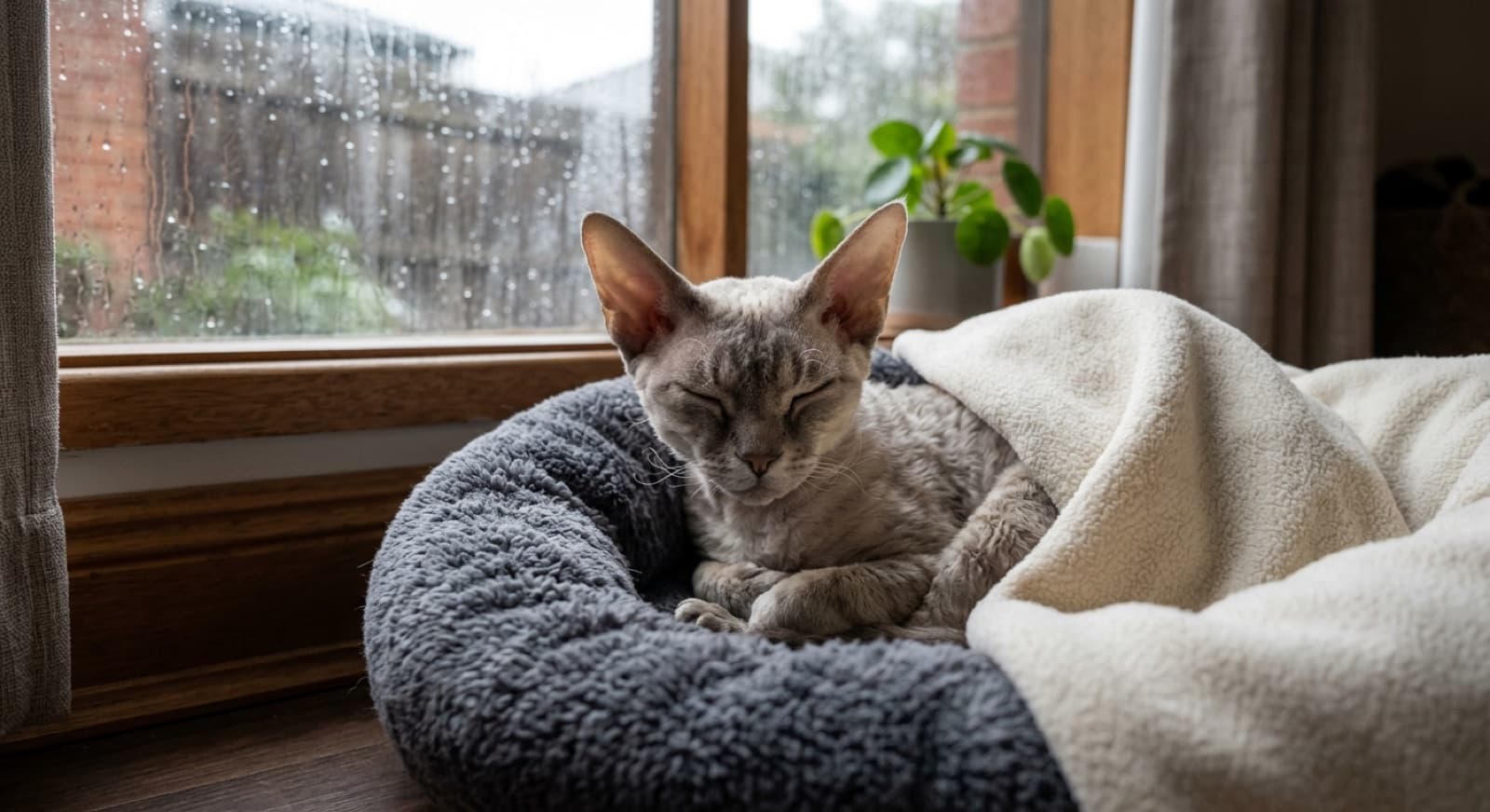
A Devon Rex is a determined warmth-seeker. It will sleep under your doona, park itself on a heater vent and follow the sun around the house. Help it by setting up warm places on purpose. A self-warming bed that reflects body heat is a simple start. A pet-safe heated pad works well in colder homes, as long as it is designed for pets and the cat can always move off it. Put beds off cold floors and away from draughty doors and windows.
Many older Melbourne houses lose heat fast at night. If yours does, keep one room warm overnight and make it the cat's room. A soft jumper can help some cats, but it is optional, and only worth using if the cat accepts it calmly. Be careful with open heaters and fireplaces: a cold cat will sit too close, so use guards. An indoor cat in a warm home is a happy Devon Rex, which is one more reason the indoor versus outdoor cats guide recommends contained living.
Sun and heat on summer days
In summer the job flips. The thin coat gives less sun protection than a normal coat, so keep a Devon Rex out of strong midday sun, especially on the ears and belly. Close blinds on hot, sunny windows during the middle of the day and shade any catio. Never use human sunscreen on a cat, as some ingredients are toxic if licked, and ask your vet if you want a cat-safe product.
Heatwave days are the real danger window. Keep the cat in the coolest room with fresh water, run a fan or air conditioning, and never leave a cat in a car or a closed, hot room. Signs of heat stress include panting, drooling, restlessness and weakness. If you see them, move the cat somewhere cool, offer water and call your vet at once. For general welfare guidance, the RSPCA Australia Knowledgebase is a reliable reference.
Ready for a Devon Rex in Melbourne?
If a barely-brush coat, a little skin care and a warm lap sound like your kind of cat, check the Devon Rex and curly-coated crosses listed across Melbourne rescues, and set an alert.
See Available Devon Rex →Low shedding is not the same as allergy-free
Because the coat is short and sparse, a Devon Rex leaves far less hair around the house, and some people with mild cat allergies find the breed easier to live with. That is often why people search for it. But no cat is truly hypoallergenic. The allergens that trigger reactions come from saliva and skin as well as fur, and a vet-reviewed breed profile from PetMD says the same. Spend real time with the individual cat before you commit, and see the Melbourne lower-allergen cats page for other options.
A simple weekly routine
- Daily: hand strokes, a quick look at the skin, fresh water, and a warm bed available.
- Weekly: check and wipe the outer ears, look at the chin, wash the food bowls well.
- Every couple of weeks: trim the claws.
- When greasy: a gentle bath in a warm room, then thorough drying.
- Each season change: move beds for warmth or shade, and check windows and catio shade.
That is genuinely all most Devon Rex need. For questions about an individual cat's skin, your vet and the Australian Veterinary Association are the right places to start. If you are still deciding whether the breed suits you, the Devon Rex adoption guide covers where to look and what it costs, and the Melbourne cat adoption guide walks through the application process.
Frequently Asked Questions
How often should you brush a Devon Rex?
Hardly ever. The Devon Rex coat is fine, soft and fragile, and vigorous brushing breaks the hairs and can leave thin or bald patches. For most Devon Rex a gentle hand stroke is all the coat needs, with a soft damp cloth or a very soft brush used lightly now and then. Put away slicker brushes and deshedding tools, which are made for thicker coats and are the wrong tools for this one.
Do Devon Rex cats need baths?
Some do, occasionally, and it is about the skin rather than the coat. The sparse coat does not soak up the skin's natural oils, so they can build up and leave the cat feeling greasy. A gentle bath with a cat-safe shampoo your vet recommends keeps that in check. Bathe only when the cat is actually greasy, because over-bathing can dry the skin out. In Melbourne, bathe in a warm room, dry the cat thoroughly and keep it warm afterwards, since a wet, thin-coated cat chills fast on a cool day.
Why does my Devon Rex have greasy skin or waxy ears?
Because a full coat normally absorbs skin oils and the Devon Rex coat is too sparse to do that job. The oil sits on the skin and collects in the large, open ears, so the breed tends to build up wax faster than most cats. Gentle wiping of the outer ear with a vet-recommended cat ear cleaner keeps it in check. Never push anything into the ear canal. Redness, a strong smell, dark discharge or a lot of head shaking points to an infection, so stop cleaning and see your vet.
Do Devon Rex cats feel the cold in Melbourne?
Yes. With so little fur to insulate them, Devon Rex feel the cold more than most cats, and Melbourne winter nights commonly drop to around 6 to 7 degrees. Expect your cat to burrow under the doona, sit on the heater vent or claim your lap. Give it a heated or self-warming bed in a draught-free spot, blankets to tunnel into, and a warm room at night. Any heat source should be safe for pets and let the cat move away when it gets too warm.
Should a Devon Rex wear a jumper in winter?
Some do well in one, but it is optional. A soft, well-fitting cat jumper can help a thin-coated cat on a cold Melbourne night or in a chilly house, as long as the cat accepts it and moves normally. Introduce it slowly with treats, take it off if the cat seems stressed, and never leave a jumper on unsupervised for long periods or when the house is warm. A warm bed and a heated room matter more than clothing.
Can a Devon Rex get sunburnt?
It can. The sparse coat gives less protection than a normal coat, especially on thin areas like the ears and belly. Keep a Devon Rex out of strong direct sun in the middle of the day, including on hot sunny windowsills, and shade any catio. Never put human sunscreen on a cat, because some ingredients are toxic to cats if licked. Ask your vet if you want a cat-safe option.
How do I keep a Devon Rex safe on a Melbourne heatwave day?
Keep it inside in the coolest room, with fresh water, shade and a fan or air conditioning running. Melbourne summers can spike above 40 degrees, and a cat has no good way to cool down in a closed, hot room. Never leave any cat in a car. Watch for panting, drooling, restlessness or weakness, and if you see them, move the cat somewhere cool and call your vet straight away, because heatstroke is an emergency. Once the house is cool, a Devon Rex may still seek a warm nook, which is fine.
Do Devon Rex cats get chin acne?
They can, like many cats, and their oilier skin may make it a little more likely. It shows as blackheads or small bumps on the chin. Swap plastic food and water bowls for ceramic, glass or stainless steel and wash them daily, which often helps. Mild acne is a hygiene issue. A red, swollen or sore chin is a vet visit, so do not squeeze or scrub it.
Do Devon Rex cats shed?
Very little compared with most cats, because the coat is short and sparse. You will find far less hair on clothes and furniture. That does not make the breed allergy-free: cat allergens come from saliva and skin as well as fur, and no cat is truly hypoallergenic. If allergies are a concern, spend time with the specific cat before adopting.
What grooming gear do I need for a Devon Rex?
Not much. A soft cloth or very soft brush for the occasional wipe, a vet-recommended cat-safe shampoo for when the skin gets greasy, a vet-recommended cat ear cleaner and cotton pads, nail clippers for regular trims, and ceramic or stainless steel bowls. For Melbourne, add a heated or self-warming bed and a couple of fleece blankets. Skip slicker brushes, combs and deshedding tools.
Keep reading
Adoptable Devon Rex in Melbourne
The Devon Rex breed profile and any Devon Rex or curly-coated crosses currently listed across Melbourne rescues.
Devon Rex Adoption in Melbourne
Why they are rare in rescue, adopt versus buy costs, and the Pet Exchange Register check.
Devon Rex Health Issues
The inherited muscle condition and its DNA test, HCM, kneecaps, blood type, skin and dental care.
Indoor vs Outdoor Cats in Melbourne
Catios, council curfews and keeping a contained cat happy, warm and stimulated.