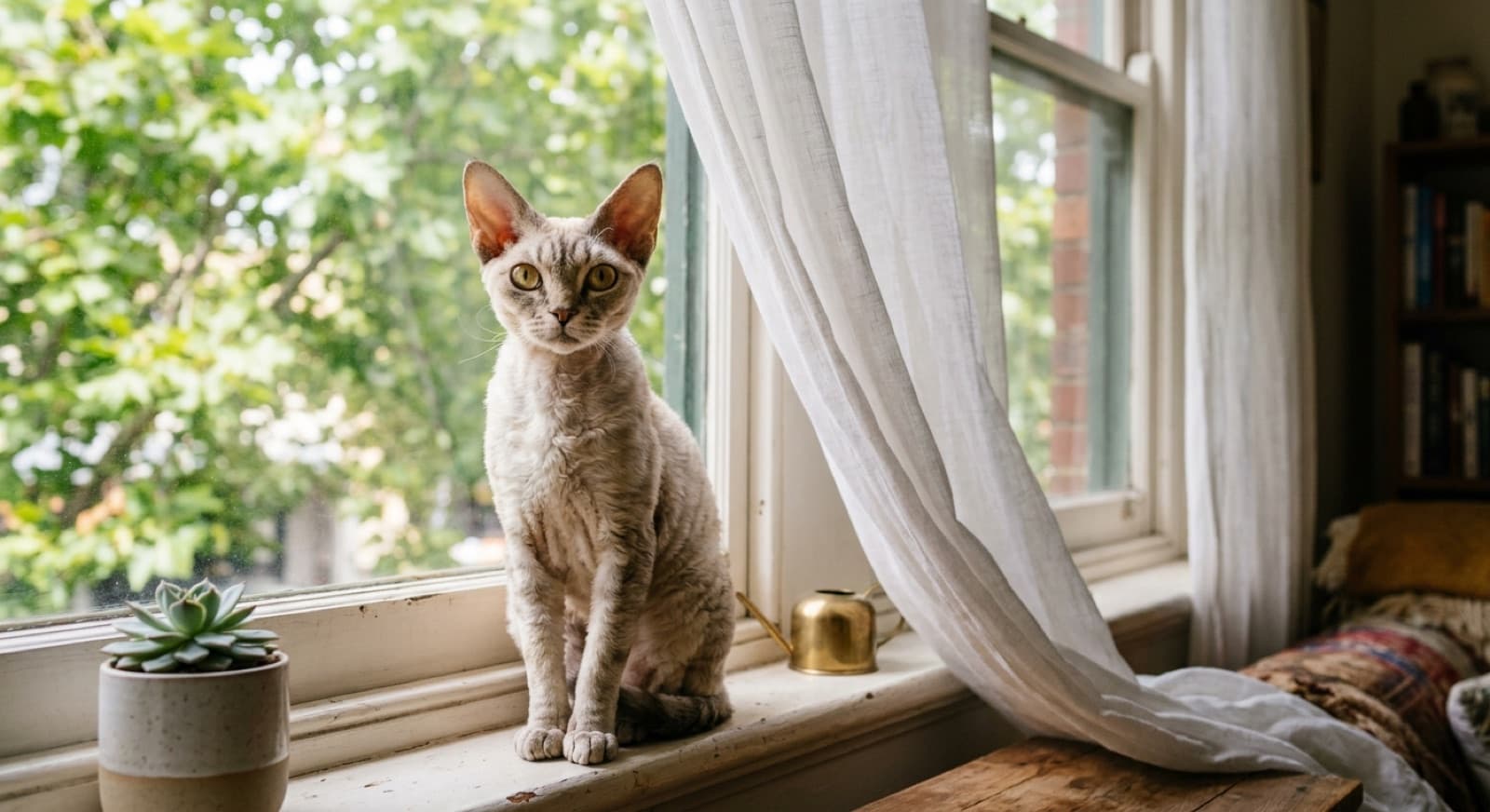
The short answer
The Devon Rex conditions to know are inherited myopathy (a muscle-weakness disorder with a DNA test), hypertrophic cardiomyopathy, patellar luxation, and type B blood, which matters for transfusions. Its sparse coat also means oily skin, waxy ears and sensitivity to cold and sun. In Melbourne, paralysis ticks are a low local risk, so the parasite focus is fleas and worms year-round. Book annual vet checks, keep the cat lean and warm, and insure while it is young. This is general information, not veterinary advice.
A quick framing before the details. Plenty of Devon Rex live long, healthy lives, so this is not a list of things that will go wrong. It is a list of things worth recognising early. For general cat health guidance alongside this article, the RSPCA Australia Knowledgebase and the Australian Veterinary Association are reliable starting points, and your own vet is always the final word on an individual cat.
Devon Rex health at a glance
| Condition | What it is | Signs to watch | Screening or management |
|---|---|---|---|
| Inherited myopathy (CMS) | Muscle weakness from a COLQ gene mutation | Low head carriage, tiring, trouble swallowing, in young kittens | DNA test for breeding cats |
| Hypertrophic cardiomyopathy | Thickened heart muscle | Often none early; later fast breathing, weakness | Vet heart checks; echocardiogram if concerned |
| Patellar luxation | Slipping kneecap | Skipping or hopping step, reluctance to jump | Vet assessment; keep the cat lean |
| Type B blood | A less common blood group, frequent in the breed | None; matters for transfusions | Blood typing and crossmatching before transfusion |
| Oily skin and waxy ears | Oil build-up under a sparse coat | Greasy feel; redness or smell means infection | Occasional baths, gentle ear cleaning |
| Dental disease | Plaque and gum disease, common in all cats | Bad breath, drooling, pawing at the mouth | Annual check, home brushing, professional cleans |
Devon Rex myopathy: the breed-specific muscle condition
The one condition specific to the breed (and to the related Sphynx) is Devon Rex myopathy, long called spasticity. Research published in PLOS ONE linked it to a mutation in the COLQ gene and reclassified it as a congenital myasthenic syndrome (CMS). The mutation disrupts how nerves signal to muscles, so affected cats tire quickly and have weak muscles.
Signs usually appear in young kittens. They include a head held low, shoulder blades that stick up, tiring after play, and difficulty eating or swallowing, sometimes with choking. The condition is inherited recessively, which means a cat needs two copies of the mutation to be affected, and a carrier with one copy is healthy.
The reassuring part is that a DNA test exists, so responsible breeders can identify carriers and avoid producing affected kittens. If you buy a kitten, ask whether the parents were tested. A rescue cat's status is usually unknown, but an adult that eats, plays and climbs normally is not showing the disease. If you ever notice weakness or swallowing trouble, see your vet promptly.
Hypertrophic cardiomyopathy: the heart concern
Hypertrophic cardiomyopathy, or HCM, is the most common heart disease in cats, according to the Cornell Feline Health Center, and a vet-reviewed breed profile from PetMD lists it among Devon Rex health concerns. In HCM the heart muscle thickens, the heart pumps less efficiently, and over time it can lead to heart failure or blood clots.
HCM can develop quietly, which is why routine vet checks matter. A vet listening to the heart may pick up a murmur or irregular rhythm. If there is concern, the next step is an echocardiogram (a heart ultrasound), which Cornell describes as the gold standard for diagnosis, often done by a veterinary cardiologist. There is no way to prevent HCM, but catching it early lets your vet manage it. Treat fast, laboured or open-mouthed breathing, sudden weakness, collapse or a suddenly painful, dragging back leg as an emergency.
Kneecaps and joints
Patellar luxation, where the kneecap slips out of its groove, is also listed for the breed. You may see an occasional skip or hop in the stride, a cat that holds a back leg up for a few steps, or reluctance to jump onto high places. Mild cases can cause little trouble. More severe ones may need treatment, sometimes surgery, so have your vet assess any change in how your cat moves.
PetMD's profile also lists hip dysplasia and polycystic kidney disease among conditions reported in the breed. These are less commonly discussed for the Devon Rex, but they are good reasons to keep up annual checks and blood tests as the cat ages. Keeping a Devon Rex lean is the simplest thing you can do for its joints.
Blood type B: why it matters
Most cats have type A blood. The Devon Rex is one of the breeds where type B is common: a veterinary review in dvm360 reports that over 30% of Devon Rex have type B blood. Cats carry strong natural antibodies against the type they do not have, so a mismatched transfusion can cause a serious reaction.
Your vet will blood type and crossmatch before any transfusion regardless of breed. Still, knowing your Devon Rex's type can save time in an emergency, and it is worth asking your vet whether to type the cat during a routine visit or before planned surgery. The same issue affects breeding cats, which is one more reason breed-savvy breeders blood type their queens.
Thinking of adopting a Devon Rex in Melbourne?
A rescue cat arrives desexed, vaccinated, microchipped and vet-checked, and the rescue can share what it knows about the cat's health. Check the Devon Rex and curly-coated crosses listed across Melbourne rescues.
See Available Devon Rex →Skin, ears and teeth
The Devon Rex coat is too sparse to absorb the oils the skin makes, so those oils build up on the skin and in the big, open ears. A greasy feel and some extra ear wax are normal for the breed and are handled with occasional gentle baths and gentle cleaning of the outer ear. The method is in the Devon Rex coat and skin care guide. Redness, sores, scaly patches, a bad smell or constant scratching are not normal. Those can mean a yeast or bacterial infection, which needs a vet diagnosis, not home treatment.
Dental disease is one of the most common problems in cats of every breed. Cats hide mouth pain well, so watch for bad breath, drooling, pawing at the mouth or a sudden preference for soft food. Gentle tooth brushing at home, introduced slowly, slows plaque build-up, and your vet will advise when a professional clean under anaesthetic is due.
Parasites and climate: the Melbourne picture
Here Melbourne differs from Sydney or Brisbane. The paralysis tick that causes most tick paralysis in Australia is an eastern-seaboard species, and it does not establish in metropolitan Melbourne's climate, so local risk is low. The risk returns if your cat travels to endemic areas such as the NSW coast or East Gippsland. Before a trip, ask your vet about a cat-safe tick product, and never use a dog product on a cat, because some are toxic to cats.
The year-round parasites to manage in Melbourne are fleas and intestinal worms, so keep your cat on a vet-recommended prevention plan, and ask your vet whether heartworm prevention is advised for your cat. Climate matters for this breed too. A thin coat means a Devon Rex feels cold winter nights, when temperatures commonly fall to around 6 to 7 degrees, and has less protection from strong sun on summer days above 40. A warm, draught-free home in winter and a cool, shaded one in summer are part of its health care. Heatstroke is an emergency for any cat.
Lifespan and a preventive routine
A commonly cited lifespan for the Devon Rex is about 9 to 15 years, and many indoor cats do well into their teens. Most of what shortens a cat's life is preventable or treatable when caught early. A simple routine covers it:
- Annual vet check, with a heart check every visit and more frequent checks as the cat ages.
- Vaccinations kept up to date on your vet's schedule.
- Flea and worm prevention year-round, plus tick prevention before travel to endemic areas.
- Dental care at home and professional cleans when advised.
- A lean weight, measured meals and daily play.
- Indoor or contained living, with warmth in winter and shade in summer.
Older cats benefit from extra monitoring, so plan for more frequent checks once your cat reaches its senior years. The Melbourne senior cats page lists older cats waiting for homes, which can suit a quieter household.
The vet budget and the case for insurance
A generally healthy breed still benefits from planning, because the biggest bills are usually unexpected. An echocardiogram with a veterinary cardiologist, a dental procedure under anaesthetic, kneecap surgery or an after-hours emergency can each run from several hundred to several thousand dollars.
Insurance makes sense for many Devon Rex owners, and the most important rule is to start while the cat is young and healthy, because pre-existing conditions are usually excluded. Australian insurers including Bow Wow Meow, Petplan Australia and RSPCA Pet Insurance offer cat cover. Compare exclusions, the annual limit and the excess, not just the premium. For the full cost of owning a cat here, see the cat adoption costs guide.
When to see a vet, and where in Melbourne
Treat these as emergencies: fast, laboured or open-mouthed breathing; sudden weakness, collapse or a dragging back leg; signs of heatstroke; and choking or being unable to swallow. Book a prompt visit for skin sores, redness or a bad smell, ear discharge, a skip in the stride, mouth pain, a cat that stops eating or hides for more than a day, and any weakness or tiring you have not seen before.
Melbourne has several 24-hour options. Lort Smith in North Melbourne runs an emergency service open 365 days, from 8am to 10pm. The Animal Referral Hospital at Essendon Fields and the Animal Emergency Centre at Mount Waverley, both part of the Animal Referral & Emergency Network, provide 24/7 emergency and specialist care, and your vet can refer you to a veterinary cardiologist if a heart scan is needed. Save the nearest one in your phone now.
For where to find a Devon Rex and what it costs, see the Devon Rex adoption guide. If you are adopting a kitten, the new kitten guide covers vaccinations and first vet visits.
Frequently Asked Questions
What health problems are Devon Rex cats prone to?
The main ones to know are an inherited muscle-weakness condition called Devon Rex myopathy (also known as congenital myasthenic syndrome), hypertrophic cardiomyopathy (a heart-muscle disease), and patellar luxation (a slipping kneecap). The breed also has a relatively high share of type B blood, which matters if a cat ever needs a transfusion, and its sparse coat brings oily skin and waxy ears. Dental disease is common, as in most cats. None of this makes a Devon Rex sickly, but regular vet checks matter. This is general information, not veterinary advice.
What is Devon Rex myopathy?
It is an inherited condition, found in Devon Rex and Sphynx cats, that causes muscle weakness and tiring with exercise. Researchers have linked it to a mutation in a gene called COLQ, and it is now classed as a congenital myasthenic syndrome. Affected cats may hold the head low, have prominent shoulder blades, tire easily, and have trouble eating or swallowing, with signs usually appearing in young kittens. It is inherited recessively, so carriers are healthy. A DNA test exists, and responsible breeders use it to avoid producing affected kittens.
Is there a DNA test for Devon Rex myopathy?
Yes. Since the COLQ mutation was identified, a DNA test has been available so breeders can identify carriers and avoid at-risk matings. If you are buying a kitten, ask the breeder whether the parents were tested and ask to see the results. A rescue cat's genetic status is usually unknown, but an adult cat that eats normally and moves and plays like any other cat is not showing the disease. If you have a concern, your vet can advise on testing.
Do Devon Rex cats get heart disease?
Hypertrophic cardiomyopathy (HCM) is listed among the breed's health concerns. In HCM the heart muscle thickens and pumps less efficiently, and it can progress with no obvious signs. A vet may hear a murmur or irregular rhythm at a routine check, and the standard way to diagnose HCM is a heart ultrasound, called an echocardiogram. There is no way to prevent it, so the goal is early detection. Treat fast, laboured or open-mouthed breathing, sudden weakness or a dragging back leg as an emergency.
What is patellar luxation in a Devon Rex?
It is a kneecap that slips out of its groove, and it is one of the conditions listed for the breed. You might notice a skip or hop in the cat's stride, a reluctance to jump, or a cat that briefly holds a back leg up. Mild cases may cause little trouble, while more severe ones can need treatment, sometimes surgery. Keeping the cat lean protects the joints. Have your vet assess any change in how the cat moves.
Why does a Devon Rex's blood type matter?
Because a large share of Devon Rex have type B blood, which is much less common in cats overall. Veterinary sources report that over 30% of Devon Rex are type B. Cats carry strong natural antibodies against the blood type they do not have, so a transfusion of the wrong type can cause a serious reaction. Vets blood type and crossmatch before any transfusion anyway, but it is worth knowing your cat's type. Ask your vet whether to type a Devon Rex at a routine visit or before surgery.
Why does my Devon Rex have greasy skin and waxy ears?
The sparse coat cannot absorb the oils the skin produces, so those oils build up on the skin and in the large, open ears. That is normal for the breed and is managed with occasional gentle baths and regular gentle cleaning of the outer ear. Redness, sores, a bad smell, scaly patches or constant scratching are not normal and can mean an infection, so see your vet rather than treating it at home.
Are paralysis ticks a risk for a Devon Rex in Melbourne?
The paralysis tick is low risk in metropolitan Melbourne, unlike coastal New South Wales and Queensland. The tick that causes most paralysis cases is an eastern-seaboard species that does not establish in Melbourne's climate. The risk returns if you travel with your cat to endemic coastal areas or East Gippsland, so ask your vet about a cat-safe tick product before a trip. Some dog tick products are toxic to cats, so never use one on a cat. Fleas and intestinal worms are the year-round parasites to manage in Melbourne.
How long do Devon Rex cats live?
A commonly cited range is about 9 to 15 years, and many indoor Devon Rex do well into their teens. Lifespan depends on the basics this guide covers: regular vet checks to catch heart disease early, good dental and skin care, a lean body weight, indoor living, and parasite prevention. A warm, indoor Melbourne home with an engaged owner gives a Devon Rex every chance of a long life.
Is pet insurance worth it for a Devon Rex?
For many owners, yes. An echocardiogram with a veterinary cardiologist, a dental procedure under anaesthetic, kneecap surgery or an after-hours emergency can each run from several hundred to several thousand dollars. Start cover while the cat is young and healthy, because pre-existing conditions are usually excluded. Australian insurers including Bow Wow Meow, Petplan Australia and RSPCA Pet Insurance offer cat cover. Compare exclusions, the annual limit and the excess, not just the premium.
Where can I get emergency vet care for a cat in Melbourne?
Melbourne has several 24-hour emergency hospitals: the Animal Referral Hospital at Essendon Fields and the Animal Emergency Centre at Mount Waverley provide 24/7 emergency care, and Advanced Vetcare runs a 24-hour hospital in Kensington. Lort Smith in North Melbourne also runs an emergency service every day from 8am to 10pm. Save the details of the one nearest you before you need it, and call ahead on the way so the team can prepare.
Keep reading
Adoptable Devon Rex in Melbourne
The Devon Rex breed profile and any Devon Rex or curly-coated crosses currently listed across Melbourne rescues.
Devon Rex Coat & Skin Care
The delicate coat, greasy skin and waxy ears, and keeping a thin-coated cat warm through a Melbourne winter.
Devon Rex Adoption in Melbourne
Why they are rare in rescue, adopt versus buy costs, and the Pet Exchange Register check.
Melbourne Cat Adoption Guide
How to apply, what rescues look for, and how to get approved to adopt a cat in Melbourne.