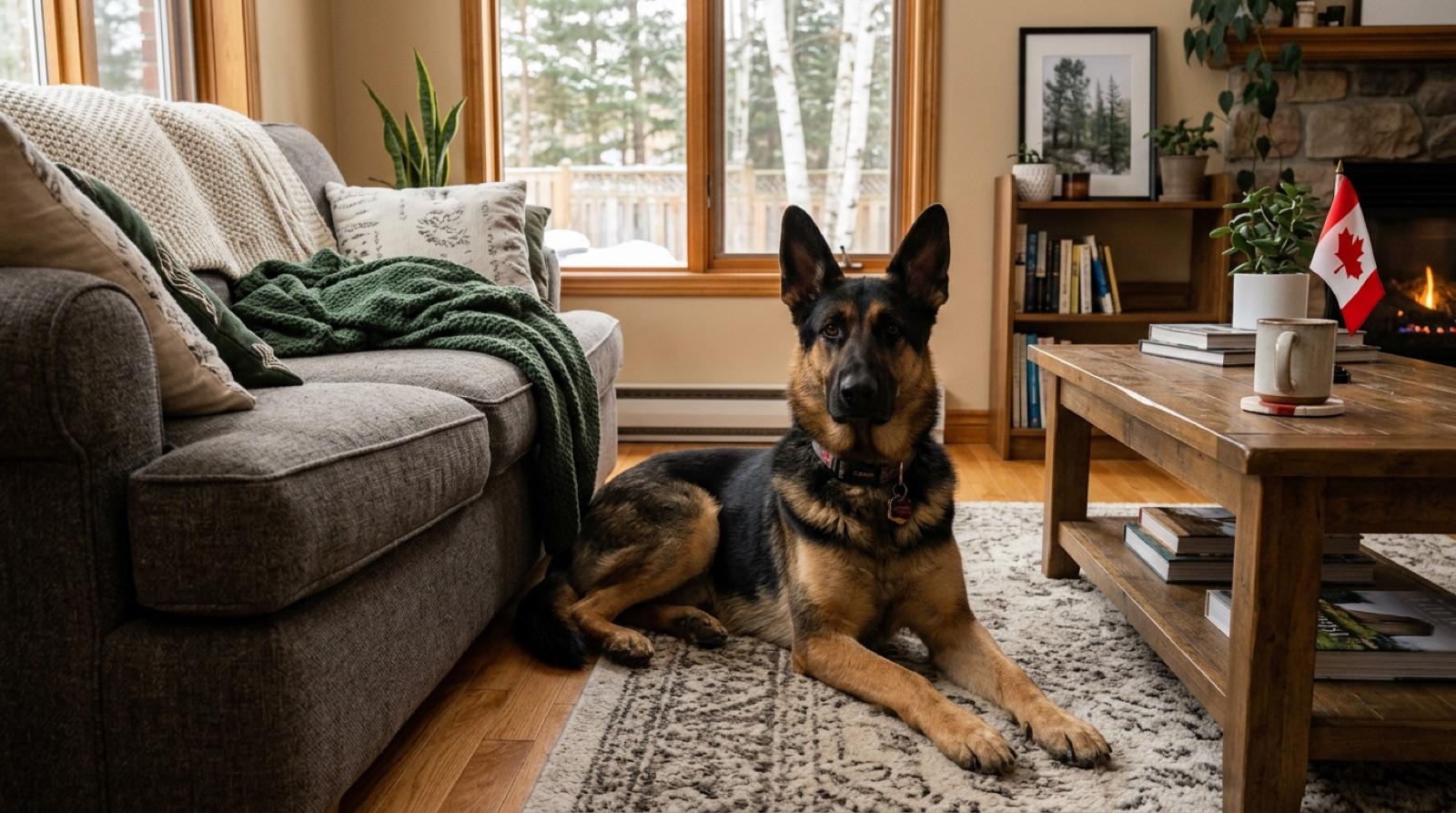
The short answer
To rehome a German Shepherd well: describe its temperament honestly, including any guarding or reactivity, screen for an experienced, active owner who is home enough, and hand over hip and elbow history if you have it. Do not advertise the dog as free to a good home. List free on LocalPetFinder and keep your dog with you while you choose, and contact a German Shepherd rescue early, because several are full or offer assisted rehoming rather than taking dogs in.
Rehome your German Shepherd on LocalPetFinder
List free, keep your dog at home until adopted, and choose the new family yourself. Your email stays private.
List your dog free →Why German Shepherds end up needing a new home
Dogs Victoria says the German Shepherd "cannot be left home alone for hours on end" and needs "stimulation and consistent training", and adds that a well-mannered German Shepherd is one of the finest companions while an unruly one "will have you at your wits' end". So common reasons are long work hours, a move to a smaller place, a new baby, or a young dog that grew bigger and stronger than the family expected.
Others are rehomed because of protectiveness. Dogs Victoria notes the breed has "an innate natural ability to guard people and property", and some dogs become wary or reactive with visitors or other dogs. If your dog's behaviour has changed suddenly, see your vet first; Animal Welfare League SA, for one, advises this because a sudden change can point to a health issue.
The right home for a German Shepherd
Dogs Victoria says the breed suits an active owner prepared to exercise the dog appropriately, with plenty of space at home, good socialisation and consistent training. In practice that means people who have owned a large, intelligent dog before, who will keep up training, and who are home enough that the dog is not alone all day.
Many German Shepherds live well with other dogs and cats once acquainted, Dogs Victoria says, if socialised well as puppies. Your dog may or may not fit that, so match the home to your dog's actual history with other animals and with children.
What to screen for
Ask every applicant: Have you owned a German Shepherd or another large working breed before? How will you train and exercise the dog, and how much time does that leave each day? Who is home during the day? Is the fencing high and secure, and are gates kept locked? Who visits regularly, including children, and how will you manage the dog around them? Does your lease or strata allow a large dog?
German Shepherd Rescue NSW suggests owners use its adoption application form as a guide to the questions to ask. Meet at least twice, let the dog meet everyone who lives in the house, and visit the new home. If your dog is wary of strangers, plan slower introductions and say so up front.
What you must disclose
Disclose guarding, reactivity and any bite, however minor, in writing. Describe how the dog behaves with visitors, at the fence, on walks with other dogs, and with children, and anything that sets it off. Sweet Shepherd Rescue Australia says it cannot assist dogs that are dangerous or human reactive, and German Shepherd Rescue Victoria asks owners to be "completely honest about any and all matters relating to your dog". Honesty protects the next family and the dog. If your dog has been declared dangerous or menacing by a council, check with your council before any transfer.
On health, Dogs Victoria lists hip dysplasia and elbow dysplasia as conditions that can occur in the breed, and says breeders must test breeding stock. If you have hip and elbow scores, X-rays, or any diagnosis of arthritis, skin, gut or ear problems, hand them over with the full vet history and say what the dog eats.
Where to rehome, and the fee
German Shepherd groups differ a lot, so read each one's terms (all read 20 November 2026). German Shepherd Rescue NSW has no kennels, asks for a dog information form, photos and paperwork, and charges a $200 rehoming fee after it has assessed your dog. German Shepherd Rescue Victoria says it is not currently taking surrender requests because of capacity limits, though urgent requests where a dog's safety or life is at risk can be emailed to it. Sweet Shepherd Rescue Australia (based in Victoria) runs an assisted rehoming program open to owners in all states and territories, with no charge to owners; your dog stays with you until a home is matched. The German Shepherd Dog Club of Victoria runs a rehoming referral service, not a rescue: it cannot take your dog and charges a $50 administration fee to the owner and to the new owner. General surrender is also possible through your state RSPCA or animal welfare league, by appointment; see the state guides.
Two German Shepherd groups advise against advertising your dog as free to a good home; German Shepherd Rescue NSW asks owners to put an amount on the advert. As a reference, not a quote: RSPCA NSW listed $500 for an adult dog (read 5 October 2026), RSPCA Victoria $500 to $1,000 for an adult dog (read 9 November 2026) and Dogs' Homes of Tasmania $450 for an adult dog, including desexing, vaccination and microchipping (read 13 November 2026). A modest fee you agree with the adopter is reasonable; LocalPetFinder's listing form has no fee field, so the amount is between you and them.
New to rehoming? Start with our step-by-step guide to rehoming a dog for free, our guide to screening adopters, and the reasons a modest fee beats free to good home.
How rehoming your German Shepherd on LocalPetFinder works
- List for free. Add up to five photos, with the first as the cover, and describe your dog honestly: age, health, how they are with children, dogs and cats, and what kind of home suits them. There is no listing fee.
- We review it. Every listing is checked before it goes live, usually within 24 to 48 hours.
- Adopters contact you privately. Your email address is never shown on the listing. Enquiries reach you through the site, and you choose who to reply to.
- You choose the family. Your dog stays with you while you screen applicants, meet them and decide. When your dog has gone to their new home, mark the listing adopted using the link in the email we send when your listing goes live.
What the law asks of you, by state
Rehoming a German Shepherd is legal everywhere in Australia, but each state and territory sets its own rules for advertising a pet and passing it on, even for free. In every state, transfer the microchip registration to the new owner at the handover.
New South Wales
Since 1 July 2019, every ad to sell or give away a cat or dog must include an identification number: the microchip number, a breeder identification number or a rehoming organisation number. Transfer the microchip through the NSW Pet Registry.
Victoria
An ad to sell or give away a dog or cat must show the animal’s microchip number and a Pet Exchange Register source number. It is an offence to advertise without both.
Australian Capital Territory
Anyone rehoming a cat or dog, even for free, must include the microchip number plus an identifier for the advertiser (such as their name) in the ad, or a breeding licence number.
Queensland
Giving away, selling or advertising a dog born on or after 26 May 2017 needs a supply number. This applies to dogs only, not cats.
Western Australia
A cat must be microchipped and sterilised before it is sold or given away (or come with a prepaid sterilisation voucher if it is too young), and a dog must be microchipped before it is transferred.
South Australia
Giving a pet away free needs no breeder registration. Anyone breeding dogs or cats to sell, including after an accidental litter, must register with Dogs and Cats Online and show the number in ads.
Tasmania
Rehoming a dog, including giving it away, means handing the new owner a vet-signed vaccination certificate and the date of its last vet health check, and disclosing any known health or behaviour problems. Puppy ads must show a microchip number.
The Northern Territory has no territory-wide rule we could confirm; check with your council. Each state guide linked above has the detail and the official sources.
Scam rules to follow
- Meet anyone interested in person, or at least on a video call, before you agree to anything.
- Never send your dog anywhere before you have met the new owner, and never pay for transport, crates or “insurance” on a stranger's behalf.
- Never accept an overpayment or refund the difference. That is a common scam pattern.
- Keep the conversation on the site until you have decided someone is genuine.
Our rehoming safety guide covers the warning signs in more detail.
Looking to adopt a German Shepherd instead?
Browse German Shepherds available for adoption from rescues and owners across Australia.
See adoptable German Shepherds →Frequently asked questions
Are German Shepherds hard to rehome?+
They can take time, because the right home needs experience, time and space for a large, clever dog. A detailed, honest listing, good photos and help from a German Shepherd rescue or club service all widen the search. Patience is better than placing the dog with someone who is not ready.
Should I advertise my German Shepherd as free to a good home?+
No. German Shepherd Rescue Victoria strongly advises against it because you cannot verify who will take the dog, and German Shepherd Rescue NSW asks owners to put an amount on the advert. Agree a modest fee and screen every applicant in person.
My German Shepherd is reactive or barks at strangers. Can I still rehome him?+
Yes, with full disclosure and a careful match. Describe exactly what sets your dog off and what helps, and look for an experienced owner with a quiet home. Some rescues cannot take dogs that have harmed a person, so talk to your vet and a reward-based behaviour professional as well.
Will a German Shepherd rescue take my dog?+
Possibly, but check first. On 20 November 2026 German Shepherd Rescue Victoria was not taking surrender requests, German Shepherd Rescue NSW rehomes dogs after assessment for a $200 fee, and Sweet Shepherd Rescue Australia offers free assisted rehoming in every state while the dog stays with you.
What health records should I pass on?+
Everything you have: vaccination and desexing certificates, the full vet history, and any hip or elbow scores or X-rays. Dogs Victoria lists hip and elbow dysplasia as conditions that can occur in the breed, so joint history helps the new owner plan.
How do I rehome my German Shepherd for free?+
List your German Shepherd on LocalPetFinder at no cost and keep it at home while you screen applicants, or ask Sweet Shepherd Rescue Australia about its free assisted rehoming. Choose an experienced home, meet more than once, and transfer the microchip through your state or territory's pet registry at the handover.
Related guides
Rehoming a Staffy anywhere in Australia? Why Staffies need new homes, what to screen for, what to disclose, and which Staffy rescues take dogs.
Rehoming a greyhound in Australia? Call the adoption program first, then screen for prey drive and leash habits. State muzzle rules and fees, checked.
Rehoming a Kelpie in Australia? Why Kelpies need new homes, the active home to look for, what to screen for and disclose, and working-dog rescue help.
A no-judgment framework and a three-week clarity protocol so you decide with evidence.
Every guide on rehoming a dog or cat in Australia, plus how to list for free.
Sources
Rehoming guides for your state
Surrender options, the local law and the help that lets you keep your pet are different in every state, territory and in New Zealand. Each guide covers the shelters, the rules and the owner-to-owner route where you live.