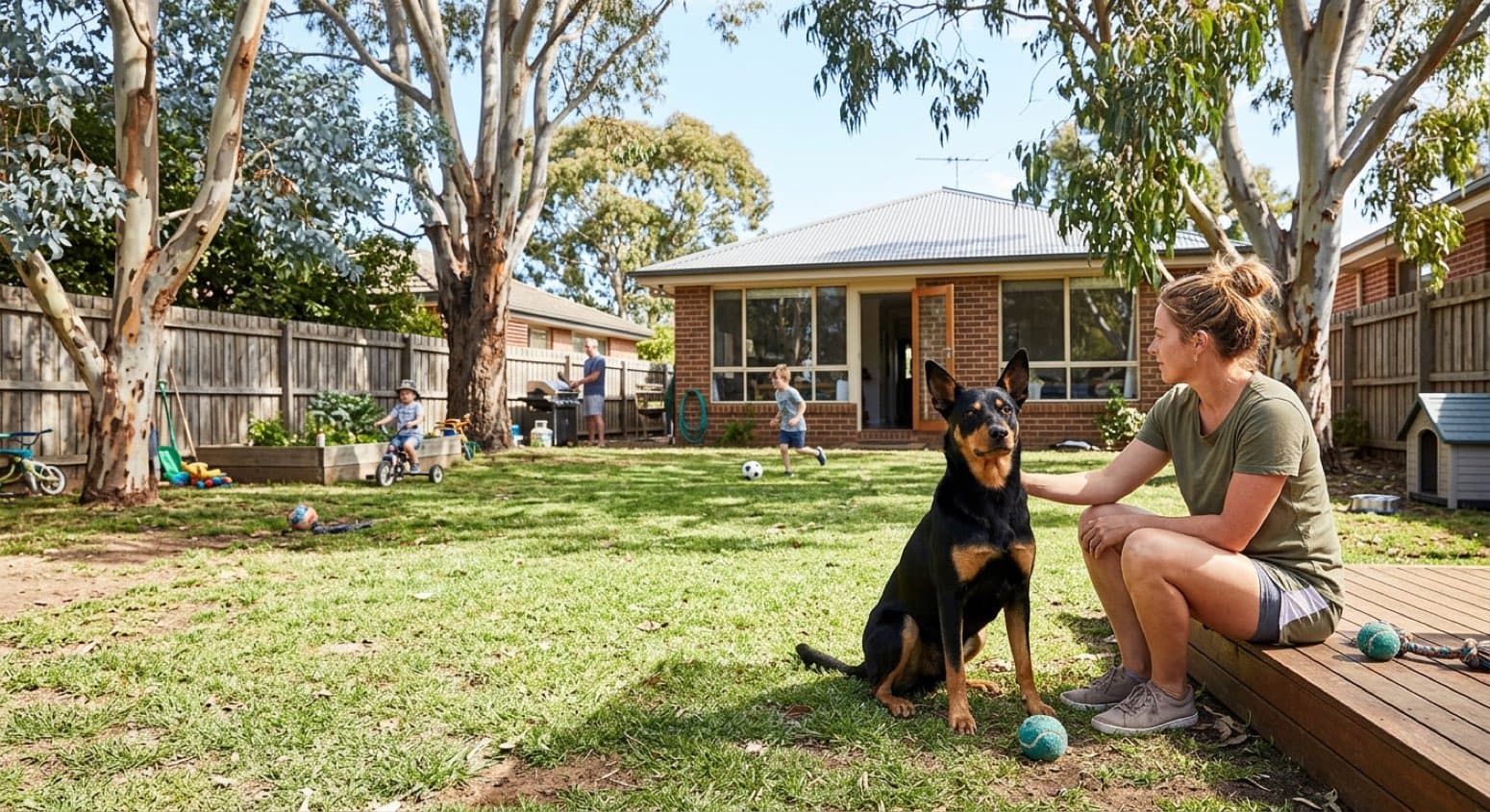
The short answer
To rehome a Kelpie well: describe its energy and drive honestly, screen for an active home that will exercise and train it every day, and do not assume it needs a farm. Disclose herding habits such as nipping or chasing. List free on LocalPetFinder and keep your Kelpie at home while you choose. Working-dog rescues currently take surrenders only in limited cases, so private rehoming is often the realistic route.
Rehome your Kelpie on LocalPetFinder
List free, keep your dog at home until adopted, and choose the new family yourself. Your email stays private.
List your dog free →Why Kelpies end up needing a new home
A common story is a mismatch of energy. Dogs Victoria describes Kelpies as cheeky and mischievous dogs that "thrive on company and activity", and a young Kelpie left alone in a suburban yard with nothing to do can dig, bark, escape or chew.
Other common reasons are a move to a place with less time or space, a new baby, or a dog that turned out not to suit farm work. Australian Working Dog Rescue makes a pointed observation on its own rehoming page: reasons like "it needs land to run" or "my yard is too small" are common, yet yard size is rarely the real issue for working breeds that suit suburban life. Time and engagement matter more than acres.
The right home for a Kelpie
The right home is active and involved: people who run, hike, cycle with a dog trailing safely, or do dog sports such as agility, herding trials or scent work, and who are around enough that the dog is not alone all day. Dogs Victoria says the breed adapts well to being a family pet and enjoys companionship, and that children and pets should always be supervised together.
A farm is not automatically better. A Kelpie that has never worked stock may not suit a working role, and Australian Working Dog Rescue suggests having a dog instinct tested by a professional if you think it really needs to work. If a farmer applies, ask what the dog's job would be, where it would sleep, and what happens to it if it does not work out.
What to screen for
Ask every applicant: How much exercise will the dog get each day, and what kind? Who is home during the day, and how long would the dog be alone? Is your fencing high and secure all the way round, with no gaps under gates? Do you have young children, cats, chooks or other small animals the dog might try to herd or chase? Have you trained an energetic dog before, and are you willing to do more?
Then watch the meeting. A good applicant asks about the dog's routine and quirks and wants to see it on a walk. Someone who says the dog will "just run around the yard" is describing the life that often led to the rehome in the first place.
What you must disclose
Herding behaviour first: nipping at heels, chasing bikes, cars, children or other pets, and any time it has caused an injury or a near miss. Also escaping, digging and barking, how long the dog copes alone, and how it reacts to strangers. Dogs Victoria notes Kelpies can be reserved with strangers, so say how yours greets visitors.
On health, pass on all vet records. Dogs Victoria lists Progressive Retinal Atrophy (PRA, an inherited eye disease) and cerebellar abiotrophy (a neurological condition affecting coordination) as conditions that occur. If your dog has had DNA tests, or you know the parents were tested, share the results, along with any injuries from running or working.
Where to rehome, and the fee
Australian Working Dog Rescue International rehomes Kelpies, Border Collies, Cattle Dogs and Koolies through foster homes and lists dogs by state. Its rehoming page (read 20 November 2026) says it is currently unable to take dogs for surrender unless they are puppies or critically urgent, that its priority is dogs in pounds, and that owners can complete a rehoming form in urgent situations. Other working-breed rescues listed on PetRescue may have room, so ask early. General surrender is possible through your state RSPCA or animal welfare league, by appointment; see the state guides. Animal Welfare League SA has paused new rehoming requests. Because rescue places are limited, a careful private rehoming that keeps your Kelpie at home until the handover is often the most realistic option.
As a reference, not a quote: RSPCA NSW listed $500 for an adult dog (read 5 October 2026), RSPCA Victoria $500 to $1,000 for an adult dog (read 9 November 2026) and Dogs' Homes of Tasmania $450 for an adult dog, including desexing, vaccination and microchipping (read 13 November 2026). For a private rehoming, a modest fee you agree with the adopter is reasonable if your Kelpie is desexed, vaccinated and microchipped. LocalPetFinder's listing form has no fee field, so the amount is between you and the adopter.
New to rehoming? Start with our step-by-step guide to rehoming a dog for free, our guide to screening adopters, and the reasons a modest fee beats free to good home.
How rehoming your Kelpie on LocalPetFinder works
- List for free. Add up to five photos, with the first as the cover, and describe your dog honestly: age, health, how they are with children, dogs and cats, and what kind of home suits them. There is no listing fee.
- We review it. Every listing is checked before it goes live, usually within 24 to 48 hours.
- Adopters contact you privately. Your email address is never shown on the listing. Enquiries reach you through the site, and you choose who to reply to.
- You choose the family. Your dog stays with you while you screen applicants, meet them and decide. When your dog has gone to their new home, mark the listing adopted using the link in the email we send when your listing goes live.
What the law asks of you, by state
Rehoming a Kelpie is legal everywhere in Australia, but each state and territory sets its own rules for advertising a pet and passing it on, even for free. In every state, transfer the microchip registration to the new owner at the handover.
New South Wales
Since 1 July 2019, every ad to sell or give away a cat or dog must include an identification number: the microchip number, a breeder identification number or a rehoming organisation number. Transfer the microchip through the NSW Pet Registry.
Victoria
An ad to sell or give away a dog or cat must show the animal’s microchip number and a Pet Exchange Register source number. It is an offence to advertise without both.
Australian Capital Territory
Anyone rehoming a cat or dog, even for free, must include the microchip number plus an identifier for the advertiser (such as their name) in the ad, or a breeding licence number.
Queensland
Giving away, selling or advertising a dog born on or after 26 May 2017 needs a supply number. This applies to dogs only, not cats.
Western Australia
A cat must be microchipped and sterilised before it is sold or given away (or come with a prepaid sterilisation voucher if it is too young), and a dog must be microchipped before it is transferred.
South Australia
Giving a pet away free needs no breeder registration. Anyone breeding dogs or cats to sell, including after an accidental litter, must register with Dogs and Cats Online and show the number in ads.
Tasmania
Rehoming a dog, including giving it away, means handing the new owner a vet-signed vaccination certificate and the date of its last vet health check, and disclosing any known health or behaviour problems. Puppy ads must show a microchip number.
The Northern Territory has no territory-wide rule we could confirm; check with your council. Each state guide linked above has the detail and the official sources.
Scam rules to follow
- Meet anyone interested in person, or at least on a video call, before you agree to anything.
- Never send your dog anywhere before you have met the new owner, and never pay for transport, crates or “insurance” on a stranger's behalf.
- Never accept an overpayment or refund the difference. That is a common scam pattern.
- Keep the conversation on the site until you have decided someone is genuine.
Our rehoming safety guide covers the warning signs in more detail.
Looking to adopt a Kelpie instead?
Browse Kelpies available for adoption from rescues and owners across Australia.
See adoptable Kelpies →Frequently asked questions
Are Kelpies hard to rehome?+
Not if you find the right kind of home. Plenty of active people want a smart, driven dog; the work is screening out homes that would leave a Kelpie alone in a yard. An honest listing that describes the dog's energy and what it loves to do brings in the right applicants.
Does my Kelpie need to go to a farm?+
Usually not. Australian Working Dog Rescue says yard size is rarely the real issue for working breeds that suit suburban life; company, exercise and training matter more. If you think your dog genuinely needs to work, it suggests having it instinct tested by a professional before you look for a working home.
My Kelpie nips heels and chases bikes. Do I have to disclose that?+
Yes. Many working-breed dogs show some herding behaviour, but the new owner needs to know about it to keep children, visitors and the dog safe. Describe when it happens and any time it has caused an injury, and choose a home that can supervise and train around it.
Will a working-dog rescue take my Kelpie?+
Maybe not straight away. Australian Working Dog Rescue said on 20 November 2026 that it was unable to take surrenders unless the dog is a puppy or the case is critically urgent, because its priority is dogs in pounds. Ask early, and plan a private rehoming in parallel.
Should I charge a rehoming fee for my Kelpie?+
A modest agreed fee is reasonable and helps filter impulse enquiries, especially for a young, striking dog. The screening matters far more than the amount, so meet applicants, check their fencing and routine, and never hand the dog to someone you have not met.
How do I rehome my Kelpie for free?+
List your Kelpie on LocalPetFinder at no cost and keep it at home while you screen applicants. Choose an active, involved family, meet them more than once, and transfer the microchip through your state or territory's pet registry at the handover, along with the vet and vaccination records.
Related guides
Rehoming a Staffy anywhere in Australia? Why Staffies need new homes, what to screen for, what to disclose, and which Staffy rescues take dogs.
Rehoming a greyhound in Australia? Call the adoption program first, then screen for prey drive and leash habits. State muzzle rules and fees, checked.
Rehoming a Border Collie in Australia? Why they need new homes, the active home to find, what to screen for and disclose, and Border Collie rescue help.
A no-judgment framework and a three-week clarity protocol so you decide with evidence.
Every guide on rehoming a dog or cat in Australia, plus how to list for free.
Sources
Rehoming guides for your state
Surrender options, the local law and the help that lets you keep your pet are different in every state, territory and in New Zealand. Each guide covers the shelters, the rules and the owner-to-owner route where you live.