The short answer
Whippets are one of the healthiest dog breeds, with few inherited problems and a long life of around 12 to 15 years. The key practical notes are anaesthesia sensitivity, thin skin, and feeling the cold. Because they are sighthounds with low body fat, always tell your vet the dog is a sighthound before any procedure. Their fine skin cuts and tears more easily, and a coat helps in a Sydney winter. Less common notes include an older-dog heart murmur and a lower-but-real risk of bloat. Keep up year-round paralysis tick prevention.
A genuinely healthy breed
Most breed health guides open with a list of problems. This one gets to open with good news. The Whippet is one of the soundest of all the pedigree dog breeds. Where some purebreds carry a long list of inherited diseases, the Whippet carries very few, and the ones it does have are mostly minor and easy to plan around. If you are weighing up which breed to adopt, the Whippet's health record is a real point in its favour.
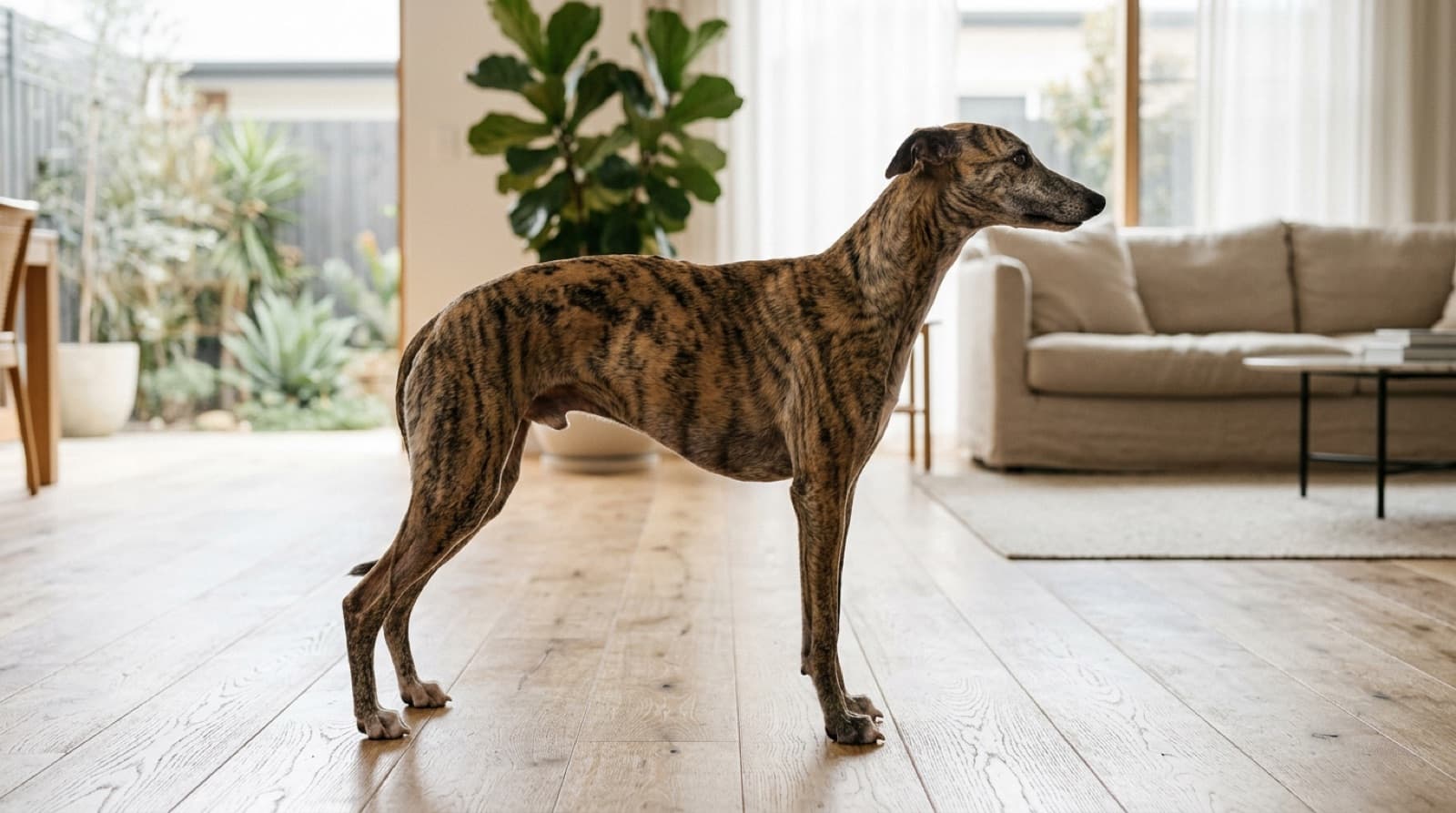
A lot of that comes down to how the breed was built. Whippets are lean, athletic sighthounds bred to sprint, without the extremes of body shape that cause trouble in some other breeds. They are not flat-faced, so they do not have the breathing problems of brachycephalic dogs. They are not heavy or oversized, so they avoid many of the joint problems that plague giant breeds. They are simply a well-proportioned, functional dog, and that shows in their long lives.
Whippets are also a long-lived breed, often reaching around 12 to 15 years. That is at the healthy end for a dog of their size. The rest of this guide is short on purpose, because there is genuinely not much to warn you about. What follows are the few things worth knowing, starting with the one that matters most.
Anaesthesia sensitivity: the one note that really matters
If you remember one thing about Whippet health, make it this. Like other sighthounds, Whippets can be more sensitive to anaesthetics and sedatives than the average dog. It is the single most important practical health note for the breed, and it is easy to manage once you know about it.
The reason is their build. Sighthounds have very low body fat and a somewhat different metabolism from most dogs. Many anaesthetic drugs are taken up and stored by body fat, so a very lean dog with little fat to soak them up can react more strongly to a standard dose or take longer to wake up and recover. This is a well-recognised trait across sighthounds, from Greyhounds to Whippets, and experienced vets know to adjust for it.
The action for you is simple: always tell your vet the dog is a sighthound before any procedure that involves anaesthetic or sedation. That includes surgery, a dental clean under anaesthetic, and even sedation for something routine like an X-ray. A vet who knows the dog is a sighthound will plan the anaesthetic and the monitoring to suit. This is not a reason to avoid necessary care, and it is not a reason to fear a routine operation. It is simply a reason to make sure the vet has the full picture first. The Australian Veterinary Association can help you find a vet, and any good clinic will already understand sighthound anaesthesia.
For a rescue Whippet this is worth raising early. When you register with a vet, mention the dog is a sighthound and ask them to note it on the file, so it is there for every future visit.
Thin skin, injuries, and feeling the cold
Whippets have fine, thin skin over very little body fat, and a short coat that offers little padding. It gives them their sleek look, but it also means their skin cuts and tears more easily than a thicker-coated, better-padded dog. A Whippet at full sprint through bush, scrub or a wire fence can pick up scrapes and cuts that a stockier dog would shrug off.
Most of these are minor and heal quickly. For a small, shallow graze, clean it gently and keep an eye on it. But because the skin is fine, a Whippet can open up a deeper cut or a flap of skin that a sturdier dog would not, and a deep cut, a wound that will not stop bleeding, or a tear that gapes open needs veterinary attention, sometimes stitches. When in doubt, have a vet look. The RSPCA Australia Knowledgebase has general first-aid guidance, but a gaping or bleeding wound is a vet job, not a home one.
The cold is the other side of that thin coat. With so little fur and fat, Whippets feel the cold far more than most dogs and will shiver in cool weather. People are sometimes surprised this matters in Sydney, but winter mornings, a cold snap, and air-conditioning are all enough to leave a Whippet cold and miserable. This is completely normal for the breed. A well-fitting dog coat or jumper on cold days and early walks makes a real difference, and Whippets are famous for loving a warm bed with a blanket to burrow under. Give them somewhere warm to curl up and something to wear when it is cold, and they are happy.
Other things to watch, kept in proportion
Heart murmur in older dogs. Some Whippets develop a heart murmur later in life, often linked to changes in a heart valve as they age. Many murmurs are mild and simply monitored, while some point to a condition your vet will want to follow over time. This is a good reason not to skip the annual check as your dog gets older, because a vet listening to the chest is how a murmur gets picked up. If your vet hears one, they will advise whether it needs anything more than watching.
Dental disease. Whippets have relatively small, fine mouths, and like many finer-boned breeds they can be prone to dental disease and tartar build-up. Left alone, that causes pain and can affect the whole dog. Regular tooth brushing at home and dental checks with your vet keep it in hand. It is one of the easiest health problems to prevent and one of the most commonly neglected.
Eye conditions. A few inherited eye conditions turn up in the breed, as they do in most purebreds. Reputable breeders screen for them, and for a rescue dog the practical approach is the same as for any dog: if you notice cloudiness, redness, a change in vision, or your dog bumping into things, have a vet check the eyes. Most of the time a Whippet's eyes give no trouble at all.
Bloat. Whippets are deep-chested, and deep-chested dogs carry some risk of bloat, properly called gastric dilatation-volvulus or GDV. The risk in a Whippet is much lower than in a giant breed like a Great Dane, but it is not zero, so it is worth knowing the signs. The note below covers what to look for and what to do.
Emergency: bloat (GDV)
Bloat is uncommon in Whippets but it is a true emergency when it happens. Get to a vet immediately if you see a swollen, hard or distended belly, unproductive retching (trying to vomit but bringing nothing up), restlessness and pacing, drooling, or obvious pain and distress. A twisted stomach becomes life-threatening fast, and survival depends on how quickly the dog reaches a vet. Do not wait and do not try home remedies. Phone ahead to your vet or a 24/7 hospital such as SASH, which runs round-the-clock emergency care, and go straight in. Keep this in proportion, though: it is a low risk in the breed, not a common one.
Why adopting a Whippet is a good choice
The Whippet's health record makes it one of the more reassuring breeds to adopt. You are taking on a dog from a breed with few serious inherited diseases and a long life, which is a genuine advantage over breeds where health is a real worry. Add the way rescue works, and the picture gets better again.
A Whippet adopted through a reputable Sydney rescue arrives desexed, vaccinated, microchipped, treated for parasites, and vet-checked, with all of that included in the fee. You are not taking on an unassessed animal. Adopting an adult also lets you ask a foster carer how the dog actually is: how it copes with exercise, whether it feels the cold, and whether anything has shown up. That is real, lived information a puppy buyer never gets. For a healthy breed like the Whippet, a rescue dog is a low-risk, high-reward adoption. Our Whippet adoption guide for Sydney covers where to look and what it costs.
Keeping a Whippet healthy: the checklist
Because the breed is so sound, routine care does most of the work. The habits below keep a Whippet in good shape for its long life.
- Tell every vet the dog is a sighthound. Before any surgery, dental procedure or sedation, make sure the vet knows, so the anaesthetic is planned to suit. This is the most important single thing on the list.
- Book annual vet checks. Yearly while the dog is adult, then twice yearly once it is a senior, so a heart murmur, dental disease or any early change gets picked up in time.
- Look after the teeth. Regular tooth brushing at home and dental checks prevent painful disease, which finer-mouthed breeds are prone to.
- Keep the dog lean but not too thin. Whippets are naturally slim, with ribs you can feel and often see, and that is correct for the breed. Feed to keep them fit and muscled, not bony and not carrying extra weight.
- Give a coat in the cold. A thin-coated, low-fat dog feels the cold. A jumper or dog coat on cold mornings and a warm bed indoors keep them comfortable.
- Stay on year-round tick and parasite prevention. Use a vet-recommended monthly product without a gap, because the paralysis tick on the NSW coast is a fatal risk.
- Watch the skin. Check for cuts and grazes after a sprint through bush or scrub, and see a vet for any deep or bleeding wound.
The Sydney paralysis tick point
One health risk has nothing to do with the breed and everything to do with where you live. The paralysis tick is native to the east coast of Australia, including the coastal and bushland areas around Sydney, and its bite releases a toxin that causes an ascending paralysis which is fatal without veterinary treatment. It is a year-round risk here, not just a summer one, and it applies to every dog regardless of how healthy the breed is.
The response is straightforward. Keep your Whippet on a vet-recommended tick prevention product every single month with no gaps, and after any walk through bush or long grass run your hands slowly over the whole dog, including inside the ears, around the face, under the collar and between the toes, feeling for a lump. On a short-coated Whippet a tick is easier to feel than on a fluffy breed, which helps. If your dog develops a wobbly back end, a changed or weak bark, gagging or heavy breathing, treat it as an emergency and get to a vet at once. It is worth adding that Sydney heat matters too: exercise a Whippet in the cooler parts of the day in summer and carry water, so a sound dog stays a sound dog.
Browse adoptable Whippets in Sydney
The Whippet is one of the healthiest breeds you can adopt, and a rescue Whippet comes vet-checked with a foster carer who knows the dog. Browse live NSW listings and set an alert so you hear the moment a Whippet or Whippet cross comes in.
See Available Whippets →When to see the vet urgently
Whippets rarely have health emergencies, which is part of what makes them such an easy breed to own. A few situations still call for an immediate vet, day or night. Get to a vet straight away if you see any of these:
- A swollen, hard belly with unproductive retching, restlessness and drooling (possible bloat, uncommon but serious).
- A wobbly back end together with a changed or weak bark, gagging or heavy breathing (possible paralysis tick).
- A deep cut, a gaping skin tear, or a wound that will not stop bleeding, given how fine the skin is.
- Collapse, fainting, or sudden laboured breathing.
For the gradual things, such as a new heart murmur picked up at a check, tartar building on the teeth, or a change in the eyes, book a normal vet visit soon rather than waiting. When in doubt, phone your vet or a 24/7 hospital and describe what you are seeing. They would far rather you called and it was nothing than the other way around. For more on the breed before you commit, see our guide to Whippet exercise and prey drive in Sydney or the full Sydney adoption resources hub. You can also read about local rescues in our roundup of the best dog rescues in Sydney.
Frequently Asked Questions
Are Whippets a healthy breed?
Yes. The Whippet is widely considered one of the healthiest of the pedigree dog breeds, with few serious inherited diseases compared with most purebreds. They are lean, athletic dogs built for sprinting, and most live long, active lives with little more than routine vet care. That does not mean they are trouble-free, but the issues are mostly minor and practical rather than the major heart or joint diseases that define some other breeds. The honest summary is that a Whippet is a genuinely sound dog. The few things to know are anaesthesia sensitivity, their fine skin, and the fact that a lean, thin-coated dog feels the cold.
What health problems do Whippets have?
Whippets have very few major inherited health problems, which is one of the best things about the breed. The notes that matter are practical. Like other sighthounds they can be more sensitive to anaesthetics and sedatives, so your vet should always know the dog is a sighthound before any procedure. Their skin is fine and thin over low body fat, so it cuts and tears more easily than a thicker-coated dog, and they feel the cold. Less commonly, older Whippets can develop a heart murmur, they can get dental disease because of their smaller mouths, and some eye conditions turn up in the breed. Being deep-chested, they carry a low but real risk of bloat. None of this changes the picture: this is a healthy breed.
Why are Whippets sensitive to anaesthesia?
Whippets are sighthounds, and sighthounds have very low body fat and a different metabolism from most dogs, which changes how they process anaesthetics and sedatives. Many anaesthetic drugs are taken up by body fat, so a very lean dog can react more strongly or take longer to recover from a standard dose. This is a well-recognised trait across sighthounds, and experienced vets adjust their approach for it. The single most important thing you can do is tell your vet the dog is a sighthound before any surgery, dental procedure or sedation, even for something routine. A vet who knows will plan the anaesthetic accordingly. This is a matter of using the right approach, not a reason to avoid necessary care.
Do Whippets get cold easily?
Yes. Whippets have a very thin coat and very little body fat, so they feel the cold far more than most dogs and will shiver in cool weather. Even in Sydney, winter mornings, air-conditioning and cold snaps are enough to leave a Whippet cold and unhappy. This is normal for the breed, not a sign of illness. A well-fitting dog coat or jumper makes a real difference on cold days and on early walks, and Whippets are famous for loving a warm bed and a blanket to burrow under. Give them somewhere warm to curl up indoors and a coat for the cold, and they are comfortable. It is one of the easiest breed traits to manage.
How long do Whippets live?
Whippets are a long-lived breed and often reach around 12 to 15 years, which fits their reputation as one of the healthiest pedigree dogs. Their lean build, lack of major inherited disease and generally sound bodies all help. As with any dog, the years are partly in your hands. A Whippet kept at a healthy weight, given regular exercise, seen by a vet each year, and kept on year-round parasite prevention has every chance of a long, active life. Because serious inherited illness is uncommon in the breed, most of what shortens a Whippet's life is avoidable: accidents, untreated dental disease, or a missed emergency. Good routine care goes a long way.
Can Whippets get bloat?
Whippets can get bloat, but the risk is lower than in giant deep-chested breeds. Bloat, properly called gastric dilatation-volvulus or GDV, is when the stomach fills with gas and can twist on itself, which is a true emergency. Deep-chested dogs are more prone to it, and the Whippet has a deep chest, so the risk is real even though it is far lower than in breeds like the Great Dane. It is worth knowing the signs so you can act fast: a swollen or hard belly, trying to vomit but bringing nothing up, restlessness and pacing, and obvious distress. If you see these, treat it as an emergency and get to a vet immediately. Keep it in proportion, though. This is not a common problem in the breed.
Do rescue Whippets come health checked?
Yes. A Whippet adopted through a reputable Sydney rescue is desexed, vaccinated, microchipped, treated for worms and fleas, and given a vet check before it is listed, with all of that included in the adoption fee. Adopting an adult also lets you ask the foster carer how the dog is going day to day: how it copes with exercise, whether it feels the cold, and whether any issues have shown up. Because the Whippet is such a healthy breed, a rescue Whippet is generally a low-risk adoption from a health point of view. The vet check is done, the routine care is sorted, and a foster carer can tell you what a puppy buyer could never know about the individual dog.
How do I keep my Whippet healthy?
Keep it simple: annual vet checks, good dental care, a healthy lean weight, a coat in the cold, year-round tick and parasite prevention, and always telling your vet the dog is a sighthound before any procedure. Because the breed is so sound, routine care does most of the work. Brush the teeth and get dental checks, because smaller mouths are prone to dental disease. Watch the fine skin for cuts after a sprint through bush or scrub. Keep up a vet-recommended monthly tick product without gaps, because the paralysis tick on the NSW coast is a fatal risk. Give steady daily exercise and let them rest warm afterwards. Do those things and a Whippet stays sound for years.
Keep reading
Adoptable Whippets in Sydney
Live listings of Whippets and Whippet crosses across Sydney and NSW rescues.
Whippet Adoption in Sydney
Where to adopt a Whippet, why they end up in rescue, and what adoption costs against a breeder.
Whippet Exercise & Prey Drive
How much exercise a Whippet really needs, and how to manage a sighthound's chase instinct in Sydney.
All Sydney Adoption Guides
Browse every breed and how-to guide for adopting a rescue dog in Sydney.