The short answer
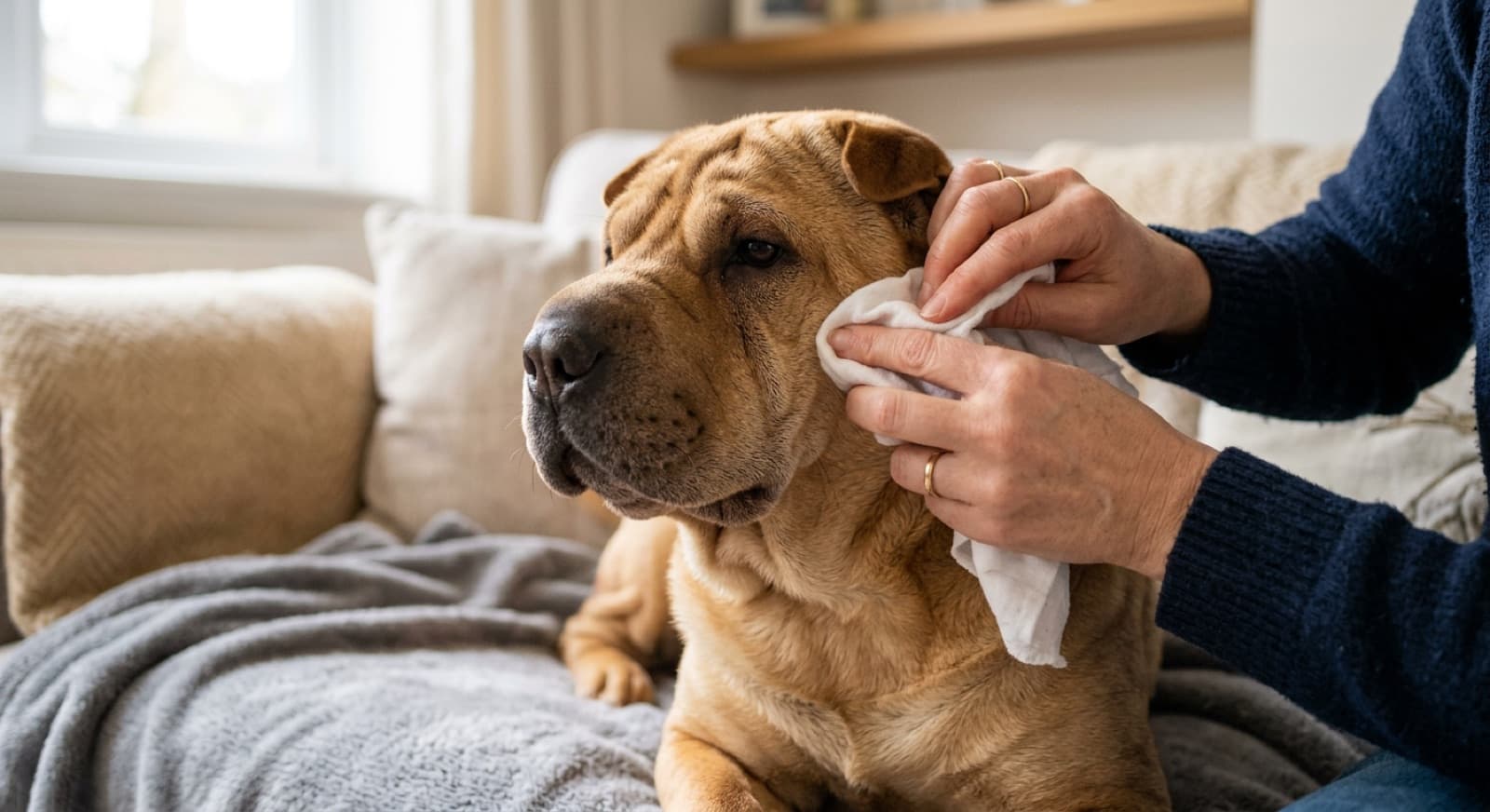
With a Shar Pei the skin is the commitment, not the coat. The deep folds trap moisture, dirt, food and dead skin, and a warm damp fold breeds yeast and bacteria that cause skin-fold dermatitis, redness, odour and sores. The one routine that matters most is cleaning and thoroughly drying the folds, especially the face and muzzle folds and the neck. Sydney's humid summers keep folds damp, so be extra vigilant and dry after every swim, bath or rain. The short, harsh coat is easy, just a weekly rubber mitt and no clipping. Watch the narrow ears, the eye area and the heat. Take a Shar Pei on only if you will do the fold care every day.
The wrinkles are the whole job
The thing that makes a Shar Pei a Shar Pei is also the thing that makes it work to look after. Those deep, loose folds of skin are lovely, but every fold is a warm, enclosed pocket that sits against the skin and traps whatever gets in there. Moisture, dirt, dead skin, and with a face fold, sometimes food and saliva. Left alone, that pocket becomes a breeding ground for yeast and bacteria, and the result is skin-fold dermatitis: red, itchy, smelly, sometimes weepy or sore skin down in the fold.
This is not a rare problem you might avoid with luck. It is the default outcome if the folds are not looked after, and it is the single most common care issue with the breed. The good news is that it is largely preventable, and the prevention is simple, but it has to be a habit. The one rule to hold onto is this: a damp fold is the enemy. Everything about Shar Pei skin care comes back to keeping the folds clean and, above all, dry.
The fold-cleaning routine
A workable routine for a Shar Pei looks like this, and it is quick once you have done it a few times:
- Check the folds every day or two. Spread each fold open with your fingers, look at the skin at the bottom, and have a gentle sniff. A healthy fold looks pale and clean and smells of little. A red, damp or smelly fold is an early warning.
- Wipe out the folds regularly. Use a soft, damp cloth or a plain unscented wipe to lift dirt and dead skin from inside each fold. Work through the face and muzzle folds, the neck rolls, and any deep folds on the body and legs.
- Dry every fold completely. This is the step people skip, and it is the most important one. After wiping, go back over each fold with a dry cotton pad or the corner of a clean towel until no moisture is left sitting in there. A clean but damp fold still causes problems.
- Pay special attention to the face. The face and muzzle folds are close to the eyes and mouth and get dirty fastest, so they usually need the most frequent attention.
- Never leave folds wet. After any swim, bath, rain or a drink at a deep bowl, dry the folds. Damp plus warm is the exact recipe for a fold infection.
Keep it gentle. You are wiping and drying, not scrubbing, and there is no need for harsh cleansers on healthy skin. If a fold is already red, sore, weepy or smelly despite your routine, stop the home cleaning and see a vet, because that fold is likely already infected and needs proper treatment. We go into the medical side, including recurring skin infections and other Shar Pei skin conditions, in the Shar Pei health issues guide.
Why Sydney humidity makes it harder
Sydney's climate raises the stakes on fold care. Our summers are warm and humid, and humidity means folds stay damp for longer after a clean, a swim or a rainy walk. That extra dampness is exactly what yeast and bacteria want, so a fold routine that keeps a Shar Pei comfortable through a mild winter may not be enough in the muggy heat of January and February.
The practical answer is simple: be more vigilant in the warm months. Check the folds more often, dry them more carefully, and never let the dog sit around with damp folds after a swim at the beach or the backyard pool, a bath, or a walk in the rain. Sydney dogs get wet a lot in summer, and a Shar Pei that comes home wet needs its folds dried before it settles down. A little extra attention in the humid season prevents a lot of vet visits.
The coat: harsh, short and easy
After all the fold talk, the coat itself is a relief. Shar Pei have a short, harsh, prickly single coat, and it comes in two lengths. The very short type is called a horse coat, and the slightly longer, softer type is called a brush coat. Neither is clipped or scissored, so there is no styling and no groomer bill for the coat, which is one of the genuinely low-maintenance things about the breed.
They do shed, though, more than people expect from such a short coat. It is moderate, steady shedding with heavier patches through the year, not the seasonal blowout of a double-coated breed. A weekly going-over with a rubber curry brush or a grooming mitt lifts the loose hair and keeps it off your furniture, and most Shar Pei quite enjoy the rub. One thing worth knowing before you commit: the coat is genuinely harsh and prickly to the touch, and some people find it can prickle or irritate their own skin, so if anyone at home has sensitive skin it is worth a hands-on meet before you adopt.
Bathing without making skin worse
With a breed this prone to skin problems, how you bathe matters. The big rule is do not over-bathe. Washing a Shar Pei too often strips the natural oils from the skin and can dry it out and make skin issues worse, not better. For most Shar Pei, a bath every few months, or when the dog is genuinely dirty or a bit smelly, is plenty. Let the dog's actual grubbiness guide you rather than a rigid schedule.
When you do bathe, use a plain dog shampoo, and rinse thoroughly so no shampoo residue is left behind to irritate the skin. Then comes the step that matters most for this breed: dry the dog properly, and work right into every fold so no moisture is trapped in there. A Shar Pei that is bathed and left with damp folds is a skin-fold infection waiting to happen, so the drying is not optional. If your vet has prescribed a medicated wash for a skin condition, follow their instructions on frequency and use rather than these general guidelines. The RSPCA Australia Knowledgebase is a good general reference on grooming and skin care.
Ears and eyes
Two more Shar Pei features need routine care. The first is the ears. Shar Pei have unusually narrow ear canals, narrower than most breeds, which means less air gets in and moisture is slower to clear. That makes them prone to ear infections, so keep the ears clean and dry, check them at least weekly, and dry them after swims and baths. If you see redness, a bad smell, dark discharge, head-shaking or scratching, that is a vet visit rather than a home clean. Because the canals are so narrow, do not go poking anything deep into the ear, just manage the visible part and let a vet handle anything more.
The second is the eyes. The folds around a Shar Pei's face can push in toward the eyes, and in some dogs the eyelid rolls inward so the lashes rub on the eye, a condition called entropion. Even without that, tight facial folds can irritate the eye area. Keep the eye area clean, wipe away any discharge in the corners with a damp cloth, and watch for a red, sore, weepy or squinting eye. Eye trouble in a Shar Pei is not something to wait on, so get it checked promptly. The medical detail on entropion, including what it needs, is in the health issues guide.
Nails and teeth
The everyday jobs round out the routine. Trim the nails regularly, roughly every few weeks, or ask a vet nurse to do it if you are not confident. Overgrown nails change how a dog stands and walks and can become painful, so keep on top of them.
Dental care is the same as for any small-to-medium dog. Brush the teeth with a dog toothpaste as often as you can manage, ideally most days, and give appropriate chews to help. Good dental care through life prevents painful teeth and gum disease later, and it is far easier to build the habit early than to fix a mouthful of problems down the track.
Sydney heat and paralysis ticks
Heat, not cold, is the real dog-safety risk in Sydney, and a Shar Pei handles it poorly. The heavy skin and folds, and the shortish muzzle many carry, mean this breed can overheat more easily than a lean, long-nosed dog. Do the harder exercise in the cool of early morning or the evening, go easy in the middle of a hot, humid summer day, and always have shade and fresh water available. Learn the signs of overheating, heavy panting, drooling, weakness or distress, and treat them as a veterinary emergency. Never leave any dog in a parked car.
Paralysis ticks are a year-round danger across the whole Sydney region and they can be fatal, so keep your Shar Pei on a vet-recommended tick prevention product all year and do a physical tick check after any bushwalk. Talk to your vet about the right product for your dog. The catch with this breed is the folds: a tick, a lump or a bit of grass seed can hide down inside a fold where you would never see it, so when you run your hands over the dog for a tick check, open the folds and feel right into them, especially around the head, neck and legs. That fold check doubles as your skin check. The Australian Veterinary Association has useful general guidance on parasite prevention.
Browse adoptable Shar Pei in Sydney
A Shar Pei rewards an owner who keeps up the daily fold care. Browse live NSW listings and set an alert so you hear the moment one comes in.
See Available Shar Pei →Is a Shar Pei right for you?
Put it together and the care picture is a mirror image of what people expect. The coat, the part you can see, is one of the easiest of any breed: a weekly rubber mitt and no clipping. The skin, the part hidden in the folds, is one of the more demanding. Those folds need cleaning and thorough drying every day or two to prevent skin-fold dermatitis, the narrow ears need watching and keeping dry, the eye area needs care, and Sydney heat and year-round ticks add to the load. A Shar Pei is low-coat and high-skin.
For the owner who will do that fold care as a lifelong habit, a Shar Pei is a calm, loyal, quietly devoted dog and a rewarding one to live with. If a daily wipe-and-dry of the wrinkles sounds like too much, that is worth being honest about before you adopt rather than after, because neglected folds and untreated skin are a real welfare problem for this breed. Rescues like RSPCA NSW, AWL NSW, Sydney Dogs and Cats Home, Monika's Doggie Rescue and Maggie's Rescue take in dogs of all breeds and crosses, know their dogs well, and can tell you honestly what a particular dog's skin and folds are really like. Remember too that all rescue dogs are desexed, microchipped and vet-checked before they go home, and you register your dog with your council under the Companion Animals Act through the NSW Pet Registry. For where to adopt one and what to expect, our Shar Pei adoption guide goes into detail.
Frequently Asked Questions
How do I clean my Shar Pei's wrinkles?
Wipe out each fold with a soft damp cloth to lift the dirt and dead skin, then, and this is the part that matters most, dry every fold completely so no moisture is left sitting in there. Work through the face and muzzle folds, the neck rolls and any deep body folds, spreading each one open so you reach the skin at the bottom. Do a quick check every day or two and a proper clean often enough that the folds never smell or look red. A dry cotton pad or the corner of a clean towel is fine for drying. The single biggest mistake is cleaning a fold and leaving it damp, because a damp warm fold is exactly what causes skin-fold dermatitis. If a fold is already red, sore, weepy or smelly, that is a vet job rather than a home clean.
Why does my Shar Pei smell?
A Shar Pei that smells usually has a skin-fold problem, because the deep folds trap moisture, dirt, food and dead skin, and that warm damp pocket lets yeast and bacteria grow. That growth is what produces the sour or musty odour, and it often comes with redness, itchiness and sometimes sores in the fold. The face and muzzle folds, the neck and any deep body folds are the usual culprits, and the narrow ears can smell too if they get an infection. The fix for the routine version is keeping the folds and ears clean and, above all, dry. But a persistent smell, especially with red or sore skin, means the fold is likely already infected, and that needs a vet, not just a wipe. Do not try to treat an infected fold at home.
Do Shar Pei shed?
Yes, Shar Pei shed moderately, more than many people expect from such a short coat. They have a short, harsh single coat, and while they are not heavy droppers like a double-coated husky, they do shed steadily, with heavier patches through the year. A weekly going-over with a rubber curry brush or a grooming mitt lifts the loose hair and keeps it off your furniture. The coat is genuinely low-maintenance in the sense that it never needs clipping or scissoring, but low-maintenance does not mean no-shed. One thing to know: the coat is short, harsh and prickly, and some people find it can prickle or irritate their skin on contact, which is worth being aware of if you have sensitive skin at home.
How often should I bathe a Shar Pei?
Bathe a Shar Pei only when it needs it rather than on a set schedule, because over-bathing strips the skin and can make skin problems worse, and this is a breed already prone to skin issues. Every few months, or when the dog is genuinely dirty or a bit smelly, is a fair guide for most Shar Pei. When you do bathe, use a plain dog shampoo, rinse thoroughly so no residue is left to irritate the skin, and then dry the dog properly, working right into every fold so no moisture is trapped. That drying step is the whole game with this breed. A Shar Pei bathed and left with damp folds is a skin-fold infection waiting to happen. If your vet has prescribed a medicated wash for a skin condition, follow their instructions on how often to use it instead.
Do Shar Pei get skin infections?
Shar Pei are prone to skin problems, and skin-fold dermatitis is the classic one. The deep folds trap moisture and debris against the skin, which lets yeast and bacteria multiply and inflame the skin in the fold, causing redness, odour, itchiness and sometimes sores. The face, muzzle, neck and any deep body folds are the high-risk spots. Good daily fold care, keeping them clean and dry, prevents a lot of it, and it matters even more in Sydney's warm humid summers when folds stay damp longer. But Shar Pei can also have other skin conditions beyond simple fold irritation, so if the skin is red, sore, smelly or the dog is scratching and uncomfortable, see a vet rather than treating it yourself. We cover the medical side in the health issues guide.
How do I care for a Shar Pei coat?
Shar Pei coat care is simple: a weekly brush with a rubber curry mitt to lift loose hair, and bathing only when needed. The coat is short and harsh and never needs clipping, scissoring or professional styling, so there is no groomer bill for the coat itself. The real work with this breed is the skin, not the coat. That means the folds, which need cleaning and thorough drying to prevent skin-fold dermatitis, plus the narrow ears kept clean and dry, and the eye area kept clean. So while the coat is one of the easiest going, the skin underneath is one of the higher-maintenance parts of any dog. Think of a Shar Pei as low-coat and high-skin, and plan your routine around the folds.
Are Shar Pei high maintenance?
On grooming, a Shar Pei is a mixed picture: the coat is very easy, but the skin is demanding. The short harsh coat needs only a weekly brush and no clipping, so in that sense the breed is low-maintenance. The catch is the wrinkles. Those deep folds need regular cleaning and drying to prevent skin-fold dermatitis, the narrow ears need watching and keeping dry, and the eye area needs care because the folds can push toward the eyes. Add Sydney heat, which this breed handles poorly, and year-round tick prevention, and the skin and health care adds up. So a Shar Pei is not a wash-and-go dog. It is easy on coat and demanding on skin, and you take one on knowing the fold care is a lifelong daily habit.
Can Shar Pei handle the Sydney heat?
Shar Pei cope poorly with heat and need active management through a Sydney summer. They come from a warm climate but their heavy skin, folds and often a somewhat shortened muzzle mean they can overheat, so treat heat as a real risk. Walk and exercise in the cool of early morning or the evening, never in the heat of the day, and always have shade and fresh water available. Watch for heavy panting, drooling, weakness or distress, which are signs of overheating and a veterinary emergency. Never leave any dog in a parked car. The folds also stay damp longer in humid weather, so be extra diligent with drying them in summer, and dry them after any swim, bath or rain. Talk to your vet about the right year-round tick and parasite prevention too.
Keep reading
Adoptable Shar Pei in Sydney
Live listings of Shar Pei and Shar Pei crosses across Sydney and NSW rescues.
Shar Pei Adoption in Sydney
Where to adopt, why Shar Pei end up in rescue, and what adoption costs against a breeder.
Shar Pei Health Issues in Sydney
Skin infections, entropion, ear problems and the other health areas to know, plus Sydney heat and year-round tick prevention.
All Sydney Adoption Guides
Browse every breed and how-to guide for adopting a rescue dog in Sydney.