The short answer
You can adopt a Shar Pei in Sydney, and a Shar Pei cross is often the easier, healthier dog to own. This is a medium purebred, unmistakable for its deep wrinkles, broad hippo-like muzzle and blue-black tongue. At home it is calm, loyal and deeply devoted to its family, and it is naturally reserved and aloof with strangers, so it needs early, steady, reward-based socialisation to be confident with new people and dogs. Energy is moderate, more couch companion than working dog, but the mind is independent. Purebred Shar Pei are uncommon in rescue, so crosses turn up more often, and those crosses usually carry looser skin with fewer of the fold and eye problems purebreds are prone to. Adoption runs about $300 to $600 for an adult, all-inclusive, against several thousand dollars from a breeder. Set alerts across the five main NSW rescues and stay open to a cross or an older dog.
What a Shar Pei actually is
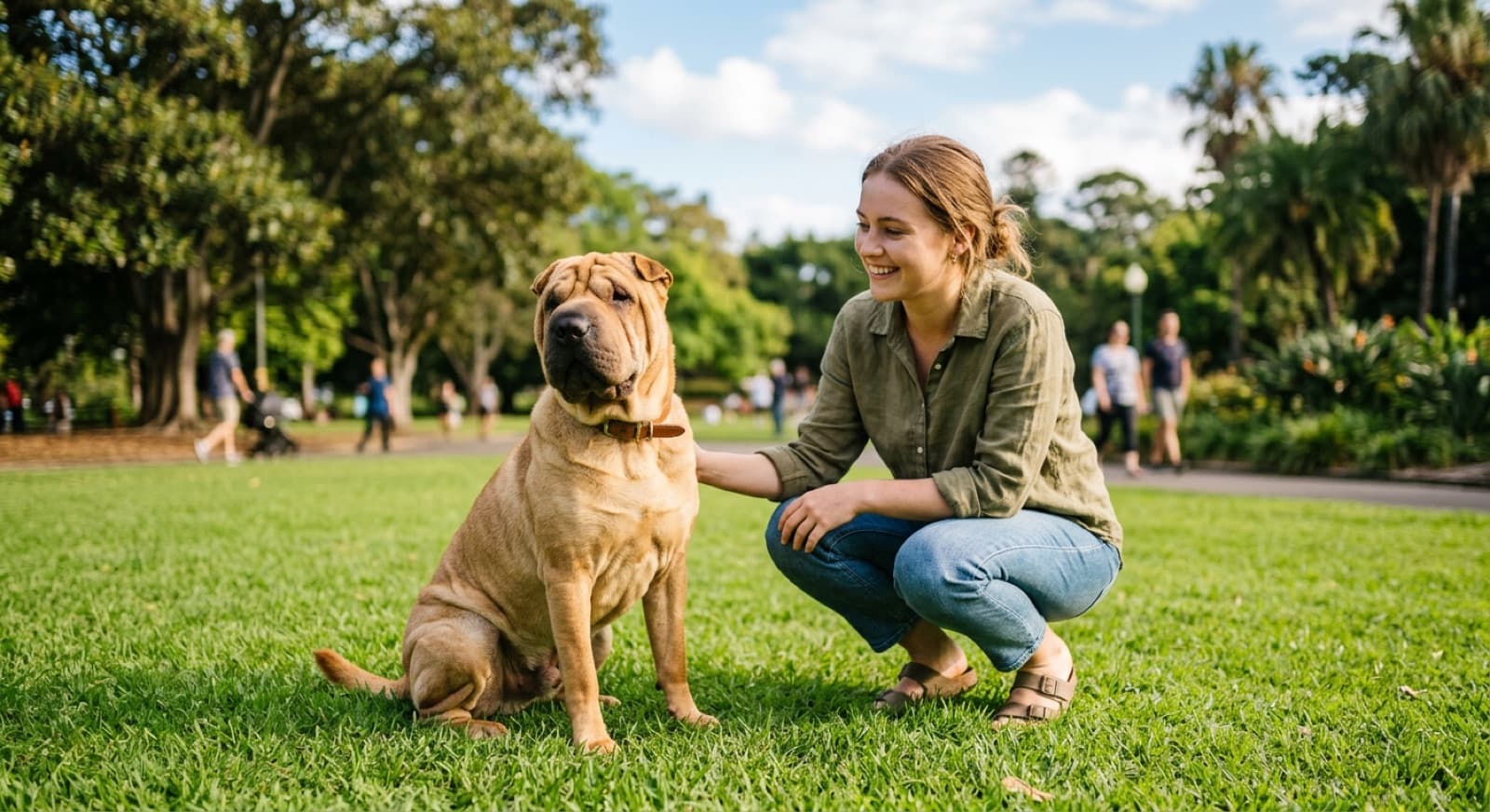
Before you go looking, it helps to be clear on the basics. Unlike a doodle or a designer cross, the Shar Pei is a purebred, an old breed with a long history in southern China. It is a medium, solid dog, usually somewhere around eighteen to twenty-five kilograms, with one of the most recognisable looks in the dog world: deep wrinkles and loose folds of skin, a broad, padded muzzle often described as hippo-like, small deep-set eyes, and a distinctive blue-black tongue. That unusual appearance is exactly what draws people in.
The temperament is calmer than the guardian look suggests. At home a well-raised Shar Pei is quiet, loyal and deeply devoted to its own people, and it tends to attach hard to one household rather than being everyone's friend. Energy is moderate. This is more of a steady couch companion than a working dog, happy with a daily walk and some play rather than needing hours of exercise. That makes the breed appealing for a calm home.
The part that matters most for adoption is the reserve. Shar Pei are naturally aloof and watchful with strangers, and some are territorial. This is a breed trait, not a fault, and it means the dog needs early, steady, reward-based socialisation to grow into a confident, settled adult around new people, dogs and situations. They are also independent-minded, so they respond to patient, positive training rather than repetition or force. A Shar Pei that misses out on socialisation can become wary or reactive, and that is a common thread in the ones that end up needing a new home.
Two practical realities round out the picture, and both are gentler in a cross. First, the skin. In the heavily wrinkled purebred, the folds trap moisture and grime and can develop skin-fold infections, so they need regular cleaning and drying. Second, the eyes. The folds around the eyes can cause entropion, where the eyelid rolls inward against the eye. A Shar Pei cross with looser skin and a less extreme face usually has fewer of these issues, which is a big reason crosses can be the easier dogs to own. We route the full health detail to the sibling articles below.
Purebred or cross: why crosses are common and often easier
Here is the honest reality of adopting this breed in Sydney. A full-pedigree Shar Pei is genuinely uncommon in NSW rescue, because it is a specialist breed most people buy as a puppy rather than surrender. What you will see far more often is a Shar Pei cross, usually mixed with Staffy, Bulldog or Mastiff lines, showing the wrinkled head and stocky build without the full extreme of the purebred.
That is good news, not a compromise. A cross typically carries looser, less exaggerated folds and a more open face, which tends to mean fewer of the skin-fold and eye problems the heavily wrinkled purebred is prone to. In practice a Staffy-Shar Pei or Bulldog-Shar Pei cross can be a hardier, lower-maintenance dog than a full pedigree, while still giving you the loyalty, the calm nature and that unmistakable wrinkled look. Every dog is an individual, so this is a tendency rather than a rule, but it is a real one.
The practical takeaway is to stay open. If your heart is set on a full purebred you may wait a long time and take on more skin and eye care. If you are open to a cross, you widen your options enormously and often end up with an easier dog. Either way, judge the individual in front of you on its temperament and the state of its skin and eyes, not on the label. For the deeper health picture, see the Shar Pei health issues guide.
Why Shar Pei end up in Sydney rescue
A Shar Pei in rescue is rarely a broken dog. It is usually a loyal dog whose socialisation or skin care outran its last home. Understanding the common reasons tells you whether the breed is genuinely right for you.
The socialisation need was underestimated. This is a big one. People fall for the wrinkled looks and the devotion, then discover a reserved, independent-minded dog that needs steady work to be confident with strangers and other dogs. When that work does not happen, wariness can tip into reactivity, and an under-socialised Shar Pei becomes harder to manage. We go deep on socialisation and confident handling in the sibling guide below.
The skin and eye care was a surprise. In a heavily wrinkled purebred, the folds and the eyes need ongoing attention, and repeated skin-fold infections or an entropion surgery can become a real cost that a new owner did not budget for. This is the practical reason a looser-skinned cross is often the easier adoption.
Life changes and mixed litters. Plenty of Shar Pei and crosses reach rescue through no fault of their own, after a relationship breakdown, a new baby, an owner moving into aged care, or a move to a rental or strata building that will not take the dog. Crosses often land in rescue simply as part of an unplanned mixed-breed litter. The bond to people and the loyalty are almost always intact. If you can commit to the socialisation and the sensible skin care, you are looking at a wonderful adoption. If you wanted a low-effort, greet-everyone dog, being honest now saves a Shar Pei from being the next surrender.
Where to adopt a Shar Pei or cross in Sydney
Because purebred Shar Pei are uncommon, a wide alert net is the right approach, and staying open to a cross widens your options a great deal. Set listing alerts on every rescue you would consider, and favour a rescue that has genuinely assessed the dog around people and other animals. For a fuller directory, see our Sydney adoption resources hub.
1. RSPCA NSW
The Sydney Adoption Centre at Yagoona plus regional NSW centres. Shar Pei crosses come through via owner surrender more often than purebreds, and every adoption includes desexing, vaccination, microchipping, a vet workup and a behavioural assessment. That vet check matters with this breed, because the team can tell you about the state of the dog's skin and eyes as well as how it handles strangers and other dogs. Apply at rspcansw.org.au.
2. Animal Welfare League NSW
AWL NSW runs the Kemps Creek Shelter plus around a dozen volunteer branches across the state. Shar Pei and Shar Pei crosses appear from time to time, usually as crosses. Adoption includes desexing, vaccination, microchipping and a vet check, with staff who can talk through what a reserved, wrinkled breed needs day to day. Current listings on awlnsw.com.au.
3. Sydney Dogs and Cats Home
The city's oldest shelter, founded in 1946, at Strathfield South. It takes a broad mix of dogs through owner surrender and council contracts, so a Shar Pei cross turns up from time to time. Adoption includes desexing, vaccination, microchipping, parasite treatment and a vet check, and the team assesses each dog before rehoming. More at sydneydogsandcatshome.org.
4. Monika's Doggie Rescue
No-kill foster-based rescue at Doggiewood in Ingleside on the Northern Beaches. Because the dogs live in foster homes, the notes on a Shar Pei's behaviour around strangers, other dogs and children tend to be detailed and honest, which is exactly what you need for a reserved breed where the individual temperament is everything. Adoption includes a home check. Listings at doggierescue.com.
5. Maggie's Rescue
Inner West rescue based in Marrickville, running a foster-to-adopt model with a trial built into every adoption, which is genuinely useful for checking a Shar Pei fits your home and your routine before you commit. Information and application links at maggiesrescue.org.
Some adopters search for a dedicated Shar Pei Rescue NSW, but we cannot verify a currently active organisation by that name, so use the general rescues above, set alerts, and be wary of any group that asks for money before you have confirmed a real address, a current adoptable-dog list and charitable status. Browse the Shar Pei and Shar Pei crosses currently listed on the Sydney Shar Pei listings.
What a Shar Pei costs: adopt versus buy
Adoption is far cheaper at the outset. A rescue fee for an adult Shar Pei or cross through a Sydney rescue commonly runs about $300 to $600, and a puppy $400 to $800, and that fee already covers desexing, vaccination, microchipping, worm and flea treatment and a vet check.
A Shar Pei puppy from a breeder in NSW, by contrast, often runs well into the thousands, with none of that vet work done yet. It is an uncommon, in-demand purebred, and that keeps breeder prices high. So adopting is many times cheaper up front, the dog arrives already vetted, and if you adopt an adult you can see the temperament and, just as importantly, the actual state of the skin and eyes, rather than gamble on a wrinkly puppy whose folds may cause problems later.
Plenty of people arrive here after searching for a Shar Pei to buy, and that makes sense, because the for-sale listings vastly outnumber the rescue ones. But before you spend anything, know that any uncommon, high-demand purebred is a magnet for fake listings, deposit scams and backyard breeders. A cheap puppy, a free-to-good-home Shar Pei, or a deposit request for a dog you have not met in person is a warning sign rather than a bargain, and the ACCC Scamwatch has documented deposit scams for puppies that do not exist. A seller who will not show you both healthy parents at their property, and who cannot talk sensibly about the breed's skin and eye health, is a red flag rather than a mark of quality.
The real cost of a purebred Shar Pei is not the fee, it is the skin and eye care across its life. Budget for regular fold cleaning, the odd vet visit for a skin-fold flare, and the possibility of an entropion procedure, which a looser-skinned cross often reduces. Add year-round paralysis tick and parasite prevention, which is essential everywhere in coastal NSW, and pet insurance you take out while the dog is young. Council registration through the NSW Pet Registry is a modest one-off, and a desexed dog attracts the lower lifetime fee.
Temperament: loyal, reserved, and needing early socialisation
The Shar Pei temperament is the part most worth understanding before you adopt. At home this is a calm, loyal, deeply devoted dog that bonds hard to its family and is quite happy to be a steady companion rather than a bouncy extrovert. The moderate energy suits people who want a dog to share the couch as much as the park. That side of the breed is easy to love.
The trait to plan for is the reserve with strangers. Shar Pei are naturally aloof and watchful, and some are territorial, so without steady socialisation that reserve can harden into wariness or reactivity. The answer is early, positive, reward-based socialisation: calm, well-managed exposure to new people, dogs, places and sounds from as young as possible, so the dog learns the world is safe. This breed is also independent-minded and does not respond to force, so patient, positive training works far better than repetition or heavy handling.
Tolerance of other dogs varies by the individual, which is why a genuine rescue assessment beats any breed generalisation. Some Shar Pei live happily with another dog, others prefer to be the only one. If you have a dog at home, ask the rescue to run a meet before you commit, and manage introductions carefully on lead. A well-socialised Shar Pei, in a calm home that respects its nature, is a wonderfully loyal and settled companion. If you want a dog that greets every stranger and dog with joy, this is not that breed, and being honest about it now serves everyone.
Is a Shar Pei right for you
A Shar Pei suits a calm owner or family who want a loyal, devoted, moderate-energy companion and are ready to put in early socialisation and, with a purebred, ongoing skin and eye care. If you like a dog that is deeply attached to its people, quiet at home, and content with a daily walk rather than endless exercise, a Shar Pei or a Shar Pei cross can be a lovely match. The bond this breed forms with its household is genuinely special.
The honest counter-case is short. This is a reserved breed that needs socialisation, so a home that will not do that work, or that wants an instantly sociable dog, is the wrong fit. The purebred carries skin-fold and eye care that a busy owner may find wearing, which is exactly why a looser-skinned cross is often the better, easier choice. And the independent streak means patient, positive training rather than a dog that does as it is told on the first ask. If any of that does not fit your life, a different breed will make you both happier. Let the individual dog in front of you, and the foster carer's honest notes, guide your decision rather than the breed name. The RSPCA Australia Knowledgebase and the Australian Veterinary Association both have good general guidance on choosing a dog that fits your life.
Shar Pei are not restricted in NSW, but responsibility is real
It is worth stating plainly. The Shar Pei is not on the NSW restricted-breed list. Under the NSW Office of Local Government, only five breeds are restricted under the Companion Animals Act 1998: the American Pit Bull Terrier, Dogo Argentino, Japanese Tosa, Fila Brasileiro and Perro de Presa Canario. A Shar Pei is legal to own and rehome normally, and simply needs to be microchipped by 12 weeks and registered with your council by 6 months of age.
There is a caveat that applies to any dog, and it is worth knowing. Any dog of any breed can be declared a menacing or dangerous dog under the Companion Animals Act based on its individual behaviour, not its breed. For a reserved breed like the Shar Pei, that is simply a reminder to do the socialisation, manage the dog sensibly around strangers and other dogs, keep secure fencing, and never let it roam. This is not about fear. It is the ordinary duty that comes with any dog, and doing it well keeps your dog, your neighbours and other animals safe.
Browse adoptable Shar Pei in Sydney
Purebred Shar Pei are uncommon in rescue, so wrinkled crosses and older dogs appear more often than puppies. Browse live NSW listings and set an alert so you hear the moment one comes in.
See Available Shar Pei →Adult or puppy, and how to choose
For almost every adopter an adult is the better choice, and Shar Pei puppies are uncommon in rescue anyway. With this breed an adult lets you check two things a puppy cannot show you: the settled temperament, including how the dog handles strangers and other dogs, and the actual state of the skin and eyes, which is a genuine health and cost factor in the wrinkled purebred. A puppy is a real gamble on both, because both the behaviour and the folds change as the dog grows.
An adult also comes with a known history the rescue can describe, often some training in place, and a lower adoption fee. When you choose, read the foster carer's notes closely. They will tell you how a specific dog does with children, other dogs, strangers and handling, and what its skin and eyes are like, and that record predicts the fit far better than the breed average. Ask directly about how the dog is around visitors and whether it can share a home with another pet. Older, settled Shar Pei are often the ones that wait longest and make the steadiest, most rewarding match for a calm home that will give them socialisation and sensible care. For the day-to-day skin routine, see the Shar Pei skin and coat care guide.
Frequently Asked Questions
Where can I adopt a Shar Pei near me in Sydney?
Start with the five main NSW rescues: RSPCA NSW (Sydney Adoption Centre at Yagoona), Animal Welfare League NSW (Kemps Creek plus regional branches), Sydney Dogs and Cats Home (Strathfield South), Monika's Doggie Rescue (Ingleside) and Maggie's Rescue (Marrickville). Set your expectations on supply first. Purebred Shar Pei are uncommon in Sydney rescue because they are a specialist breed most people buy as puppies, so a Shar Pei cross turns up far more often than a full pedigree, usually mixed with Staffy, Bulldog or Mastiff lines. Because this breed is naturally reserved with strangers, the individual dog's foster assessment matters a lot, so favour a rescue that has genuinely lived with the dog. The reliable approach is to set listing alerts on every rescue you would consider, have your application and references ready, and stay open to a cross or an older dog. If a group calls itself a Shar Pei rescue, confirm it is real before you engage and never send money before you have.
Are Shar Pei crosses healthier than purebreds?
Often, yes, and this is one of the best reasons to be open to a cross. The purebred Shar Pei is prone to skin-fold problems and eye conditions like entropion, where the eyelid rolls inward, largely because of the heavy wrinkling that was bred into the modern dog. A Shar Pei cross usually carries fewer and looser folds and a less extreme face, which tends to mean fewer of those skin and eye issues and a lower-maintenance dog to own. That is not a guarantee, and every dog is an individual, but a Staffy or Bulldog cross with a Shar Pei look can genuinely be an easier and hardier pet than a heavily wrinkled purebred. A good rescue will tell you what an individual dog's skin and eyes are like. We cover the health picture in detail in the health guide linked below.
Are Shar Pei good family dogs and good with children?
A well-socialised Shar Pei can be a devoted, calm family dog, but this breed needs early socialisation and a family that respects its reserved nature. Shar Pei bond hard to their own people and are quiet, loyal and deeply attached at home, which many families love. The honest catch is that they are naturally aloof and watchful with strangers, and some are territorial, so they need careful, positive introductions to visitors and steady exposure to new people and situations from a young age. With children in the home, supervise interactions, teach kids to respect the dog's space, and choose a dog whose foster carer has seen it around children. Their reserve with outsiders means they are not a bouncy, greet-everyone breed, so a calm household suits them better than a chaotic one. As always, the foster notes on a specific dog predict the fit far better than the breed average.
Are Shar Pei good with other dogs?
It varies a lot by the individual dog, so this is one to assess case by case rather than assume. Shar Pei can be reserved or standoffish with unfamiliar dogs, and some carry a degree of dog-directed wariness or prey drive, while others live happily alongside another dog they were raised with. There is no single breed answer, which is exactly why a genuine rescue assessment of how a specific Shar Pei goes with other dogs is worth more than any generalisation. Early, positive socialisation helps a young dog learn to read other dogs and stay settled. For an adult, the safest path is to adopt through a rescue that has watched the dog around others and can be honest about what it can handle, then manage introductions carefully on lead. If you have another dog at home, ask the rescue to do a meet before you commit.
Are Shar Pei a restricted breed in NSW?
No. The Shar Pei is not on the NSW restricted-breed list. Under the Companion Animals Act 1998, only five breeds are restricted in NSW: the American Pit Bull Terrier, Dogo Argentino, Japanese Tosa, Fila Brasileiro and Perro de Presa Canario. A Shar Pei is legal to own and rehome normally. That said, any dog of any breed can be declared a menacing or dangerous dog under the Act based on its individual behaviour, not its breed, so responsible ownership matters. Secure fencing, good socialisation, sensible management around strangers and other dogs, and council registration are all part of owning any dog properly. Legality is the easy part. The socialisation and the skin care are the real commitments with this breed.
Why do Shar Pei end up in rescue?
Usually because the socialisation need or the skin and eye care were underestimated, not because of a fault in the dog. People are drawn to the wrinkled, unusual looks and the loyalty, then find a reserved, independent-minded dog that needs steady socialisation to be confident with new people and dogs, and in the purebred, ongoing skin-fold and eye care. When that work does not happen, wariness can tip into problem behaviour and the skin issues can become a costly surprise. Others reach rescue through no fault of their own, after a relationship breakdown, a new baby, an owner moving into aged care, or a move to housing that will not take the dog. Crosses often land in rescue simply as part of a mixed-breed litter. The devotion and the bond to people are almost always intact.
How much does it cost to adopt a Shar Pei versus buy one?
Adoption is far cheaper up front. A rescue fee for an adult Shar Pei or cross through a Sydney rescue commonly runs about $300 to $600, and a puppy $400 to $800, and that fee already includes desexing, vaccination, microchipping, worm and flea treatment and a vet check. A Shar Pei puppy from a breeder in NSW often runs well into the thousands, with none of that vet work done yet, because it is an uncommon, in-demand purebred. So adopting is many times cheaper at the outset and the dog arrives already vetted. There is a second reason to adopt with this breed: in an adult you can see the temperament, and importantly the state of the skin and eyes, rather than gambling on a wrinkly puppy whose folds may cause problems later. The real ongoing cost of a purebred Shar Pei is skin and eye care across its life, which a looser-skinned cross often reduces.
How much grooming and skin care does a Shar Pei need?
The coat itself is low-maintenance, but the skin folds are the real job, especially in a heavily wrinkled purebred. The short, prickly coat only needs a weekly brush and the occasional bath, so shedding and coat work are minimal. The wrinkles are different. Moisture and grime collect in the folds, particularly around the face and neck, and if they are not kept clean and dry they can develop irritation and skin-fold infections, so regular fold checks and gentle cleaning are part of daily life with a purebred. The eyes need watching too, because the folds around them can cause entropion. A Shar Pei cross with looser skin usually needs far less of this. In Sydney's warm, humid summers the folds can get sweaty, so keep the dog cool and the skin dry, and see your vet at the first sign of redness or smell rather than waiting.
Should I adopt an adult Shar Pei or a puppy?
For most adopters an adult is the better choice, and Shar Pei puppies are uncommon in rescue anyway. With this breed an adult lets you see two things you cannot predict in a puppy: the settled temperament, including how the dog handles strangers and other dogs, and the actual state of the skin and eyes, which is a genuine health and cost factor in the wrinkled purebred. An adult has already grown into its temperament and its folds, so you can assess rather than gamble. It also comes with a known history the rescue can describe, often some training in place, and a lower adoption fee. A young puppy from an unknown source is a gamble on both behaviour and skin. Older, settled Shar Pei are often overlooked and make a steady, rewarding match for a calm home that will give them socialisation and sensible care.
Keep reading
Adoptable Shar Pei in Sydney
Live listings of Shar Pei and Shar Pei crosses across Sydney and NSW rescues.
Shar Pei Health Issues in Sydney
Skin-fold problems, entropion and other eye conditions, why crosses often have fewer, plus Sydney year-round paralysis tick prevention.
Shar Pei Skin & Coat Care
The daily fold-cleaning routine, keeping wrinkles dry in Sydney's humid summers, and the coat care a Shar Pei needs.
All Sydney Adoption Guides
Browse every breed and how-to guide for adopting a rescue dog in Sydney.