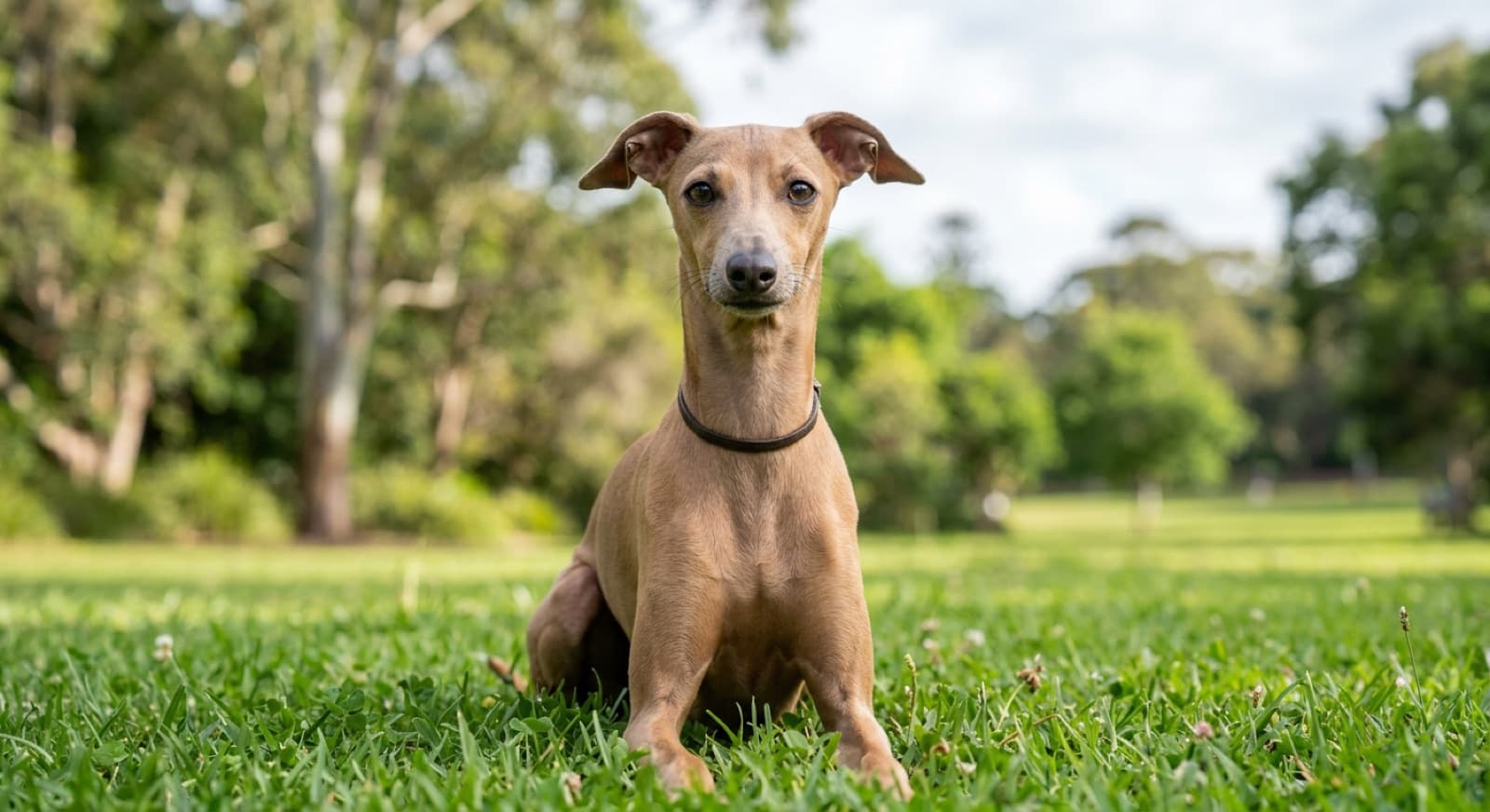
The short answer
The Italian Greyhound is a small purebred that tends to live a long life, with a handful of issues worth planning for. The big two are severe, early dental disease, more common and faster in this breed than most, and fine leg bones that fracture easily, often from a simple jump off furniture in a young dog. Lifelong tooth care and sensible injury-proofing handle much of it. Watch too for inherited eye conditions, a slipping kneecap, and a real dislike of the cold in a thin-coated dog. Tell any vet the dog is an Italian Greyhound before an anaesthetic. Learn one emergency above all: a sudden non-weight-bearing lameness after a jump or fall is a likely broken leg. Get to a vet promptly.
Severe dental disease: the first thing to understand
If there is one health theme that defines the Italian Greyhound, it is the teeth. Like other toy breeds, the Iggy has a full set of teeth packed into a very small, fine jaw, so the teeth crowd and overlap. That crowding traps plaque and food where it is hard to clean, and Italian Greyhounds are especially prone to early, severe periodontal disease, which means gum and bone infection around the teeth. It tends to start young and progress faster than in bigger breeds.
Left alone, this leads to tartar build-up, red and painful gums, bad breath, loose teeth and early tooth loss, sometimes while the dog is still in its prime. Dental infection is not just a mouth problem either, since it causes real pain and can affect overall health over time. Many Iggies need dental treatment during their lives, and this is one of the reasons anaesthetic care, covered further down, matters so much in the breed.
The good news is that dental disease is one of the most manageable problems if you stay ahead of it. Lifelong dental care is the answer, and it means two things working together. At home, regular tooth brushing is the gold standard, ideally started while the dog is young so it becomes routine. At the vet, regular dental checks and professional cleans when advised keep on top of what brushing cannot reach. Check the mouth now and then for red gums, brown tartar and reluctance to chew, and treat teeth as a core part of Italian Greyhound care rather than an optional extra. The RSPCA Australia Knowledgebase has general guidance on dental health and home tooth care that supports this approach.
Fragile legs and broken bones
The second signature Italian Greyhound concern is how easily their legs break. The breed is built for grace, with very fine, delicate bones, and the two lower foreleg bones, the radius and ulna, are the classic weak point. A jump down from a couch or bed, a fall during play, or a bad landing can be enough to fracture them. It is a well-known feature of owning this breed, not a rare freak event.
Young Iggies are most at risk. Between roughly four months and a year, while the bones are still maturing, a great many fractures happen, often from the dog launching itself off furniture the way any excited puppy would. This is why injury-proofing the home is such a big part of raising one. Ramps or low steps up to the couch and bed, keeping the dog off high surfaces, non-slip flooring instead of slippery tiles, and careful supervision of rough play with bigger dogs all cut the risk. Our Italian Greyhound care and fragility guide for Sydney goes through the full injury-proofing routine step by step.
Emergency: a suspected broken leg
This is the one Italian Greyhound emergency every owner must know. A fractured leg needs a vet promptly, not overnight watching. Treat it as urgent if, after a jump, fall or tumble, your Iggy is suddenly lame, holding a leg up and refusing to put any weight on it, crying in pain, or has a swollen or oddly angled leg. Keep the dog quiet and still, support it gently without forcing the leg straight, and get to a vet. Phone ahead so the team is ready, and if it is out of hours head to a 24/7 hospital such as SASH, which offers round-the-clock emergency care in Sydney. A prolonged or repeated seizure is also an emergency and needs the same fast response.
Inherited eye conditions
Italian Greyhounds carry several inherited eye conditions, so eyes are worth watching across the dog's life. Progressive retinal atrophy, often shortened to PRA, is a gradual degeneration of the retina at the back of the eye. It slowly reduces vision and can end in blindness, and the early clues are a dog that hesitates in dim light, bumps into things or becomes cautious on stairs. Cataracts, a clouding of the lens that affects vision, can also appear, sometimes earlier than you might expect.
Two others to know are glaucoma, a painful build-up of pressure inside the eye, and vitreous degeneration, a change in the jelly-like fluid of the eye. Have your vet check the eyes at routine visits, and book a prompt appointment if you notice a cloudy or bluish eye, redness, squinting, a suddenly painful or bulging eye, or a dog that starts bumping into furniture. Some causes are treatable and early assessment gives the best outcome, so eye changes are never something to simply leave and see.
Kneecaps and hips: patellar luxation and Legg-Calve-Perthes
Like many toy breeds, the Italian Greyhound can have a luxating patella, which means a kneecap that slips out of its normal groove. The classic sign is a dog that suddenly skips or hops on a back leg for a few strides, then carries on as normal once the kneecap slots back into place. Some dogs do this occasionally and are never bothered, while more significant cases cause ongoing limping, stiffness and, over the years, arthritis. If you notice the skipping gait, mention it to your vet, who can feel the knee and grade how loose it is. Mild cases are often managed by keeping the dog lean and fit, while more severe cases sometimes need surgery.
Small breeds like the Iggy can also develop Legg-Calve-Perthes disease, a condition where the top of the thigh bone loses its blood supply and the hip joint degenerates, usually in a young dog. The sign is a growing puppy or young dog that limps on a back leg, favours it, or shows pain in the hip, and it tends to come on gradually rather than after a single injury. It needs a vet assessment, and treatment is often surgical with a good outlook. Any persistent limp in a young Italian Greyhound is worth a vet visit rather than waiting for it to pass.
Seizures and epilepsy
Epilepsy, a tendency to recurring seizures, can occur in the Italian Greyhound. A seizure can look frightening if you have never seen one. The dog may collapse, stiffen or paddle its legs, lose awareness, drool, and sometimes wee or lose bowel control, then be dazed and wobbly for a while afterwards. If your Iggy has a seizure, stay calm, keep it safe from stairs and hard edges, do not put your hands near its mouth, note the time, and phone your vet.
A single short seizure that stops on its own still needs a vet visit to work out the cause, but it is not usually a same-minute emergency. A seizure that lasts more than a few minutes, or one seizure running into another without the dog recovering in between, is an emergency and needs a vet at once. Your vet can investigate what is behind the seizures and talk through managing them, which is a decision to make together rather than at home.
Anaesthetic sensitivity, thyroid and autoimmune issues
Italian Greyhounds, like other sighthounds, can be more sensitive to some anaesthetic drugs. They are very lean with little body fat, which changes how their bodies handle these medications. This does not mean they cannot be safely anaesthetised. It means the vet team needs to know the dog is a sighthound so they can choose a suitable protocol and monitor closely, which any vet familiar with the breed will already plan for. The practical rule for owners is simple: always tell your vet the dog is an Italian Greyhound before any procedure needing sedation or anaesthesia, including a routine dental clean or desexing. It is one more reason to keep up daily tooth care, since good prevention reduces how often the dog needs dental work under anaesthetic over a lifetime.
Two other conditions can turn up in the breed. Hypothyroidism, an underactive thyroid gland, can cause weight gain, low energy, and coat and skin changes, and it is usually straightforward to diagnose and manage with your vet. Some autoimmune conditions, where the immune system mistakenly targets the body's own tissues, can also occur. Neither is a reason to avoid the breed. They are simply things to have on your radar so that vague signs like unexplained tiredness, weight change or recurring skin trouble get a vet look rather than being dismissed.
Feeling the cold, and the Sydney heat note
Italian Greyhounds feel the cold more than almost any breed. They have a very thin, short single coat and almost no body fat to insulate them, so they chill quickly, seek out warmth, burrow under blankets, and shiver on a cool day. Sydney winters are mild with no snow, but a cold snap, an early morning walk or an air-conditioned room can still leave an Iggy uncomfortable. A well-fitted coat or jumper in the cooler months is a genuine need for this breed, not a fashion statement, and a warm bed with blankets to burrow into keeps them content.
The same thin coat gives little protection from the sun and heat, so the Sydney summer needs sense too. Walk your Iggy in the cooler hours of the morning and evening, carry water, watch a fine-skinned dog for sunburn on exposed areas, and never leave a dog in a car. The breed copes well with a warm climate overall, but its lack of insulation cuts both ways.
Why adopting an Italian Greyhound is not a health disadvantage
People sometimes worry that a rescue dog is a health gamble next to a breeder puppy. For an Italian Greyhound the picture is more balanced than that. An Iggy adopted through a reputable Sydney rescue arrives desexed, vaccinated, microchipped, treated for parasites and vet-checked, with all of it included in the fee, and often with dental work already done. You are not taking on an unassessed animal.
Adopting also means the things that matter most in this breed are often known upfront. Because so many rescue Iggies live in foster care, a carer who has shared a home with the dog can tell you how it is with jumping and stairs, whether it has any fracture history, how its teeth and eyes have been, and how it copes day to day. That is exactly the ongoing-management detail an Italian Greyhound owner wants, and a puppy cannot offer it. If you are weighing it up, our Italian Greyhound adoption guide for Sydney covers where to look and what it costs. Sydney rescues worth watching include RSPCA NSW, AWL NSW, Sydney Dogs and Cats Home, Monika's Doggie Rescue and Maggie's Rescue.
Keeping an Italian Greyhound healthy: the checklist
Most of what keeps an Iggy well is routine, and teeth and injury prevention sit right at the centre of it. The habits below do the heavy lifting.
- Look after the teeth for life. Regular tooth brushing at home plus professional dental checks and cleans prevent the early, severe gum disease this breed is prone to.
- Injury-proof the home. Ramps or steps to furniture, non-slip flooring, keeping the dog off high surfaces, and careful supervision of play protect fine leg bones, especially in a young dog.
- Treat a suspected fracture as urgent. Sudden lameness and refusing to bear weight after a jump or fall means a vet promptly, not overnight.
- Watch the eyes. Note hesitation in dim light, bumping into things, a cloudy or painful eye, and have the eyes checked at routine visits.
- Flag any persistent limp. An intermittent skipping gait or a young dog favouring a back leg deserves a vet look for a slipping kneecap or a hip issue.
- Tell the vet it is a sighthound. Always mention the breed before any anaesthetic or sedation so they use a suitable protocol.
- Keep the dog warm. A coat in the cooler months and a warm burrow bed suit a thin-coated, low-fat breed, and walk in the cool hours in summer.
- Stay on year-round tick prevention. Use a vet-recommended product every month without a gap, because the paralysis tick on the NSW coast is a fatal risk.
The Sydney paralysis tick point
One health risk has nothing to do with the breed and everything to do with where you live. The paralysis tick is native to the east coast of Australia, including the coastal and bushland areas around Sydney, and its bite releases a toxin that causes an ascending paralysis, which is fatal without veterinary treatment. It is a year-round risk here, not just a summer one.
The response is straightforward. Keep your Italian Greyhound on a vet-recommended tick prevention product every single month with no gaps, and after any walk through bush or long grass run your hands slowly over the whole dog, feeling for a lump. The thin Iggy coat actually makes ticks easier to find than in a fluffy breed, but still check carefully, especially around the face, under and inside the ear flaps, under the collar, in the armpits and between the toes. If your dog develops a wobbly back end, a changed or weak bark, gagging or heavy breathing, treat it as an emergency and get to a vet at once. Your own vet can advise on the right prevention product for your dog.
Browse adoptable Italian Greyhounds in Sydney
Adopting an adult lets you learn a dog's teeth, eyes and fracture history directly, often with dental work already done and a vet check in place. Browse live NSW listings and set an alert so you hear the moment an Italian Greyhound comes in.
See Available Italian Greyhounds →When to see the vet urgently
Most Italian Greyhound health issues are managed at a normal appointment. A few need a faster response. Get to a vet immediately, including out of hours, if you see any of these:
- Sudden lameness and refusing to bear weight after a jump or fall, with pain or swelling (likely broken leg, which needs prompt care).
- A seizure lasting more than a few minutes, or repeated seizures without the dog recovering in between (a genuine emergency).
- A wobbly back end together with a changed or weak bark, gagging or heavy breathing (possible paralysis tick).
- A suddenly red, painful, cloudy or bulging eye, or squinting with discharge (possible eye emergency).
For the everyday things, such as a persistent limp, an intermittent skipping gait, dental tartar and bad breath, or a single short seizure that has stopped, book a normal vet visit soon rather than waiting. Catching those early gives your Iggy the best outcome. When in doubt, phone your vet or a 24/7 hospital and describe what you are seeing. They would far rather you called and it was nothing than the other way around. To find a local vet, the Australian Veterinary Association can help, and you can browse the full Sydney adoption resources hub for more breed guides.
Frequently Asked Questions
What health problems do Italian Greyhounds have?
Italian Greyhounds are a generally long-lived toy breed, but a few issues come up often enough to plan for. The two signatures are severe dental disease, because a full set of teeth is packed into a tiny jaw, and fragile leg bones that break easily, especially in young dogs jumping off furniture. On top of those, the breed carries several inherited eye conditions such as progressive retinal atrophy, cataracts and glaucoma, along with a luxating patella, a slipping kneecap, and Legg-Calve-Perthes, a hip problem. Epilepsy, hypothyroidism and autoimmune conditions can also occur. Because they are lean sighthounds with little body fat, they can be more sensitive to some anaesthetics, and their very thin coat means they feel the cold badly. Most of it is manageable with good dental care, sensible injury-proofing, a coat in winter and regular vet checks. Italian Greyhounds commonly live into their mid-teens.
Why do Italian Greyhounds break their legs?
Italian Greyhounds break their legs because their leg bones are unusually fine and delicate, particularly the two lower foreleg bones, the radius and ulna. A jump down from a couch or bed, a fall during play, or a misjudged landing can be enough to snap them, and young Iggies between about four months and a year are most at risk while their bones are still maturing. The signs of a fracture are sudden lameness, holding a leg up and refusing to bear weight, obvious pain, swelling, or a crying dog after a jump or tumble. This is an urgent vet visit, not something to watch overnight. You can lower the risk a lot with simple injury-proofing, such as ramps or steps to furniture, keeping the dog off high surfaces, non-slip flooring and careful supervision of rough play, all of which our care and fragility guide covers in detail.
Do Italian Greyhounds have bad teeth?
Yes. Dental disease is one of the defining health issues of the Italian Greyhound, and it tends to start early and progress fast. Like other toy breeds, they have a normal number of teeth crammed into a very small jaw, so the teeth crowd and overlap, trapping plaque where it is hard to clean. Left alone this leads to tartar, painful gum disease, infection and early tooth loss, sometimes while the dog is still young. The answer is lifelong dental care. Regular tooth brushing at home is the gold standard, backed up by professional checks and cleans on your vet's advice. Get into the habit while the dog is young, check the mouth now and then for red gums, brown tartar and bad breath, and treat teeth as a core part of Iggy care rather than an optional extra.
How long do Italian Greyhounds live?
Italian Greyhounds are a long-lived toy breed and commonly live well into their mid-teens with good care. Much of their common trouble is about care and injury prevention rather than being automatically life-shortening. An Iggy whose teeth are looked after, who is protected from the jumps and falls that break fragile legs, who is kept warm in winter, and who has regular vet checks has a strong chance of a long comfortable life. Ask about teeth, any fracture history, eyes and any known conditions when you adopt, keep up year-round paralysis tick prevention, tell any vet the dog is an Italian Greyhound before an anaesthetic, and learn the emergency signs for a broken leg and for a seizure so you can act fast if they ever happen.
Are Italian Greyhounds sensitive to anaesthetic?
Italian Greyhounds, like other sighthounds, can be more sensitive to some anaesthetic drugs because they are very lean with little body fat, which changes how their bodies handle these medications. This does not mean they cannot be safely anaesthetised. It means the vet team needs to know the dog is a sighthound so they can choose a suitable protocol and monitor closely. Any vet used to the breed will already plan for this. The practical takeaways for owners are simple. Always tell your vet the dog is an Italian Greyhound before any procedure that needs sedation or anaesthesia, including a routine dental clean or desexing, and use a vet you trust to raise it if they do not. It is also a good reason to keep up daily tooth care, since prevention reduces how often the dog needs dental work under anaesthetic over a lifetime.
What are the eye problems in Italian Greyhounds?
Italian Greyhounds carry several inherited eye conditions, so eyes are worth watching across the dog's life. Progressive retinal atrophy is a gradual degeneration of the retina that slowly reduces vision and can lead to blindness, and early signs are hesitation in dim light, bumping into things and reluctance on stairs. Cataracts cloud the lens and also affect vision, sometimes earlier than you would expect. Glaucoma, a painful build-up of pressure in the eye, and vitreous degeneration can also occur. Have your vet check the eyes at routine visits, and book a prompt appointment if you notice a cloudy or bluish eye, redness, squinting, a suddenly painful or bulging eye, or a dog that starts bumping into furniture. Some causes are treatable and early assessment gives the best outcome, so eye changes are never something to leave and see.
Do Italian Greyhounds feel the cold?
Yes, Italian Greyhounds feel the cold badly, more than almost any other breed. They have a very thin, short single coat and almost no body fat to insulate them, so they chill quickly and will often seek out warmth, burrow under blankets and shiver on a cool day. Sydney winters are mild with no snow, but a cold snap, an early morning walk or an air-conditioned room can still leave an Iggy uncomfortable. A well-fitted coat or jumper in the cooler months is a genuine need for this breed, not a fashion choice, and a warm bed with blankets to burrow into keeps them content. The flip side is that their thin coat gives little protection from the sun and heat either, so walk in the cooler hours in a Sydney summer, carry water, and never leave a dog in a car.
Do rescue Italian Greyhounds come health checked?
Yes. An Italian Greyhound adopted through a reputable Sydney rescue arrives desexed, vaccinated, microchipped, treated for worms and fleas, and given a vet check before it is listed, with all of that included in the fee. Many arrive with dental work already done, which matters a great deal in this breed. A good rescue also notes any known issues, and for an Iggy that often includes a history of a fractured leg, dental treatment, or an eye condition, exactly the things that shape care. Many rescue Italian Greyhounds are in foster care, so a carer who has lived with the dog can tell you how it is with jumping and stairs, how its teeth and eyes have been, and how it copes day to day. That is a real advantage, because you adopt knowing the dog rather than guessing, and the issues that need ongoing management are flagged before you commit.
Keep reading
Adoptable Italian Greyhounds in Sydney
Live listings of Italian Greyhounds across Sydney and NSW rescues.
Italian Greyhound Adoption in Sydney
Where to adopt an Italian Greyhound, why they end up in rescue, and what adoption costs against a breeder.
Italian Greyhound Care & Fragility
Injury-proofing a fine-boned Iggy at home, plus the daily care routine for Sydney owners.
All Sydney Adoption Guides
Browse every breed and how-to guide for adopting a rescue dog in Sydney.