The short answer
You can adopt an Italian Greyhound in Sydney, but be patient and be honest about the breed. An Iggy is a tiny sighthound, a miniature version of a racing greyhound, gentle and sensitive and glued to its favourite person. It is also genuinely delicate: fine bones, long slender legs, and a real risk of fractures from a fall or a badly judged jump. It feels the cold, loves to burrow under blankets, and can be hard to house-train. Those demands are the main reasons Iggies end up in rescue. Purebreds are rare in rescue, so set alerts across the five main NSW rescues, be application-ready, and stay open to an Iggy cross or an older dog. Adoption runs about $400 to $650 for an adult, all-inclusive, against several thousand dollars from a breeder. An Iggy can suit a unit or apartment, with strata approval, an injury-proofed home and daily company.
What an Italian Greyhound actually is
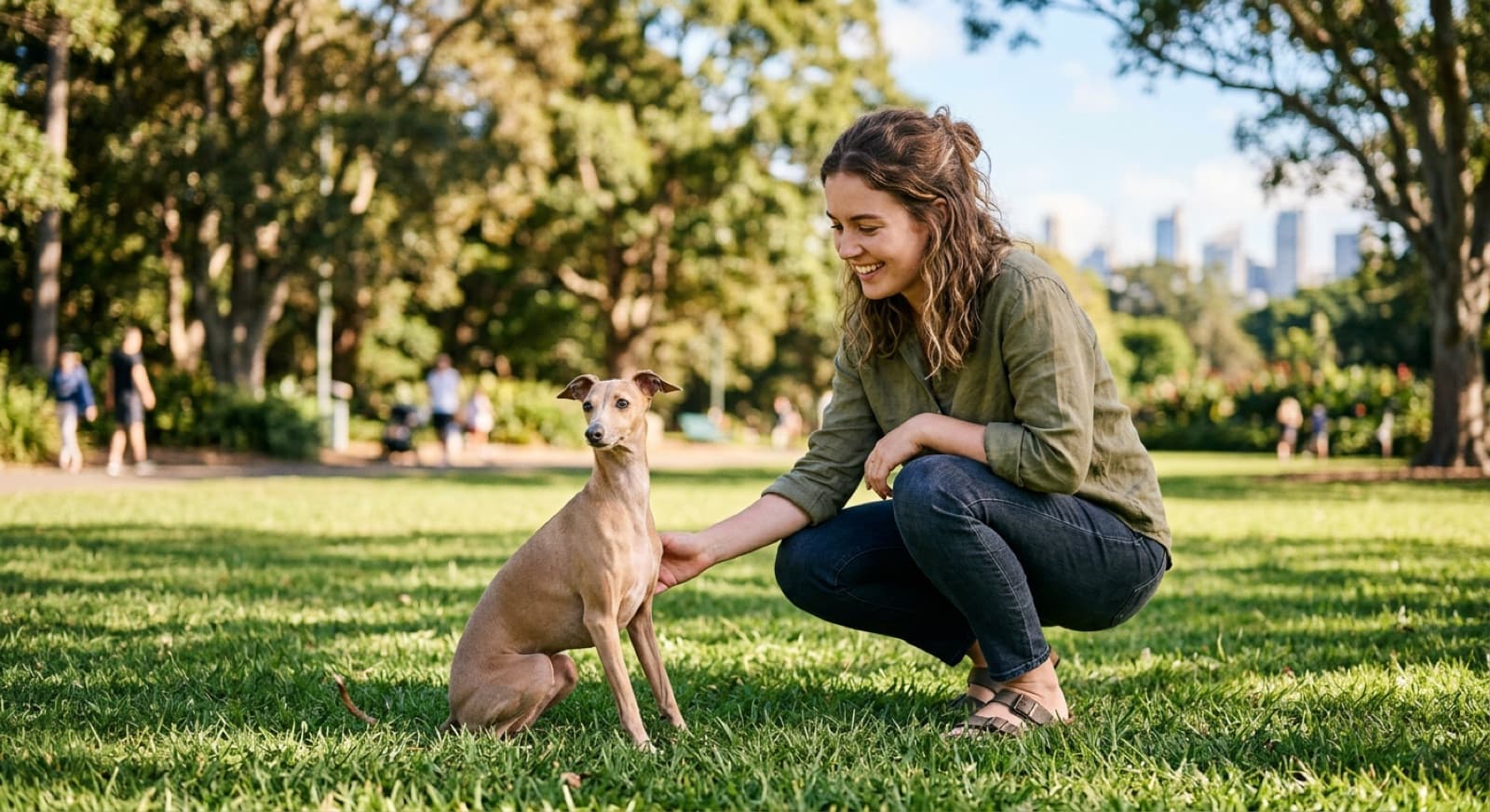
Before you go looking, it helps to be clear on the basics. Unlike a Cavoodle or a Whippet cross, the Italian Greyhound is a purebred, an old and recognised breed rather than a designer cross or a shrunken racing dog. Picture a full-sized greyhound scaled right down: the same deep chest, arched back, long fine legs and elegant lines, but in a body that usually weighs only three and a half to five kilograms. The coat is short, smooth and single, the frame is fine-boned and slender, and everything about the dog is built for grace rather than strength. Owners and breed fans call them Iggies or IGs.
The temperament matches the looks. An Italian Greyhound is gentle, affectionate and sensitive, and it bonds intensely to its household. This is a classic velcro dog, the sort that wants to be on your lap, under your blanket or pressed against your leg for most of the day. It is quiet and sweet-natured indoors, and it adores warmth and soft places to curl up. Do not mistake calm for lazy, though. An Iggy is still a sighthound, and in the right space it turns into a fast, playful, zooming little athlete with a real love of the chase.
Two other traits shape daily life. First, the sighthound prey drive. Iggies are wired to spot and chase small moving things, which means secure fencing and care around very small pets, and a sensible caution about off-lead time in unfenced areas. Second, the breed can be timid or shy, especially without good early socialisation, so gentle handling and patient confidence-building matter. None of this is a flaw. It is simply who the breed is, and knowing it upfront is what makes the adoption work.
The trait that matters most, though, is fragility. This is the single biggest thing to understand about the breed. An Iggy is genuinely delicate, with thin, lightweight bones that can fracture from a fall off the couch or a mistimed leap during play. Broken legs are a well-known risk, and injury-proofing the home is not optional with this dog. We go deep on fragility, home-proofing and Sydney-specific care in the sibling guide linked below, because it is the make-or-break issue for many owners.
Why Italian Greyhounds end up in Sydney rescue
An Iggy in rescue is rarely a broken dog, in temperament at least. It is usually a sweet, sensitive dog whose needs outran what its last home was set up to give. Understanding the common reasons tells you whether the breed is genuinely right for you.
The fragility was underestimated. This is a big one. People fall for the elegant looks, then discover just how delicate the dog is when a leg cracks after a jump off the bed, or when the recovery and vet bill turn out to be more than they expected. Some owners realise too late that their home, or their household with young kids or a bigger dog, was never set up for such a breakable dog. The fragility side is covered in full in the sibling care guide below, because it is a real commitment that is easy to miss at the start.
House-training struggles. Italian Greyhounds are famously tricky to house-train, and it wears some owners down. A tiny bladder and a deep hatred of toileting in cold or wet weather add up to indoor accidents, and households that were not prepared for the patience it takes sometimes reach the point of surrender. This is a genuine, common driver into rescue, not a rare problem.
The neediness and the cold. Because Iggies bond so hard and get anxious when left alone, a home that is out all day can leave the dog stressed and unhappy. And a warmth-loving dog that shivers through winter needs coats, warm bedding and thought that some owners did not anticipate. Add the ongoing dental care the breed needs, and the surprise costs mount up for people who assumed a small dog would be cheap and easy.
Life changes. Plenty of Iggies reach rescue through no fault of their own, after a relationship breakdown, a new baby, an owner moving into aged care, or a move to a rental or strata building. If you can commit to the careful handling, the company, the warmth and the patience, you are looking at a wonderful adoption. If you wanted a robust, low-maintenance dog you can leave all day, being honest now saves an Iggy from being the next surrender.
Where to adopt an Italian Greyhound or cross in Sydney
Because purebred Italian Greyhounds are genuinely rare in general rescue, a wide alert net is the right approach. Set listing alerts on every rescue you would consider, and stay open to an Iggy cross or an older dog. For a fuller directory, see our Sydney adoption resources hub.
1. RSPCA NSW
The Sydney Adoption Centre at Yagoona plus regional NSW centres. Italian Greyhounds and Iggy crosses come through occasionally via owner surrender, and every adoption includes desexing, vaccination, microchipping, a vet workup and a behavioural assessment. A surrendered dog often arrives with a known history the team can talk you through, including how it copes with being left alone and whether it has any history of injury, both of which matter for a delicate companion breed. Apply at rspcansw.org.au.
2. Animal Welfare League NSW
AWL NSW runs the Kemps Creek Shelter plus around a dozen volunteer branches across the state. Small companion dogs like Iggies and Iggy crosses appear from time to time. Adoption includes desexing, vaccination, microchipping and a vet check, with staff who can talk through what a sensitive toy breed needs day to day. Current listings on awlnsw.com.au.
3. Sydney Dogs and Cats Home
The city's oldest shelter, founded in 1946, at Strathfield South. It takes a broad mix of dogs through owner surrender and council contracts, so an Iggy or Iggy cross turns up from time to time. Adoption includes desexing, vaccination, microchipping, parasite treatment and a vet check. More at sydneydogsandcatshome.org.
4. Monika's Doggie Rescue
No-kill foster-based rescue at Doggiewood in Ingleside on the Northern Beaches. Because the dogs live in foster homes, the notes on an Iggy's confidence, how it copes alone, how it goes with house-training and its behaviour around other animals tend to be detailed and honest, which is exactly what you need for a breed where temperament and careful handling are everything. Adoption includes a home check. Listings at doggierescue.com.
5. Maggie's Rescue
Inner West rescue based in Marrickville, running a foster-to-adopt model with a trial built into every adoption, which is genuinely useful for checking an Iggy fits your home, your routine and how much company you can give before you commit. Information and application links at maggiesrescue.org.
Some adopters search for a dedicated Italian Greyhound Rescue NSW, but we cannot verify a currently active organisation by that name, so use the general rescues above, set alerts, and be wary of any group that asks for money before you have confirmed a real address, a current adoptable-dog list and charitable status. If you are also weighing up the breed's common health risks or the day-to-day care, our Italian Greyhound health guide and care and fragility guide go into far more depth. Or browse the Italian Greyhounds and Iggy crosses currently listed on the Sydney Italian Greyhound listings.
What an Italian Greyhound costs: adopt versus buy
Adoption is far cheaper at the outset. A rescue fee for an adult Iggy through a Sydney rescue commonly runs about $400 to $650, and a puppy $580 to $850, and that fee already covers desexing, vaccination, microchipping, worm and flea treatment and a vet check.
An Italian Greyhound puppy from a breeder in NSW, by contrast, often runs well into the thousands, with none of that vet work done yet. Iggies are an uncommon toy breed in steady demand, breeder litters are limited, and that keeps prices high and waitlists long. So adopting is many times cheaper up front, the dog arrives already vetted, and if you adopt an adult you can see the temperament and confidence rather than gamble on a puppy.
Plenty of people arrive here after searching for an Italian Greyhound to buy, and that makes sense, because the for-sale listings vastly outnumber the rescue ones. But before you spend anything, know that any small, in-demand purebred is a magnet for fake listings, deposit scams and backyard breeders. A cheap puppy, a free-to-good-home Iggy, or a deposit request for a dog you have not met in person is a warning sign rather than a bargain, and the ACCC Scamwatch has documented deposit scams for puppies that do not exist. A seller who will not show you both healthy parents at their property is a red flag rather than a mark of quality.
The real cost of an Iggy is not the fee, it is the years of care that follow. This breed needs ongoing dental care, because small mouths crowd teeth and dental disease is common, so budget for regular vet dental checks. Add year-round paralysis tick and parasite prevention, which is essential everywhere in coastal NSW, plus coats and warm bedding for a dog that feels the cold, and pet insurance you take out while the dog is young, which matters given the fracture risk. Council registration through the NSW Pet Registry is a modest one-off, and a desexed dog attracts the lower lifetime fee. The dental and potential emergency costs are the ones people miss.
The delicate build: fragility, warmth and the home you need
Two breed-specific points matter enough to flag before you adopt. The first is fragility. An Iggy's fine bones and slender legs are the flip side of its elegance, and they break more easily than most owners expect. A leap off a high couch, a fall from someone's arms, or a knock from a bigger, bouncier dog can cause a fracture. That does not mean you wrap the dog in cotton wool, but it does mean thinking about your home. Discourage jumping onto and off tall furniture, add ramps or steps where the dog likes to climb, supervise play, and be careful in a household with toddlers or large dogs. If a leg does break, treat it as a veterinary emergency and get to a vet straight away. We cover home-proofing in detail in the sibling care guide below.
The second is warmth. With a short single coat, a slender frame and almost no body fat, an Italian Greyhound feels the cold far more than a thicker dog. Even a mild Sydney winter has this breed shivering, chasing sunny patches and burrowing under blankets. Owners kit their Iggies out with coats and jumpers for walks and provide warm, soft bedding at home, and it is worth building that into your budget and routine from day one. The love of warmth is also tied to the house-training challenge: a dog that hates the cold will resist going outside to toilet in winter, so making the outdoor spot sheltered and warm, and keeping a consistent routine, is part of the answer. Punishment never helps.
Handled well, none of this is a dealbreaker. It just asks for a certain kind of home: calm, careful, warm and around enough to give this bonded little dog the company it needs. Get that right and an Iggy is a devoted, gentle, easy-to-love companion. For clipping-free coat care, dental routines, injury-proofing and Sydney-specific advice, see the Italian Greyhound care and fragility guide.
Is an Italian Greyhound right for you
An Italian Greyhound suits someone who is home enough to give it real company, patient enough for house-training, and willing to run a careful, injury-aware household. If you work from home, are retired, have a flexible routine, or can arrange daytime company, and you want a gentle, affectionate, sensitive little dog that will curl up on your lap and shadow you around the house, an Iggy can be a wonderful match. Its small size and quiet nature make it well suited to unit or apartment living, provided you have strata approval, an injury-proofed space, and give it a daily walk and warmth.
The honest counter-case comes down to a few things. An Iggy is fragile, so a chaotic home with rowdy toddlers or large boisterous dogs is a real risk to its safety. It is not a dog to leave alone all day, because this velcro breed gets anxious and stressed on its own. And it takes patience with house-training and the cold. If your household is out for long full days, or you want a robust dog for rough-and-tumble family life, a sturdier, more independent breed will make you both happier. Let the individual dog in front of you, and the foster carer's honest notes, guide your decision rather than the breed name. The RSPCA Australia Knowledgebase and the Australian Veterinary Association both have good general guidance on choosing a dog that fits your life.
Italian Greyhounds are not restricted in NSW
It is worth stating plainly. The Italian Greyhound is not on the NSW restricted-breed list. Under the NSW Office of Local Government, only five breeds are restricted under the Companion Animals Act 1998: the American Pit Bull Terrier, Dogo Argentino, Japanese Tosa, Fila Brasileiro and Perro de Presa Canario. An Iggy is legal to own and rehome normally, and simply needs to be microchipped by 12 weeks and registered with your council by 6 months of age.
As a small companion dog, an Iggy adapts well to unit or apartment living, so the practical question is usually strata rather than the law. Many Sydney apartment blocks require the owners corporation to approve a pet, so if you rent or live under strata, confirm dogs are permitted and get any approval you need before you apply to adopt.
Browse adoptable Italian Greyhounds in Sydney
Purebred Iggies are rare in rescue, so crosses and older dogs appear more often than puppies. Browse live NSW listings and set an alert so you hear the moment one comes in.
See Available Italian Greyhounds →Adult or puppy, and how to choose
For almost every adopter an adult is the better choice, and Iggy puppies are rare in rescue anyway. With this breed it matters even more than usual. Iggy puppies are heartbreakingly fragile, prone to leg fractures during their bouncy first year, and they need constant supervision to keep them safe. An adult has grown out of that most-fragile stage, and the traits that make or break the fit, how it copes alone, how it handles other people and pets, and where it is up to with house-training, are far easier to read in a settled dog than to guess in a puppy.
An adult also comes with a known history the rescue can describe, often some training in place, and a lower adoption fee. When you choose, read the foster carer's notes closely. They will tell you how a specific dog copes with being left alone, how it goes with children and other dogs, whether it is confident or shy, and how house-training is progressing, and that record predicts the fit far better than the breed average. Ask directly about time spent alone, about house-training, and about any injury history. Older, gentler Iggies are often the ones that wait longest and make the steadiest, most affectionate companions for a calm home that can give them the warmth and company they crave.
Frequently Asked Questions
Where can I adopt an Italian Greyhound near me in Sydney?
Start with the five main NSW rescues: RSPCA NSW (Sydney Adoption Centre at Yagoona), Animal Welfare League NSW (Kemps Creek plus regional branches), Sydney Dogs and Cats Home (Strathfield South), Monika's Doggie Rescue (Ingleside) and Maggie's Rescue (Marrickville). Set your expectations on supply first. A purebred Italian Greyhound is an uncommon toy breed that people mostly buy as puppies, so full pedigrees reach rescue rarely, and Iggy crosses turn up more often than a purebred. The reliable approach is to set listing alerts across every rescue you would consider, have your application and references ready in advance, and stay open to a cross or an older dog. If you find a group calling itself an Italian Greyhound rescue, confirm it is real before you engage, and never send money before you have.
Are Italian Greyhounds fragile, and do their legs break easily?
Yes, the Italian Greyhound is a genuinely delicate dog, and broken legs are a real and well-known risk for the breed. An Iggy has fine, thin, lightweight bones on long slender legs, and its whole build is elegant rather than sturdy. A fall from a couch or a bed, a leap off a lounge, or a mistimed jump during play can fracture a leg, and young Iggies are especially prone to it. This is not scaremongering, it is the single most important thing to understand before you adopt one. It means injury-proofing your home, discouraging jumping onto and off furniture, supervising rough play, and being careful in a household with young children or larger dogs. We cover fragility and home-proofing in depth in the sibling care guide linked below. If a broken leg does happen, it is a veterinary emergency.
Are Italian Greyhounds hard to house-train?
Yes, Italian Greyhounds have a reputation as one of the trickier toy breeds to house-train, and it is a real driver into rescue. Two things stack up. As a small dog with a tiny bladder, an Iggy simply cannot hold on as long as a big dog. And as a warmth-loving breed with a thin coat and almost no body fat, it genuinely hates going outside to toilet in cold or wet Sydney weather, so it will hold on, then have an accident inside where it is warm. The fix is patience, a consistent routine, and making outdoor toileting as comfortable as possible, which often means a warm coat and a sheltered, close-to-the-door spot. Many owners use indoor toilet options like a covered litter tray or grass pad as a backup. Punishment makes it worse. Adopting a settled adult with house-training already in place sidesteps a lot of this.
Do Italian Greyhounds feel the cold?
Very much so, and it shapes daily life with the breed more than almost anything else. An Italian Greyhound has a short, fine, single coat, a slender build and very little body fat, so it loses heat fast and feels cold that a thicker dog would shrug off. Even in mild Sydney winters, when the average July day tops out around 17 degrees, an Iggy will shiver, seek out sunny spots, and burrow under blankets. This is why the breed is famous for curling up in warm laps and under the covers, and why owners kit them out with coats and jumpers for walks and warm bedding at home. It is not fussiness, it is physiology. Provide warmth and soft places to curl up and your Iggy will be comfortable and content.
Why do Italian Greyhounds end up in rescue?
Usually because the fragility, the house-training or the sheer neediness of the breed was underestimated, not because of a fault in the dog. A cracked or broken leg, and the vet bill and careful recovery that follow, catches some owners off guard and reveals they were not set up for such a delicate dog. House-training struggles wear others down, especially the accidents that come with a warmth-loving dog that refuses to toilet in the cold. And because Iggies are intensely bonded velcro dogs, homes that are out all day can leave them anxious and stressed. On top of those, Italian Greyhounds reach rescue through no fault of their own after a relationship breakdown, a new baby, an owner moving into aged care, or a house move. The temperament is almost always intact, gentle and loving.
How much does it cost to adopt an Italian Greyhound versus buy one?
Adoption is far cheaper up front. A rescue fee for an adult Iggy through a Sydney rescue commonly runs about $400 to $650, and a puppy $580 to $850, and that fee already includes desexing, vaccination, microchipping, worm and flea treatment and a vet check. An Italian Greyhound puppy from a breeder in NSW often runs well into the thousands, with none of that vet work done yet. Because Iggies are an uncommon, in-demand toy breed, breeder prices stay high and waitlists are long. So adopting is many times cheaper at the outset and the dog arrives already vetted. The costs that surprise Iggy owners come later: this breed needs ongoing dental care because small mouths crowd teeth, plus year-round paralysis tick and parasite prevention, warm coats and bedding, and the risk of an emergency vet bill if a leg is injured.
Are there Italian Greyhound rescues in NSW?
There is no NSW Italian Greyhound-specific rescue we can verify as currently active, so the reliable route is the general rescues. RSPCA NSW, AWL NSW, Sydney Dogs and Cats Home, Monika's Doggie Rescue and Maggie's Rescue all rehome Italian Greyhounds and Iggy crosses when they come in. Because a purebred Iggy is genuinely rare in rescue, a wide alert net beats waiting on one specialist group. Set listing alerts on every rescue you would consider and be application-ready so you can move quickly. If you find a group calling itself an Italian Greyhound Rescue NSW, verify it before you engage: a real address, a current list of adoptable dogs, and registered charitable status. Never send a deposit to a group you cannot confirm is genuine.
Are Italian Greyhounds good apartment dogs?
Yes, an Italian Greyhound can be an excellent apartment or unit dog, with a few conditions. First, check your strata rules and get any approval you need before you adopt, because many Sydney apartment blocks require the owners corporation to sign off on a pet. Second, injury-proof the space, because an Iggy that leaps off high furniture can break a leg no matter how small the flat is. Third, remember the breed is a velcro companion that hates being left alone, so an apartment where the dog is by itself all day is a poor fit. Given company, warmth and a daily outing, an Iggy's size, quiet nature and love of curling up on the couch make it well suited to unit living. A rescue foster carer can tell you how a specific dog copes with apartment life, lifts and being left alone.
Are Italian Greyhounds good with children and other pets?
A well-socialised Italian Greyhound is gentle, affectionate and sweet-natured, and can be good with calm, gentle older children and with other dogs. The honest catch is fragility. An Iggy is tiny and delicate, around three and a half to five kilograms, so rough handling, an accidental drop or a knock from a boisterous dog can cause a serious injury, which makes the breed better suited to homes with older, careful children than to toddlers. There is also the sighthound side to consider. Iggies have a real prey drive and love to chase, so caution is sensible around very small pets, and secure, fenced areas matter for their safety outdoors. As always, the foster carer's notes on a specific dog with children and other animals predict the fit far better than the breed average, so ask before you commit.
Keep reading
Adoptable Italian Greyhounds in Sydney
Live listings of Italian Greyhounds and Iggy crosses across Sydney and NSW rescues.
Italian Greyhound Health Issues in Sydney
The breed's common health risks, dental care, plus Sydney heat and year-round paralysis tick prevention.
Italian Greyhound Care & Fragility
Injury-proofing the home, house-training, keeping a warmth-loving Iggy comfortable and safe.
All Sydney Adoption Guides
Browse every breed and how-to guide for adopting a rescue dog in Sydney.