The short answer
Italian Greyhounds are lovely, low-maintenance companions with three care realities you have to plan for. First, they are fragile: those slender leg bones break easily, usually from jumping off the couch or bed, so injury-proof your home with ramps or steps and keep play with bigger dogs supervised. Second, they feel the cold: a thin coat and little body fat mean coats, warm bedding and shelter from air-conditioning and cool weather. Third, they are hard to house-train, made worse because they refuse to toilet in the rain, so you need patience, a covered toilet spot and a realistic indoor backup for wet weeks. Add daily teeth-brushing and year-round tick prevention and you have the whole care picture. Get these right and an Iggy is one of the easiest, most affectionate small dogs going.
Fragility: the fine bones break easily
The first thing to understand about caring for an Italian Greyhound is how light and fine its frame really is. This is a toy sighthound, all thin legs and delicate bone, built for speed rather than durability. Those slender leg bones do not have the mass to absorb a bad landing, and broken legs are a well-known problem in the breed. The classic injury is not some dramatic accident. It is the dog leaping off the sofa or the bed and landing awkwardly, and it happens most in young, bouncy Iggies who have no sense of their own fragility.
So the core of daily Italian Greyhound care is quietly injury-proofing the home. Discourage and limit jumping on and off high furniture. The easiest way is to give the dog a controlled route up and down: a pet ramp or a set of pet steps against the couch and the bed, and a bit of training to use them. Plenty of owners go further and simply keep the dog off high beds entirely, giving it a cosy raised bed at floor level to burrow into instead. Either way, the goal is to take the big drop out of the dog's day.
The other fragility flashpoints are play and traffic. Supervise play with bigger or rougher dogs, because a normal bit of rough-and-tumble that a sturdy dog would shrug off can genuinely injure a delicate Iggy. Lay non-slip rugs or runners over slippery floorboards and tiles so the dog cannot skid and wrench a leg. Mind the dog underfoot and around swinging or slamming doors, since Italian Greyhounds are small, fast and love to dart between your feet. And handle the dog gently, especially picking it up and putting it down. This is the practical companion to the fracture section in the Italian Greyhound health guide, which covers what actually happens if a leg does break.
Warmth: a thin coat feels the cold
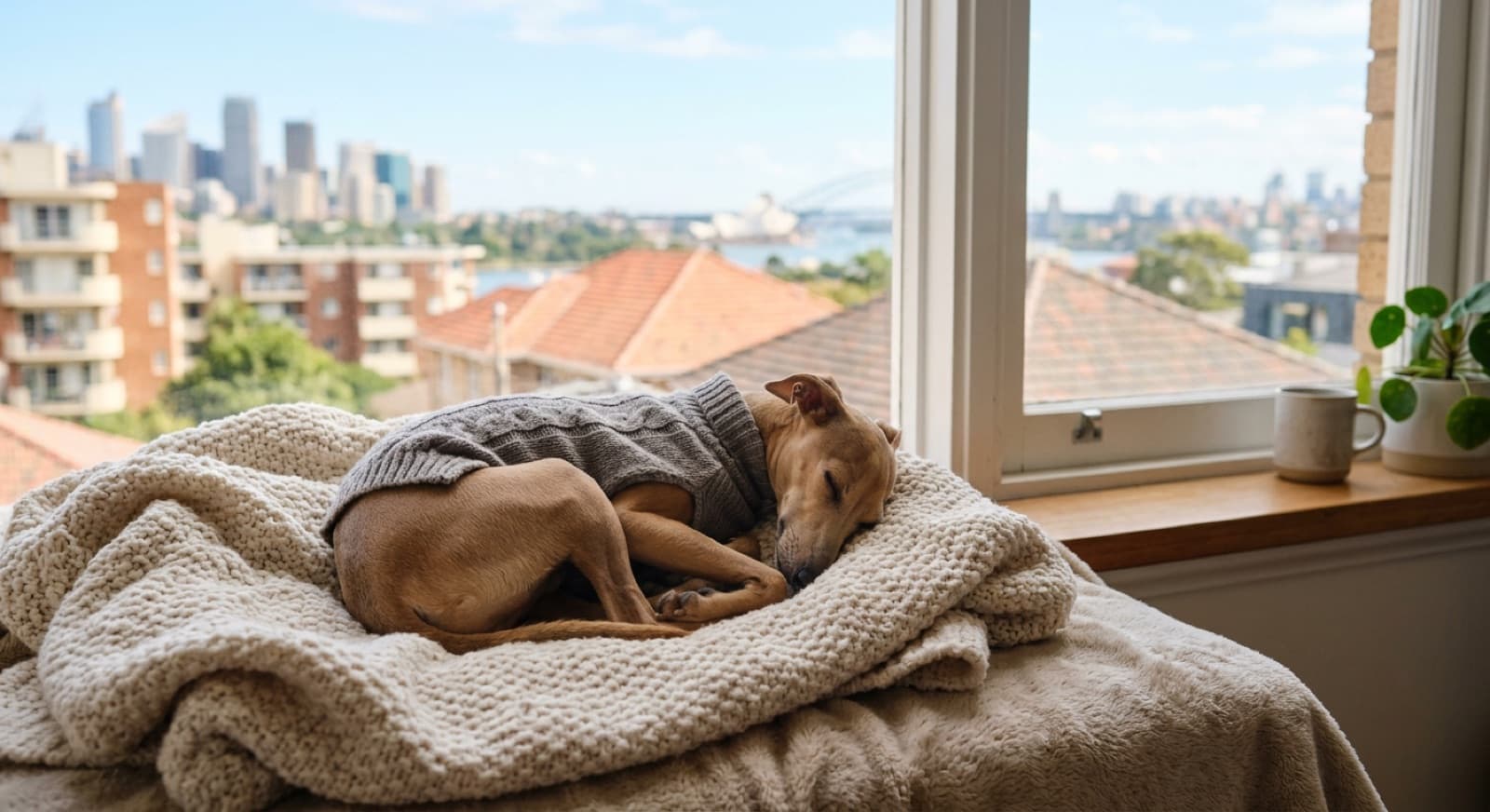
The second care reality is cold sensitivity. An Italian Greyhound has a very thin single coat and very little body fat, which means it loses heat quickly and feels the cold far more than a sturdier dog. People assume Sydney is too warm for this to matter. It is not. A mild Sydney winter evening, or a living room running air-conditioning through summer, is enough to leave an Iggy shivering and hunched, seeking out a warm lap or diving under the nearest blanket.
Reading those signals and acting on them is basic care, not pampering. The practical routine looks like this:
- A well-fitted coat or jumper for walks on cool, windy or wet days, so the dog can still get out without getting chilled.
- Warm, soft bedding to burrow into. Iggies love to tunnel under blankets, so a covered bed or a stack of soft throws in a draught-free spot is exactly what they want.
- Shelter from the air-conditioning. Keep a jumper handy indoors and give the dog a warm spot away from the aircon vent when the unit is running.
- Do not force the dog out in cold, wet weather uncovered. If it is genuinely miserable outside, put a coat on or wait for a break in the rain.
Warmth is far more of a day-to-day concern for this breed than heat, which is unusual for a Sydney dog. That said, do not swing too far the other way and overheat the dog on a genuinely hot day. Heat is still the main dog-safety risk in a Sydney summer for any breed, so exercise in the cool hours and never leave a dog in a parked car. For a delicate Iggy, the everyday work is simply keeping it comfortably warm.
House-training: the honest challenge
Now the part that catches new owners out. Italian Greyhounds are notoriously slow and hard to house-train, and it is worth knowing that before you adopt rather than being blindsided by it. A big driver is the cold sensitivity from the last section: an Iggy will flatly refuse to toilet outside in cold or wet weather, hold on as long as it can, and then go inside where it is warm and dry. It is not defiance or a dim dog. It is a small, cold-averse animal making a rational choice about a horrible backyard.
The approach that works is patient, consistent, reward-based toilet training, and no punishment. Telling off a sensitive dog for an accident does not teach it to go outside, it teaches it to hide when it toilets, which makes everything harder. Instead, stack the odds in your favour:
- Take the dog out often on a predictable routine and after every sleep, meal and play session, so the chances to succeed are frequent.
- Reward the instant it toilets outside, heavily and immediately, so the outdoor habit becomes the rewarding one.
- Make going out bearable. A coat and a sheltered, covered toilet spot out of the wind and rain removes the dog's main objection.
- Keep a realistic indoor backup for wet Sydney weeks. A toilet-training pad or an indoor tray gives accidents somewhere manageable to land while you keep reinforcing the outdoor habit.
Most of all, manage your expectations. With this breed, reliable house-training is often measured in months, not weeks, and progress can wobble backwards on a run of cold, wet days. That is normal for an Iggy. Consistency and patience get you there. The general settling-in picture for a rescued Italian Greyhound, including toileting setbacks in a new home, is covered in the Italian Greyhound adoption guide.
A velcro dog that hates being alone
Italian Greyhounds are deeply bonded, sensitive companion dogs. They want to be with their people, ideally on a warm lap under a blanket, and they form intense attachments. That devotion is a huge part of the charm, but it has a flip side: an Iggy left alone for long working days can become distressed and is prone to separation anxiety. This is a dog for a household with regular company, not one that is empty from dawn to dusk.
The sensitivity also shapes how you train and handle the breed. Reward-based, gentle methods are the only ones that work well. Harsh corrections or heavy-handed discipline make an Iggy anxious and shut it down, which is counterproductive with a dog this soft. Build trust, keep training positive, and you get a willing, affectionate little dog. Push too hard and you get a worried one.
Exercise, safely
For all its delicacy, an Italian Greyhound is still a sighthound, and it is playful and genuinely fast. It loves a flat-out sprint and then a long snooze. Daily walks plus some active play keep it happy, and it is not a high-endurance dog that needs hours of hard exercise. The care skill is keeping the activity safe given the fragile frame.
Two things to respect. First, keep play supervised, especially with bigger dogs, so an over-enthusiastic game does not end in an injury. Second, the prey drive is real. A sighthound will lock onto a bird, a cat or a possum and bolt, and in that moment it will not hear you call it back. That means any off-lead running belongs only inside fully fenced off-lead areas, never near roads or open unfenced ground, and off-lead rules and locations vary between councils across Sydney, so check your council first. Public off-lead reserves such as Sydney Park at St Peters or the timed off-lead zones in Centennial Parklands are the kind of secure spaces to look for. Be cautious around very small pets at home too, given that prey instinct.
Grooming, teeth and ticks
The coat is the easy part. A short, fine single coat needs almost nothing: a quick wipe or a rub with a soft brush or grooming mitt once or twice a week keeps it clean and glossy, the breed sheds little, and it barely smells. Bath only when the dog is actually dirty. Because the coat is so thin, keep an eye on the skin for grazes and knocks.
The routine that actually matters is dental. Like many toy breeds, Italian Greyhounds have small, crowded mouths that trap plaque, and dental disease is a common, painful problem. Daily teeth-brushing with a dog-safe toothbrush and toothpaste is the best defence, ideally every day, introduced slowly and kept positive. Pair that with regular veterinary dental checks. The medical detail, including anaesthetic and cost considerations for dental work, sits in the health guide, but the daily takeaway is that a toothbrush is part of normal Iggy care.
Then there are nails, which should be kept short so they do not change how the dog stands, and ears, which want an occasional check and gentle clean. Finally, keep year-round paralysis tick prevention going. Paralysis ticks are a serious, potentially fatal risk right across the Sydney region, and prevention is a vet-recommended product used all year rather than just in summer. The short coat is a small advantage, making ticks easier to find, but still run your hands over the dog and part the coat after any bushwalk. Ask your vet which tick product suits your individual dog.
Browse adoptable Italian Greyhounds in Sydney
An Italian Greyhound rewards a warm, gentle home that can injury-proof its space and stick with house-training. Browse live NSW listings and set an alert so you hear the moment one comes into rescue.
See Available Italian Greyhounds →Is this level of care right for you?
Put the three realities together and the picture is honest and manageable. An Italian Greyhound needs a home that will injury-proof against jumps and rough play, keep it warm through cool weather and air-conditioning, and stay patient through slow house-training. In exchange you get one of the most affectionate, elegant, low-shedding, apartment-friendly companions there is, a dog happiest curled on your lap under a blanket.
If ramps, coats, non-slip rugs and a few months of toilet training sound like a fair trade, an Iggy is a wonderful adoption. If you want a robust, weatherproof dog you can leave to its own devices, this is not the breed. Sydney and NSW rescues such as RSPCA NSW, AWL NSW, Sydney Dogs and Cats Home, Monika's Doggie Rescue and Maggie's Rescue assess their dogs in foster and shelter care, and can tell you honestly whether a particular Italian Greyhound or Iggy cross suits your home. General care guidance from the RSPCA Australia Knowledgebase and the Australian Veterinary Association is worth reading too. If you go ahead, register your adopted dog with your council through the NSW Pet Registry as required under the Companion Animals Act.
Frequently Asked Questions
How do I stop my Italian Greyhound breaking a leg?
The single most important thing is to stop your Italian Greyhound jumping on and off high furniture, because that is how most leg fractures happen. Those fine, slender leg bones are not built to absorb the landing when a dog leaps down from a sofa or a high bed, and young Iggies in particular break legs this way and during over-excited play. Practical injury-proofing means using pet ramps or steps up to the couch and bed, or lifting the dog on and off yourself, and ideally keeping it off high beds altogether. Supervise play with bigger, rougher dogs, because a delicate Italian Greyhound can be hurt in normal rough-and-tumble that a sturdy dog would shrug off. Add non-slip rugs or runners over slippery floorboards and tiles so the dog cannot skid, mind the dog underfoot and around slamming doors since Iggies are small and love to dart, and handle it gently. None of this makes the breed a wrapped-in-cotton-wool dog, it just respects how light the frame is.
Do Italian Greyhounds need to wear coats?
Yes, most Italian Greyhounds genuinely need a coat or jumper in cool weather, and this is not just a fashion habit. The breed has a very thin single coat and very little body fat, so it loses heat fast and feels the cold acutely, even in a mild Sydney winter or a room running air-conditioning. A cold Iggy will shiver, hunch, seek out warm laps and burrow under blankets, and those are real signals rather than fussiness. Put a well-fitted dog coat on for walks on cool or windy days, keep one handy indoors when the aircon is on or the evening turns cold, and do not force the dog out in cold, wet weather without cover. Warmth is far more of a daily concern for this breed than heat, though on genuinely hot Sydney days you still exercise in the cool hours and never overheat the dog. Warm, soft bedding it can burrow into is not a luxury for an Iggy, it is basic care.
Why is my Italian Greyhound so hard to house-train?
Italian Greyhounds are one of the trickier breeds to house-train, and a big reason is that they hate toileting outside in cold or wet weather, so they hold on and then go inside instead. It is not stubbornness or spite, it is a small, cold-sensitive dog making an understandable choice about a miserable backyard. The way through is patience and consistency rather than punishment, which only makes a sensitive dog anxious and secretive. Take the dog out often on a predictable routine, reward heavily the moment it toilets outside, put a coat on so going out is bearable, and set up a sheltered or covered toilet spot out of the wind and rain. For wet Sydney weeks, keep a realistic indoor backup like a toilet-training pad or an indoor tray so accidents land somewhere manageable while you keep reinforcing the outdoor habit. Manage your expectations too, because with this breed reliable house-training can take months rather than weeks.
Can Italian Greyhounds jump on and off the couch?
They can and they love to, but letting them is one of the main ways they break a leg, so it is worth managing rather than allowing freely. An Italian Greyhound will happily launch itself off a sofa or bed, and the landing puts all the force through those thin leg bones, which is exactly the kind of fall that causes fractures in the breed. The safest approach is to give the dog a controlled way up and down, such as a pet ramp or steps against the couch and bed, and to teach it to use them, or to lift the dog on and off yourself. Many Iggy owners simply keep the dog off high furniture and give it a cosy raised dog bed at floor level to burrow into instead. It feels overprotective at first, but a broken leg means surgery, weeks of crate rest and a big vet bill, so preventing the jump is far kinder than treating the break.
Are Italian Greyhounds good apartment dogs in Sydney?
Yes, an Italian Greyhound suits apartment and unit living well, provided it still gets daily walks, play and warmth, and provided you injury-proof the space. They are small, quiet and clean, they love a warm indoor life, and they are content to spend much of the day curled up under a blanket, which fits a Sydney flat. The catches are the ones this breed always brings: they need their exercise even in a small home, they feel the cold so an air-conditioned unit needs warm bedding and often a jumper, and they are notoriously slow to house-train, which is harder without a private yard. They also form intense bonds and hate long days home alone, so a household that is out for very long stretches is a poor fit. Check your building and strata rules on pets before you commit, and register the dog with your council. Get those things right and an Iggy is one of the better small breeds for apartment life.
How much exercise does an Italian Greyhound need?
An Italian Greyhound needs a good daily walk plus some play and a chance to run, but far less than its size and speed might suggest, and the running must be kept safe. This is a small sighthound that loves a flat-out sprint and can reach real speed, then happily crashes on the couch for hours. A couple of walks a day, some active play, and a chance to stretch its legs in a secure fenced area usually keeps it happy. The safety points matter for this breed: the sighthound prey drive is strong, so an Iggy can bolt after a bird, a cat or a possum and will not hear you recall it, which means off-lead running belongs only inside fully fenced off-lead areas, never near roads. Check your council, because off-lead rules and locations vary across Sydney. Keep play with big dogs supervised given how fragile the frame is, and in summer stick to the cooler hours of the day.
Do Italian Greyhounds have bad teeth?
Yes, dental disease is a common and serious problem in Italian Greyhounds, and daily home dental care is one of the most important routines you can build for the breed. Like many toy dogs, Iggies have small mouths with crowded teeth that trap plaque, so tartar, gum disease and early tooth loss are frequent without care. The daily side is simple to describe: get the dog used to having its teeth brushed with a dog-safe toothbrush and toothpaste, ideally every day, starting slow and making it positive. That, plus regular veterinary dental checks and professional cleaning when your vet advises, protects the teeth and spares the dog painful extractions later. We cover the dental picture and the anaesthetic and cost considerations in more detail in the health guide, but the takeaway here is that a toothbrush is part of everyday Italian Greyhound care, not an optional extra.
What grooming does an Italian Greyhound need?
Grooming an Italian Greyhound is refreshingly easy, because the short, fine coat needs very little, so the real daily care goes into warmth, teeth, nails and skin rather than the coat. A quick wipe-over with a soft cloth or a rubber grooming mitt once or twice a week keeps the coat clean and shiny, and the breed sheds little and has almost no doggy odour. Bath only when the dog actually needs it. The parts that do need routine attention are the nails, which should be kept short so they do not affect the way the dog stands and moves, the ears, which want a check and a gentle clean, and the teeth, which need daily brushing as covered above. Because the coat is so thin, also keep an eye on the skin for grazes, and keep year-round paralysis tick prevention going, as the short coat makes ticks easier to find but the risk across Sydney is real and can be fatal. Ask your vet for the right tick product.
Keep reading
Adoptable Italian Greyhounds in Sydney
Live listings of Italian Greyhounds and Iggy crosses across Sydney and NSW rescues.
Italian Greyhound Adoption in Sydney
Where to adopt, why Iggies end up in rescue, and what adoption costs against a breeder.
Italian Greyhound Health Issues in Sydney
Leg fractures and what surgery involves, dental disease, and year-round paralysis tick prevention.
All Sydney Adoption Guides
Browse every breed and how-to guide for adopting a rescue dog in Sydney.