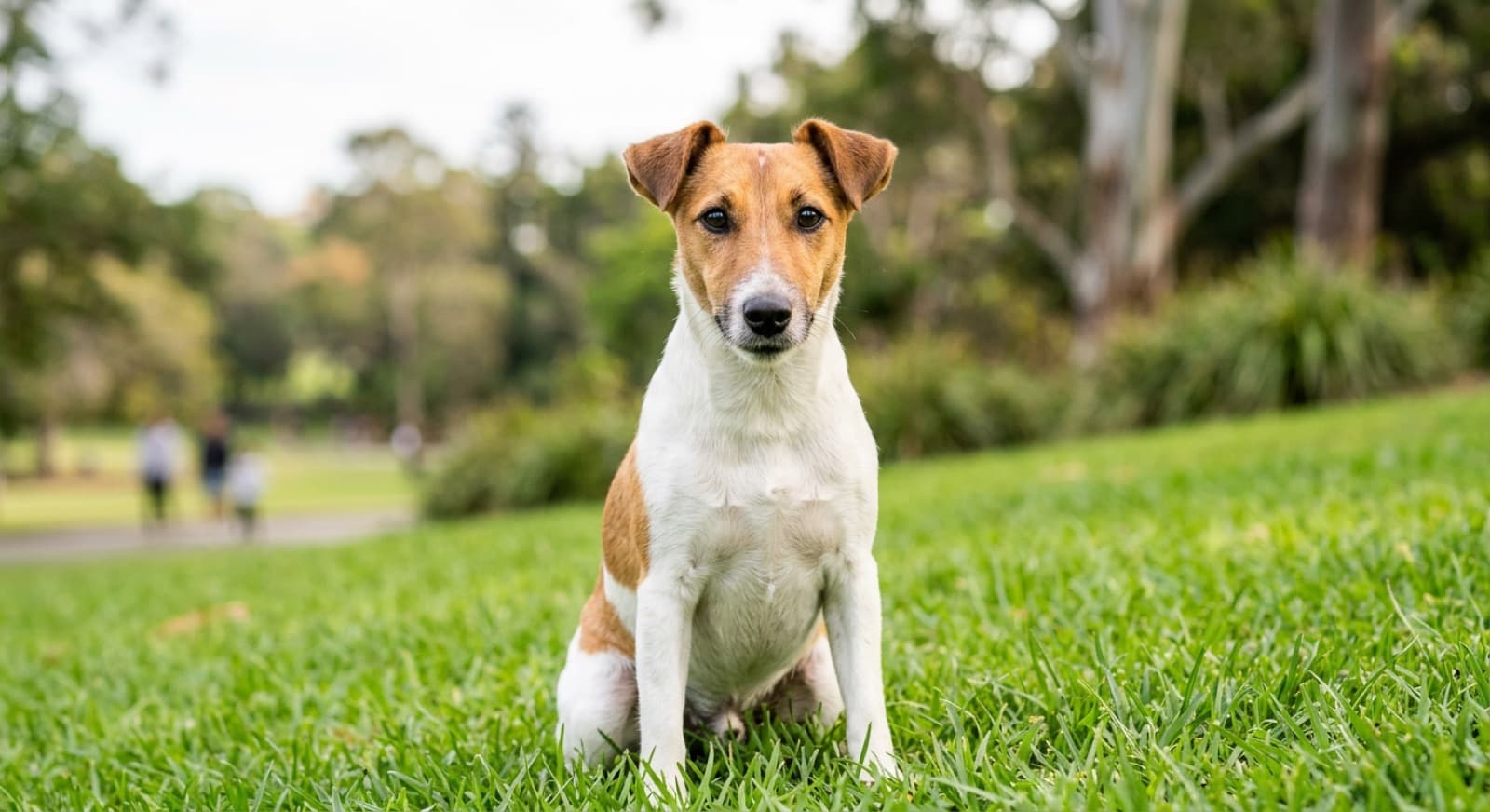
The short answer
The Fox Terrier is a genuinely hardy small breed that often lives 12 to 15 years, so start from a place of reassurance. The one distinctive condition to understand is primary lens luxation, an inherited eye problem where the lens slips out of place and can spike the eye's pressure. A sudden painful, red, cloudy or bulging eye is a true emergency and needs a vet the same day, because sight can be saved when treatment is fast. Beyond that, watch for a slipping kneecap, congenital deafness, and joint issues, keep the dog lean, and stay on year-round paralysis tick prevention.
A hardy breed first
Before the list of conditions, the honest headline is a good one. The Fox Terrier is one of the soundest small breeds you can own. It was bred to work, to run with a pack of hounds and then go to ground after a fox, so a fragile dog was never any use. What survived that breeding is a rugged, functional little terrier with fewer inherited problems than many of the popular breeds, and a long life to match. Most Fox Terriers live around 12 to 15 years, and plenty stay active and busy well into old age.
So this article is not a warning label. It is a plan. The conditions below are worth knowing so you can spot them early and act, but most Fox Terriers will only ever brush against one or two of them, and much of what keeps the breed well is ordinary care: a lean weight, real exercise, clean teeth, and steady tick prevention. The RSPCA Australia Knowledgebase has good general guidance on preventative care and healthy weight that applies to any dog. The one condition that deserves special attention is an eye problem, so it comes first.
Primary lens luxation: the one to take seriously
If there is one condition to understand in this breed, it is primary lens luxation, usually shortened to PLL. It is an inherited eye condition that terriers as a group are prone to, and the Fox Terrier is on that list. The lens is the clear structure inside the eye that focuses light, held in place by a ring of tiny ligaments. In PLL those ligaments weaken and break, and the lens slips out of its proper position. That sounds mechanical and minor. It is not, and here is why.
Why it is an emergency. When the lens slips, it can block the normal drainage of fluid inside the eye, and the pressure rises sharply. That raised pressure is a secondary glaucoma, and it is both very painful and capable of destroying vision fast, sometimes within a day. This is the reason PLL is not a wait-and-see problem. A slipped lens with rising pressure is a race against the clock, and the eye that is treated quickly has a far better chance than the one left overnight.
What it looks like. The signs come on suddenly. Watch for a sore, red or cloudy eye, squinting or holding the eye shut, a watery eye, an eye that looks larger or bulging than the other, or a dog that suddenly goes quiet and seems off colour. Because dogs cannot tell you their eye hurts, the behaviour change, a normally busy terrier going flat, is often the first thing an owner notices. Any of these, and especially a sudden painful eye, means the same day, not the next appointment.
The DNA test and rescue dogs. There is a DNA test for the gene behind PLL, and responsible breeders screen their dogs so they do not pair two carriers. A rescue Fox Terrier of unknown breeding may not have a known status, which is not a reason to worry, just a reason to know the signs cold and to keep your vet on speed dial. If you ever want the eyes formally assessed, a vet can refer you to a veterinary eye specialist. The Australian Veterinary Association can help you find a local vet to start with.
Emergency: a sudden painful, red, cloudy or bulging eye
A sudden sore, red, cloudy or bulging eye in a Fox Terrier, or squinting and holding an eye shut, can mean primary lens luxation and the raised pressure of acute glaucoma. It is painful and can cost the eye within hours if it is not treated, so this is a genuine emergency. Get to a vet the same day, day or night, and phone ahead so the team is ready. Do not try home remedies or wait to see if it settles, and do not let the dog rub or paw at the eye. Out of hours, head to a 24/7 hospital such as SASH, which offers round-the-clock emergency care in Sydney. Sight can often be saved when treatment is fast, which is exactly why speed matters here.
Deafness: linked to the white coat
Congenital deafness, meaning deafness a dog is born with, occurs in Fox Terriers and is linked to the breed's largely white coat and the pigment genes that come with it. It can affect one ear or both. A dog deaf in a single ear usually lives an entirely normal life, and many owners never even realise, since the dog hears fine and simply cannot pinpoint where a sound came from. A dog deaf in both ears needs a different approach but is far from a difficult pet.
A bilaterally deaf terrier is trained with hand signals, body language and vibration rather than voice, and it needs extra care around roads and water because it cannot hear a car or a call. The upside is that these dogs are not startled by thunder or fireworks, and they bond closely to the visual cues you teach. A simple hearing check, or a specialist test called BAER, tells you exactly where a dog stands, and it is a sensible thing to ask about when you take on a Fox Terrier of unknown history. If your dog does not respond to sound the way you expect, mention it to your vet rather than assuming stubbornness. Our Fox Terrier exercise and temperament guide covers training a lively terrier, including hand-signal work.
Joints: kneecaps and Legg-Calve-Perthes
As a small, active dog the Fox Terrier can have a couple of the joint issues seen across terriers and small breeds. Patellar luxation, a slipping kneecap, is the common one. The kneecap pops out of its groove, and it often looks like a brief skip or hop on a back leg that then rights itself, sometimes with the dog stopping to stretch or shake the leg out before carrying on. Mild cases are simply monitored, while more troublesome ones are assessed by a vet and sometimes corrected with surgery.
Legg-Calve-Perthes disease is one to know in small breeds specifically. It is a problem of the hip in young dogs where the top of the thigh bone loses its blood supply and begins to break down, causing pain and limping, usually in a dog under a year old. A young Fox Terrier that develops a persistent limp on a back leg should be seen by a vet, since these conditions are diagnosed with an examination and imaging and are very treatable when caught. Keeping the dog lean takes strain off every joint and is the simplest thing you can do for its legs.
Other eye conditions: cataracts and glaucoma
Beyond primary lens luxation, the breed can carry a few other eye conditions, so the eyes are worth a look now and then. A cataract clouds the lens so the pupil looks milky or bluish-white, and vision fades as it thickens. Cataracts are usually painless and slow, and dogs adapt remarkably well to gradual sight loss, but they are worth confirming with a vet because some can be linked to other problems.
Glaucoma, the raised eye pressure described in the PLL section, can also occur, and it is the reason any red, painful or suddenly cloudy eye earns an urgent visit rather than a routine one. The general rule for a Fox Terrier's eyes is simple and worth memorising: any slow, painless cloudiness or a dog becoming hesitant in dim light earns a routine check, but any red, painful, weepy, bulging or suddenly cloudy eye earns a same-day one. When in doubt, treat the eye as urgent and phone.
Other conditions, teeth and weight
Occasional conditions. A few less common problems can turn up in the breed, including myasthenia gravis, a condition where the signals between nerve and muscle break down and cause weakness that gets worse with activity. It is uncommon, but a dog that tires abnormally fast, whose back legs give way after a short burst, or whose voice or swallow changes, deserves a proper vet work-up rather than a shrug. These are not everyday worries, they are simply things to have on your radar so an odd pattern gets checked rather than dismissed.
Dental disease. Like most small breeds, Fox Terriers can suffer dental disease, because a small mouth crowds the teeth and traps plaque. Left alone it causes pain, tooth loss and infection that can affect the rest of the body. Regular tooth brushing, dental chews and professional cleans when your vet advises keep it in check, and it is one of the easiest problems to stay ahead of.
Weight. A Fox Terrier that is not exercised enough will gain weight, and a fat terrier is a set-up for joint strain, a harder-working heart, and a shorter, less comfortable life. This is an energetic working breed that needs a solid dose of daily walking and play, so give it the exercise it was built for and measure meals to a visible waist rather than free-feeding. In a Sydney summer, walk in the cooler hours of the early morning or evening and carry water, because heat, not cold, is the local dog-safety risk.
The Sydney paralysis tick point
One health risk has nothing to do with the breed and everything to do with where you live. The paralysis tick is native to the east coast of Australia, including the coastal and bushland areas around Sydney, and its bite releases a toxin that causes an ascending paralysis which is fatal without veterinary treatment. It is a year-round risk here, not just a summer one, which matters for a game little terrier that loves nosing through bush and long grass.
The response is straightforward. Keep your Fox Terrier on a vet-recommended tick prevention product every single month with no gaps, and after any walk through bush or long grass run your hands slowly over the whole dog, feeling for a lump. Check carefully around the face and muzzle, under and inside the ear flaps, under the collar, in the armpits and between the toes, and remember a wiry-coated Fox Terrier gives a tick good cover. If your dog develops a wobbly back end, a changed or weak bark, gagging, vomiting or heavy breathing, treat it as an emergency and get to a vet at once. Ask your own vet which prevention product suits your dog.
Browse adoptable Fox Terriers in Sydney
Adopting an adult lets you learn a dog's health history directly, including whether it hears normally and how its eyes have been, with a vet check already done. Fox Terriers reach rescue less often than mainstream breeds, so browse live NSW listings and set an alert to hear the moment one comes in.
See Available Fox Terriers →Why adopting a Fox Terrier is not a health disadvantage
People sometimes worry that a rescue dog is a health gamble next to a breeder puppy. For a hardy breed like the Fox Terrier the picture is more balanced than that. A Fox Terrier adopted through a reputable Sydney rescue arrives desexed, vaccinated, microchipped, treated for parasites and vet-checked, with all of it included in the fee. You are not taking on an unassessed animal.
Adopting also means the things that matter most in this breed are often known upfront. A foster carer who has lived with the dog can tell you whether it responds to sound normally, how its eyes have been, whether it hops on a back leg, and how it has gone day to day, which is real information a puppy cannot offer. If you are weighing it up, our Fox Terrier adoption guide for Sydney covers where to look and what it costs. Sydney rescues worth watching include RSPCA NSW, AWL NSW, Sydney Dogs and Cats Home, Monika's Doggie Rescue and Maggie's Rescue.
Keeping a Fox Terrier healthy: the checklist
Most of what keeps a Fox Terrier well is routine. This is a rugged breed, so the habits below do the heavy lifting.
- Know the eye emergency. Learn the signs of a sudden painful, red, cloudy or bulging eye, and treat it as a same-day emergency, because primary lens luxation can cost sight fast.
- Give it real exercise. A generous daily dose of walking and play keeps a working terrier fit and holds a healthy weight, which protects joints and heart alike.
- Keep the dog lean. Measure meals to a visible waist and go easy on treats. A lean Fox Terrier carries less risk of joint trouble and tends to live longer.
- Check the hearing. Ask about or arrange a hearing check for a dog of unknown history, and train around hand signals if a dog is deaf.
- Look after the teeth. Regular tooth brushing and dental checks prevent painful disease in a small, crowded mouth.
- Book regular vet checks. Annually while adult, then twice yearly for a senior, so an early joint or eye issue is caught early.
- Stay on year-round tick prevention. Use a vet-recommended product every month without a gap, because the paralysis tick on the NSW coast is a fatal risk.
When to see the vet urgently
Most Fox Terrier health issues are handled at a normal appointment. A few need a faster response. Get to a vet immediately, including out of hours, if you see any of these:
- A sudden red, painful, cloudy or bulging eye, or squinting and holding an eye shut (possible primary lens luxation or glaucoma, which can cost the eye quickly).
- A wobbly back end together with a changed or weak bark, gagging, vomiting or heavy breathing (possible paralysis tick).
- Sudden collapse, fainting, or laboured breathing at rest.
- Sudden severe weakness or back legs giving way that gets worse with activity (worth an urgent check).
For the everyday things, such as a slow-growing painless cloudiness in an eye, an occasional skip on a back leg, a persistent limp in a young dog, or steady weight gain, book a normal vet visit soon rather than waiting. Catching those early gives your Fox Terrier the best outcome. When in doubt, phone your vet or a 24/7 hospital and describe what you are seeing. They would far rather you called and it was nothing than the other way around. For a broader look at the breed before you commit, browse the full Sydney adoption resources hub.
Frequently Asked Questions
Are Fox Terriers a healthy breed?
Yes. The Fox Terrier is a hardy, long-lived small breed, and that soundness is a big part of its appeal. It was bred as a working terrier that had to run with hounds and go to ground after foxes, so it is a genuinely rugged little dog with fewer inherited problems than many popular breeds. That said, no breed is free of health issues. The one that is genuinely distinctive to the Fox Terrier is an inherited eye condition called primary lens luxation, which is a true emergency when it flares. Beyond that, the breed can have a slipping kneecap, congenital deafness, a young-dog hip condition called Legg-Calve-Perthes, and the small-dog issues of dental disease and weight gain if under-exercised. Most of it is manageable with routine vet care, a lean weight and year-round tick prevention. Fox Terriers often live around 12 to 15 years.
What is primary lens luxation in Fox Terriers?
Primary lens luxation, often shortened to PLL, is an inherited eye condition, common in terriers, where the small ligaments holding the lens in place weaken and break, so the lens slips out of its normal position. It matters because a slipped lens can suddenly block the drainage of fluid inside the eye and send the pressure sharply up, which is a secondary glaucoma that is painful and can destroy vision fast. The signs come on quickly: a sore, red or cloudy eye, squinting or holding the eye shut, a watery eye, an eye that looks larger or bulging, or a dog that suddenly seems reluctant and off colour. A sudden painful eye in a Fox Terrier should always be treated as a same-day emergency, because sight can often be saved when treatment is fast. There is a DNA test for PLL, and responsible breeders screen, but a rescue dog may not have a known status.
Are Fox Terriers prone to deafness?
Some Fox Terriers are born deaf, and it is linked to the breed's white coat and the pigment genes that go with it. Congenital deafness can affect one ear or both. A dog deaf in one ear usually lives an entirely normal life and many owners never realise, while a dog deaf in both ears needs training built around hand signals and vibration rather than voice and needs extra care around roads because it cannot hear traffic. A simple hearing check, sometimes a specialist test called BAER, tells you where a dog stands, and it is a sensible thing to ask about or arrange when you take on a Fox Terrier of unknown history. A deaf dog is not a lesser pet. It just needs a slightly different approach, and plenty of deaf terriers are wonderful, secure companions.
How long do Fox Terriers live?
Fox Terriers often live around 12 to 15 years, which is a good long life and one of the reasons the breed is so well regarded. They are a rugged working terrier with fewer inherited problems than many small breeds, so with sensible care a Fox Terrier has every chance of a long, active old age. The things that most affect a long life are within your control: keeping the dog lean and fit, staying on top of dental care, keeping up year-round paralysis tick prevention, and booking regular vet checks that become twice-yearly for a senior. Ask about the dog's health history when you adopt, and learn to recognise the sudden painful eye of primary lens luxation, because that is the one condition where acting fast can save your dog's sight.
What are the signs of an eye emergency in a Fox Terrier?
The signs of an eye emergency in a Fox Terrier are a suddenly sore, red or cloudy eye, squinting or holding the eye shut, a watery or weepy eye, an eye that looks larger or bulging, or a dog that suddenly goes quiet and off colour with any of those signs. These can mean primary lens luxation and the raised eye pressure of secondary glaucoma, which is painful and can cost the eye quickly if it is not treated fast. Do not wait to see if it settles. Treat a sudden painful eye as a same-day, often same-hour, veterinary emergency, and phone ahead so the team is ready. Out of hours, head to a 24/7 hospital. Slow changes, such as a gradual cloudiness with no pain, are worth a routine check but are not the same emergency.
Do Fox Terriers have knee or hip problems?
Some Fox Terriers do, and two are worth knowing in this small, active breed. Patellar luxation is a slipping kneecap, where the kneecap pops out of its groove, and it usually looks like a brief skip or hop on a back leg that then rights itself, sometimes with the dog stopping to shake the leg out. Legg-Calve-Perthes disease is a hip condition seen in young small dogs, where the top of the thigh bone loses its blood supply and starts to break down, causing pain and a limp, usually in a dog under a year old. A young Fox Terrier with a persistent limp on a back leg should be seen by a vet, because these are diagnosed with an examination and imaging and are very treatable when caught early. Keeping the dog lean takes strain off every joint and is the simplest thing you can do.
Do rescue Fox Terriers come health checked?
Yes. A Fox Terrier adopted through a reputable Sydney rescue arrives desexed, vaccinated, microchipped, treated for worms and fleas, and vet-checked before it is listed, with all of that included in the adoption fee. Any known health issue, such as a slipping kneecap, an eye problem or deafness in one ear, is usually noted on the listing or shared by the foster carer. That is a real advantage, because a foster carer who has lived with the dog can tell you how it has been day to day, including whether it responds to sound normally, which is information a puppy from a listing simply cannot offer. Fox Terriers reach rescue less often than mainstream breeds, so setting an alert is the practical way to hear when one comes in.
How do I keep my Fox Terrier healthy?
Keep the dog lean and fit, exercise it well, look after the teeth, stay on year-round tick prevention, and book regular vet checks. The Fox Terrier is a hardy breed, so most of keeping one well is routine rather than firefighting. Give it the daily walking and play a working terrier needs, because a fit Fox Terrier holds a healthy weight and a lean dog carries less strain on joints and heart. Brush the teeth and book dental checks, since small mouths trap plaque. Keep up a vet-recommended tick prevention product every month without a gap, because the paralysis tick on the NSW coast is fatal without treatment. Above all, learn the signs of a sudden painful eye and act on them the same day, because primary lens luxation is the one condition in this breed where speed saves sight.
Keep reading
Adoptable Fox Terriers in Sydney
Live listings of Fox Terriers and Fox Terrier crosses across Sydney and NSW rescues.
Fox Terrier Adoption in Sydney
Where to adopt a Fox Terrier or Fox cross, the real costs, and the terrier instincts people underestimate.
Fox Terrier Exercise & Temperament
The busy, brave terrier mind, how much exercise it really needs, and training a lively small dog.
All Sydney Adoption Guides
Browse every breed and how-to guide for adopting a rescue dog in Sydney.