The short answer
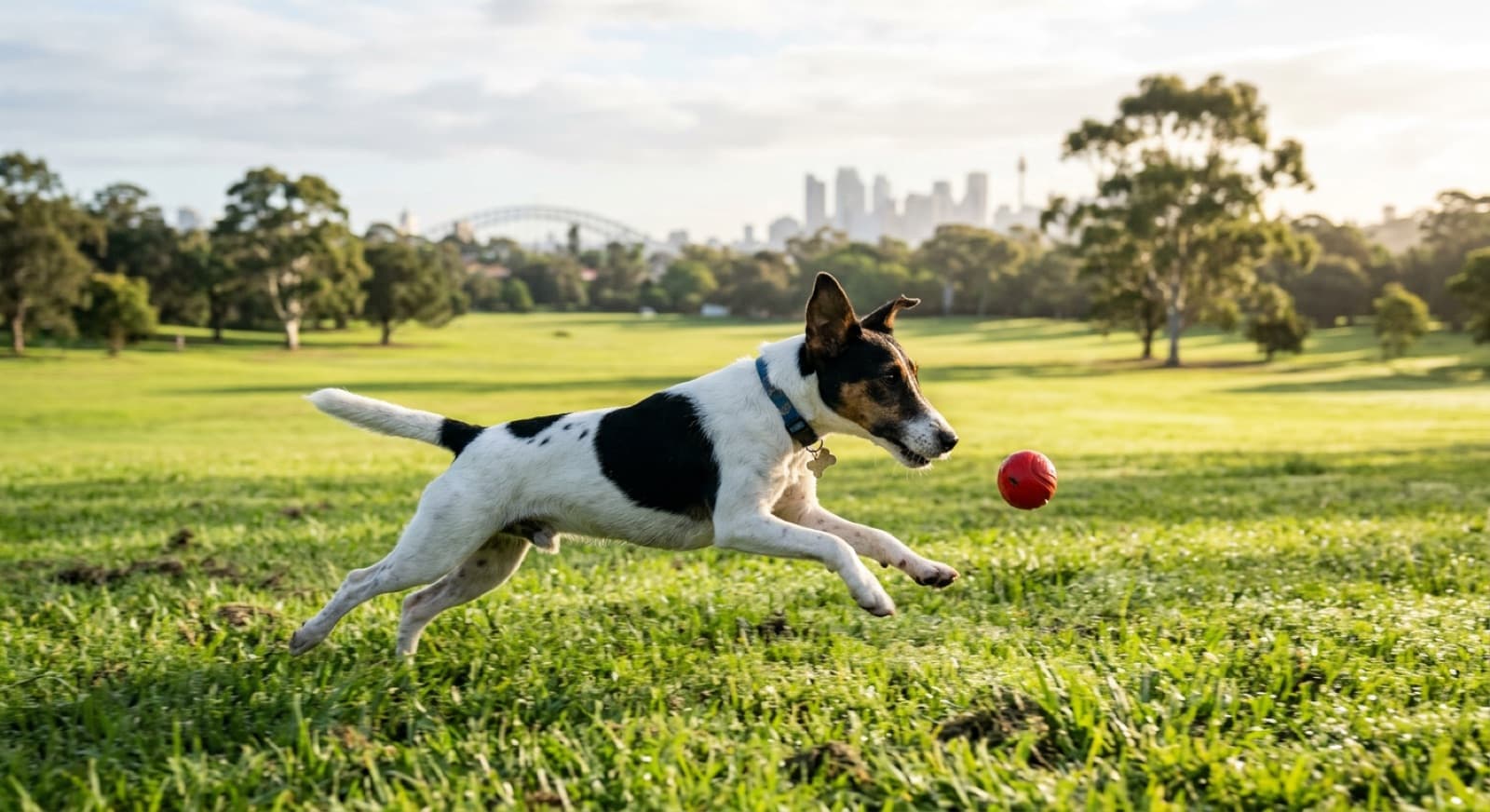
A Fox Terrier is a small dog with a big working-terrier engine: bold, clever, busy and vocal, not a quiet lap dog. Plan on a good hour or more of real activity a day, made up of walks, off-lead running and play where it is safe, plus daily mental work like training, scent games and puzzle toys, because a bored Foxie invents its own fun and it is usually barky and destructive. Training must be reward-based, short and varied, because this is an independent terrier that decides whether your request is worth it. Prey drive is strong, so build a solid recall on a long-line before trusting off-lead, and expect digging and escaping unless you have secure fencing and a proper outlet. In Sydney, work the cool hours, carry water, watch for overheating and keep year-round tick prevention going. Adopt one only if you can meet the exercise, the enrichment and the training a working terrier needs.
A big engine in a small body
To understand a Fox Terrier you have to understand what it was built for. Both the Smooth and the Wire Fox Terrier were developed to work fox: to keep up with the hunt, then go to ground, dig, and bolt a fox from its den. That is a job that rewards a bold, tireless, quick-thinking dog with real drive, and every Foxie you meet still carries it. The dog looks like a small, smart, tidy companion. Underneath is a proper working terrier.
That is the single most important thing to grasp before you adopt one. The compact size fools people into expecting a low-key little dog, and a Fox Terrier is the opposite. It is high-energy, curious and always into something, wired to run, hunt, dig and investigate. When people call a Foxie “too much” or “never switches off,” what they usually mean is a working terrier that is not getting a working terrier's worth of exercise and thinking. Give the same dog a proper outlet and the picture changes completely.
This is also the trap that lands Fox Terriers in rescue. They are handsome, clever and full of character, and plenty of people take one on for the look without reading the temperament underneath. The Fox Terrier breed page flags the busy energy and the strong prey drive as the two most underestimated things about the breed, and it is exactly that mismatch, a high-drive terrier in a low-activity home, that fills foster carers' spare rooms.
Temperament: bold, clever and not a lap dog
A Fox Terrier is bold, confident and endlessly busy, with a personality far bigger than its body. It is clever and curious, always investigating, and alert and vocal enough to make a genuinely good little watchdog. It will tell you about every visitor, every possum on the fence and every car in the street. With its own family it is affectionate, playful and lively, and it wants to be in the middle of everything you do.
What it is not is a quiet lap dog, and setting that expectation honestly is the kindest thing you can do before adopting. People who take a Foxie on picturing a calm little couch companion are often the ones who end up surrendering it a year later, because the real dog is spirited, driven and needs a job. That is not a criticism of the breed. A Fox Terrier in the right home, with enough exercise and company, is one of the most entertaining and devoted dogs going. It just has to be the right home.
Around other dogs and other people, individual temperament varies, and terriers can be scrappy or same-sex selective, so meeting the actual dog matters more than any breed generalisation. This is where adopting through a rescue that fosters is a real advantage. A foster carer has lived with the dog and can tell you honestly how it behaves with visitors, other dogs, cats and children. The temperament of a settling rescue Foxie, and what the first weeks look like, is covered in the Fox Terrier adoption guide.
How much exercise a Fox Terrier really needs
For a healthy adult Fox Terrier, plan on a good hour or more of real activity a day, split across the day rather than crammed into one hit. The small size is deceptive. This is a dog with deep stamina that will happily run, chase and play for far longer than its legs suggest. A slow amble on lead where the dog stops at every fence post is not the same as sustained walking, running or free play that actually works the body.
A good weekly routine for a Sydney Fox Terrier usually looks something like this:
- Two proper daily walks. Brisk, purposeful walks, not around-the-block strolls that leave the dog with energy to spare.
- Off-lead running and fetch where it is safe. A securely fenced off-lead area lets a Foxie open up and burn energy in a way lead walking never will. Check your council for where and when off-lead is allowed.
- Vigorous play. Fetch, tug and chase games that get the dog really moving, on top of the walking.
- Daily mental work. Training, scent games, puzzle feeders and trick sessions. A thinking terrier is a calmer terrier.
The number matters less than the honesty behind it. If reading that list makes your heart sink, a Fox Terrier is probably not your breed, and that is a completely fair conclusion to reach before you adopt rather than after. The RSPCA Australia Knowledgebase has sensible general guidance on how much exercise dogs need and why it matters for behaviour. One note for a young dog: while a Fox Terrier is still growing, keep to free play, normal walks and games rather than hard, repetitive distance running, because the joints and growth plates are still forming. Build up slowly and ask your vet when your individual dog is ready.
Exercise is only half of it: the busy brain needs a job
A walk tires the legs. It does not tire the brain, and a Fox Terrier's brain is the part that gets it into trouble. This is a clever, problem-solving breed, and mental work is one of the most powerful and most overlooked tools for settling a high-drive dog. It is also easy to build into a normal day.
- Scent and nose games. Hide food or a favourite toy around the house or yard and let the dog sniff it out. Using the nose is deeply satisfying work for a terrier and genuinely tiring.
- Puzzle feeders and food toys. Feed part of the daily meal out of a puzzle or a slow feeder so the dog has to work for it.
- Trick training and new skills. Short daily sessions teaching something new give the brain the workout it craves.
- A real job or a dog sport. Fox Terriers thrive when they have a purpose, whether that is a formal sport or structured tasks around the home.
A dog that has run and thought and been part of the family day is a dog that lies down and sleeps in the evening. That is the goal, and it is very achievable with a Fox Terrier in the right home. Skip the enrichment and rely on physical exercise alone, and you will find a Foxie has a bottomless tank of energy that never quite empties.
Training a terrier that thinks for itself
Here is the part that surprises people. Fox Terriers are clever and very food-motivated, which makes them capable learners, and yet they are not effortless to train. The reason is the independent streak. A terrier bred to work on its own initiative down a fox den will quietly weigh up your request and decide whether it is worth doing. That is not stubbornness for its own sake, it is a dog that thinks, and it changes how you have to train.
What works with a Fox Terrier is reward-based training that stays upbeat, short and varied. This breed bores fast with the same command drilled over and over, so keep sessions brief, make them fun, mix up what you ask, and reward generously so the dog decides that working with you is the best game going. Start early and keep going, because a young Foxie that has never learned the rules is a quick, opinionated dog to catch up with later. Early and ongoing socialisation matters just as much as obedience, so the dog grows up confident and settled around people, dogs and everyday Sydney life.
Just as important is what not to do. Harsh, heavy-handed or punishment-based methods backfire badly with a proud terrier. They damage the trust between you and the dog, and a strong-willed Foxie often digs in rather than complies. Force-free, positive methods are not just kinder, they genuinely work better with this temperament. The Australian Veterinary Association and the RSPCA Australia Knowledgebase both back reward-based training over aversive methods for exactly these reasons.
The things worth prioritising with a Fox Terrier are a rock-solid recall (more on that below), everyday impulse control so the dog can settle and wait, and early management of the alert-barking so it does not become a fixed habit in close Sydney housing. For a first-time terrier owner especially, a good positive reward-based class or a Sydney force-free trainer experienced with terriers is well worth the money. A trainer who understands the terrier mind will save you a lot of frustration, and the earlier you start, the easier the whole picture becomes.
Prey drive, digging and the escape artist
This is the safety heart of owning a Fox Terrier, so it is worth reading twice. The breed was created to bolt foxes, which means it comes with a very strong prey drive. A Foxie will chase cats, wildlife, birds, rabbits and small animals, and once it locks onto something, recall fails. In the heat of a chase even a normally reliable recall can vanish. This does not make a Fox Terrier unmanageable. It means you plan around the drive rather than pretend it is not there.
Build a strong recall early with reward-based training, and proof it thoroughly on a long training line before you ever trust your dog off-lead in an open space. A long-line lets a Foxie run, sniff and explore while you keep control, which is the safest way to give freedom to a dog with drive. Only let a Fox Terrier fully off-lead in genuinely secure, legally designated off-lead areas away from roads, and treat any unfenced space near traffic or wildlife as a long-line area, never a free-run one. A possum in a tree or a cat across the road can trigger a chase in an instant, and a small dog bolting toward traffic is exactly the scenario you are guarding against.
The same instincts make the Fox Terrier a champion digger and a determined escape artist. Bred to dig its way to a fox, a Foxie will dig under a fence, climb or scramble a low one, and squeeze through any gap it can find. Secure, dig-proof fencing is not optional with this breed. Check the base of the fence for gaps and dig-outs, watch for climb points, and think like a small, motivated terrier trying to get out. Rather than fighting the digging instinct entirely, give it an outlet: a dig pit or sandpit in a corner of the yard, seeded with a buried toy or treat, becomes the fun place to dig and takes the pressure off your garden and your fence line. A tired, satisfied Foxie with somewhere legal to dig has far less reason to tunnel out.
Fox Terriers with cats, small pets and kids
Because of that prey drive, cats and small pets need real care. Some Fox Terriers, especially ones raised with a cat from a young age or with a softer drive, live happily alongside a household cat. Others will chase, and a determined terrier chasing a cat is dangerous for the cat. Treat cat compatibility as something to assess in the individual dog, not a breed guarantee. If you have a cat, tell the rescue up front and ask them to match you with a dog they have seen behave calmly around cats in foster care. Introduce slowly, with barriers and supervision, and set the home up so the cat always has escape routes and high spaces. Small pets like rabbits, guinea pigs and birds are a harder ask again, and are usually best kept completely separate from any terrier.
With children, a Fox Terrier is lively and can be great fun with active, respectful older kids who enjoy training and playing with a dog that has energy to match. Around toddlers and very young children, supervise closely. A Foxie is busy and quick, and a terrier that is grabbed, cornered or handled roughly may not tolerate it. As with cats, the individual dog and an honest foster assessment matter more than any breed rule, so ask the rescue how a particular Fox Terrier has been with children.
Boredom, barking and why they land in rescue
This is the honest part, and it is the reason so many Fox Terriers end up needing new homes. When a working terrier does not get enough exercise and mental work, that energy and drive do not vanish. They come out sideways. An under-exercised, bored or under-stimulated Foxie will dig up the garden, chew, escape the yard, and bark and bark and bark. Owners often read this as the dog being naughty or difficult. It almost never is. It is a working animal with nothing to work on.
The barking deserves its own mention, because in close Sydney housing it is one of the fastest ways a Fox Terrier wears out its welcome. A bored, under-exercised Foxie barks at everything, and a barking small dog can strain relationships with neighbours quickly. Fox Terriers are also clever and people-focused, and they do not do well shut away from family life for long stretches. Boredom plus isolation is the worst combination, and it can tip into real separation distress where the dog panics and destroys things specifically when left alone.
The fix is rarely more discipline. It is more of the right stuff: more physical exercise, more enrichment, more company, a predictable routine, and legitimate outlets for the terrier instincts like a dig pit and plenty of scent work. Get that right and the vast majority of the “behaviour problems” melt away, because they were never really behaviour problems, they were unmet needs. If your Fox Terrier is destroying things or barking frantically specifically when it is left alone, or working itself into a state as you head for the door, treat that as separation distress and work through it with your vet or a qualified force-free trainer rather than punishing it.
Exercising a Fox Terrier in the Sydney heat
Sydney gives you a busy little dog that will run itself flat out, and summers that can hit the mid-thirties with real humidity. That combination needs managing, because heat, not cold, is the genuine dog-safety risk here. A Fox Terrier will keep going long after it should stop, so it is on you to call the pace on a hot, humid day.
The practical rules are simple. Do the hard exercise in the cool of early morning and the evening, not the middle of a hot day. Carry water and offer it often. Never leave your dog in a parked car, not even for a couple of minutes. On the hottest days, swap the run for a shorter walk plus indoor mental work, and let a swim do some of the load if your dog enjoys water. Watch the footpath temperature too, because hot bitumen burns paw pads.
Learn the warning signs of heat stress and take them seriously: heavy, frantic panting, drooling, bright red gums, wobbliness, weakness or collapse. If you see them, stop immediately, move the dog into shade, offer water, and cool it with cool (not icy) water over the body. If the dog does not settle quickly, get to a vet straight away, because heatstroke is a true emergency that can kill. For after-hours emergencies, Sydney has 24/7 specialty and emergency services such as the Small Animal Specialist Hospital (SASH).
One more Sydney fact tied to all that outdoor exercise: paralysis ticks are a year-round danger across the region and can be fatal, so keep your Fox Terrier on a vet-recommended tick prevention product all year and do a physical tick check after any bushwalk. Run your fingers right down to the skin, because a tick is easy to miss on a busy dog that will not sit still.
Browse adoptable Fox Terriers in Sydney
A Fox Terrier rewards an active owner who can meet the exercise, the enrichment and the training a working terrier needs. Browse live NSW listings and set an alert so you hear the moment one comes into rescue.
See Available Fox Terriers →Is a Fox Terrier's energy and drive right for you?
Put it together and the honest picture is clear. A Fox Terrier is a small dog with a big working-terrier engine: bold, clever, busy and vocal, with a strong prey drive and a genius for digging and escaping. It needs a good hour or more of real exercise a day, daily mental work, patient reward-based training, secure dig-proof fencing and plenty of company. Meet all of that and you get one of the most entertaining, loyal and characterful companions going, a brilliant match for an active person or family who enjoys training and wants a dog with real spark. Miss it and you get a bored, barky, destructive escape artist and, all too often, another Fox Terrier in rescue.
So the question to ask yourself is not whether you like how a Foxie looks. It is whether your actual daily life, your yard and your fences have room for that much dog and that much drive. If they do, a Fox Terrier is a wonderful adoption. If they do not, a calmer breed will make both of you happier. Sydney and NSW rescues such as RSPCA NSW, AWL NSW, Sydney Dogs and Cats Home, Monika's Doggie Rescue and Maggie's Rescue assess their dogs in foster and shelter care, and can tell you honestly how much a particular Fox Terrier or Foxie cross needs and whether it suits your home. If you go ahead, register your adopted dog with your council through the NSW Pet Registry as required under the Companion Animals Act.
Frequently Asked Questions
How much exercise does a Fox Terrier need?
Plan on a good hour or more of real activity a day, split across the day, and be ready to add mental work on top. A Fox Terrier is small but it carries a full working-terrier engine, so a quick block walk does not touch it. A good routine mixes a couple of proper walks, off-lead running and fetch in a secure area where you can, and vigorous play, plus daily thinking work like training, scent games and puzzle feeders. The mental side matters as much as the physical, because a clever terrier that gets a walk but nothing to think about is still a restless dog. A Foxie that gets one without the other tends to invent its own entertainment, and it is usually the barky, destructive kind. Match the amount to your individual dog, but assume a genuine daily commitment before you adopt one.
Why is my Fox Terrier digging and escaping?
Digging and escaping are hardwired terrier behaviours in a Fox Terrier, and they get far worse when the dog is bored or under-exercised. The breed was developed to bolt foxes, which means going to ground, digging and squeezing into tight spaces are exactly what it was built to do. A Foxie will happily dig under a fence, climb a weak one or slip through a gap to go exploring, especially if something interesting is on the other side. The fix is two-sided. Meet the dog's real exercise and enrichment needs so it is not desperate to leave, and back that up with secure, dig-proof fencing that a determined digger and climber cannot beat. Give digging a legal outlet too, like a sandpit in the yard seeded with a buried toy, rather than expecting a terrier to never dig. A tired, satisfied Fox Terrier with somewhere to dig has far less reason to tunnel out.
Are Fox Terriers easy to train?
Fox Terriers are clever and food-motivated, which makes them very capable learners, but they are independent and can be stubborn, so they are not effortless to train. This is a terrier that thinks for itself and will quietly weigh up whether your request is worth doing. Training works when it is reward-based, upbeat, short and varied, and it stalls when it becomes repetitive drilling or turns harsh. A Foxie bores fast with the same command over and over, and heavy-handed methods backfire with a proud terrier. Start early, keep sessions fun, reward generously, and build impulse control and a reliable recall from the beginning. Managing the alert-barking early helps too, because Fox Terriers are natural watchdogs and will sound off. A positive reward-based class or a Sydney force-free trainer experienced with terriers is well worth it, especially for a first-time terrier owner.
Are Fox Terriers good with cats?
Sometimes, but never assume it, because Fox Terriers were bred to hunt and most carry a strong prey drive toward cats, birds and small animals. Some Foxies, especially ones raised with a cat from a young age or with a naturally softer drive, live happily alongside a household cat. Others will chase, and a determined terrier chasing a cat is genuinely dangerous. Treat cat compatibility as something to assess in the individual dog rather than a breed guarantee. If you have a cat, tell the rescue up front and ask them to match you with a dog they have seen behave calmly around cats in foster care. Introduce slowly, with barriers and supervision, and set the home up so the cat always has escape routes and high spaces. Small pets like rabbits, guinea pigs and birds are a harder ask again, and are usually best kept completely separate from any terrier.
What is a Fox Terrier temperament like?
A Fox Terrier is bold, clever, confident and endlessly busy, a big personality packed into a small dog. It is curious, alert and vocal, a natural watchdog that will tell you about every visitor, possum and passing car. With its family it is affectionate, playful and lively, and it thrives on being in the middle of things. What it is not is a quiet lap dog, and this is the honest expectation to set before you adopt. People who take a Foxie on expecting a calm little couch companion are often the ones who end up surrendering it, because the reality is a spirited, high-drive terrier that needs a job. Given enough exercise, training and company, that same energy makes a Fox Terrier a hugely entertaining and devoted companion for an active home.
Do Fox Terriers bark a lot?
Yes, Fox Terriers are naturally alert and vocal, and barking is part of the package rather than a flaw to be surprised by. The breed was bred to work noisily and to raise the alarm, so a Foxie will bark at visitors, other dogs, wildlife and anything out of the ordinary. That makes them good little watchdogs but it can become a problem in close Sydney housing if it is not managed. The best approach is to manage it early rather than let it become a habit. Meet the dog's exercise and enrichment needs so it is not barking out of boredom, teach a calm response to normal triggers with reward-based training, and avoid accidentally rewarding the barking with attention. A well-exercised, well-trained Fox Terrier still barks, but far less than a bored, under-stimulated one, and it can learn to settle on cue.
Can I let my Fox Terrier off-lead in Sydney?
Only in a securely fenced off-lead area, and only once your dog has a recall you have genuinely tested, because the strong prey drive makes an unproofed recall unreliable. A Fox Terrier that locks onto a possum, a bird or a cat can be very hard to call back, and near roads that is a real danger. Many Sydney councils have designated off-lead parks and some off-lead beach areas, but the rules, boundaries and times vary between councils, so check your council before you unclip the lead. Treat any open, unfenced space near traffic or wildlife as a long-line area rather than a free-run one, since a chase can start in an instant. A long training line lets a Foxie stretch out and sniff safely while you keep control. Fully fenced off-lead parks are where a terrier can truly let loose and where you build up off-lead reliability over time.
How do I exercise a Fox Terrier in the Sydney heat?
Shift the hard exercise to the cool of early morning and the evening, carry water, and never leave your dog in a parked car. Heat, not cold, is the real dog-safety risk in Sydney, and a busy little dog that will run itself flat out can overheat quickly on a hot, humid day. Watch for heavy panting, drooling, bright red gums, wobbliness or collapse, which are signs of heat stress. If you see them, stop, move the dog into shade, offer water, and cool it with cool (not icy) water over the body. If it does not settle quickly, get to a vet straight away, because heatstroke is a genuine emergency. On the hottest days, swap the run for a shorter walk plus indoor mental work like training or a puzzle feeder. Keep year-round paralysis tick prevention going as well, and check the coat down to the skin after any bushwalk.
Keep reading
Adoptable Fox Terriers in Sydney
Live listings of Fox Terriers and Foxie crosses across Sydney and NSW rescues.
Fox Terrier Adoption in Sydney
Where to adopt, why Fox Terriers end up in rescue, and what adoption costs against a breeder.
Fox Terrier Health Issues in Sydney
The health conditions to know in the breed, and year-round paralysis tick prevention.
All Sydney Adoption Guides
Browse every breed and how-to guide for adopting a rescue dog in Sydney.