The short answer
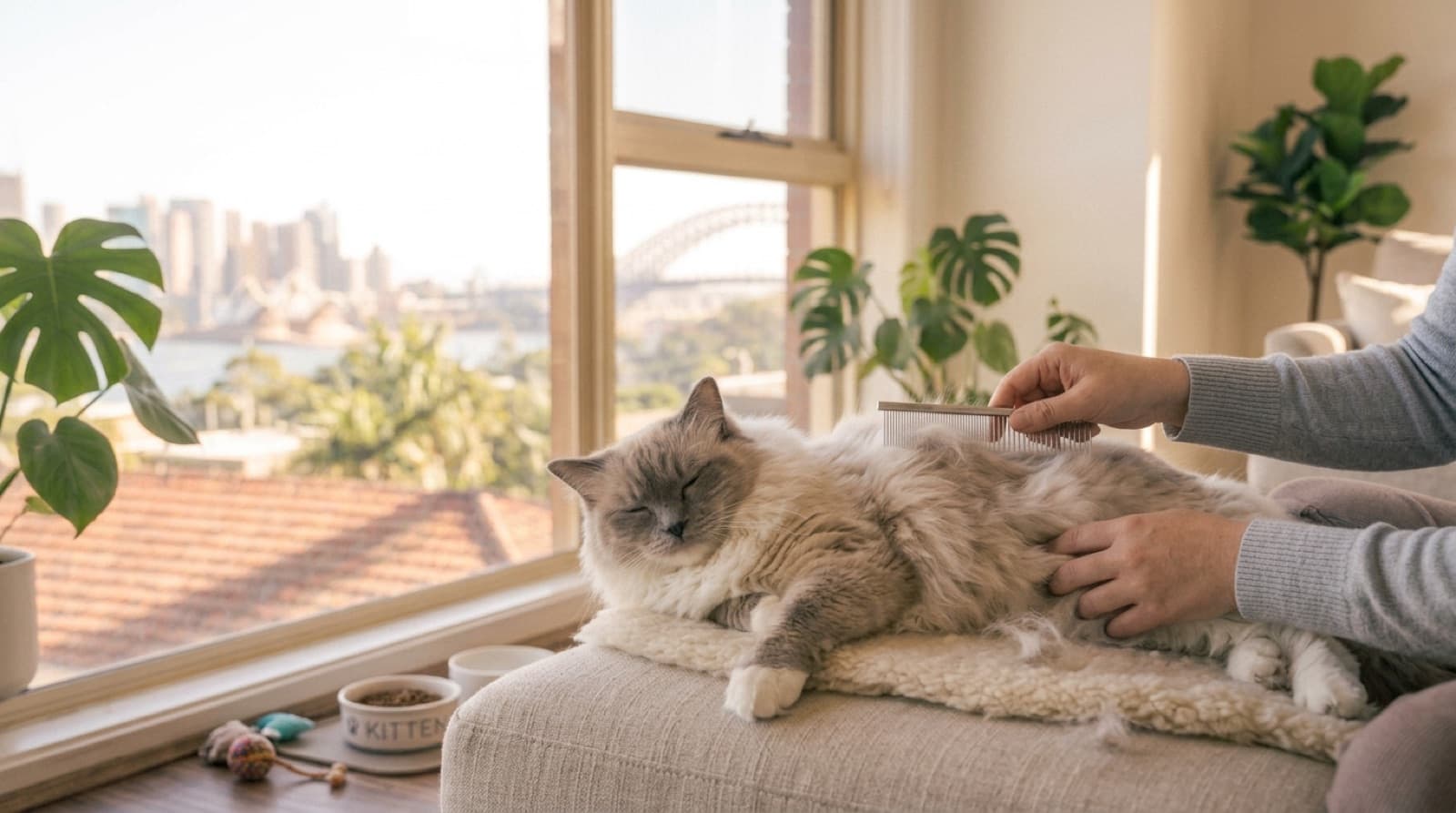
The Ragdoll coat is easier than it looks: no dense undercoat, so a brush a few times a week prevents mats. Use a stainless steel comb through the friction spots (behind the ears, the armpits, the belly and the britches), and go daily during the spring and autumn moult. Ragdolls shed and are not hypoallergenic. They are docile, affectionate lap cats that bond hard, so they suit an indoor life and often a companion cat. Never cut a mat out with scissors, and check the long coat for ticks after any outdoor time.
The Ragdoll coat, explained
Ragdolls have a semi-long, silky, plush coat that feels a bit like rabbit fur. The important detail for grooming is what the coat lacks: a Ragdoll has little or no thick, dense undercoat. That single feature is why the coat behaves so differently from a Persian's. A dense undercoat is what packs together and felts into hard mats, so a coat without much of one tangles more slowly and stays manageable with a light routine.
So a Ragdoll sits in the middle of the grooming scale. It is not a wash-and-go shorthair, and it is not the daily-maintenance job a Persian demands. It is a soft, longish coat that needs regular but modest attention. Get that routine right and you rarely fight a mat. Skip it for weeks and the coat will tangle in the usual friction zones, the same as any long-haired cat.
Ragdolls are also a slow-maturing breed, and the full adult coat can take up to three years to come in. A young Ragdoll is easier to keep tidy while the coat is lighter, which makes it the perfect time to teach the cat to accept a comb. If you are still deciding on the breed, our Ragdoll breed page and the Ragdoll adoption guide cover where to find one in Sydney rescue.
The grooming routine
The whole routine is short. A few minutes, a few times a week, focused on the spots that actually tangle. Here is what it looks like:
- Frequency: comb a few times a week normally, and daily during the heavier moult in spring and autumn when loose hair spikes.
- Cover the hot-spots: the friction zones tangle first. Work through behind the ears, the armpits under the front legs, the belly, and the britches around the tail and back legs every session.
- Use the right tools: a stainless steel comb is the workhorse, reaching through the silky topcoat to find tangles early. Add a slicker brush to lift loose hair from the body during moult.
- Introduce it gently: keep sessions short and calm, pair them with a treat, and start young if you can. A cat that learns to enjoy grooming as a kitten stays easy to handle for life.
- Check as you go: run your fingers through the coat to feel for small tangles or clumps, so you catch them before they become mats.
Consistency matters more than time. Ten minutes twice a week beats an hour once a month, because the whole game is stopping small tangles before they set. Groom in a quiet spot when the cat is relaxed, not straight after play, and stop before the cat gets fed up. The Australian Veterinary Association has general advice on routine cat care and handling at ava.com.au.
Dealing with mats
Even with a good routine, the odd tangle happens, usually in the britches or the armpits. For a small, loose one, hold the fur at the base near the skin with one hand so you are not pulling on the cat, then gently tease the tangle apart with your fingers and the steel comb, working from the outside edge inwards.
The one rule that matters most: never cut a mat out with scissors. A cat's skin is thin and loose and often pulls up into the base of the mat, so it is frighteningly easy to cut the skin and cause a wound that needs stitches. If a mat is tight, matted right down to the skin, or the cat is distressed, do not push it. Book a professional cat groomer or your vet, who can shave the mat off safely with proper clippers. It is a routine job for them and far safer than any home attempt. Once the mat is dealt with, tighten up the brushing so it does not happen again.
Shedding and the seasonal moult
Ragdolls shed. They are a long-haired cat, so loose fur lands on furniture and clothes, and it picks up during the seasonal moult in spring and autumn as the coat changes over. The lack of a thick undercoat means it is usually less dramatic than a Persian's moult, but it is real, and anyone hoping for a low-shed cat should know that going in.
Brushing is your best tool. Hair you catch on the comb is hair that never reaches the couch, and it is also hair the cat does not swallow while self-grooming, which cuts down on hairballs. Step up to daily combing while the moult is heavy and the loose fur around the house drops noticeably. A quick note on the earlier point: Ragdolls are not hypoallergenic, and that shed long hair can carry the cat allergen around a home, so a regular brush helps a mildly allergic household as well as a clean one.
Bathing
Ragdolls rarely need a bath. Like most cats, they groom themselves and keep their own coat clean, so a healthy Ragdoll can go its whole life without one. A bath is only worth it if the cat gets into something greasy or sticky it cannot clean off, or if a vet recommends a medicated wash for a skin condition. If you do bath one, use a cat-specific shampoo, keep the water warm, comb the coat through before it dries, and dry it thoroughly so the longer fur does not stay damp against the skin. Over-bathing strips the coat's natural oils and can dry the skin, so less is more.
The rest of daily care
Grooming is the headline, but a Ragdoll needs the same routine care as any cat:
- Nails: a trim every few weeks keeps claws from catching and splitting. A scratching post lets the cat maintain its own claws too. If your cat is shredding the furniture, our guide to cat scratching covers redirecting it to a post.
- Dental care: dental disease is common in cats. Ask your vet about tooth-brushing and dental checks at the annual visit.
- Ears and eyes: glance at the ears when you groom and wipe any gunk from the corners of the eyes with a damp cloth. Anything red, smelly or weepy is a vet visit.
- Litter tray: keep it clean and scooped daily. A long-coated cat can carry litter and mess in the britches, so a tidy tray and a tidy back end go together.
Browse adoptable Ragdolls in Sydney
Ragdolls and Ragdoll mixes turn up in Sydney rescue more often than people expect. See who is currently listed and looking for a home.
See Available Ragdolls →The Ragdoll temperament, and what it needs
The Ragdoll got its name from the way many of them go limp and relaxed when picked up. They are famously docile, affectionate and people-oriented, the classic floppy lap cat that follows you room to room and wants to be where you are. It is a lovely temperament, and it shapes how you care for one.
Because Ragdolls bond so hard to their family, they dislike being left alone for long stretches and can get bored or anxious when the house is empty all day. The best answer is company. A companion cat, and a bonded pair especially, suits a Ragdoll well, because two cats keep each other occupied while you are out and prevent the loneliness that drives behaviour problems in a single indoor cat. You can browse cats listed together on the bonded pairs page. Plenty of enrichment helps too: a cat tree, window perches, puzzle feeders and daily play give a Ragdoll something to do.
That trusting nature is also exactly why a Ragdoll should be an indoor cat. A cat this docile is poor at defending itself and has none of the street-smarts a free-roaming cat needs, so it is at real risk from traffic, cat fights and theft outdoors. Indoor or contained living, like a catio or secure yard, keeps a Ragdoll safe and is what most Sydney rescues require. Our indoor versus outdoor cats guide covers the full case and how to keep an indoor cat happy.
Tick checks in a long coat
Sydney sits on the paralysis tick's home range, and the tick is present in bushland areas year-round. Its bite delivers a neurotoxin that causes ascending paralysis and is fatal to cats without veterinary treatment. Even an indoor cat can be at risk if you have a contained garden that backs onto bush, or if the cat has any supervised outdoor time.
Two things protect a Ragdoll. First, keep the cat on year-round tick prevention using a product your vet recommends specifically for cats. This matters more than most owners realise: some parasite products made for dogs are toxic to cats and can be fatal, so never use a dog product on a cat, and never guess a dose. Second, run a physical tick check with your fingers after any outdoor or contained-outdoor time. A long, plush coat hides a tick easily, so work slowly over the whole body, including the face, ears, neck, between the toes and under the tail. If you find a tick or your cat seems wobbly, off its food or is breathing oddly, treat it as an emergency and get to a vet straight away. The RSPCA Australia Knowledgebase has plain-language guidance on ticks and cat health at kb.rspca.org.au.
When a coat problem means a vet
Most Ragdoll grooming is straightforward, but some coat changes are a health signal, not a grooming job. See your vet if you notice any of these:
- Sudden heavy matting in a cat that used to stay tidy. A cat that stops grooming itself is often telling you it is in pain, unwell or overweight and cannot reach.
- Bald patches or thinning fur anywhere on the body, which can point to skin disease, parasites, allergies or a hormonal problem.
- Overgrooming, where the cat licks one area raw or bald. This can be stress, boredom or an itchy skin condition, and it needs a proper diagnosis.
- Red, flaky, smelly or scabby skin, or a cat that scratches constantly.
A coat is a good early warning system for a cat's general health, so a change in it is worth acting on. When in doubt, book a check. Your vet can sort a skin problem from a stress problem and get the coat, and the cat, back on track. For general cat-health background, the NSW Pet Registry at petregistry.nsw.gov.au also holds your cat's microchip and registration details, which are worth keeping current in case a cat ever slips outside.
Frequently Asked Questions
How often should I groom a Ragdoll?
A brush a few times a week is enough for most Ragdolls, moving to daily during the heavier seasonal moult in spring and autumn. The Ragdoll coat is semi-long and silky but has little dense undercoat, so it mats far less than a Persian and does not need the twice-daily attention that a Persian does. The point of a regular routine is prevention: a few minutes with a comb several times a week stops small tangles becoming painful mats. Run your fingers or the comb through the high-friction spots each session, and you will rarely have a problem to fix.
Do Ragdoll cats mat easily?
Ragdolls mat less than heavy-undercoat breeds like the Persian, but they still mat if the coat is neglected, especially in the friction zones. The usual trouble spots are behind the ears, in the armpits under the front legs, on the belly, and around the tail and back legs (the britches). These areas rub as the cat moves and grooms, so tangles form there first. A comb through those spots a few times a week keeps them clear. Long-haired cats that are overweight or elderly mat more because they cannot reach to groom themselves, so those cats need extra help from you.
Do Ragdolls shed a lot?
Yes, Ragdolls shed, and they shed more heavily during the seasonal moult in spring and autumn. They are a long-haired cat, so loose hair ends up on furniture and clothes, though the lack of a thick undercoat means it is usually less than a Persian sheds. Regular brushing is the best control, because hair you catch on the comb is hair that does not land on the couch or get swallowed while the cat self-grooms. Swallowed hair can also mean more hairballs, so brushing helps there too. Expect a noticeable increase in loose fur as the weather changes each season.
Are Ragdolls hypoallergenic?
No, Ragdolls are not hypoallergenic. No cat breed truly is, because the main cat allergen is a protein in saliva and skin oils, not the hair itself, and every cat produces it. Ragdolls shed a moderate amount of long hair that can carry that allergen around the home. If someone in the household has a mild cat allergy, regular brushing, keeping the cat out of bedrooms, and good cleaning can help, but there is no guarantee. Anyone with a serious allergy should spend time around cats before committing to any breed, Ragdoll included.
What brush is best for a Ragdoll?
A stainless steel comb and a slicker brush are the two tools that cover a Ragdoll coat. The steel comb is the most important: it reaches through the silky topcoat to find tangles before they become mats, and it works well on the britches and behind the ears. The slicker brush lifts loose hair from the body during moult. Start gently and keep sessions short and positive, especially with a kitten or a newly adopted cat, so grooming becomes something the cat tolerates or enjoys rather than fights. A calm cat that lies still for a comb is far easier to keep mat-free for life.
How do I get a mat out of my Ragdoll's coat?
For a small, loose tangle, hold the fur at the base near the skin, then gently tease it apart with your fingers and a steel comb, working from the outer edge inwards. Never cut a mat out with scissors. Cat skin is thin and loose, and it is very easy to catch and cut the skin, which causes a serious wound. If a mat is tight, close to the skin, or the cat is distressed, stop and book a professional groomer or your vet, who can shave it safely with clippers. Prevention beats removal, so once the mat is gone, tighten up the brushing routine.
Can Ragdolls be left alone?
Ragdolls can be left alone for a normal working day, but they cope less well with it than many breeds because they are so people-oriented and bond hard to their family. A Ragdoll left alone for long hours every day can become bored or anxious, which shows up as overgrooming, clinginess or destructive behaviour. The simplest fix is a companion cat, and a bonded pair suits Ragdolls especially well because they keep each other company while you are out. Plenty of enrichment, a window perch and daily play time also help a single Ragdoll settle when the house is empty.
Should a Ragdoll be an indoor cat?
Yes, a Ragdoll should live indoors or with contained outdoor access like a catio, secure yard or harness walks. Ragdolls are famously docile and trusting, which makes them poor at defending themselves and no good at the street-smarts a free-roaming cat needs, so they are at real risk from traffic, other cats and theft outside. Sydney also has paralysis ticks in bushland areas year-round, which are dangerous to any cat and easily hidden in a long coat. Most Sydney rescues adopt Ragdolls out on an indoor or contained basis, and with vertical space, scratching posts and play, an indoor Ragdoll is a very happy cat.
Keep reading
Adoptable Ragdolls in Sydney
Live listings of Ragdolls and Ragdoll mixes across Sydney and NSW rescues.
Ragdoll Adoption in Sydney
Where to find a Ragdoll in Sydney rescue, what it costs, and what to expect.
Ragdoll Health Issues in Sydney
The health conditions to know about in the breed, and how to plan for them.
All Cat Adoption Guides
Every LocalPetFinder guide on adopting and caring for a cat in Sydney and NSW.