The short answer
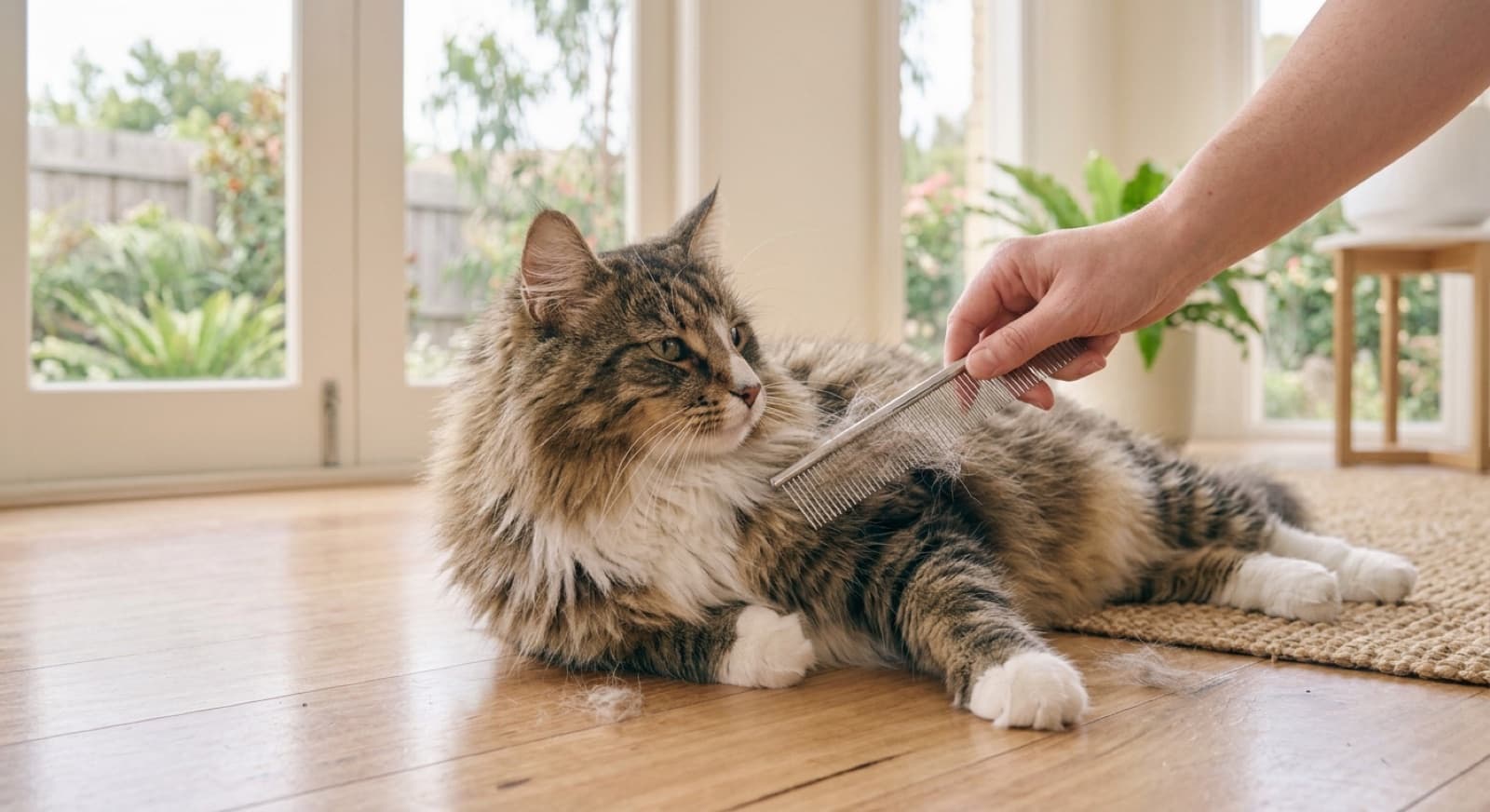
Brush a Norwegian Forest Cat two or three times a week with a long-toothed comb, and most days during the spring moult when it drops its winter undercoat. Target the mat-prone zones: the ruff, the back legs, the belly and behind the ears. Never shave the double coat, even in a Sydney summer, because it protects the skin and helps regulate temperature. Instead keep the cat cool with shade, water, cool indoor spots and regular brushing so air can move through the coat. Baths are rarely needed, since the coat is water-resistant and largely self-cleaning.
Understanding the double coat
To care for the coat you have to understand what it is for. The Norwegian Forest Cat comes from the forests of Scandinavia, and its coat is a survival tool. There are two layers: a dense, woolly undercoat that traps warmth, and a layer of longer, water-resistant guard hairs on top that shed rain and snow. Together they kept the cat alive through brutal northern winters, and they still shape everything about grooming a Wegie today.
Two things follow from that design. First, the coat is fairly self-maintaining and water-resistant, which is why these cats rarely need baths and generally keep themselves clean. Second, the woolly undercoat is exactly what mats if it is not brushed out, and it is what makes a cold-climate cat work harder to stay cool in a warm place like Sydney. Good grooming works with the coat, helping the cat shed the dead undercoat, rather than fighting against it.
The brushing routine
For most of the year, a thorough brush two or three times a week keeps a Wegie's coat in good shape. During the spring moult, when the cat drops its heavy winter undercoat, step that up to most days for a few weeks to stay ahead of the shedding. The single most useful tool is a long-toothed metal comb that reaches through the guard hairs into the undercoat, where mats begin. Many owners add a slicker brush or a gentle deshedding tool to lift loose undercoat during the moult.
Pay particular attention to the spots where mats form: the full ruff around the neck, the long “knickerbocker” fur on the back legs, the belly and armpits, and behind the ears. Work gently and never drag through a knot, because that hurts and teaches a cat to dread grooming. If your rescue cat has never been groomed, build up in short, calm, rewarded sessions rather than one long wrestle. Done right, most Wegies come to enjoy it, and the regular handling is good for spotting skin changes early.
Never shave the coat, even in a Sydney summer
This is the rule that catches people out, so it deserves its own section. In a hot Sydney summer it is tempting to think a thick-coated cat would be more comfortable shaved. It would not. You should never shave a cat's double coat, because shaving does not cool the cat the way people assume. The coat helps regulate temperature in both directions and shields the skin from the sun. Remove it and you expose the skin to sunburn, strip away the cat's natural temperature control, and often cause the coat to grow back patchy or with a changed, woollier texture that mats more easily.
The right way to help a Wegie feel cooler is to brush out the dead undercoat so air can move through the coat, and to manage the environment, which the next section covers. The one exception to leaving the coat alone is severe matting that cannot be brushed out. That is a job for a vet or a professional cat groomer, who can safely remove the affected fur, not something to tackle at home with scissors or clippers. For general guidance on cat coat care and welfare, the RSPCA Australia Knowledgebase is a reliable starting point.
Keeping a cold-weather breed cool in Sydney
A coat built for a Scandinavian winter is a real consideration in a city with summer heatwaves. The good news is that keeping a Wegie comfortable is about managing its environment, not its coat. On hot days keep the cat indoors in the coolest part of the home, with fresh water always available and shade from direct sun, and use fans or air conditioning to hold the temperature down. Never leave the cat in a hot car or a closed, hot room, the same rule that applies to every pet in a Sydney summer.
Regular brushing does double duty here, because a coat clear of dead undercoat lets air move and helps the cat shed heat. Watch for signs of heat stress on very hot days, such as heavy panting, drooling, weakness or obvious distress, and if you see them, move the cat somewhere cool, offer water and contact your vet, because heatstroke is an emergency. Heat is the real Sydney safety risk for this breed, not the cold its coat was designed for, and a little planning through summer keeps a Wegie perfectly happy.
Mats, skin and the humid Sydney weather
Mats are the main thing regular grooming prevents, and they matter for more than looks. A mat pulls tight on the skin, traps moisture and dirt against it, and can hide a skin problem developing underneath. Sydney's humid spells can let the coat knot faster, so check the mat-prone zones often and comb out tangles while they are still loose.
If you find a mat, never cut it out with scissors. The skin sits much closer to the base of a mat than it looks, and cutting a cat while trying to free a mat is a common and nasty injury. Tease small tangles apart gently with your fingers and a comb, and if matting has got ahead of you, hand it to a vet or a professional cat groomer. While you groom, it is a good moment to glance at the ears, trim the nails if needed, and check the skin, so grooming becomes a regular health check as much as a tidy-up.
Ready for a Norwegian Forest Cat in Sydney?
If a few brushing sessions a week sound like a fair trade for a sturdy, gentle, stunning cat, a rescue Wegie or fluffy longhair cross is the way to go. Check the Norwegian Forest Cats available now across Sydney and NSW rescues, and set an alert.
See Available Norwegian Forest Cats →Why coat care and indoor living go together
Everything on this page is easier with an indoor cat, where you control the sun, the temperature and how much the coat picks up outside. A thick-coated cat roaming outdoors in a Sydney summer faces exactly the heat it is least suited to, on top of the traffic, theft, tick and wildlife risks that apply to any free-roaming cat. Most Sydney rescues adopt cats out on an indoor or contained basis, and for a cold-climate breed it is the sensible choice. We cover indoor living, catios and safe shaded outdoor access in the indoor versus outdoor cats guide. For general veterinary guidance, the Australian Veterinary Association and your own vet are the people to ask, and the health picture for the breed is in the Norwegian Forest Cat health guide.
Frequently Asked Questions
How often should you brush a Norwegian Forest Cat?
Aim for a thorough brush two or three times a week for most of the year, and step it up to most days during the heavy seasonal moult in spring, when the cat drops its winter undercoat. The double coat is fairly self-maintaining compared with a Persian's, so this is manageable rather than daily hard work, but it is a real commitment. Regular brushing removes dead undercoat before it mats, spreads the coat's natural oils, lets you check the skin, and in Sydney it helps air move through the coat so the cat stays cooler. Little and often beats an occasional big session that the cat resents.
What brush is best for a Norwegian Forest Cat?
A good long-toothed metal comb is the single most useful tool, because it reaches through the guard hairs into the woolly undercoat where mats start, especially around the ruff, the back legs, the belly and behind the ears. Many owners pair it with a slicker brush or a gentle deshedding tool to lift out loose undercoat during the moult. Work gently and never drag through a knot, since that hurts and teaches the cat to dread grooming. Introduce the tools slowly and with rewards, and if your cat has never been groomed, build up in short calm sessions rather than one long one.
Do Norwegian Forest Cats shed a lot?
Yes, they shed, and most heavily during the spring moult when they release the thick winter undercoat. Through the rest of the year shedding is steadier. Regular brushing is the answer, because the fur a cat sheds either ends up brushed out by you or swallowed during self-grooming and around your home. Removing dead undercoat with a comb before it loosens keeps shedding under control, reduces hairballs, and stops the undercoat from matting. In a warm Sydney climate the seasonal pattern can be less pronounced than in a cold country, but the coat still needs the same regular attention.
Should you ever shave a Norwegian Forest Cat to keep it cool?
No. You should never shave a double coat, and it is one of the most important things to know about this breed. It is tempting in a Sydney summer, but shaving does not cool the cat the way people expect. The double coat actually helps regulate temperature in both directions and shields the skin, and shaving removes that protection, exposes the skin to sunburn, and can cause the coat to grow back patchy or with a changed texture. The right way to keep a Wegie cool is to brush out the dead undercoat so air can move through the coat, and to manage the environment with shade, water and cool indoor spots. If a cat is badly matted, a vet or professional groomer deals with it safely, not a home shave.
How do I stop my Norwegian Forest Cat getting matted?
Regular brushing is the whole game, with extra attention to the spots where mats form: the ruff around the neck, the long fur on the back legs, the belly and armpits, and behind the ears. Catch tangles early with a comb before they tighten into mats, because a mat pulls on the skin, traps moisture, and can hide skin problems underneath. In Sydney's humid spells the coat can knot faster, so check these zones often. Never try to cut a mat out with scissors, because it is very easy to cut the skin, which sits closer to a mat than you think. If matting has got ahead of you, a vet or a professional cat groomer can remove it safely.
Do Norwegian Forest Cats need baths?
Rarely. The Norwegian Forest Cat has a water-resistant coat that actually repels water and is hard to wet through, and a healthy, well-brushed cat keeps itself clean, so most Wegies seldom need a bath. Bathe only when the cat is genuinely dirty or your vet advises it, using a gentle cat-safe shampoo, lukewarm water, and a thorough dry afterwards, since a dense coat holds water and stays damp for a long time. For most owners, the real coat care is brushing, not bathing. If you find a cat needs frequent baths to stay clean, that is worth a vet conversation, because it can point to a skin or coat problem.
How do I keep a thick-coated cat cool in a Sydney summer?
Manage the environment rather than the coat. On hot days keep your Norwegian Forest Cat indoors in the coolest part of the home, with fresh water always available and shade from direct sun, and use fans or air conditioning to hold the temperature down. Never leave the cat in a hot car or a closed hot room. Keep up the regular brushing, because removing dead undercoat lets air move through the coat and helps the cat shed heat. Watch for signs of heat stress such as heavy panting, drooling, weakness or distress, and if you see them move the cat somewhere cool, offer water and contact your vet, because heatstroke is a genuine emergency. Heat, not cold, is the real risk for this breed in Sydney.
Keep reading
Adoptable Norwegian Forest Cats
The breed profile and any Norwegian Forest Cats or longhair crosses currently listed across Sydney and NSW rescues.
Norwegian Forest Cat Health Issues
Heart disease, the GSD IV genetic condition, hip and weight considerations, and the vet budget to plan for.
Norwegian Forest Cat Adoption in Sydney
Where to adopt a Wegie or longhair cross, why they are rare in rescue, and adopt versus breeder cost.
Indoor vs Outdoor Cats in Sydney
Why Sydney rescues adopt out indoor cats, plus catios and how to give a cat safe, shaded outdoor access.