The short answer
You can adopt a Norwegian Forest Cat in Sydney, but be patient: purebreds are rare in rescue because nearly all are bought from breeders, and large fluffy longhair crosses come up more often. Watch the main NSW cat rescues and set alerts. When a Wegie or longhair cross does appear, adoption costs about $100 to $300 all inclusive of desexing, vaccination, microchipping and a FIV check, a fraction of what a breeder charges. A cross usually carries the same sturdy, gentle temperament and is what you are most likely to find. One thing to plan for in Sydney: that thick double coat was built for a Scandinavian winter, so heat management and regular grooming matter here.
What a Norwegian Forest Cat actually is
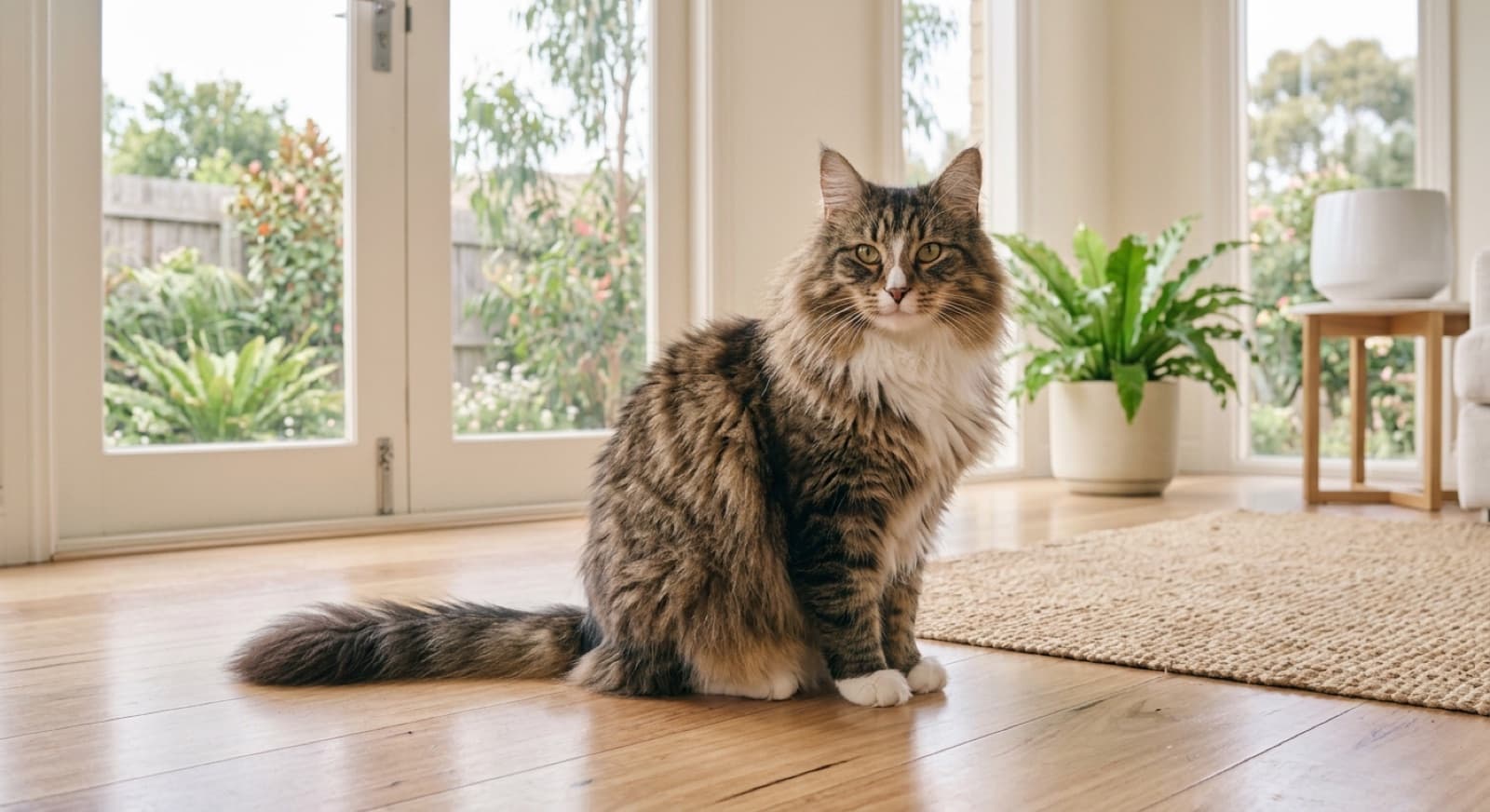
The Norwegian Forest Cat, often called a Wegie, is a large, sturdy, semi-longhaired breed that comes from the forests of Scandinavia. Everything about it is built for cold: a thick, water-resistant double coat with a woolly undercoat, a full ruff around the neck, tufted ears and toes, and a long bushy tail. It is a big, muscular cat, and it matures slowly, often not reaching full size until around four or five years old.
Temperament is easygoing. Norwegian Forest Cats are gentle, friendly and calm, but a little more independent than a clingy breed. They tend to want to be near the family rather than glued to a lap, they keep a strong climbing and play instinct well into adulthood, and they are known as sensible, unflappable cats. That laid-back nature makes them a lovely family cat and an easy housemate, provided you meet their two real needs: things to climb and regular coat care. For the breed profile and any Norwegian Forest Cat currently listed, see the Norwegian Forest Cat breed page.
Why Norwegian Forest Cats are rare in rescue, and why they do turn up
Purebred Norwegian Forest Cats are scarce in Sydney rescue for a simple reason: almost everyone who owns one bought it from a breeder, and it is a sturdy, long-lived breed owners tend to keep. Compared with the endless stream of domestic cats and kittens Sydney rescues take in, purebred Wegie numbers are tiny.
They do end up in rescue, though, and rarely because anything is wrong with the cat. The common thread is a life change: an owner moving to a rental that will not allow pets, a new baby, a relationship breaking down, illness, or a household that can no longer care for a pet. Occasionally a big longhair is surrendered by an owner who underestimated the grooming a double coat needs, or the space and climbing a large active cat wants. None of that reflects on the cat, which is usually as gentle as ever once it settles.
The other thing to understand is crosses. A Norwegian Forest Cat cross, or simply a big fluffy domestic longhair with the breed's coat and easygoing nature, appears in rescue far more often than a purebred. These cats carry much of the look and temperament without the pedigree paperwork, and they make wonderful companions. If you want a Wegie for the character rather than the papers, a longhair cross is both easier to find and often the smarter adoption.
Wegie, Maine Coon, or just a fluffy cat? Be honest with yourself
It saves disappointment to be realistic here. Without pedigree papers you often cannot be certain a cat is a purebred Norwegian Forest Cat, and most rescue longhairs with the look are best described as Norwegian Forest type or a longhair cross. The breed also overlaps heavily with the Maine Coon, and plenty of large fluffy rescue cats are a mix of both plus ordinary domestic cat.
The features people look for are a large sturdy body, a thick water-resistant double coat with a woolly undercoat, a full ruff, tufted ears and toes, a long bushy tail, a triangular face with a fairly straight profile, and an almond eye shape. The Maine Coon overlaps but leans to a squarer muzzle and a more rectangular body. In practice the two are easy to confuse, and none of these traits proves pedigree on its own. A good rescue will call a cat a cross or a type when there is no paperwork, and that honesty is a green flag, not a downgrade. If a confirmed pedigree genuinely matters to you, breeder registration papers are the only certainty. For a family companion, the temperament in front of you matters far more than the label.
Where to adopt a Norwegian Forest Cat or longhair cross in Sydney
There is no reliable shortcut here. Because Norwegian Forest Cats are scarce, the winning strategy is to watch several established NSW rescues at once, set alerts, and be ready to apply the moment a suitable cat appears. These are the main rescues rehoming cats across Sydney:
Cat Protection Society of NSW
A cat-only adoption centre in Newtown, and a strong first stop. Because they focus entirely on cats, staff know their animals well and can tell you if a large fluffy longhair is in care or expected. Every cat is desexed, vaccinated, microchipped and FIV tested. Listings at catprotection.org.au.
Sydney Dogs and Cats Home
The city's oldest shelter, at Strathfield South, taking cats through owner surrender and council contracts. That broad intake is exactly where a surrendered Wegie or longhair cross can surface. Adoption includes desexing, vaccination, microchipping and a vet check. More at sydneydogsandcatshome.org.
RSPCA NSW
The Sydney Adoption Centre at Yagoona plus regional NSW centres rehome a steady stream of cats, with the occasional pedigree or pedigree cross among them. Adoption covers desexing, vaccination, microchipping and a FIV check. Apply at rspcansw.org.au.
AWL NSW
Animal Welfare League NSW runs the Kemps Creek Shelter plus volunteer branches that foster cats in real homes, so you get honest notes on temperament. That helps with a big active breed, where you want to know how playful and how independent an individual cat is. Adoption includes desexing, vaccination, microchipping and a vet check. Listings on awlnsw.com.au.
Maggie's Rescue
An Inner West rescue in Marrickville using a foster-to-adopt model, so cats are assessed in real homes before rehoming. That means detailed temperament notes, which help you judge whether a cat suits your household and how it is with children and other pets. Information at maggiesrescue.org.
Brighter Future Cat Rescue
A cat-only foster network in Western Sydney. Because every cat lives in a foster home, the rescue can describe exactly how a cat behaves day to day, including how it handles other animals and how much it likes to climb and play. More at brighterfuturecatrescue.com.
A quick word on searches for a dedicated “Norwegian Forest Cat Rescue NSW.” People look for one, but we cannot verify a currently active NSW Norwegian Forest Cat-specific rescue by that name. Keep your search on the general rescues above and lean on alerts. Because the breed is so scarce in rescue, a single specialist group would rarely have a cat available anyway. For the broader how-to on applying and getting approved, our Sydney cat adoption guide walks through the whole process.
What it costs: adopt versus buy
The money is where the case for adoption gets very clear. Adopting a Norwegian Forest Cat or longhair cross through a Sydney rescue costs about the same as any rescue cat:
- Adult cat: about $200 to $220, all inclusive of desexing, vaccination, microchipping and a FIV check.
- Kitten: about $250 to $270, covering the same vet work plus the early vaccination course.
A purebred Norwegian Forest Cat from a breeder is a different order of cost, often well over a thousand dollars, and that price buys a cat with none of the vet work done. You then pay for desexing, vaccination, microchipping and the rest yourself in the first months, and a breeder price has 10% GST built in on top. Add it up and adoption is not just cheaper on the sticker price, it saves you hundreds more in vet bills that a rescue has already covered. For a fuller breakdown of what a Sydney cat costs across its life, see our cat adoption costs guide.
Plan for the ongoing costs too. A Norwegian Forest Cat needs quality food, litter, annual vet checks and a vet-recommended parasite product. In Sydney that parasite product matters, because the paralysis tick is present year-round in bushland areas and is dangerous to cats, so ask your vet for a cat-safe option. Budget a little grooming gear as well, since the double coat needs regular brushing, which we cover in the grooming and coat guide. Taking out pet insurance while the cat is young is the cheapest time to start.
If you have been searching “Norwegian Forest Cat for sale Sydney”
Plenty of people land here after searching for a Norwegian Forest Cat to buy, and it is worth pausing before you do. Pedigree kittens are the single most scam-prone corner of the online pet market, precisely because buyers will pay a lot sight unseen. The ACCC Scamwatch has recorded pet scams where a seller takes a deposit for a kitten that does not exist, then vanishes once the money clears. A sought-after breed like the Norwegian Forest Cat is a favourite target.
Adoption removes that risk. You deal with an established, registered rescue, you meet the cat, and you pay a modest fee for an animal already desexed, vaccinated, microchipped and FIV tested. Never send money before you have confirmed a real rescue with a physical location and a current adoptable list, or a breeder you can verify in person. If you do go the breeder route, look for one registered with a recognised body, ask to see the parents and how the kittens are raised, and never pay a deposit for a cat you have not seen. When a fluffy longhair cross with the same gentle temperament may be sitting in a Sydney rescue for a fraction of the price, the safer and cheaper choice is usually the obvious one.
The one thing to plan for: a thick coat in a hot city
This is the match question that matters most with the breed in Sydney. The Norwegian Forest Cat's glorious double coat was built for a Scandinavian winter, and here it lives in a climate with summer heatwaves. That means two ongoing jobs: regular brushing to keep the coat healthy and mat-free and to help the cat shed dead undercoat, and active heat management through summer with shade, fresh water and cool indoor spots.
The coat is not as high-maintenance as a Persian's, but it is a real commitment, and there is one rule that catches people out: you should never shave a double coat to cool the cat down, because it damages the coat and does not help the way people expect. The full routine, plus how to keep a cold-weather breed comfortable through a Sydney summer, is in the Norwegian Forest Cat grooming and coat guide.
Why a Norwegian Forest Cat should live indoors
A Norwegian Forest Cat should live indoors, or with contained outdoor access like a catio, secure yard or harness walks. The breed is a keen, capable climber with a semi-wild look, but underneath it is a friendly, valuable cat poorly equipped for traffic, dogs or a fight with another cat, and a striking pedigree longhair is a target for theft.
Sydney conditions stack the odds further: heavy traffic, year-round paralysis ticks in bushland suburbs, and native wildlife that free-roaming cats harm, with a growing number of NSW councils now bringing in cat containment rules. Most Sydney rescues already adopt cats out on an indoor or contained basis and will ask about your setup. The good news is that a Norwegian Forest Cat is genuinely happy indoors when the home gives it height, with tall climbing towers, sturdy scratching posts, puzzle feeders and daily play to satisfy that climbing instinct. We cover the full case, plus catios and how to transition a cat that has lived outdoors, in the indoor versus outdoor cats guide.
The NSW basics before you bring one home
NSW has clear rules for cat ownership under the Companion Animals Act 1998, and a rescue handles most of them for you. Every cat must be microchipped by 12 weeks of age or before it is sold or given away, and lifetime registered with your council by six months of age. Adopt through a rescue and the cat is already desexed and microchipped, so your job is mainly to transfer the ownership details and pay the one-off registration.
Registration runs through the NSW Pet Registry, and the lifetime fee is lower for a desexed cat than an entire one, which is another quiet reason adoption saves money. Fees change over time, so confirm the current figure on the NSW Office of Local Government site before you pay. For general veterinary guidance on cat care and desexing, the RSPCA Australia Knowledgebase and the Australian Veterinary Association are reliable starting points, and always speak to your own vet about an individual cat.
Browse adoptable Norwegian Forest Cats in Sydney
Norwegian Forest Cats and fluffy longhair crosses with that sturdy, gentle nature are rare in rescue, so the best move is to check the live listings and set an alert. See the Wegies and longhair crosses available right now across Sydney and NSW rescues.
See Available Norwegian Forest Cats →Choosing your Norwegian Forest Cat
When a Norwegian Forest Cat or longhair cross does come up, a few things will make the match work. The first is age. An adult with a known temperament is usually the safer bet, especially for a first cat or a busy home, because the rescue or foster carer can tell you exactly how playful, independent and sociable the cat is. Norwegian Forest Cats mature slowly and stay playful for years, so you lose little by skipping the kitten stage, and an adult's size and coat are already settled.
The second is to read the foster notes over the photo. A cat in foster care has been observed day to day, so the notes on how it copes with children, dogs and other cats, and how much it climbs and plays, predict fit far better than looks alone. The third is to think honestly about your household. If you can offer height to climb, are ready for regular grooming, and want a sturdy, gentle, easygoing cat, a Norwegian Forest Cat or fluffy longhair cross is a joy. Set your alerts, be application-ready, and be willing to move when the right cat appears.
Frequently Asked Questions
Where can I adopt a Norwegian Forest Cat near me in Sydney?
Start with the main NSW cat rescues and set alerts, because purebred Norwegian Forest Cats are scarce and go fast. Cat Protection Society of NSW in Newtown, Sydney Dogs and Cats Home in Strathfield South, RSPCA NSW at Yagoona, AWL NSW at Kemps Creek, Maggie's Rescue in Marrickville and Brighter Future Cat Rescue in Western Sydney all rehome cats, and a Norwegian Forest Cat or a fluffy longhair cross turns up in one of them from time to time. You are far more likely to find a large semi-longhair with the Wegie look and gentle nature than a confirmed purebred. Browse current listings, ask each rescue to flag you if a big fluffy cat comes in, and be application-ready so you can move quickly when one does.
Are Norwegian Forest Cats rare in Australian rescue?
Purebred Norwegian Forest Cats are uncommon in Sydney rescue, because almost every one is bought from a breeder and it is a sturdy, long-lived breed owners tend to keep. What you will see far more often is a large semi-longhaired cat or a cross with much of the breed's look and easygoing nature. Plenty of fluffy domestic longhairs get labelled Norwegian Forest Cat, Maine Coon or just 'part Wegie' in listings when they are really a mix, which is honest rather than misleading, since without papers no one can be certain. If you love the sturdy, gentle, semi-wild look rather than the pedigree, a longhair cross is both easier to find and well worth considering.
How much does it cost to adopt a Norwegian Forest Cat versus buy one?
Adopting a Norwegian Forest Cat or longhair cross through a Sydney rescue costs about $200 to $220 for an adult or $250 to $270 for a kitten, and that fee already covers desexing, vaccination, microchipping, a FIV check, worming and flea treatment and a vet check. A purebred Norwegian Forest Cat from a breeder costs far more, often well over a thousand dollars, with none of that vet work done, so you pay those bills separately on top and a breeder price has 10% GST built in. Adoption is not a compromise on cost. It is a fraction of the breeder price and the cat arrives already vetted and ready to settle in.
Is there a Norwegian Forest Cat rescue in NSW?
People search for a dedicated Norwegian Forest Cat rescue in NSW, but we cannot verify a currently active NSW Norwegian Forest Cat-specific rescue by that name. The realistic path is the general NSW cat rescues listed above, plus alerts so you hear the moment a large fluffy cat comes in. Because the breed is scarce in rescue, a single specialist group would rarely have a cat available anyway. Spreading your search across several established rescues and being ready to apply gives you a far better chance than waiting on one name that may not exist.
How do I tell a Norwegian Forest Cat from a Maine Coon or domestic longhair?
Often you cannot be certain without pedigree papers, and most rescue fluffy cats are best described as Norwegian Forest type or a longhair cross. The breed traits people look for are a large, sturdy body, a thick water-resistant double coat with a woolly undercoat, a full ruff around the neck, tufted ears and toes, a long bushy tail, a triangular face and an almond eye shape. The Maine Coon overlaps a lot, but tends to a squarer muzzle and a more rectangular body, while the Wegie has a straighter profile and a triangular face. In practice the two are easy to confuse and many rescue longhairs are simply a mix of both plus domestic cat. A good rescue will call a cat a cross or a type when there is no paperwork, and that honesty is a green flag. If a confirmed pedigree matters to you, breeder registration papers are the only certainty, though for a companion the temperament in front of you matters far more.
Are Norwegian Forest Cats good family cats?
Yes, they are generally a lovely family cat: sturdy, patient, gentle and easygoing, which suits homes with children and other pets when introductions are done properly. They tend to be a little more independent than a clingy breed like the Burmese, happy to be near the family rather than on top of them, and they often keep a playful, climbing streak well into adulthood. Their size and calm nature make them fairly sturdy and tolerant with respectful, cat-savvy children. As with any cat, teach children to handle gently and give the cat an escape route to a quiet high perch, and read a rescue's foster notes to check how an individual cat is with kids and other animals.
Is it safe to buy a Norwegian Forest Cat kitten online?
Buying a Norwegian Forest Cat kitten online is risky, because pedigree kittens are exactly the sort of high-value listing that attracts scammers. The ACCC Scamwatch has recorded pet scams where a seller takes a deposit for a kitten that does not exist and then disappears, and popular breeds are a favourite target because buyers will pay a lot sight unseen. Never send money before you have confirmed a real, registered rescue or a breeder you can verify in person. Adoption sidesteps the risk entirely: you deal with an established rescue, meet the cat, and pay a modest fee for an animal already desexed, vaccinated and microchipped.
Should a Norwegian Forest Cat be kept indoors?
Yes. A Norwegian Forest Cat should live indoors or with contained outdoor access like a catio, secure yard or harness walks. The breed is a keen climber and its semi-wild look hides a friendly, valuable cat that is poorly equipped for traffic, dogs or cat fights, and a striking pedigree longhair is a target for theft. Sydney also has heavy traffic, year-round paralysis ticks in bushland areas and native wildlife that free-roaming cats harm, and a growing number of NSW councils now have cat containment rules. A Norwegian Forest Cat thrives indoors with tall climbing towers, scratching posts, daily play and puzzle feeders, and most Sydney rescues now adopt cats out on an indoor or contained basis.
Do I need to register and microchip a Norwegian Forest Cat in NSW?
Yes. Under the NSW Companion Animals Act 1998, every cat must be microchipped by 12 weeks of age or before it is sold or given away, whichever comes first, and lifetime registered with your council by six months of age. A rescue cat is already microchipped when you adopt, so your main job is to update the ownership details on the NSW Pet Registry and pay the one-off lifetime registration fee, which is lower for a desexed cat. Registration fees change, so check the current figure on the NSW Office of Local Government site before you pay.
Keep reading
Adoptable Norwegian Forest Cats
The breed profile and any Norwegian Forest Cats or longhair crosses currently listed across Sydney and NSW rescues.
Grooming & Coat Care in the Heat
Brushing the double coat, seasonal shedding, why you never shave it, and keeping a cold-weather breed cool in Sydney.
Norwegian Forest Cat Health Issues
Heart disease, the GSD IV genetic condition, hip and weight considerations, and the vet budget to plan for.
Sydney Cat Adoption Guide
How to apply, what rescues look for, and how to get approved to adopt a cat in Sydney and NSW.