The short answer
A Devon Rex's delicate curly coat needs almost no brushing, and over-brushing it causes thin or bald patches, so a gentle hand-stroke or soft wipe is all it wants. The real care is the skin. Because the sparse coat does not absorb skin oils, the breed can get greasy skin and waxy ears, so give it an occasional gentle bath when needed and regular gentle ear cleaning. And with little coat to insulate it, a Devon Rex feels the cold, so provide warm spots, and keep it out of strong Sydney summer sun. Low-grooming, but not zero-care.
Understanding the rex coat
The Devon Rex's coat is the result of a natural genetic mutation, the same kind of thing that gives the breed its name. Instead of a normal three-layer coat, a Devon Rex has a short, fine, soft, wavy or curly coat that is missing most of the coarse guard hairs other cats have, so it feels like suede or lambswool and is often sparse, especially on the belly, the chest and behind the ears. Even the whiskers tend to be curly and brittle. It is a coat built more for charm than for protection.
Two things follow from that design, and they shape all of coat care. First, the coat is delicate and does very little brushing well, because the fine hairs break easily. Second, a sparse coat cannot do the two jobs a normal coat does: it does not fully absorb the skin's oils, and it does not insulate the cat well. So Devon Rex care is less about the fur and more about managing the skin and keeping the cat warm, which is the opposite of what people expect from a coated cat.
Brushing: less is more
This is the rule that catches new owners out. Unlike almost every other breed, a Devon Rex needs barely any brushing, and vigorous brushing actively harms the coat. The fine hairs are fragile, so a firm brush, a slicker or a deshedding tool will break them and can leave the cat with thin or bald patches. Put those tools away.
What the coat does want is the gentlest possible touch. For most Devon Rex, simply stroking the cat with your hand keeps the coat in good order, and it doubles as the affection this breed adores. If you want to do a little more, a soft damp cloth wiped lightly over the coat, or a very soft brush used with the lightest pressure, is plenty, and only occasionally. Think of coat care as a gentle wipe now and then, not a grooming session. The cat will thank you, and so will its coat.
Skin, oils and the occasional bath
The skin is where the real care goes. Because the sparse coat cannot fully absorb the natural oils the skin produces, those oils can build up, leaving the skin feeling a little greasy and sometimes carrying a faint odour, a milder version of what a hairless Sphynx experiences. The answer is an occasional gentle bath when the cat is genuinely greasy, using lukewarm water and a cat-safe shampoo recommended by your vet.
The important word is occasional. Over-bathing strips the skin and can make it produce even more oil, so bathe only when the cat needs it, not on a fixed weekly schedule. Dry the cat well afterwards and keep it warm, because a sparse-coated Devon Rex chills fast when wet. Never use human or dog shampoo, which can irritate a cat's skin. And if a cat needs frequent baths to stay comfortable, or the skin looks red, sore or smells off, that is a vet matter, not a grooming one, and it is covered in our Devon Rex health guide.
Ears and chin: the oily-skin extras
The same oily-skin tendency shows up in the ears and on the chin. Devon Rex ears, large and open, can build up wax faster than a typical cat's, so gentle regular cleaning of the outer ear with a vet-recommended cat ear cleaner and a cotton pad keeps them healthy. Wipe only what you can easily reach and never push anything into the ear canal. Redness, a strong smell, dark discharge or a cat scratching and shaking its head means stop cleaning and see your vet, because that is an infection, not just wax.
On the chin, feline acne, showing as blackheads or small bumps, is common and a little more likely in an oily-skinned breed. Keeping the chin clean helps, and swapping a plastic food bowl for ceramic, glass or stainless steel that you wash daily makes a real difference, since plastic harbours the bacteria that worsen acne. Mild cases are a hygiene issue, but a red, swollen or infected-looking chin is a vet visit.
Warmth and sun in the Sydney climate
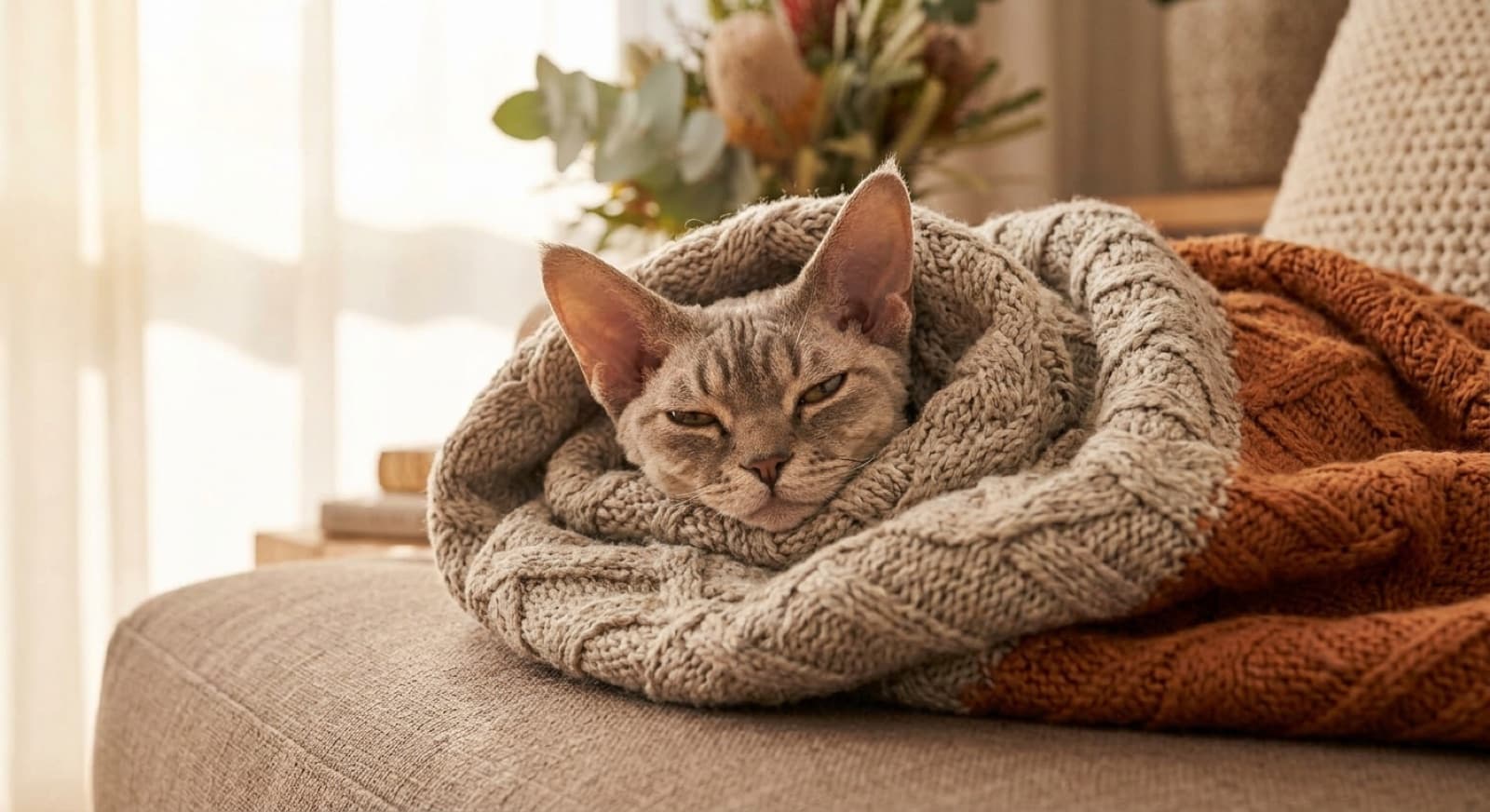
The other half of a sparse coat is temperature. With little insulation, a Devon Rex feels the cold and is a determined warmth-seeker, so give it warm resting spots, blankets to burrow into, and a soft jumper for the coldest days or when the air conditioning is running. Even in mild Sydney winters, cool nights matter for this breed. Make sure any heat source is safe and that the cat can always move away from it.
In summer the job flips to sun and heat. The thin coat gives less protection than a full one, so keep a Devon Rex out of direct midday sun, especially on lightly-coated areas like the ears and belly, do not let it bask on a hot sunny windowsill when the sun is high, and shade any catio. It is a less extreme sun risk than a hairless cat, but Sydney summers are strong and worth managing. Do not use human sunscreen on a cat, since some ingredients are toxic, and ask your vet if you want a cat-safe option. As with every pet here, keep the cat cool, shaded and hydrated in the heat. For general guidance on cat coat and skin care, the RSPCA Australia Knowledgebase and your own vet are reliable starting points.
Ready for a Devon Rex in Sydney?
If a barely-brush coat, a bit of skin care and a warm lap sound like your kind of cat, a rescue Devon Rex or curly-coated cross is the way to go. Check the Devon Rex available now across Sydney and NSW rescues, and set an alert.
See Available Devon Rex →Why coat care and indoor living go together
Everything on this page is easier with an indoor cat, where you control the sun, the temperature and the cleanliness of the environment. A sparse-coated Devon Rex outdoors is exposed to the two things it copes with least, strong sun and temperature swings, on top of the traffic, theft, tick and wildlife risks that apply to any free-roaming cat. Most Sydney rescues adopt cats out on an indoor or contained basis, and for this breed it is the sensible choice. We cover indoor living, catios and safe shaded outdoor access in the indoor versus outdoor cats guide. For general veterinary guidance, the Australian Veterinary Association and your own vet are the people to ask, and the health picture for the breed is in the Devon Rex health guide.
Frequently Asked Questions
How often should you brush a Devon Rex?
Hardly ever, and this surprises people. The Devon Rex coat is fine, soft, wavy and delicate, and vigorous brushing does more harm than good, because it breaks the fragile hairs and can leave the cat with thin or bald patches. Most Devon Rex need no real brushing at all. A gentle hand-stroke, a soft damp cloth wiped over the coat now and then, or at most a very soft brush used lightly is plenty to keep the coat looking good. Put away the slicker brushes and deshedding tools you might use on other breeds, since they are the wrong tools entirely for this delicate coat. With a Devon Rex, less really is more.
Do Devon Rex cats need baths?
Some do, occasionally, and it comes down to the skin rather than the coat. Because the fine, sparse coat does not absorb the natural oils the skin produces, those oils can build up and leave the skin feeling greasy, sometimes with a faint odour. A gentle bath with a cat-safe shampoo when the cat is genuinely greasy keeps this in check. The key word is occasional: over-bathing strips the skin and can make it produce even more oil, so bathe only when needed, not on a fixed schedule. Use lukewarm water and a gentle cat-safe product, dry the cat well afterwards and keep it warm, since a sparse-coated cat chills quickly when wet. If a cat needs frequent baths to stay comfortable, that is a vet conversation.
Why does my Devon Rex have greasy skin or waxy ears?
It comes back to the coat. A full coat quietly absorbs the oils a cat's skin produces, but the Devon Rex's sparse coat cannot, so those oils sit on the skin and collect in the ears. That is why the breed can feel a little greasy and build up ear wax faster than a typical cat, and why it is more prone to yeast-related skin and ear irritation. The management is gentle and routine: an occasional bath when needed, and regular gentle cleaning of the outer ear with a vet-recommended cat ear cleaner, wiping only what you can easily reach and never pushing into the ear canal. If you see redness, a strong smell, dark discharge, sores or a lot of scratching, stop cleaning and see your vet, because that points to an infection that needs treatment.
Do Devon Rex cats get cold?
Yes. With so little coat to insulate them, Devon Rex feel the cold more than most cats and are real warmth-seekers. You will often find one curled on a warm lap, burrowed under the covers, or pressed against anything cosy, and many owners provide warm beds, blankets to tunnel into, and a soft jumper for the coldest days or in air conditioning. Even in Sydney, where winters are mild, cool nights matter for a sparse-coated cat, so give it warm places to settle. Make sure any heat source is safe and that the cat can move away from it, because a cat that struggles to hold its body heat can also overheat if it cannot escape a hot spot.
Can a Devon Rex get sunburnt in Sydney?
It can, because the sparse coat gives less protection than a full one, so a Devon Rex should not have access to direct summer sun in the middle of the day, especially on any thinly-coated areas like the ears and belly. It is not as extreme a risk as with a hairless Sphynx, since a Devon Rex does have a coat, but Sydney's summer sun is strong and worth managing. Keep the cat indoors with shaded resting spots, do not let it bask on a hot sunny windowsill when the sun is high, and if you use a catio make sure it is shaded. Do not put human sunscreen on a cat, because some ingredients are toxic to cats. If you want sun protection, ask your vet.
Do Devon Rex cats get chin acne?
They can, like many cats, and it usually shows as blackheads or small bumps on the chin. Because the breed already has oilier skin than most, keeping the chin clean matters, and one simple change often helps a lot: swap a plastic food bowl for ceramic, glass or stainless steel and wash it daily, since plastic harbours the bacteria that worsen chin acne. Mild acne is a grooming and hygiene issue. But if the area becomes red, swollen, sore or looks infected, treat it as a vet visit rather than squeezing or scrubbing it, because damaged skin can become infected.
How do I keep a Devon Rex comfortable through a Sydney summer?
Balance warmth against heat. A Devon Rex needs warm spots in cool weather, but through a hot Sydney summer the priority flips to keeping it cool and out of the sun. Keep the cat indoors in the coolest part of the home on hot days, with fresh water always available and shade from direct sun, and use fans or air conditioning to hold the temperature down, remembering the cat may then seek a warm nook once it is comfortable. Never leave the cat in a hot car or a closed hot room. Watch for signs of heat stress such as heavy panting, drooling or weakness, and if you see them move the cat somewhere cool, offer water and contact your vet, because heatstroke is an emergency. Heat is the real Sydney risk for any cat.
Keep reading
Adoptable Devon Rex in Sydney
The Devon Rex breed profile and any Devon Rex or curly-coated crosses currently listed across Sydney and NSW rescues.
Devon Rex Health Issues
Devon Rex myopathy, HCM, skin and dental care, the DNA test, and the vet budget to plan for.
Devon Rex Adoption in Sydney
Where to adopt a Devon Rex or curly-coated cross, why they are rare in rescue, and adopt versus breeder cost.
Sphynx Skin & Sun Care
The related hairless breed's skin routine, useful reading for any sparse-coated cat in the Sydney climate.