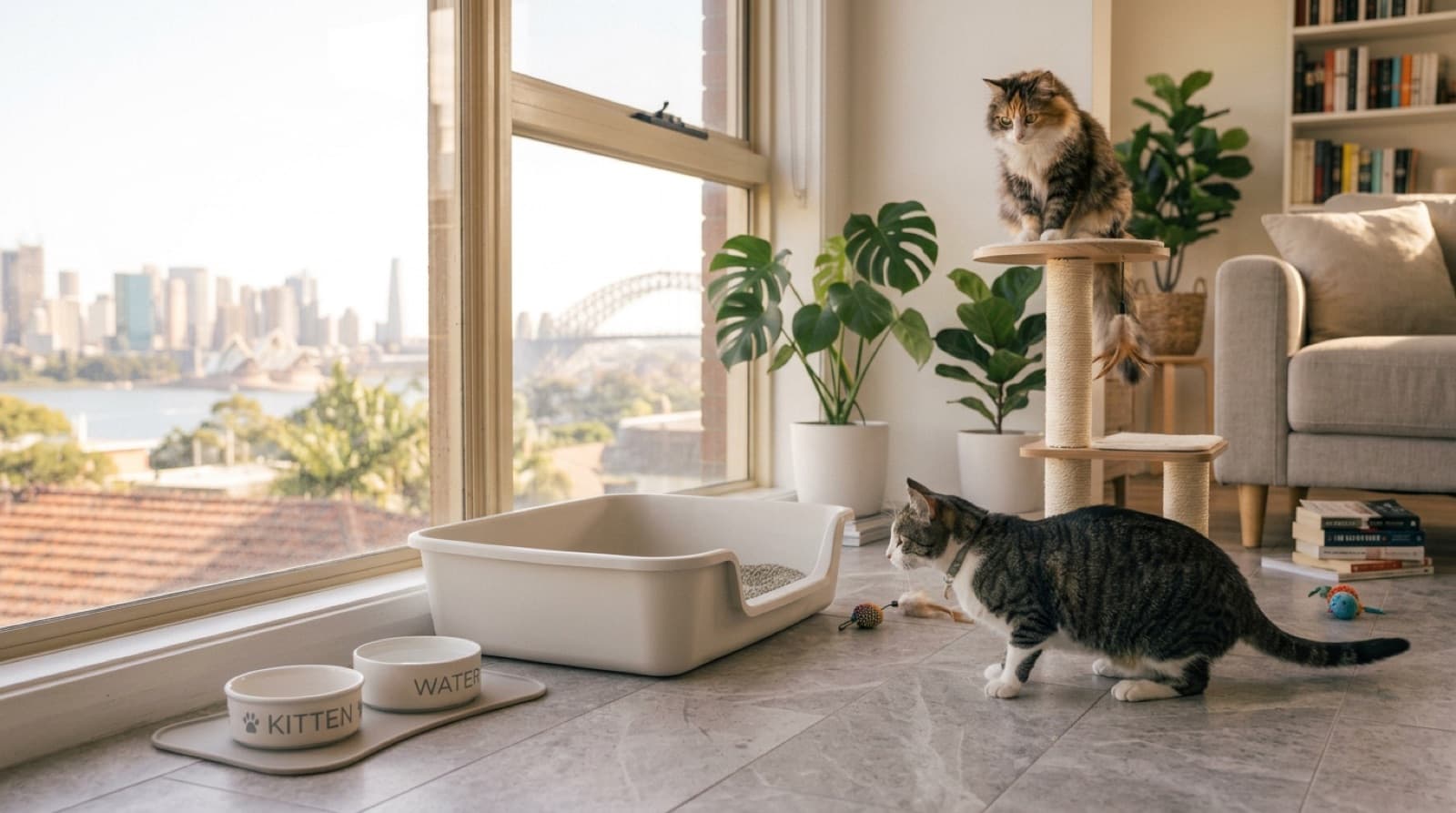
The short answer
Go slow, separate first, swap scents, weeks not days. Set the new cat up in its own room with its own litter tray, food, water and bed. For the first days the cats never meet. You let them get used to each other by smell, then by sight through a barrier, then in short supervised meetings that you end while things are still calm. Move up a stage only when both cats are relaxed. Give every cat its own spread-out resources, including one litter tray per cat plus one spare. Rushing is what causes fights. If you would rather skip the whole process, a bonded pair comes pre-introduced.
Why slow introductions matter
Cats are territorial animals. Unlike dogs, they are not naturally pack animals, and a resident cat views your home as its own space. When a strange cat suddenly appears in that space, the resident cat can feel genuinely threatened, and the newcomer, already stressed from moving, has nowhere safe to land. Put them nose to nose on day one and you are asking two anxious animals to work it out on the spot. It almost never goes well.
The damage from a rushed introduction is not just a bad afternoon. A first meeting that turns into a chase or a fight can set the relationship for months. Cats have long memories for a bad experience, and once two cats have decided the other is a threat, undoing that takes far more time than a careful introduction would have taken in the first place. This is the story we hear again and again from adopters who wish they had gone slower.
The good news is that most cats can learn to share a home, and many become close, if you give them the time to get familiar on their own terms. The staged method below is the approach recommended by the RSPCA Australia Knowledgebase: introduce cats gradually, by scent first, then sight, then supervised contact. It works because it never forces a confrontation. It lets each cat decide the other is safe.
Before the new cat arrives
Set up before you bring the new cat home, not on the day. The single most important thing you need is a separate safe room for the newcomer: a spare bedroom, a study, or even a bathroom will do. This room becomes the new cat's whole world for the first stage, so it needs everything the cat requires without ever leaving it.
Kit the safe room out with its own litter tray, food and water bowls, a bed or a hiding box, a scratching post and some toys. Keep the new cat's food and water well away from its litter tray, because cats dislike eating next to where they toilet. A hiding spot matters a lot here. A stressed cat that can retreat into a covered bed or a box feels safe enough to relax, and a relaxed cat settles faster.
Across the whole home, plan to duplicate resources so the two cats never have to compete. That means separate food and water stations, several beds and perches, and plenty of vertical space like cat trees, shelves or the top of a wardrobe. Cats feel safer when they can get up high and keep distance. Resource duplication is one of the most reliable ways to prevent conflict between cats, and it costs almost nothing to plan for.
Litter trays follow their own rule: one tray per cat plus one spare. For two cats that means three trays, placed in different spots rather than side by side. A resident cat can quietly guard a single litter location and leave the newcomer stuck, so spreading trays around the home removes a common and avoidable flashpoint. Get all of this in place before the new cat walks through the door.
Stage 1: Total separation and scent swapping
For the first days, the cats do not meet at all. The new cat stays in its safe room with the door shut, and your resident cat has the run of the rest of the house as usual. This gives the newcomer time to decompress from the move and lets both cats hear and smell each other through the door without any pressure. Spend calm, normal time with each cat separately so neither feels shut out.
Scent is how cats decide who belongs, so this stage is all about swapping smells. Take a soft cloth or a sock, rub it gently around one cat's cheeks where the scent glands are, then leave it in the other cat's space, and do the same in reverse. Swap their bedding between rooms. You can also swap the cats over for short periods, letting the new cat explore the main house while the resident cat spends time in the safe room, so each investigates the other's scent without a face to go with it.
The most useful trick at this stage is feeding either side of the closed door. Put a bowl down for each cat a little distance from the door, then over days move the bowls closer. This teaches both cats that the other's smell means something good is happening, which is exactly the association you want. Watch how each cat eats. Relaxed eating near the door is your green light. Hissing at the door, refusing to eat, or swatting under it means stay at this stage longer.
Stage 2: Visual contact without access
Once both cats are calm and eating happily either side of the door, let them see each other, but not reach each other. The point of this stage is that the cats can look, learn each other's faces, and stay safe, so nothing can tip over into a chase.
Use a barrier. A door wedged open a couple of centimetres, a tall baby gate, or a temporary screen all work. Keep meetings short and pair them with something positive: feed both cats within sight of each other through the barrier, or play with each one so the sight of the other is linked to a good time. Start with brief sessions and build up only as both cats stay settled.
Some interest, some staring, even a little hiss that quickly settles is normal here. What you are looking for is the ability to see each other and go back to eating or playing. If either cat freezes, growls, puffs up, or bolts, calmly close the gap and go back to Stage 1 for a few more days. There is no prize for speed. Spend as long on this stage as the cats need.
Stage 3: Short supervised meetings
When both cats can eat and relax in sight of each other through the barrier, you can let them share a space with no barrier, but only while you are there and only for a few minutes. Keep these first meetings short, positive, and always ended by you while things are still calm. Ending on a good note is the whole skill here.
Set the meetings up to succeed. Choose a large room with escape routes and high perches so neither cat feels cornered, and use food or a favourite toy to keep the mood good and give the cats something to focus on other than each other. A wand toy is handy because you can direct play and gently steer a cat away if needed. Two people, one calmly attending to each cat, makes it easier.
Watch closely and finish before either cat gets tense. A few minutes is plenty at first, then back to separate rooms. Repeat daily, extending the time only as the cats stay relaxed. If a meeting starts to sour, distract them with a toy or a treat and calmly separate, then make the next session shorter. Never reach in with your bare hands to break up a scuffle. Drop a towel or slide a barrier between them instead, then give everyone time to reset.
Stage 4: Full access
Give the cats free run of the house together only when they are genuinely relaxed in supervised meetings: eating near each other, ignoring each other calmly, or even playing or grooming. This is the finish line, and reaching it too early is the last place an introduction commonly goes wrong. If in doubt, give it a few more supervised days.
Even at full access, keep the resources spread out. Leave the extra litter trays, the duplicate food and water stations, the multiple beds and the vertical space in place for good, because these are what let two cats live together without friction long term. Do not funnel them back down to one bowl and one tray the moment they seem to get along. The setup that helped them settle is the setup that keeps the peace.
Do not expect instant best friends. Plenty of cats settle into a calm, respectful co-existence rather than a cuddly bond, and that is a complete success. As long as both cats are eating, using their trays, and moving freely around the home without fear, the introduction has worked. For everything else about helping a new cat settle in those first weeks, see our first week with a rescue cat guide.
Reading cat body language
The cats tell you when to move forward and when to pause, if you know what to look for. Learning the difference between relaxed, tense and aggressive body language is what lets you keep every meeting safe. The Australian Veterinary Association and RSPCA both stress reading these signals rather than pushing on regardless.
- Relaxed and ready to progress: loose posture, ears forward, tail up or gently curled, slow blinks, eating and grooming normally, showing curious interest without stiffness.
- Tense, so slow down: crouched low, ears flattening or turning back, tail flicking or tucked, staring hard, freezing in place, or eating little. Give them more time at the current stage.
- Aggressive or frightened, so stop: hissing, growling, spitting, a puffed-up coat, an arched back, flattened ears, dilated pupils, swatting, or bolting to hide. Separate calmly and step back a stage.
Trust the signals over the timeline. A cat that is crouched and staring is not ready no matter how many days have passed, and a cat doing slow blinks near the barrier is telling you it feels safe.
What is normal, and when to slow down or restart
A degree of hissing, staring and posturing during an introduction is completely normal. This is how cats negotiate, and a hiss is a warning, not a fight. As long as it settles quickly and the cats can go back to eating or resting, you are on track. Occasional grumbling can continue even after the cats are living together happily, and that is fine.
The signs that you have moved too fast are clearer: sustained aggression, real fighting with contact, one cat constantly hiding, or either cat going off its food. Any of these means step back to the last stage where both cats were calm, usually full separation with active scent swapping, and rebuild more slowly. Restarting is not failure. It is the normal way an introduction gets back on track, and cats that seemed hopeless often come good with a slower second run.
Give the whole thing weeks. A fortnight is fast, a month or two is common for a confident resident cat, and there is no benefit to hurrying. If you want the wider context on setting up a calm, contained home for cats in Sydney, our indoor versus outdoor cats guide and the Sydney cat adoption guide both help.
When to get help
Sometimes an introduction needs more than patience. If you have gone slowly and carefully and the cats still cannot share space without serious aggression, or if one cat is hiding for days, not eating, over-grooming, or toileting outside the tray from stress, it is time to involve a professional. These are not problems to wait out.
Start with your vet. A cat that is not eating or is hiding excessively may have an underlying health issue driving the behaviour, and a vet can rule that out first. Your vet can also refer you to a veterinary behaviour service for a proper behaviour plan. In Sydney, SASH, the Small Animal Specialist Hospital, is one referral option with a veterinary behaviour team. Some owners find vet-recommended pheromone diffusers helpful as one part of a broader plan, but ask your vet rather than reaching for a product on your own. There are no shortcuts or medications you should try without veterinary advice.
The bonded-pair shortcut
If all of this sounds like a lot of work, there is a way to skip it entirely: adopt a bonded pair. A bonded pair is two cats that already live together and are closely attached, so rescues rehome them as a unit to avoid the distress of splitting them up. They come pre-introduced. There is no safe room, no scent swapping and no staged meetings, because they already know and like each other. They simply move in together.
Bonded pairs are often the easier choice for a first-time multi-cat home, and especially good if you are out at work all day, because the two cats keep each other company and head off the boredom and loneliness that cause behaviour problems in single indoor cats. Many pairs are adopted for a single combined fee rather than double. You can browse cats listed together on the Sydney bonded pairs page. Just remember this is different from adding a new cat to a cat you already own, which still needs the full staged introduction above.
Browse adoptable cats in Sydney
Looking for a second cat, or a ready-made bonded pair that skips the introduction? Browse kittens, adults, seniors and pairs from rescues across Sydney and NSW.
See Available Cats →Frequently Asked Questions
How long does it take to introduce two cats?
Plan for weeks, not days. A relaxed pair might be sharing space happily in one to two weeks, while a nervous or territorial cat can take one to two months or more. The right pace is set by the cats, not the calendar: you move to the next stage only when both cats are calm at the current one. Rushing to save time is the single most common reason introductions fail, and a failed first meeting can leave lasting bad feeling that takes far longer to undo. Kittens and easygoing cats usually go faster than confident adult cats who have had a home to themselves for years. If either cat is hissing, hiding or refusing food, you are going too fast and should slow down.
How do I introduce a new cat to my existing cat?
Keep them completely separate at first, then introduce them by scent, then by sight, then in short supervised meetings, moving up a stage only when both stay calm. Set the new cat up in its own room with its own litter tray, food, water and bed. For the first days the cats never meet. You swap their bedding and rub a cloth on one cat then the other so each gets used to the other's smell. Next you feed them either side of a barrier like a cracked door or a baby gate so they can see each other while something good happens. Then you allow short, supervised, positive meetings that you end before either cat gets tense. Only when they are relaxed together do you give full access. The whole process runs over days to weeks. The RSPCA describes this same gradual scent-first approach.
Why are my cats fighting after the introduction?
Fighting after an introduction usually means the process moved too fast, or the cats are competing over resources. Cats are territorial, and a new cat in the resident cat's space can feel like an invasion, especially if they were pushed together before they were ready. Go back a stage: separate them again, calm everything down, and rebuild slowly with more scent swapping and barrier feeding. Also check you have enough spread-out resources, because two cats forced to share one food bowl or one litter tray will clash. Make sure there is one litter tray per cat plus one spare, placed in different spots, along with duplicate food, water, beds and high perches. If the fighting is frequent, causing injuries, or one cat is constantly hiding or not eating, stop and speak to your vet.
Should I let my cats sort it out themselves?
No. Letting cats fight it out is one of the worst things you can do and it rarely settles anything. A serious fight can injure both cats, spread disease through bites, and lock in fear and aggression that then takes months to reverse. Cats do not resolve conflict by brawling the way some people imagine. They avoid it through space, distance and a slow build of familiarity. Your job is to manage the introduction so a real fight never happens: keep them separated until the scent stage is done, supervise every early meeting, and step in calmly to distract or separate them before tension turns into a strike. Never grab between fighting cats with your hands. Toss a towel or use a barrier instead.
How many litter trays do I need for two cats?
Three: one tray per cat plus one spare. The standard rule of thumb is one litter tray per cat plus one extra, so two cats means three trays. Place them in different locations rather than lined up together, because a resident cat can guard a single spot and leave the new cat with nowhere to go. Cats are private about toileting and will sometimes avoid a tray another cat has just used, so spare capacity genuinely reduces conflict and accidents. The same duplicate-and-spread principle applies to food bowls, water, beds, scratching posts and high perches. Giving each cat its own resources removes most of the reasons two cats compete in the first place.
What if the introduction is not working?
Slow right down and go back to the last stage where both cats were calm, then rebuild from there. Introductions stall when a stage is pushed too soon, so returning to full separation with active scent swapping often resets things. Give it weeks, not days, and keep every meeting short and positive. Some pairs need a month or more. If you have gone slowly and carefully and the cats still cannot be in the same room without real aggression, or one cat is hiding constantly, not eating, or showing signs of stress like over-grooming, that is the point to get help. Your vet can rule out a health problem behind the behaviour and can refer you to a veterinary behaviour service. Some owners also use vet-recommended pheromone diffusers as one part of the plan.
Is it easier to adopt a bonded pair?
Yes, in the sense that a bonded pair skips the introduction entirely. A bonded pair is two cats that already live together and are attached, so they come pre-introduced and simply move in as a unit with no scent swapping or staged meetings needed. They also keep each other company while you are out, which prevents the boredom and loneliness that cause behaviour problems in single indoor cats. Many pairs are rehomed for a single combined fee. Bonded pairs are a great fit if you want two cats and would rather not manage an introduction, or if you are out at work all day. You can browse cats listed as pairs on the Sydney bonded-pairs page. Note this is different from introducing a new cat to a cat you already own, which still needs the staged method.
Can an older cat accept a new kitten?
Often yes, but it still needs the same slow, staged introduction, and sometimes a gentler pace. A playful kitten can overwhelm or annoy a settled older cat, so an established resident may need extra separation and shorter meetings to adjust. Never assume an older cat will simply mother a kitten. Some do, many just tolerate the newcomer, and a few find a bouncy kitten stressful. Give the older cat plenty of its own quiet space, high perches to retreat to, and resources the kitten cannot monopolise. Match energy where you can: a laid-back senior may be happier with a calm adult than a wild kitten. Watch the older cat for signs of stress like hiding or not eating, and slow down if you see them.
Keep reading
Bonded Pairs in Sydney
Two cats that already live together, rehomed as a unit with no introduction needed.
First Week With a Rescue Cat
The safe room, the 3-3-3 settling period, and how to help a new cat relax in a Sydney home.
Cat Adoption Guide for Sydney
Where to adopt, what it costs, the NSW law, and how to choose the right rescue cat.
All Cat Adoption Resources
Every guide on adopting and caring for a rescue cat in Sydney and NSW.