The short answer
If your cat has suddenly stopped using the litter tray, see a vet first to rule out a medical cause, then fix the tray setup. Sudden toileting changes are often a urinary infection, cystitis, bladder crystals or arthritis, not bad behaviour. A male cat straining and passing almost no urine is a life-threatening blockage that needs an emergency vet now. Once illness is ruled out, use one tray per cat plus one, a large uncovered tray, unscented clumping litter, a quiet spot away from food, daily scooping, and enzyme cleaner on any accidents.
Step 1: rule out a medical problem first
This is the step people skip, and it is the most important one. A cat that has always used the tray and suddenly stops is telling you something, and very often the message is medical rather than behavioural. Cats are hardwired to hide illness, so a change in toileting is one of the few early signals you get. Booking a vet check before you rearrange the furniture will save you weeks of guessing.
The common medical causes of a cat toileting outside the tray include a urinary tract infection, feline idiopathic cystitis (a stress-linked bladder inflammation), bladder crystals or stones, kidney disease, diabetes, and arthritis that makes climbing into a high-sided tray painful. Several of these make weeing hurt, so the cat starts to associate the tray with pain and goes elsewhere. Others, like kidney disease and diabetes, make the cat produce far more urine than the tray can cope with. Your vet can sort these out with a simple examination and a urine test. The RSPCA Australia Knowledgebase and the Australian Veterinary Association both stress checking for a medical cause before treating toileting as a behaviour issue.
Emergency: a straining male cat cannot wait
A male cat straining to urinate and producing little or nothing has a possible urethral blockage. This is a genuine emergency. A blocked cat cannot pass urine, toxins build up fast, and it can be fatal within a day or two. Do not wait to see if it passes. Get to your regular vet or a 24/7 emergency hospital immediately, such as the Small Animal Specialist Hospital (SASH), which runs round-the-clock emergency care across Sydney.
Signs that mean go now:
- Straining in the tray with nothing, or only a few drops, coming out
- Frequent trips to the tray, in and out, over and over
- Crying, howling or clear distress while trying to wee
- Blood in the urine
- Repeated licking at the genitals, restlessness, hiding, vomiting or refusing food
Blockages are far more common in male cats because of their narrow urethra, but any cat showing these signs needs a same-day vet. When in doubt, ring your vet or an emergency hospital and describe what you are seeing.
For a cat that is toileting outside the tray but weeing normally in volume, without straining, you are not in emergency territory. Book a normal vet appointment rather than rushing to emergency, but still get the medical box ticked before you move on. Only once a vet has ruled out illness should you treat the problem as a setup or stress issue.
Step 2: get the litter tray setup right
Once your vet has cleared any medical cause, the tray itself is the next place to look. Cats are fussy about toileting for good evolutionary reasons, and a surprising number of accidents come down to a setup the cat quietly dislikes. Work through this checklist and change one thing at a time so you can see what helps.
- Enough trays. One tray per cat, plus one spare. One cat needs two trays, two cats need three. Cats do not like sharing, and some refuse a tray that already has waste in it.
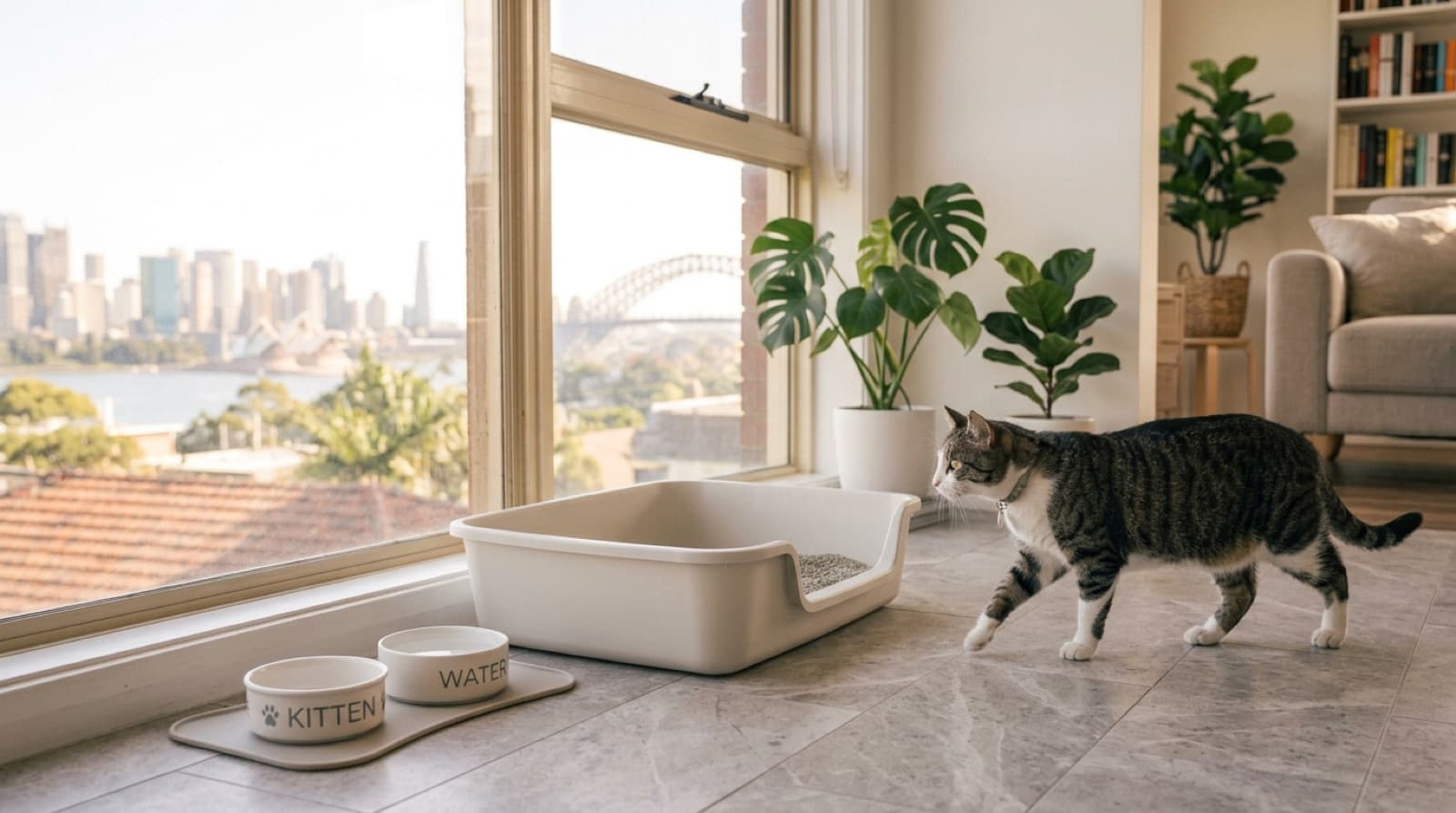
- Big enough. The tray should be about one and a half times the length of your cat, so it can turn around and dig comfortably. Many shop-bought trays are too small. A plain storage tub works well for a big cat.
- Uncovered beats covered. Most cats prefer an open tray. Hoods trap odour, feel cramped, and can let another cat ambush a nervous cat at the only exit. If your cat is avoiding a covered tray, try taking the lid off.
- Unscented clumping litter. A fine, soft, unscented clumping litter suits most cats. Perfumed litters smell strong to a cat even when they smell pleasant to us. Keep the depth around 5 to 7 cm so the cat can dig.
- Right spot. A quiet, low-traffic place where the cat feels safe, well away from the food and water bowls. Cats will not toilet next to where they eat.
- Scoop daily. Remove waste at least once a day. A dirty tray is one of the most common reasons a clean cat starts going elsewhere.
- Full clean regularly. Empty the tray completely and wash it with warm water and a mild, unscented detergent every week or two. Avoid strong-smelling cleaners that leave a scent the cat objects to.
- Change litter slowly. If you switch litter type, mix the new into the old over a week. A sudden change can trigger a boycott.
For kittens, seniors and arthritic cats, add a low-sided tray so they can step in without pain, and put a tray on each level of the home so they never have to climb stairs when they are caught short. Small changes here fix a lot of problems on their own.
Step 3: look at stress and the environment
When the vet has cleared your cat and the tray setup is textbook, stress is the usual remaining cause. Cats are creatures of routine, and toileting outside the tray is often the way they tell you something in their world has changed. The biggest triggers are a house move, a new baby, a new partner, a new cat or dog, building work, or even a change in your work hours.
Tension between cats is a common and easily missed cause. If a confident cat guards the single tray, or blocks the hallway to it, a more timid cat will find a safer corner to go in. Spreading trays around the home so no cat can guard them all, and giving each cat its own resources, usually eases this. Vertical space matters too. Shelves, cat trees and window perches let cats share a home without constant standoffs, which lowers the background stress that drives toileting problems.
Feline idiopathic cystitis, mentioned in Step 1, sits right on the line between medical and stress, because it is a bladder inflammation that flares when a cat is anxious. That is one more reason the vet check and the stress work go hand in hand rather than being separate paths. If your cat is an indoor cat, plenty of play, climbing space and enrichment is not a luxury, it is prevention. We cover the case for keeping Sydney cats indoors, and how to enrich an indoor home, in the indoor versus outdoor cats guide.
Cleaning up accidents the right way
How you clean an accident decides whether the cat comes back to the same spot. The single most important rule is to use an enzyme-based cleaner made for pet urine, and never a cleaner that contains ammonia. Ammonia is one of the smells in cat urine, so an ammonia product effectively tells the cat this is the toilet, and it will return.
Blot up as much fresh urine as you can with paper towel first. Then soak the area properly with the enzyme cleaner, more than feels necessary, and let it dry naturally rather than wiping it straight off. The enzymes need contact time to break down the odour molecules the cat can smell long after the spot looks clean to us. Steer clear of strong bleach and heavily perfumed disinfectants on toileting spots too, because the smell can either lure the cat back or push it to a fresh corner. If the same spot keeps getting hit, block access to it for a while, or place the food bowl there, since cats avoid toileting where they eat.
Spraying versus toileting outside the tray
These two problems look similar but are different, and telling them apart points you to the right fix. Toileting outside the tray means the cat squats and empties its bladder on a horizontal surface, the floor, a bed or the carpet. It usually points to a medical cause or a tray the cat dislikes, which is why Steps 1 and 2 come first.
Spraying is scent-marking, and it looks distinct. A spraying cat stands upright, backs up to a vertical surface like a wall, door frame or curtain, quivers its tail, and squirts a small amount of urine backwards. It is about territory, insecurity or the presence of other cats rather than needing the toilet. Entire (non-desexed) cats spray far more, which is one of the reasons every rescue cat is desexed before it goes to a new home, so most adopted cats are far less likely to spray in the first place.
If a desexed cat is spraying, the trigger is nearly always stress or another cat, indoors or a cat it can see through the window. The fixes overlap with the stress section above: reduce the trigger, spread resources, add vertical space, and clean every marked spot with enzyme cleaner. As with toileting problems, a vet check still comes first, because a cat in urinary pain can mark as well. When it is unclear which you are dealing with, your vet is the fastest way to know.
Browse adoptable cats in Sydney
Thinking of adding a cat, or a second cat for company? Rescue cats come already desexed, vaccinated and microchipped, and foster notes tell you which ones settle easily. Browse the live listings from rescues across Sydney and NSW.
See Available Cats →When it is a new rescue cat
A cat that has just come home from a rescue and toilets outside the tray in the first days is a special case, and usually not a lasting problem. A newly adopted cat lands in a strange home full of unfamiliar smells and sounds, and can be too anxious to go looking for a tray in a big open house, or simply has not found it yet. This is settling-in stress, not a broken cat.
The fix is the same reset every rescue recommends for a new cat. Set the cat up in one quiet room with its litter tray at one end and its food, water and a hiding spot at the other, and let it decompress there for the first days before you open up the rest of the house. In a small space the tray is easy to find and the cat feels secure, so reliable toileting usually follows within a week or two. Expand the cat's territory slowly, adding a tray as you open up new areas. We walk through this whole settling-in process in the first week with a rescue cat guide, and the cat adoption guide covers what to have ready before the cat arrives.
One caution. Settling-in slips are normal in the first fortnight, but if a new cat was toileting reliably and then changes, or the problem drags on past a couple of weeks, do not write it off as nerves. Book the vet check. The same medical causes in Step 1 apply to a new cat as much as a long-settled one.
When to go back to the vet
You have ruled out illness once, fixed the tray, and eased the stress, and the accidents continue. That is your cue to return to the vet rather than keep experimenting at home. Some medical problems, cystitis in particular, come and go, and a cat that was cleared a month ago can have a fresh flare. A second visit, often with a urine test, catches what a single check can miss.
Go straight back, and urgently, if you ever see the emergency signs from earlier: straining with little or no urine, crying in the tray, blood, or a male cat in obvious distress. For a stubborn behavioural case where the cat is healthy but still marking or toileting, ask your vet to refer you to a veterinary behaviour service. That is a better path than any product you can buy off a shelf, and it keeps a treatable cat in its home rather than back at a shelter. Registering the microchip in your name via the NSW Pet Registry also means that if a stressed cat ever bolts outside, it can be reunited with you quickly.
Frequently Asked Questions
Why has my cat stopped using the litter tray?
A sudden change in toileting nearly always means one of three things, and you check them in order. First, a medical problem: a urinary infection, cystitis, bladder crystals, kidney disease, diabetes or arthritis that makes the tray painful to use. See a vet before you assume it is behaviour. Second, the tray setup: too few trays, a covered or cramped tray, a scented litter, a busy location or a tray that is not scooped often enough. Third, stress: a house move, a new pet or person, or a change in routine. Rule out the vet cause first, then work through the setup and the stress.
Is a cat not using the litter box a medical emergency?
Sometimes, yes. A male cat straining to urinate and passing little or nothing is a life-threatening emergency called a blocked bladder, and he needs a vet or a 24/7 emergency hospital immediately, not tomorrow. The blockage stops the cat from passing urine, and it can be fatal within a day or two. Warning signs are straining in the tray, frequent trips producing only a few drops, crying or howling while trying to go, blood in the urine, and repeated licking at the genitals. If you see these, treat it as an emergency for any cat, but especially a male. For a slow, non-straining change over days, book a normal vet appointment rather than an emergency, but still get it checked.
How many litter trays should I have?
The rule is one tray per cat, plus one spare. So one cat needs two trays, two cats need three, and so on. Cats are territorial about toileting and do not like to share, and some will not use a tray that already has waste in it. Spreading the trays around the home, rather than lining them up in one spot, also gives a nervous or bullied cat a safe option that another cat is not guarding. If your cat has started going outside the tray in a multi-cat home, adding another tray in a different room is one of the simplest first fixes.
What kind of litter do cats prefer?
Most cats prefer a fine, soft, unscented clumping litter, deep enough to dig in, at around 5 to 7 cm. Cats have a far stronger sense of smell than we do, so heavily perfumed litters that we find pleasant can put a cat off the tray entirely. If you want to change litter, do it gradually by mixing the new type into the old over a week, because a sudden switch can trigger a boycott. If your cat has recently stopped using the tray after a litter change, going back to the old type is worth trying first.
Where should I put the litter tray?
Put the tray in a quiet, low-traffic spot where the cat feels safe and will not be startled, and keep it well away from the food and water bowls. Cats instinctively do not toilet where they eat, so a tray next to the food is a common reason for accidents. Avoid busy hallways, spots next to a noisy washing machine, and dead-end corners where a timid cat could be cornered by another pet. Each cat should be able to reach a tray without passing a spot it finds scary. In a multi-level home, a tray on each floor helps kittens, seniors and arthritic cats who struggle with stairs.
How do I clean up cat urine so they stop going there?
Use an enzyme-based cleaner made for pet urine, and never a cleaner containing ammonia. Ammonia is a component of cat urine, so an ammonia-based product smells like a wee spot to the cat and actually invites it back to the same place. Enzyme cleaners break down the odour molecules so the cat cannot smell the marker. Blot up as much as you can first, soak the area with the enzyme cleaner, and let it dry fully rather than wiping it straight off. Skip strong bleach and disinfectants on toileting spots too, as the smell can either draw the cat back or drive it to a new corner.
Why is my new rescue cat toileting outside the tray?
A new rescue cat toileting outside the tray in the first days or weeks is usually settling-in stress, not a lasting problem. A cat that has just arrived in a strange home can be too anxious to seek out a tray in an unfamiliar room, or simply cannot find it yet. The fix is to go back to basics: set the cat up in one quiet room with its tray, food, water and a hiding spot, and let it decompress before you give it the run of the house. Most cats settle into reliable toileting within a week or two once they feel safe. If it continues, or the cat was reliable and then changed, see a vet.
What is the difference between spraying and litter box problems?
Spraying is scent-marking, and it looks different from a toileting accident. A spraying cat stands upright, backs up to a vertical surface like a wall or a door frame, quivers its tail and squirts a small amount of urine backwards. Toileting outside the tray means the cat squats and empties its bladder on a horizontal surface like the floor, a bed or the carpet. Marking is usually about territory or stress, and entire (non-desexed) cats spray far more, which is one reason rescue cats are desexed before adoption. Toileting accidents point more often to a medical problem or a tray issue. Either way, a vet check comes first, because both can have a medical trigger.
Keep reading
Adoptable Cats in Sydney
Live listings of kittens, adults and seniors across Sydney and NSW rescues.
First Week With a Rescue Cat
The safe-room reset, settling in, and why the first days set up reliable toileting.
Cat Adoption Guide for Sydney
Where to adopt, what it costs, NSW law, and how to choose the right rescue cat.
All Cat Adoption Resources
Guides on adopting, settling in, indoor living and caring for a Sydney rescue cat.