The short answer
If you want a Dutch Shepherd puppy, buy from a Dogs Australia registered breeder and ask for both parents' hip and elbow results and an eye examination; Dogs Australia's registration regulations name no compulsory test for this breed, so the checks are up to you. No breed club publishes a price, and none of the member breeders whose own websites we read in November 2026 published one, so ask breeders directly. If you are open to an adult or a shepherd cross, adopt: rescues charge their standard fee, for example $500 for a dog over 12 months at RSPCA NSW. Fees are reference only, read on 12 November 2026, not a quote; fees change, so check with the rescue.
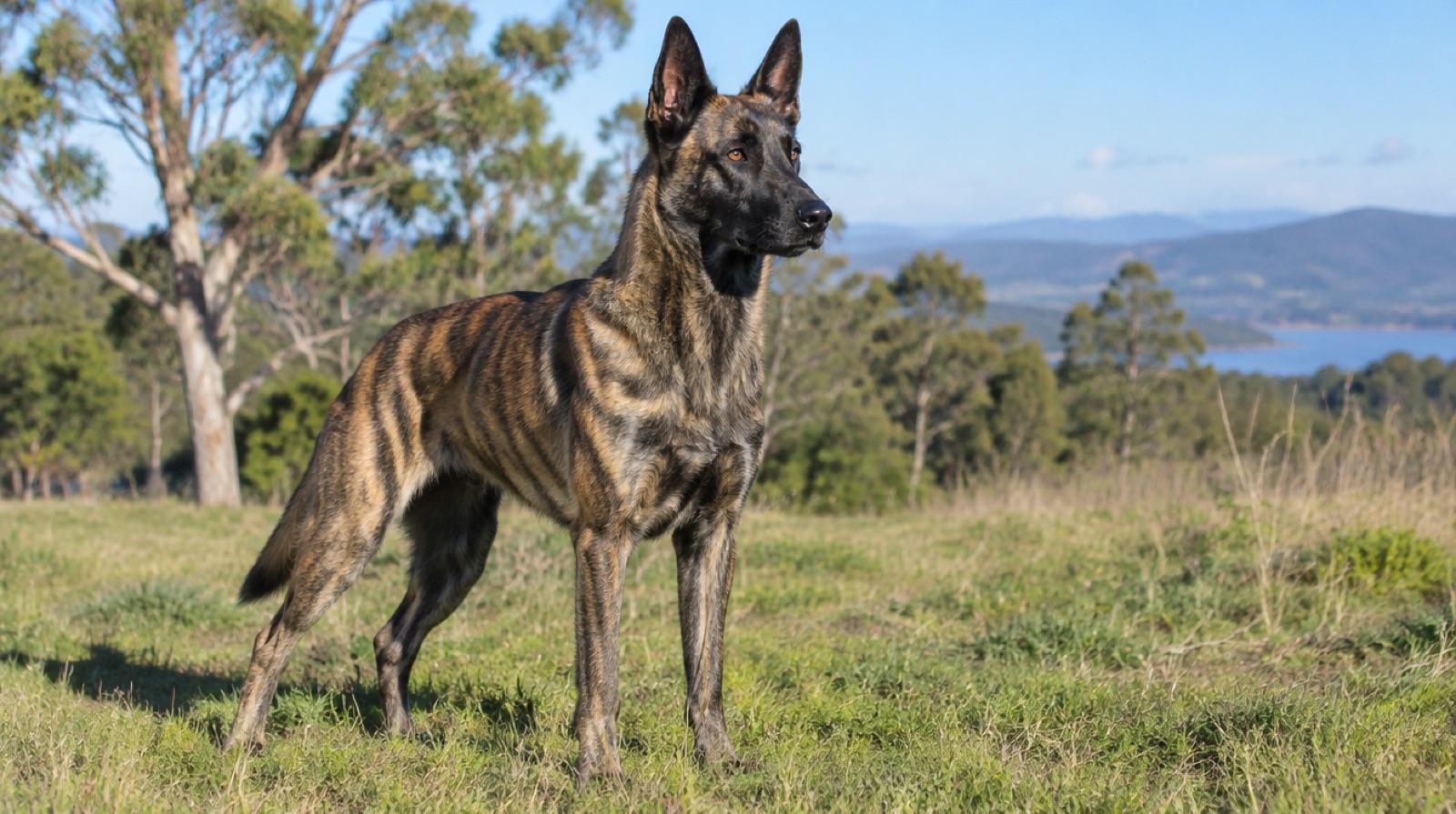
Should you adopt or buy a Dutch Shepherd?
Start with whether you can give a working dog work. The Dogs Australia breed standard describes a dog that is “very loyal and reliable, always alert, watchful, active, independent, with persistence, intelligence, prepared to be obedient and gifted with true shepherding temperament”. If you can meet that, the choice comes down to what you want.
A registered breeder is the route to a puppy from health-checked parents in the coat you prefer. An adult from rescue comes with a known energy level and known reactions to people, children and other dogs. Numbers change daily, so check the live listings. Our guide to adopting a dog in Australia covers the rescue process step by step.
| Route | Reference cost | What you usually get | Main risk |
|---|---|---|---|
| Dogs Australia registered breeder | No published price; ask each breeder | A registered puppy of a chosen coat, with papers | Health testing is up to the breeder, so check |
| Rescue or pound | The standard fee, for example $500 to $1,000 for an adult dog at RSPCA Victoria | A desexed, microchipped, vaccinated dog of the breed or a cross | Unknown parent health |
| Online ad or social media | Varies | Anything from a real litter to a puppy that does not exist | Scams, untested parents, unclear breeding |
Reference figures: RSPCA Victoria adoption page, read 12 November 2026. Reference only, not a quote. Breeders and rescues set their own prices and change them, so check with them.
How does Dogs Australia recognise the Dutch Shepherd?
As one breed in Group 5, Working Dogs. Its public profile calls it the Dutch Shepherd; its breed standard, last updated on 9 January 2020, uses the full name Dutch Shepherd Dog. Dogs Australia's breed listing names the FCI, the international federation, as the owner of the standard. The standard records the breed's first standard as dating from 12 June 1898.
| Coat variety | What the standard says |
|---|---|
| Short hair | “All over the body, quite hard, close-fitting, not too short coat, with woolly undercoat”; ruff, breeches and tail plume clearly visible |
| Long hair | Long, straight, harsh to the touch, without curl or waves, with a woolly undercoat; distinct ruff and breeches, feathering on the backs of the forelegs |
| Wire hair | “Dense, harsh tousled coat” with a woolly undercoat, beard and eyebrows; the standard says it should be hand plucked on average twice a year |
All three share one colour: brindle. The standard says the base colour is golden or silver, golden ranging from light sand to chestnut red, with the brindle clearly present all over the body. A black mask is preferable; too much black and heavy white markings on the chest or feet are not desirable. Heights are 57 to 62 cm for dogs and 55 to 60 cm for bitches. Our merle and brindle dogs guide explains how brindle is inherited.
Which health tests should a Dutch Shepherd breeder show you?
Dogs Australia's registration regulations name no compulsory health test for the Dutch Shepherd, and we found no Australian breed club health page. The most specific published guide we found is from the United States: the American Dutch Shepherd Association's health statement, approved by its board on 14 October 2024 and hosted by the American Kennel Club. It describes a generally healthy and athletic breed with a life expectancy of 12 to 14 years, recommends hip, elbow and eye screening for all breeding stock, and encourages optional tests:
| Check | What it looks for | ADSA status |
|---|---|---|
| Hip evaluation | Hip dysplasia | Recommended, all breeding stock |
| Elbow evaluation | Elbow dysplasia | Recommended, all breeding stock |
| Annual eye screening from 1 year | Hereditary eye disease such as progressive retinal atrophy (PRA) | Recommended, all breeding stock |
| Degenerative myelopathy DNA test | A degenerative spinal cord disease | Optional, recommended |
| Two cerebellar ataxia DNA tests | Spongy degeneration with cerebellar ataxia, which affects coordination | Optional; recommended for the short hair variety |
| Thyroid testing; von Willebrand's disease type I DNA test | Autoimmune thyroiditis; a clotting disorder | Optional; recommended for the long hair variety |
Source: American Dutch Shepherd Association health statement, read 12 November 2026. The ADSA lists US schemes; in Australia, ask which hip, elbow and eye schemes the breeder used and to see the certificates.
The ADSA also says that, like other breeds that primarily herd, “there is some concern for anesthesia sensitivity”, which should be mentioned to your vet before any procedure that involves a general anaesthetic.
See the Dutch Shepherds listed right now
Dutch Shepherds and crosses from the rescues, shelters and council pounds we aggregate. Numbers change daily. Every listing links to the rescue, where you apply directly.
How much is a Dutch Shepherd puppy from a registered breeder?
We cannot give a reference figure. No Australian breed club publishes a guide price, and when we read Australian Dutch Shepherd breeders' own websites in November 2026, none that shows Dogs Australia state body membership published a pet puppy price. Prices that appear only on listing sites are excluded, because we cannot show they are current.
Ask each breeder what the price includes: the register the puppy goes on, desexing terms, both parents' hip, elbow and eye results, the coat variety of the parents, and a return policy. Then run the first year through the dog cost calculator, including training. With this breed, training is not optional.
What do Dutch Shepherds in rescue look like?
Numbers change daily, so check the live listings and include crosses. A brindle shepherd type may be listed as a Dutch Shepherd, a Belgian Malinois cross or a German Shepherd cross, so search more than one breed name. Malinois listings by city: Sydney, Melbourne, Brisbane, Perth, Adelaide.
An adult from rescue has one big advantage with a working breed: the rescue can tell you how that dog behaves at home, with visitors and with other dogs.
What does a rescue dog cost?
| Rescue | Published fee | Read |
|---|---|---|
| RSPCA NSW | $620 puppy under 12 months; $500 dog over 12 months | 12 Nov 2026 |
| RSPCA Victoria | $650 to $1,000 puppy under 6 months; $500 to $1,000 adult dog | 12 Nov 2026 |
Fees as published on the date shown. Reference only, not a quote: rescues change fees and price some dogs individually, so check with them. Both RSPCA pages say adopted animals are desexed, microchipped and vaccinated.
How do Dutch Shepherd puppy scams work?
Never send a deposit for a puppy you have not seen with its mother, in person or at least on a live video call.
Scamwatch says scammers set up fake websites, social media profiles and online marketplace listings to sell popular breeds or cute puppies that do not exist. Its advice: view the pet in person, ask for a video call with the breeder, check the breeder is legitimate and accredited, and compare prices, because a very cheap pet is likely a scam.
- Colour. The standard allows brindle only. A “rare” solid-coloured purebred Dutch Shepherd is not one the standard describes.
- No papers or no health results. Ask for Dogs Australia papers and both parents' hip, elbow and eye results, with names that match.
- No breeder number. NSW, Victoria, Queensland and South Australia require a breeder, source or supply number in puppy ads; the ACT requires a breeding licence number or, for other sellers, the animal's microchip number and an identifier. Check the number yourself on the official register.
Our guide to puppies for sale in Australia has the full state-by-state table of breeder numbers and what to do if you have already paid.
When is a registered breeder the better choice?
Rescue is not right for everyone. A registered breeder is a reasonable choice if you want to show, trial or do herding and dog sports with a puppy from known lines, want a particular coat variety, or need a dog raised around children or livestock from the start.
- Registration. Enter the breeder's prefix or membership number in the Dogs Australia registered breeder check. It confirms membership, not puppy quality.
- Hip, elbow and eye results for both parents, with names that match the litter.
- Any DNA results the breeder holds for the parents' coat variety.
- A written contract covering health problems, register type, desexing and whether the breeder will take the dog back.
Is a Dutch Shepherd the right dog for you?
The Dogs Australia breed history explains where the drive comes from: a farm dog that kept flocks away from crops, herded cows for milking and alerted farmers to strangers, then started a new career around 1900 as a police dog and a search and tracking dog. The standard describes a dog that “works willingly together with its owner and deals independently with any task which is assigned to him”. That independence and alertness need an owner who trains every day.
No state or territory restricted-breed list names the Dutch Shepherd, but councils can assess any individual dog's behaviour, whatever its breed. Not sure it fits? Try the what dog breed am I quiz, the adoption readiness check, or compare the smartest dog breeds.
Find a Dutch Shepherd near you
Dutch Shepherds and crosses listed by rescues, by city:
- Dutch Shepherds for adoption in Sydney
- Dutch Shepherds for adoption in Melbourne
- Dutch Shepherds for adoption in Brisbane
- Dutch Shepherds for adoption in Perth
- Dutch Shepherds for adoption in Adelaide
Sydney guides for related shepherds: adopting a Belgian Malinois in Sydney and adopting a German Shepherd in Sydney.
Frequently asked questions
Should I adopt or buy a Dutch Shepherd puppy?▼
Buy from a Dogs Australia registered breeder if you want a puppy from health-checked parents and can give a working dog daily training and exercise. Adopt if you are open to an adult or a shepherd cross: you will know the dog's energy level and temperament before it comes home, which matters a great deal with a high-drive working breed.
Is the Dutch Shepherd recognised by Dogs Australia?▼
Yes. Dogs Australia lists the Dutch Shepherd Dog in Group 5, Working Dogs, with a breed standard last updated on 9 January 2020. Dogs Australia's breed standard owners listing names the FCI, the international federation, as the owner of the standard.
What coat types does the Dutch Shepherd come in?▼
Three: short haired, long haired and wire haired. The Dogs Australia standard says the breed is distinguished into these varieties depending on the coat, under one breed standard. Every variety is brindle, on a golden or silver base; the standard says a black mask is preferable and too much black is undesirable.
How much is a Dutch Shepherd puppy in Australia?▼
No Australian breed club publishes a price, and none of the member breeders whose own websites we read in November 2026 published a pet puppy price. Ask breeders directly what they charge and what is included. For comparison, RSPCA NSW listed $620 for a puppy under 12 months and $500 for a dog over 12 months, read on 12 November 2026. Reference only, not a quote; fees change, so check with them.
How big is a Dutch Shepherd?▼
Medium sized. The Dogs Australia standard sets 57 to 62 cm at the withers for dogs and 55 to 60 cm for bitches, and describes a middle weighted, well-muscled dog with lots of endurance and a lively temperament.
What health tests should a Dutch Shepherd breeder show me?▼
Hip and elbow results and an eye examination for both parents. The American Dutch Shepherd Association, a US breed club, recommends hip and elbow evaluation and annual eye screening for all breeding stock, plus optional tests, some for the short or long hair variety only. Dogs Australia's registration regulations name no compulsory test for the breed, so ask.
How long do Dutch Shepherds live?▼
The American Dutch Shepherd Association, a US breed club, describes a generally healthy and athletic breed with a life expectancy of 12 to 14 years. Individual dogs vary.
Is a Dutch Shepherd a good family dog?▼
For an experienced, active family, it can be. The Dogs Australia standard describes a dog that is very loyal and reliable, always alert, watchful, active and independent, and that works willingly with its owner. That alertness and drive need training and daily work; supervise young children with any dog.
Is a Dutch Shepherd the same as a Belgian Malinois?▼
No. The Dutch Shepherd has its own Dogs Australia standard; the Malinois is one variety of the Belgian Shepherd Dog, which has a separate standard. The Dutch Shepherd standard allows brindle only; the Belgian Shepherd standard says the Malinois is "Only fawn with black overlay and with black mask". Both are working shepherds with a lot of drive.
Is the Dutch Shepherd restricted in Australia?▼
No state or territory list names the Dutch Shepherd. Councils can still assess an individual dog's behaviour and declare a dog dangerous or menacing, whatever its breed, so training and control matter.
Where can I see Dutch Shepherds for adoption right now?▼
The Dutch Shepherd breed page on LocalPetFinder shows Dutch Shepherds and crosses listed by the rescues, shelters and council pounds we aggregate, with a page for each major city. Numbers change daily, so set an alert.
Sources
- Dogs Australia: Dutch Shepherd Dog breed standard (last updated 9 January 2020)
- Dogs Australia: Dutch Shepherd breed profile
- Dogs Australia: Recognised breed listing with breed standard owners (listing last amended 14 May 2024)
- Dogs Australia: Regulation Part 6, Registration (effective 1 July 2025)
- Dogs Australia: registered breeder check
- American Dutch Shepherd Association: Health statement (approved 14 October 2024)
- Scamwatch: Buying and selling scams (pet scams)
- RSPCA NSW: Adoption fees
- RSPCA Victoria: The adoption process
Keep reading
Dutch Shepherds listed by rescues
Dutch Shepherds and crosses listed right now by the rescues and pounds we aggregate across Australia.
Belgian Malinois puppies: adopt or buy?
The four Belgian Shepherd varieties, working drive, and the health checks the clubs ask for.
German Shepherd puppies: adopt or buy?
The more familiar working shepherd, its hip and elbow scheme, and its rescue picture.
Merle and brindle dogs
What makes a dog brindle, and which breed standards allow it in Australia.