The short answer
If you want a papered Burmese kitten, buy from a breeder registered with a cat council who can show both parents' DNA results for Burmese hypokalaemia and talk openly about diabetes, which a University of Sydney study found is almost four times more common in Burmese than in other breeds in Australia and Europe. We found no published breeder price to quote. Purebred Burmese are uncommon in rescue but do appear, often as adults or crosses, for a rescue fee of a few hundred dollars with desexing and vaccination included. Fees are reference figures checked 9 November 2026, not quotes.
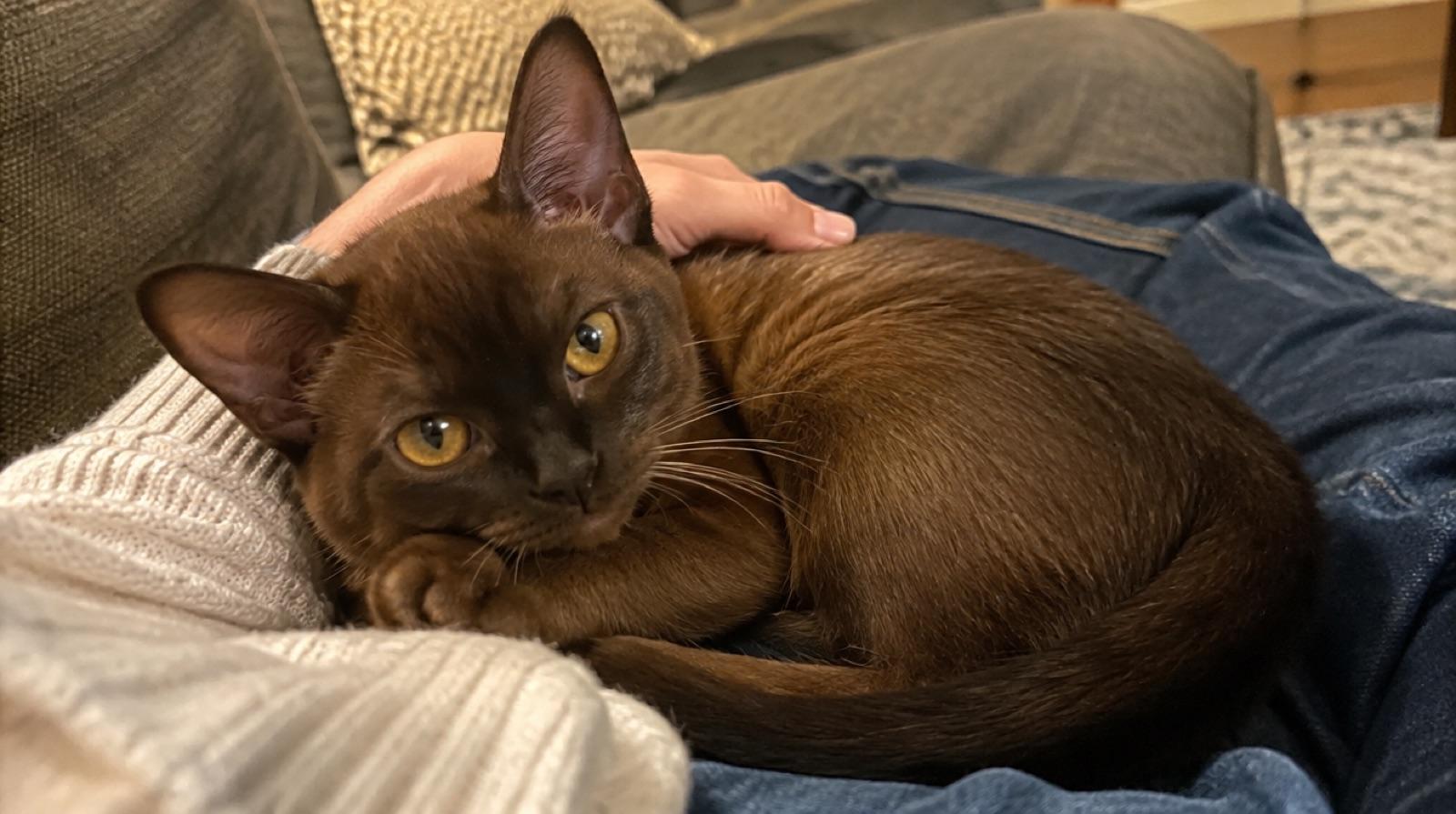
Should you adopt or buy a Burmese?
It depends on whether you need a papered Burmese or a Burmese-type cat. Across the Australian rescues we aggregate, purebred Burmese appear only a few at a time, so if you have your heart set on a kitten of a particular colour, a registered breeder is the honest answer. If what you want is a sociable, affectionate cat, rescue has many, and the occasional Burmese or Burmese cross among them.
- A registered breeder. A pedigree kitten registered with a cat council. The trap is a breeder who cannot show hypokalaemia DNA results for the parents.
- A rescue, shelter or council pound. A few hundred dollars with desexing, microchipping and vaccination done. The trap is a label: a brown cat listed as “Burmese” may be a Burmese, a cross or a moggy, which is fine as long as you know it.
- An online ad. The highest risk. Pet scams advertise popular breeds that do not exist.
What does the Australian Burmese standard ask for?
The Coordinating Cat Council of Australia standard (issued May 2025) describes “an elegant, muscular cat of medium size” with a coat that “looks and feels like satin”, “an outgoing, sociable cat, lively and alert”.
| Feature | What the standard says |
|---|---|
| Solid colours | Brown, blue, chocolate, lilac, red, cream |
| Tortoiseshell colours | Brown, blue, chocolate and lilac tortoiseshell |
| Eyes | Any shade of yellow, golden yellow preferred; green, orange or copper eyes withhold a cat from awards |
| Coat | Short, fine, satin-like, lying close to the body; kittens are much lighter than adults |
| Head and body | Slightly rounded head tapering to a short, blunt wedge; muscular body heavier than it looks |
| Faults | Tabby barring in adults, a white patch or a noticeable number of white hairs in solid colours |
| Outcrosses | American Burmese only within an approved experimental breeding programme |
Source: CCCA Burmese breed standard, read 9 November 2026. Other Australian councils publish their own standards, and colour recognition can differ between registries.
Two practical points for buyers. First, a Burmese kitten's colour is paler than it will be as an adult, so ask to see the parents. Second, the standard faults are show faults: a Burmese with copper eyes is still a Burmese, and a pet-quality kitten is a perfectly good pet.
Which health problems should you ask a Burmese breeder about?
Ask for both parents' DNA results for Burmese hypokalaemia before you pay a deposit. It is a simple test, and a good breeder will already have it.
| Condition | What the authority says | What to ask |
|---|---|---|
| Hypokalaemia (low potassium, muscle weakness) | International Cat Care: usually first seen in kittens from 2 to 6 months; episodes of weakness, often with the neck bent down; all potential breeding Burmese should ideally be tested. Langford Vets: recessive, and two carriers should not be bred together | Both parents' DNA results (normal, carrier or affected), and how the breeder avoids carrier-to-carrier pairings |
| Diabetes mellitus | University of Sydney study (2020): almost four times more common among Burmese than other breeds in Australia and Europe; not seen in North American Burmese | Whether any relatives have developed diabetes; there is no single DNA test |
| Other listed conditions | International Cat Care lists Burmese head defect, orofacial pain syndrome and flat-chested kittens among Burmese conditions | The health of the parents and earlier litters, and whether any kittens have had these problems |
Read 9 November 2026. A buying checklist, not veterinary advice; diagnosis and treatment are for your vet.
The diabetes finding is the one most specific to Australia. The University of Sydney researchers found the raised risk in Australian and European Burmese but not in the North American population, which is regarded as genetically distinct. International Cat Care lists the signs to watch for at any age: drinking more, urinating more, eating more and losing weight. Keeping a Burmese lean and active is the part an owner controls. Our Burmese health guide explains each condition in more detail.
What does a Burmese kitten cost?
We looked for a Burmese club or cat council page that publishes a kitten price and did not find one, so we do not quote a breeder range. Prices on listing sites are each seller's asking price, not a benchmark. Here is what rescues publish:
| Route | Reference cost | What is included | Source |
|---|---|---|---|
| Registered Burmese breeder | No published reference price | Ask what is included: vaccination, microchip, registration papers, desexing arrangement | Breeder sets the price |
| RSPCA NSW | $270 kitten (under 6 months); $220 adult cat | Desexing, microchipping, vaccinations and health checks | RSPCA NSW fees, read 9 Nov 2026 |
| Cat Protection Society of NSW | $150 per cat or kitten, $250 for two | Vet check, desexing, microchip, first vaccination, flea and worm treatment | Cat Protection Society, read 9 Nov 2026 |
Reference figures, not quotes. Breeders set their own prices and rescues change their fees; follow the link before you rely on a number. Fees in other states are in our guide to kittens for sale in Australia.
See Burmese cats listed near you
Purebreds are uncommon in rescue, so the breed pages also help you catch Burmese crosses as they are listed. Each listing links to the rescue, where you apply directly.
How do you check a Burmese breeder?
- Confirm cat council registration yourself. Australian registering bodies include ANCATS (Australian National Cats), the Australian Cat Federation and its member bodies, and the Co-Ordinating Cat Council of Australia and its members. Ask which one, then check with that body directly.
- Check your state's rules. NSW, Victoria, South Australia and the ACT set rules for kitten ads, such as a breeder number in NSW or a Pet Exchange Register source number in Victoria. The state-by-state table is in our kittens for sale guide.
- See the DNA results. Hypokalaemia results for both parents, on the laboratory's certificate.
- Meet the mother. In person, or on a live video call if you cannot travel, with the kittens in the same room.
- Ask about diabetes and earlier litters. Any diabetes in relatives, and how the breeder's previous kittens have fared.
- Get it in writing. Vaccination and microchip records, registration papers, and the desexing arrangement.
What do Burmese scams look like?
Scamwatch describes the pattern across all pet scams: fake websites, social media profiles and marketplace listings for popular breeds that do not exist, and a price so cheap it is likely a scam. Red flags for a Burmese ad:
- No visit, no video. The kitten is always interstate or somewhere you cannot go.
- Extra fees. Transport, a crate, insurance or a vet certificate after you have paid a deposit.
- No council you can check. “Registered” with no named body, or a link to a lookup the seller controls.
- No DNA results. A Burmese seller who has never heard of the hypokalaemia test is not a serious breeder.
- Copied photos. Run a reverse image search on the kitten photos.
If you have already paid, contact your bank straight away and report it to Scamwatch. More checks are in our kittens for sale guide.
Is a Burmese the right cat for you?
The Australian standard calls the Burmese outgoing, sociable, lively and alert. That describes a cat that wants to be involved in the household, not one that keeps to itself.
- Good fit: a home where someone is around much of the day, families who want an involved, playful cat, or a home that can take two cats.
- Think twice: a cat left alone for long hours every day, or a household that wants an aloof, independent cat.
- Keep in mind: the diabetes risk makes weight and activity worth managing from kittenhood.
Temperament varies between individual cats in every breed, which is where rescue helps: a foster carer can tell you how a particular cat behaves. If a sociable cat appeals, look at bonded pairs too. Not sure what kind of cat suits you? Try the what cat breed am I quiz, or dog or cat? if you are still deciding.
Where to find a Burmese or a Burmese cross to adopt
Purebred Burmese appear in rescue only a few at a time, so watch the breed page and set an alert. In NSW, DCH Animal Adoptions offers a wait list for purebred cats including Burmese.
Burmese listings in the big cities
- Burmese cats for adoption in Sydney
- Burmese cats for adoption in Melbourne
- Burmese cats for adoption in Brisbane
- Burmese cats for adoption in Perth
- Burmese cats for adoption in Adelaide
- Australia-wide: the Burmese breed page.
City guides to adopting a Burmese
- Burmese adoption in Sydney
- Burmese adoption in Melbourne
- Burmese adoption in Brisbane
- Burmese adoption in Gold Coast
- Burmese adoption in Perth
- Burmese adoption in Adelaide
Bonded pairs, listed by city: Sydney, Melbourne, Brisbane, Perth, Adelaide. For a kitten of any breed, see kittens in Sydney or kittens in Melbourne, and before you apply, take the adoption readiness check.
Frequently asked questions
How much is a Burmese kitten in Australia?▼
We could not find a Burmese breed club or cat council page that publishes a kitten price, so we do not quote one; registered breeders set their own. Rescue fees are published: RSPCA NSW charges $270 for a kitten under 6 months and $220 for an adult cat, and the Cat Protection Society of NSW charges $150 per cat or kitten, with desexing, microchipping and vaccination included (read 9 November 2026). These are reference figures, not quotes.
What colours do Burmese cats come in, in Australia?▼
The Coordinating Cat Council of Australia standard recognises ten: brown, blue, chocolate, lilac, red and cream, plus brown, blue, chocolate and lilac tortoiseshell. Eyes should be any shade of yellow, golden yellow preferred. Green, orange or copper eyes, tabby barring in an adult or a white patch rule a cat out of the show standard, though not out of being a lovely pet.
What is Burmese hypokalaemia?▼
An inherited condition that causes episodes of low blood potassium and muscle weakness. International Cat Care says it is usually first seen in kittens from 2 to 6 months of age, with signs such as weakness and a downward-bent neck, and that a simple gene test is available. It is recessive, so two carrier parents can produce affected kittens. Ask a breeder for both parents' DNA results; any treatment is a matter for your vet.
Are Burmese cats prone to diabetes?▼
In Australia, yes. A University of Sydney study published in 2020 says that in Australia and Europe, diabetes mellitus is almost four times more common among Burmese cats than in other breeds, and that the raised risk has not been seen in North American Burmese, which are regarded as genetically distinct. There is no single DNA test for it. Keep a Burmese lean and active and ask your vet about checks as it ages.
What health tests should a Burmese breeder do?▼
At minimum, a DNA test for Burmese hypokalaemia on breeding cats, which International Cat Care says all potential breeding Burmese should ideally have. Ask for both parents' results, and how the breeder avoids pairing two carriers. Also ask about diabetes in the parents and earlier litters, and about the health of the breeder's previous kittens.
What is a Burmese cat like?▼
The Australian standard describes an outgoing, sociable cat, lively and alert, of medium size, muscular and heavier than it looks, with a short, satin-like coat. A sociable cat generally suits a home where someone is around more than one left alone all day, but every cat is an individual.
Can you adopt a Burmese cat in Australia?▼
Sometimes, but purebred Burmese are uncommon in rescue. Across the rescues we aggregate they appear only a few at a time, often as adults or as Burmese crosses. DCH Animal Adoptions in NSW keeps a wait list for purebred cats including Burmese. Watch the Burmese breed page for your city and set an alert.
Is my brown cat a Burmese?▼
Only papers prove it. Shelters sometimes list a brown or dark cat as a Burmese or Burmese cross on looks. A Burmese has a short, glossy, satin-like coat, yellow to golden eyes, a rounded head with a short wedge and a muscular body that feels heavier than it looks. A cat without papers is best judged by its personality, which a rescue can describe.
Are Burmese kitten ads online scams?▼
Some are. Scamwatch describes fake websites, social media profiles and marketplace listings for popular breeds that do not exist, and warns that a very cheap pet is likely a scam. Be wary of any request for transport or insurance money after a deposit. See the kitten with its mother in person or on a live video call, and confirm the breeder's cat council registration yourself.
How do I check a Burmese breeder is registered?▼
Ask which cat council the breeder belongs to and check with that council directly, not through a link the seller sends. Australian registering bodies include ANCATS, the Australian Cat Federation and its member bodies, and the Coordinating Cat Council of Australia and its members. Then check your state's own rules, such as a breeder number in NSW or a Pet Exchange Register source number in Victoria.
Should I get one Burmese or two?▼
It depends on your household and the cat. A sociable breed often does better with company: if someone is home most of the day, one cat may be content; if the house is empty for long hours, a companion cat or a bonded pair from a rescue can suit better. Ask the breeder or rescue about the individual cat.
Sources
- Coordinating Cat Council of Australia: Burmese breed standard (May 2025)
- International Cat Care: Hypokalaemia in cats
- International Cat Care: Diabetes mellitus in cats
- International Cat Care: Inherited disorders in cats
- Langford Vets: Burmese hypokalaemia genetic test
- Samaha et al. (2020), Scientific Reports: Mapping the genetic basis of diabetes mellitus in the Australian Burmese cat
- DCH Animal Adoptions: Breeds (purebred cat wait list)
- Scamwatch: Buying and selling scams (pet scams)
- RSPCA NSW: Adoption fees
- Cat Protection Society of NSW: Cats for adoption
Keep reading
Burmese cats for adoption in Sydney
Burmese and Burmese crosses listed by the Sydney rescues we aggregate, with each rescue’s details on the profile.
Burmese health issues
Hypokalaemia, diabetes and the other conditions to know about, and when to see a vet.
Kittens for sale: adopt or buy?
Every state’s rules for kitten ads, the Scamwatch checks and rescue fees across Australia.
Devon Rex kittens: adopt or buy?
The curly-coated breed sold as hypoallergenic, and what ASCIA says about that.