The short answer
Purebred Burmese almost never appear in Melbourne rescue, because the breed is a deliberate, sought-after purchase. Nearly every cat we list from Melbourne rescues is a domestic short-hair or long-hair. So set an alert, stay open to a Burmese cross or a sociable domestic, and apply fast when one appears. Adoption runs about $145 to $400 for an adult, already desexed, vaccinated and microchipped. If you buy instead, check the seller's Pet Exchange Register source number first. Either way, the Burmese is a people-focused cat that does not like being left alone for long.
What a Burmese cat is
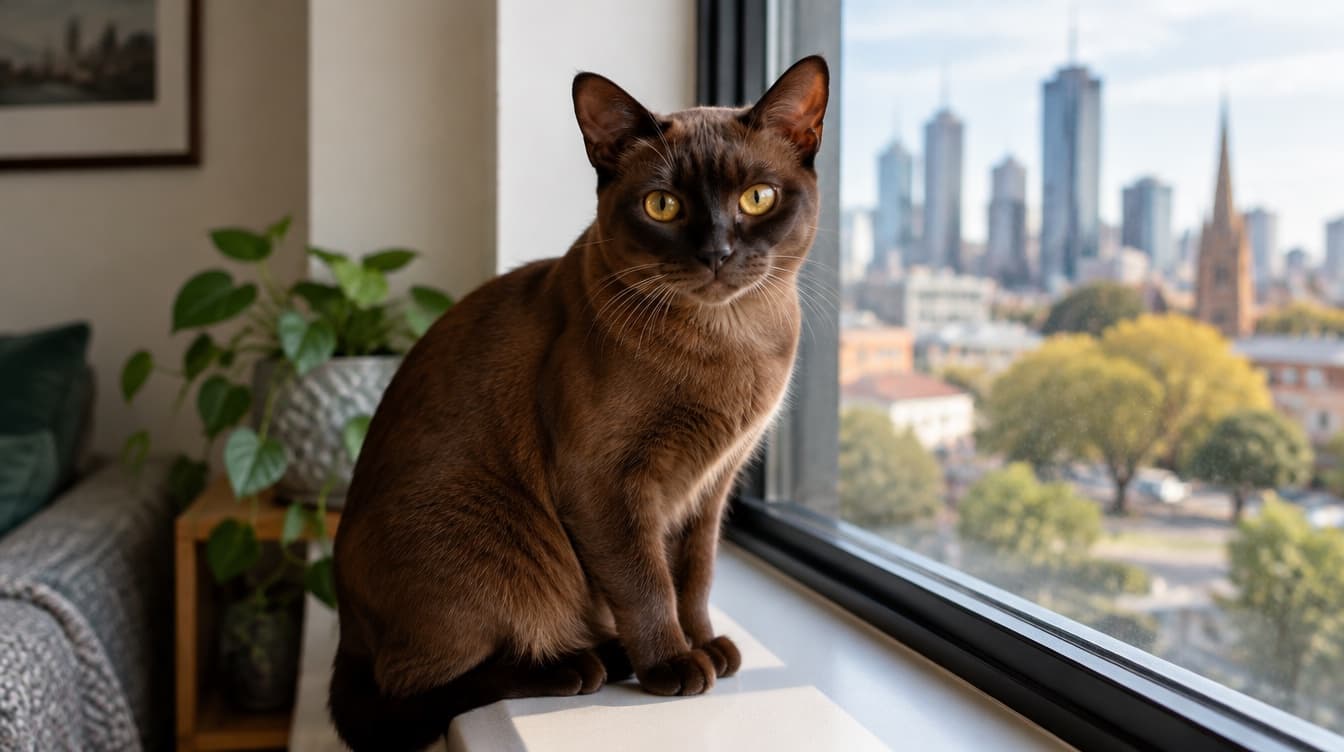
The Burmese is a compact, muscular, short-coated cat with a glossy, satin-like coat, large expressive eyes and a rounded head. Originally a rich sable brown, the breed now comes in a range of colours including blue, chocolate, lilac and the red and cream series. It is a surprisingly heavy, solid cat for its size, often described as a brick wrapped in silk, and the coat is easy to care for with little more than an occasional brush.
Temperament is the real draw, and it is why the breed is so popular in Australia. Burmese are intensely affectionate, sociable and people-oriented, often called dog-like for the way they follow their people around, greet visitors and want to be involved in everything. They stay playful and curious well into adulthood, and they are talkative, keeping up a running conversation. The flip side is that a Burmese wants company and does not cope well with being left alone all day, which is the single most important thing to understand before adopting one.
How Burmese end up in rescue
A Burmese is a deliberate, expensive purchase, which is the main reason so few reach shelters. When one does, the reasons tend to repeat:
- The social needs were underestimated. A Burmese left alone all day can become bored, stressed or unhappy, and an owner whose circumstances change may surrender a cat that needs more company than they can give.
- Life changes. A move to a rental that will not take pets, a new baby, an allergy, a relationship breakdown, or an owner who becomes unwell or passes away.
- Breeder surrenders. Retired breeding cats and the occasional cat from a backyard breeder also come into rescue and, with the right home, make devoted pets.
None of these are the cat's fault. A Burmese that lands in rescue after the wrong match often thrives in a home that can give it the company it craves.
Where to adopt a Burmese or Burmese cross in Melbourne
There is no Burmese-only rescue we can verify in Victoria, so the plan is to watch the general cat rescues and act quickly. These are the main groups rehoming cats around Melbourne:
| Rescue | Location | Good to know |
|---|---|---|
| RSPCA Victoria | Burwood East and Pearcedale | The state body, with published cat fees and a steady flow of adult cats. |
| Lort Smith | Adoption centre at Campbellfield | Animal hospital in North Melbourne with its own adoption centre. |
| The Lost Dogs' Home | North Melbourne | Long-established metro shelter that rehomes cats as well as dogs. |
| Animal Aid | Coldstream, Yarra Ranges | Worth an alert if you are in the outer east. |
| Second Chance Animal Rescue (SCAR) | Victoria | Victorian rescue rehoming both dogs and cats. |
| Australian Animal Protection Society (AAPS) | Keysborough | South-east shelter, handy for Bayside and the south-east suburbs. |
Many of these rescues also appear on PetRescue, the national listing site, and LocalPetFinder brings Melbourne listings together so you do not have to check each site by hand. You may also see searches for a group called Burmese Rescue Victoria. We cannot verify a currently-active Burmese-specific rescue by that name, so do not send a deposit to any organisation you have not confirmed yourself. For the full process, from application to bringing a cat home, read our Melbourne cat adoption guide.
What it costs: adopt versus buy
Adopting is far cheaper than buying, and the cat arrives already vetted. RSPCA Victoria publishes adult cat fees of $145 to $400 and kitten fees of $235 to $400, with seniors often free, and other Melbourne rescues sit in a similar range.
| Path | Typical cost | What you get |
|---|---|---|
| Melbourne rescue, adult cat | About $145 to $400 | Desexing, vaccination, microchip, FIV check, worming, flea treatment, vet check. |
| Melbourne rescue, kitten | About $235 to $400 | As above. |
| Melbourne rescue, senior cat | Often discounted or free | As above, plus a known temperament. |
| Purebred Burmese from a breeder | Well into four figures, often several thousand dollars | A kitten of known breeding. Ask about health testing of the parents. |
| Cheap or “free” private listing | Varies | Must show a microchip number and PER source number. Missing either is a red flag. |
The rescue fee is not really the cat's price. It partly covers vet work the rescue has already paid for, which is why a rescue cat often works out cheaper than a free kitten you then have to desex, vaccinate and microchip yourself. Our Melbourne cat adoption costs guide breaks down setup and yearly costs.
If you have been searching “Burmese kitten for sale Melbourne”
Plenty of people land here after looking for a Burmese kitten to buy, and it is worth slowing down before you pay. Victoria gives you a check that buyers in many other states do not have. Under the Pet Exchange Register scheme, anyone who advertises a cat or kitten for sale, or even to give away, must show the animal's microchip number and a Pet Exchange Register source number in the advertisement. It is an offence to advertise without them.
- Find both numbers in the ad. No microchip number or no source number means walk away.
- Check the source number on the Pet Exchange Register before any money changes hands.
- Meet the kitten in person, ideally with its mother, and never pay a deposit by bank transfer for a kitten you have not seen.
- Ask about health testing. A genuine Burmese breeder should be able to talk about the health of their lines and show that the parents are well cared for.
The ACCC Scamwatch service records pet deposit scams where a seller takes money for a kitten that does not exist, and popular purebred kittens are a common lure. A rescue cat removes that risk: it is real, you can meet it, and it is already desexed and vetted. If a papered Burmese matters to you, go to a breeder you can verify. If what you want is an affectionate, sociable cat, adoption is the safer and cheaper path.
Victorian rules for a new cat owner
The governing law is the Domestic Animals Act 1994, administered through Agriculture Victoria. The parts that affect you:
- Council registration. Cats aged three months and over must be registered with your local council, renewing each year by 10 April.
- Reduced fees for desexed cats. A desexed and microchipped cat attracts a substantially lower fee. Each council sets its own amount, so check yours.
- Microchipping. A cat registered with a Victorian council for the first time must already be microchipped. A rescue cat arrives chipped, so update the record into your name.
- Cat curfews and containment. These are set council by council, and more Victorian councils now require cats to be contained to the owner's property. A Burmese is happiest indoors with company, so containment suits the breed well.
Living with a Burmese, and the health picture
The one thing to get right with a Burmese is company. This is a cat that bonds hard to its people, wants to be involved in daily life, and can become bored or anxious if left alone for long stretches. A Burmese suits a home where someone is around much of the day, or where it has a feline companion to keep it occupied, and it rewards that with enormous affection, play and conversation. The short, satin coat is low-maintenance, needing little more than an occasional brush.
On health, the Burmese is linked to a few hereditary conditions seen in the breed, including a muscle-weakness condition and a predisposition to diabetes, and the breed can be prone to dental and gum problems. A rescue Burmese or Burmese cross arrives vet-checked, so ask the rescue what the in-care assessment found, keep the cat a healthy weight to reduce diabetes risk, stay on top of dental care, and talk to your own vet about the individual cat. A cross often carries fewer breed-linked traits than a purebred.
Indoor living and Melbourne weather
Burmese are well suited to indoor life, and Melbourne rescues generally adopt cats out to live indoors or with contained outdoor access. A sociable, people-focused Burmese is content indoors as long as it has company, play, a window perch and some vertical space, and indoor living keeps it safe from traffic and protects local wildlife. Our indoor versus outdoor cats guide covers setting up a safe, interesting indoor home.
Melbourne's weather is the local twist. Summers swing into heatwave days above 40 degrees, so on those days keep your cat inside in the coolest room with water, shade and airflow or air-conditioning, and never leave it in a car or a closed-up sunroom. Winters are cool and changeable, and a short-coated Burmese appreciates a warm bed in a draught-free spot. Paralysis ticks, a big concern on the New South Wales and Queensland coast, are low risk in metropolitan Melbourne, so heat is the season to plan around.
Browse adoptable Burmese cats in Melbourne
A purebred Burmese rarely comes up, so set an alert. Affectionate crosses with the same sociable nature appear far more often across Melbourne rescues.
See Available Burmese →Choosing the right Burmese-type cat
For a first Burmese, an adult is usually the safer bet. You can see the real temperament, hear how vocal the cat is, and ask how it copes when the house is empty before you commit. Kittens are endearing, but their personality is still forming, and a demanding, people-focused kitten needs a lot of time. When you meet a cat, check three things:
- How it handles being alone. Ask the foster carer how the cat copes on its own, and whether it would be happier with a feline companion.
- Its sociability. A confident, people-seeking cat is the classic Burmese nature, but every individual differs.
- Any health notes. The foster notes and vet check tell you more about the individual cat than the breed label does.
Keep an open mind about a Burmese cross or a sociable domestic rather than holding out for a papered purebred. For a pet home, a friendly short-haired cat with the same affectionate nature is often the easier and faster match.
Frequently Asked Questions
Where can I adopt a Burmese cat near me in Melbourne?
Watch the main Melbourne rescues and set an alert, because a purebred Burmese very rarely comes up. RSPCA Victoria (Burwood East and Pearcedale), Lort Smith's adoption centre at Campbellfield, The Lost Dogs' Home in North Melbourne, Animal Aid at Coldstream, Second Chance Animal Rescue and the Australian Animal Protection Society at Keysborough all rehome cats, and any of them could list a Burmese or a Burmese cross. Nearly every cat on Melbourne rescue lists is a domestic short-hair or long-hair, so your realistic target is a short-coated, affectionate, people-loving cat with a Burmese-like nature. Be application-ready and apply the day a suitable cat appears.
Why are Burmese cats rare in Melbourne rescue?
Because almost all rescue cats are domestic cats, not purebreds. A Burmese is a deliberate, expensive purchase, and the breed is popular and sought-after in Australia, so far fewer reach shelters than everyday moggies. When one is surrendered it is usually because the owner underestimated how demanding the breed is for company and attention, or because of a move, a death in the family or a relationship breakdown. A Burmese cross or a friendly short-haired domestic is a far more likely find, and for a pet home it often has the same affectionate, sociable nature.
How much does it cost to adopt a Burmese versus buy one in Melbourne?
Adopting through a Melbourne rescue costs about $145 to $400 for an adult cat or $235 to $400 for a kitten, and seniors are often discounted or free. That fee covers desexing, vaccination, microchipping, a FIV check, worming, flea treatment and a vet check. A purebred Burmese kitten from a breeder costs far more, commonly well into four figures and often several thousand dollars, and you still pay for the vet work afterwards. Adopting a Burmese cross or a sociable domestic gives you the temperament for a fraction of the price.
Is there a Burmese cat rescue in Victoria?
We cannot verify a currently-active, Burmese-specific rescue operating in Victoria, so treat any name like Burmese Rescue Victoria with caution until you have confirmed it yourself. Some pedigree cat clubs run occasional rehoming lists, but we cannot point you to a dedicated single-breed Burmese rescue with confidence. The dependable route is the general Melbourne cat rescues, an alert for Burmese and Burmese crosses, and telling each rescue you are open to a cross. Before sending money to any group, confirm it has a real physical presence, a current adoptable list and, for a private rehoming advertisement, a Pet Exchange Register source number.
Are Burmese cats good pets?
For the right home, they are wonderful. Burmese are among the most affectionate and people-oriented of cats, often described as dog-like: they follow you from room to room, greet you at the door, ride on a shoulder and want to be part of everything. They are playful and intelligent well into adulthood, and they are vocal, holding conversations with their people. The catch is that they do not like being left alone for long. A Burmese suits a home where someone is around a lot, or where it has a feline companion, and it can become bored or unhappy if left on its own all day.
Are Burmese cats good with children and other pets?
Usually very good, because the breed is so sociable. A well-adjusted Burmese tends to enjoy a busy household, gets on with gentle children, and often does well with another cat or a calm dog, which also keeps it company. As always, the best guide is the rescue's own assessment of the individual cat rather than the breed label, so ask how the cat reacted to children or other animals in its foster home. A Burmese cross with the same friendly nature can be just as good a family cat.
Should I adopt an adult Burmese or a kitten?
An adult is usually the better choice, especially for a first Burmese. With an adult you can see the real temperament and how sociable and vocal the cat is before you commit, and the rescue can describe how it copes with being alone. A kitten's personality is still forming, and a demanding, people-focused kitten needs a lot of time. Adults also wait longer for homes and often have a lower adoption fee. Whichever you choose, read the foster notes closely, because they tell you how the individual cat handles company and solitude.
Are there free Burmese cats in Melbourne, or ones under $500?
Be careful with free or very cheap Burmese. A legitimate rescue charges an adoption fee, commonly $145 to $400 for an adult and $235 to $400 for a kitten, so adoption already sits under the $500 people search for, and that fee part-covers the desexing, vaccination, microchipping and vet check the cat has already had. A purebred Burmese offered free to a good home, or well under a breeder price, is one of the classic scam and backyard-breeding setups. In Victoria, any cat advertised for sale or to give away must display a microchip number and a Pet Exchange Register source number, so check those before taking on a private listing.
I keep seeing Burmese kittens for sale. Is adopting really an option?
It is, and for a pet home a Burmese cross or a sociable domestic gives you the same affectionate nature at a fraction of the price. The for-sale listings are easy to find because the breed is popular, but that popularity also attracts backyard breeding and the occasional scam, so a cheap Burmese kitten or a deposit request for a cat you have not met is a warning sign rather than a bargain. In Victoria, any advertisement to sell or give away a cat must show the animal's microchip number and a Pet Exchange Register source number, so check that number on the Pet Exchange Register before you pay. If a papered Burmese matters to you, use a breeder you can verify; if you simply want the temperament, adoption is the safer, cheaper path.
Do I have to register a Burmese cat in Victoria?
Yes. Under the Domestic Animals Act 1994, cats aged three months and over must be registered with your local council, and registration renews each year by 10 April. A desexed and microchipped cat attracts a substantially reduced fee, and the exact amount is set by each council. Any cat registered with a Victorian council for the first time must be microchipped beforehand. A rescue Burmese arrives desexed and microchipped already, so check the current fee with your council and make sure the microchip record moves into your name.
Keep reading
Adoptable Burmese Cats in Melbourne
Live listings of Burmese and Burmese crosses from Melbourne rescues, with foster carer notes.
Melbourne Cat Adoption Guide
The full process, from application and home check to settling a new cat in.
Cat Adoption Costs in Melbourne
Adoption fees, setup gear, yearly costs and Victorian council registration.
Indoor vs Outdoor Cats in Melbourne
Keeping a sociable cat happy and safe indoors, and the Victorian containment rules.