
Angel
3 years • Kelpie Cross


Bea
2 years 6 months • Staffy x Rhodesian Ridgeback
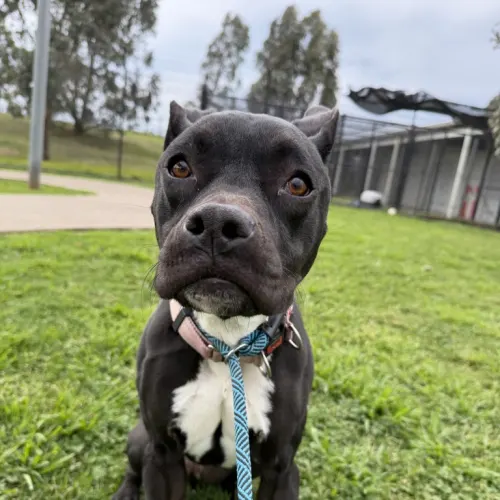
Bella
Unknown • American Staffy Cross
Bella
3 years 5 months • American Staffordshire Terrier
Showing 1-9 of 144 dogs
Get notified about new dogs in Melbourne
We will email you when new rescue dogs become available in Melbourne, so you can be among the first to meet them.
A low maintenance dog is one whose everyday care fits easily around a busy life. Usually that means a short, smooth coat that needs little more than a weekly brush and sheds in a predictable way, so there is no clipping bill and no matting to stay on top of. It also means moderate rather than extreme exercise needs, and a settled adult temperament that is comfortable to live with. Dogs like this suit first-time owners, renters, and anyone who wants a companion without the grooming, training and energy demands that some breeds bring.
The honest caveat is that low maintenance never means no maintenance. Every dog needs daily walks, company and mental stimulation, consistent training, and regular vet care, and in the Melbourne climate that includes year-round parasite prevention for fleas, ticks and heartworm. A short coat saves you grooming time, but it does not replace the time and attention every dog depends on. The dogs that genuinely earn the low maintenance label are the ones whose care is simple and predictable, not the ones that need nothing at all.
The safest low maintenance choice is an adult rescue dog whose coat, size and energy level are already known, because there are no surprises as they grow. Short-coated breeds and crosses are common in Melbourne rescue, including Staffies, Kelpies and cattle-dog types, Greyhounds and Whippets, Beagles, and short-coated terriers. Every dog listed below arrives desexed, vaccinated, microchipped and vet-checked, and listings are updated regularly so you can see current availability.
What Low Maintenance Really Means
A low maintenance dog is one whose everyday care fits easily around a busy life. In practice that means three things working together: a short, smooth coat that needs little grooming, moderate rather than extreme exercise needs, and a settled adult temperament that is comfortable to live with. Any one of these on its own helps, but it is the combination that makes a dog genuinely easy to own.
This kind of dog suits first-time owners, renters, busy professionals and anyone who wants a companion without a heavy grooming, training or energy commitment. It is not about wanting less of a bond with a dog; it is about choosing a dog whose care is simple and predictable so that the relationship is a pleasure rather than a chore.
The honest caveat runs through everything on this page: low maintenance never means no maintenance. Every dog needs daily walks, company, mental stimulation, consistent training and regular vet care. What a low maintenance dog spares you is the extra load of a high-grooming coat, a high-drive temperament or intensive training, not the fundamentals of caring for a dog.
Coat Types and Grooming, Explained
Coat is the biggest single driver of grooming workload, so it is worth understanding. Short, smooth coats, the kind you see on Staffies, cattle-dog types, Greyhounds and Beagles, need little more than a weekly brush and the occasional bath. They shed, but they do not mat and they never need clipping, which is where the real time and money go.
Long and curly coats are the opposite. The woolly coats on Poodle crosses and the long coats on breeds like Maltese and Shih Tzus grow continuously, need brushing every day or two to prevent painful matting, and require professional clipping every six to eight weeks at a cost that adds up over a year. Beautiful, but decidedly not low maintenance.
Double-coated breeds sit somewhere in between: they do not need clipping but they shed heavily, especially seasonally, and need regular brushing to manage it. If easy coat care is your priority, a short single coat is the clear winner, and an adult short-coated rescue dog lets you see exactly what you are getting.
Low Maintenance Breeds and Crosses in Melbourne Rescue
Plenty of easy-care dogs turn up in Melbourne and Victoria rescue. Short-coated breeds and crosses are common, including Staffies and bull-breed types, Kelpies and cattle-dog crosses, Greyhounds and Whippets, Beagles, and short-coated terriers. Many are the everyday mixed breeds that make up the bulk of the rescue population, and a good number tick all three low maintenance boxes.
Retired racing Greyhounds deserve a special mention here, because they combine a short, wash-and-wear coat with a famously calm temperament and only modest exercise needs. For a lot of people they are the definition of a low maintenance dog, gentle, quiet indoors, and needing little more than a couple of short daily walks.
As always, the rescue's assessment of the individual dog matters more than the breed label. Ask specifically about coat, shedding, energy and temperament for any dog you are considering, since a foster carer who lives with the dog can tell you exactly how much care it really needs in daily life.
Exercise, Training and the Ongoing Basics
A low maintenance dog still needs real daily exercise, just not the extreme amounts a working breed demands. A couple of decent walks a day, plus some play and enrichment, keeps most easy-care dogs happy, fit and out of mischief. Skipping this because a dog is billed as low maintenance is the quickest way to end up with a bored, badly behaved dog.
Training is part of the deal too. Even the most easy-going dog needs to learn its name, to walk politely on a lead and to come when called, and reward-based training makes that straightforward and enjoyable. An adult rescue dog often already knows the basics, which is another way adopting a grown dog keeps the workload down.
The everyday basics apply to every dog regardless of how low maintenance it is: quality food, fresh water, company, year-round parasite prevention and routine vet care. A short coat saves you grooming time, but it does not replace the time and attention every dog depends on, so factor these fundamentals into your decision.
Why an Adult Dog Is the Low Maintenance Choice
The safest low maintenance choice is an adult rescue dog whose coat, size and energy level are already known. With a puppy, all three are still developing, and the fluffy pup you adopt could grow a coat that needs regular clipping or an energy level that outstrips your lifestyle. An adult dog holds no such surprises.
Adult dogs are also usually past the intensive early stage of chewing, toilet training and constant supervision, which is the least low maintenance phase of any dog's life. Many arrive already house-trained and understanding how to live in a home, so the settling-in period is far gentler than raising a puppy from scratch.
Choosing an adult dog and being honest with the rescue about wanting an easy-care companion is the most reliable path to a genuinely low maintenance dog. The foster carers know which of their dogs have simple coats, moderate energy and settled temperaments, and they can match you to one that fits your life from day one.
Costs, Registration and Care in the Melbourne Climate
Adopting a low maintenance dog from a Melbourne or Victoria rescue typically costs a few hundred dollars, and the fee already covers desexing, vaccination, microchipping and a vet check, against several thousand from a breeder with none of that done. A short-coated dog also saves you the ongoing grooming bills that a clipped coat racks up.
Councils in Victoria require dogs to be microchipped and registered, with desexed dogs usually paying a lower registration fee, so keep the paperwork from your rescue and keep your microchip details current. These are the same basics that apply to every dog, easy-care or not.
One thing no dog escapes, whatever its coat, is year-round parasite prevention for fleas, ticks and heartworm, which is essential in the Melbourne climate. A low maintenance dog keeps your grooming simple, but sensible vet care, prevention and attention remain part of the deal, and planning for them is part of choosing well.
What low-maintenance really means in Melbourne
A genuinely low-maintenance dog usually means an adult with a short, easy coat and a settled temperament. Short-coated dogs need little more than a weekly brush and the occasional bath, which sidesteps the six-to-eight-week grooming cycle that long or curly coats demand. Adopting an adult also removes the intense work of the puppy stage, since a grown dog's size, energy and personality are already known rather than a gamble.
Melbourne rescues such as RSPCA Victoria and The Lost Dogs' Home assess each adult dog before rehoming, so you can ask directly about grooming needs, house-training and general fuss level. That lets you match a dog to how much time you realistically have, rather than discovering the workload after you get home.
Low upkeep still means real basics
Low-maintenance is not no-maintenance. Every dog needs daily walks, year-round flea and worm prevention, and council registration from three months of age with renewal by 10 April. Because rescue dogs are desexed and microchipped, you will pay the reduced council fee, which you can confirm with your local council. Keep up routine care with your local vet and you have a dog that genuinely fits a busy life.
Low Maintenance Dog Adoption FAQ
Tap a question to expand