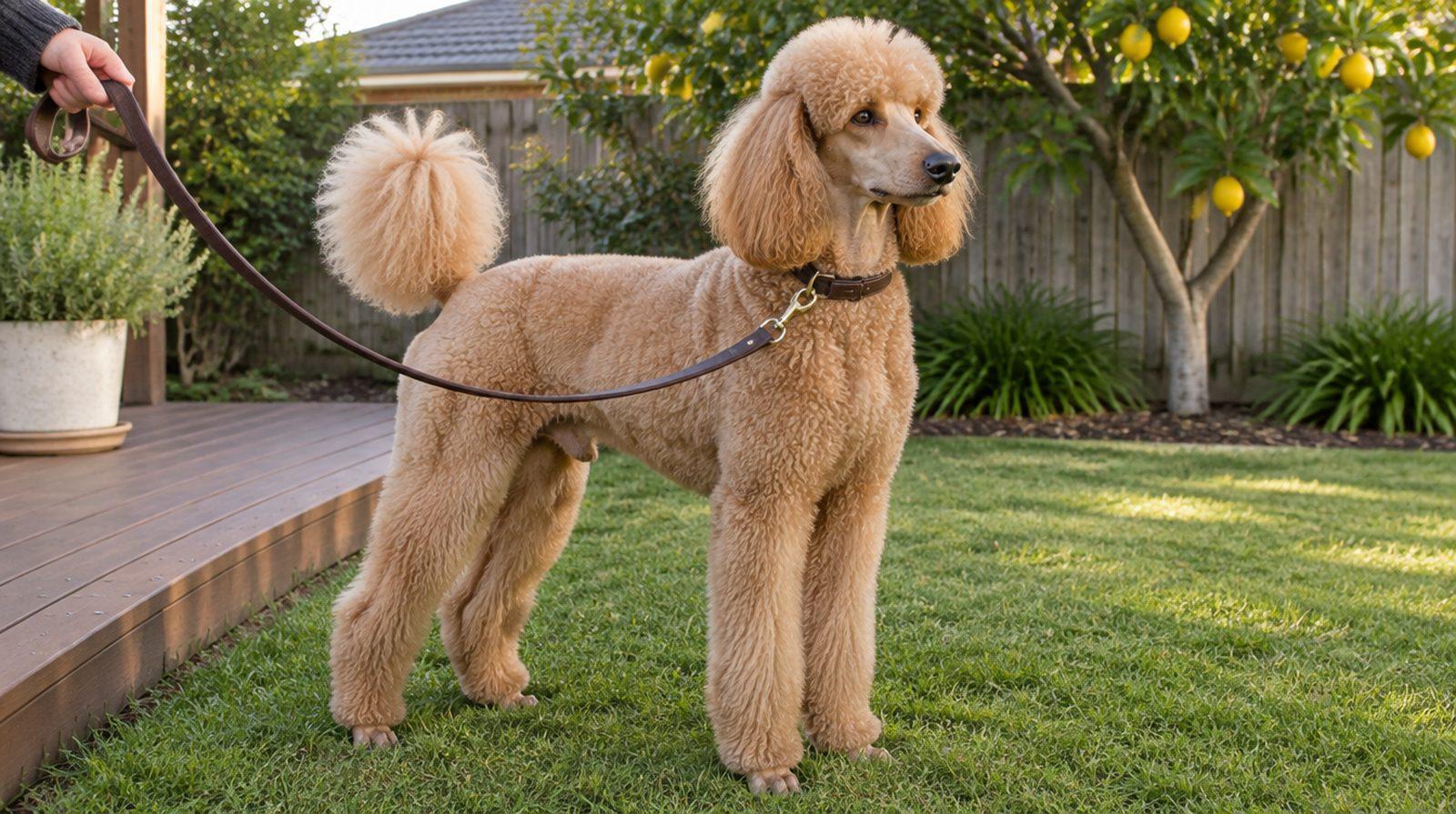
The short answer
List your Poodle free on LocalPetFinder, keep it with you, and choose the home yourself. Say which size it is, then screen for three things: a real plan and budget for professional grooming every six to eight weeks, someone home enough that the dog is not left alone for long stretches, and, for a Standard, an active household. Hand over the vet file, including any eye, knee, hip or skin history, and transfer the microchip through your state or territory's pet registry at the handover. The Poodle is not a restricted breed anywhere in Australia.
Rehome your Poodle on LocalPetFinder
List free, keep your dog at home until adopted, and choose the new family yourself. Your email stays private.
List your dog free →Why Poodles end up needing a new home
The coat is the commitment people most often underestimate. Dogs Victoria calls the Poodle a high maintenance breed: the curly, thick coat needs regular brushing and the dog should be bathed and clipped every six to eight weeks. Dogs NSW, writing for the Poodle Club of NSW, describes a pet Poodle's routine as a daily eye, rear and foot check, weekly brushing and ear cleaning, and a professional bath, ear clean, nail trim and clip about every six weeks. When that slips, the coat mats close to the skin, and a household that is already stretched can feel it has fallen too far behind.
The second reason is time. Dogs Victoria says the Poodle "cannot be considered an outside dog or left alone for long periods of time" and needs both physical and mental activity. A change in work hours, a new baby or an owner's illness can leave a clever, people-focused dog bored and unsettled.
Size can also be a mismatch. Dogs NSW notes a Standard must be at least 38 cm at the shoulder and is usually well above 55 cm, an athletic dog that needs more exercise than the smaller sizes. A household that expected a small lap dog can struggle with a Standard, and an older owner can find even a Toy's grooming and vet care hard to keep up. None of this is a failing in you or the dog.
The right home for each size
Toy (under 28 cm at the shoulder) and Miniature (28 to 38 cm) Poodles often suit apartments, retirees and quieter homes, and Dogs Victoria says they fit in well with families too. A Toy is small enough to be hurt by rough handling, so a home with very young children needs to supervise closely; Dogs NSW advises supervision wherever Poodles mix with children, especially very young ones.
A Standard Poodle is an athletic dog that does best with an active household, daily exercise and something to think about, such as training, dog sports or games. All three sizes are intelligent and easily trained, and all three want company. Whatever the size, the right home is one where someone is around for much of the day and the grooming is already part of the plan.
What to ask people who want your Poodle
Start with the coat, because it decides whether the placement lasts. Ask: How will you keep the coat, and do you have a groomer in mind? Do you know a professional groom is needed about every six to eight weeks, and have you budgeted for it? Will you brush between appointments? Someone who thinks a low-shedding coat means low maintenance is the home where the coat will mat.
Then ask about time and fit: How many hours a day would the dog be alone? Who in the house will walk and train it? For a Standard, what does a normal weekday of exercise look like? For a Toy or Miniature, are there young children or other dogs that might be rough with a small dog? Have you had a Poodle or a Poodle cross before?
Tell applicants your dog's real grooming history, including any matting or shave-downs, and how it behaves on the grooming table. A good adopter will want to know, and a frank answer now saves your dog a second move later.
Health history to hand over, by size
Dogs Victoria lists the health checks a good breeder does. For Toys and Miniatures it recommends a DNA test for progressive retinal atrophy (an inherited eye disease that leads to blindness) and names luxating patellas (kneecaps that slip out of place) and Legg-Perthes disease (a hip condition) as other conditions to ask a breeder about. For Standards it lists DNA tests for degenerative myelopathy, neonatal encephalopathy and von Willebrand's disease (a bleeding disorder), hip x-rays, and testing for sebaceous adenitis, an autoimmune skin condition. Cornell University's vet school names Standard Poodles among the breeds in which bloat (a twisted, swollen stomach that needs emergency care) is far more common, and the Merck Veterinary Manual lists the Standard Poodle among breeds overrepresented for Addison's disease, a hormone disorder of the adrenal glands.
Small Poodles have two more things worth recording. The American College of Veterinary Surgeons (ACVS) names Poodles among the small breeds most affected by tracheal collapse, a weakening of the windpipe that causes a dry, honking cough, often when the dog is picked up or its collar is pulled. And a Royal Veterinary College study of 22,333 dogs under UK vet care found Toy Poodles had 3.97 times the odds of periodontal (gum) disease compared with crossbred dogs, among the highest of the breeds studied.
You do not need to have tested for any of this. What matters is passing on what you know: the breeder's test results if you have them, every vet visit, dental work, any coughing, limping or skin trouble, and what the vet advised. A UK study of more than half a million dogs (McMillan and colleagues, 2024) found a median lifespan of 14 years for Poodles of all sizes combined, so state your dog's age plainly.
Where to rehome, and the fee
We could not verify a Poodle-only rescue in Australia that says on its own website that it takes owner surrenders, so we do not name one; Poodle rescue groups do list dogs on PetRescue, so check there. Dogs NSW publishes a list of breed club rescue contacts that includes the Poodle and the Toy Poodle. The Poodle Club of NSW refers puppy, rehoming and rescue enquiries to its member breeders, who must be registered with their state body, and says it takes no responsibility for dogs rehomed. Your dog's breeder is often the best first call. Your state RSPCA or animal welfare league takes dogs by appointment when it has space; see the state guides. Animal Welfare League SA has paused new rehoming requests.
As a reference, not a quote: RSPCA NSW lists $500 to adopt a dog over 12 months and $620 for a puppy under 12 months (read on its own page on 20 November 2026), and those fees cover desexing, microchipping and vaccination. For a private rehoming, a modest fee is safer than free to good home, because a free Poodle listing attracts people who resell or breed from dogs. The screening you do matters far more than the exact figure.
New to rehoming? Start with our step-by-step guide to rehoming a dog for free, our guide to screening adopters, and the reasons a modest fee beats free to good home.
How rehoming your Poodle on LocalPetFinder works
- List for free. Add up to five photos, with the first as the cover, and describe your dog honestly: age, health, how they are with children, dogs and cats, and what kind of home suits them. There is no listing fee.
- We review it. Every listing is checked before it goes live, usually within 24 to 48 hours.
- Adopters contact you privately. Your email address is never shown on the listing. Enquiries reach you through the site, and you choose who to reply to.
- You choose the family. Your dog stays with you while you screen applicants, meet them and decide. When your dog has gone to their new home, mark the listing adopted using the link in the email we send when your listing goes live.
What the law asks of you, by state
Rehoming a Poodle is legal everywhere in Australia, but each state and territory sets its own rules for advertising a pet and passing it on, even for free. In every state, transfer the microchip registration to the new owner at the handover.
New South Wales
Since 1 July 2019, every ad to sell or give away a cat or dog must include an identification number: the microchip number, a breeder identification number or a rehoming organisation number. Transfer the microchip through the NSW Pet Registry.
Victoria
An ad to sell or give away a dog or cat must show the animal’s microchip number and a Pet Exchange Register source number. It is an offence to advertise without both.
Australian Capital Territory
Anyone rehoming a cat or dog, even for free, must include the microchip number plus an identifier for the advertiser (such as their name) in the ad, or a breeding licence number.
Queensland
Giving away, selling or advertising a dog born on or after 26 May 2017 needs a supply number. This applies to dogs only, not cats.
Western Australia
A cat must be microchipped and sterilised before it is sold or given away (or come with a prepaid sterilisation voucher if it is too young), and a dog must be microchipped before it is transferred.
South Australia
Giving a pet away free needs no breeder registration. Anyone breeding dogs or cats to sell, including after an accidental litter, must register with Dogs and Cats Online and show the number in ads.
Tasmania
Rehoming a dog, including giving it away, means handing the new owner a vet-signed vaccination certificate and the date of its last vet health check, and disclosing any known health or behaviour problems. Puppy ads must show a microchip number.
The Northern Territory has no territory-wide rule we could confirm; check with your council. Each state guide linked above has the detail and the official sources.
Scam rules to follow
- Meet anyone interested in person, or at least on a video call, before you agree to anything.
- Never send your dog anywhere before you have met the new owner, and never pay for transport, crates or “insurance” on a stranger's behalf.
- Never accept an overpayment or refund the difference. That is a common scam pattern.
- Keep the conversation on the site until you have decided someone is genuine.
Our rehoming safety guide covers the warning signs in more detail.
Looking to adopt a Poodle instead?
Browse Poodles available for adoption from rescues and owners across Australia.
See adoptable Poodles →Frequently asked questions
Is it hard to rehome a Poodle?+
Usually not, if you are honest about the grooming. Poodles are clever, affectionate and come in sizes that suit many homes. The challenge is finding someone who will keep up a professional groom every six to eight weeks and not leave the dog alone for long periods, so screen for that rather than taking the first offer.
Does it matter whether my Poodle is a Toy, Miniature or Standard?+
Yes. Say the size clearly in your listing. Toys and Miniatures often suit apartments and quieter homes, while a Standard is an athletic dog that needs more exercise and does best with an active household. The health history to hand over also differs: knees, eyes and teeth for the small sizes; hips, bloat, bleeding and skin conditions for Standards.
What should I ask someone who wants my Poodle?+
Ask how they will look after the coat, whether they have a groomer and a budget for a groom every six to eight weeks, and how long the dog would be alone each day. For a Standard, ask what exercise it will get on a normal weekday. Someone who thinks a low-shedding dog is low maintenance is the wrong home.
My Poodle is matted. Can I still rehome it?+
Yes, but get the coat sorted or at least say so plainly. A badly matted coat usually needs a professional groomer or a vet to clip it off close to the skin, which is kinder than leaving it. Tell adopters what happened and what grooming routine will keep it from happening again.
Should I charge a fee to rehome my Poodle?+
A modest fee is safer than free. Free listings for popular small breeds attract people who resell or breed from dogs, and a fee plus real screening filters them out. For reference, RSPCA NSW lists $500 to adopt a dog over 12 months (read 20 November 2026), which includes desexing and vaccination; a private fee does not need to match it.
Can I rehome an older Poodle?+
Yes. Poodles had a median lifespan of 14 years in a large UK study, so an older Poodle may have years ahead, and many adopters, including retirees, want a settled older dog. Be clear about age, teeth, eyesight, any cough or limp and current medication, and look for a quiet home with a vet budget.
How do I rehome my Poodle for free?+
List your Poodle on LocalPetFinder at no cost. Your email stays private, the listing is reviewed before it goes live, and your dog appears alongside rescue dogs in your city. Keep your dog at home, screen the people who apply, meet the ones you like, and transfer the microchip through your state or territory's pet registry at the handover.
Related guides
Rehoming a Staffy anywhere in Australia? Why Staffies need new homes, what to screen for, what to disclose, and which Staffy rescues take dogs.
Rehoming a greyhound in Australia? Call the adoption program first, then screen for prey drive and leash habits. State muzzle rules and fees, checked.
Rehoming a Kelpie in Australia? Why Kelpies need new homes, the active home to look for, what to screen for and disclose, and working-dog rescue help.
A no-judgment framework and a three-week clarity protocol so you decide with evidence.
Every guide on rehoming a dog or cat in Australia, plus how to list for free.
Sources
- Dogs Victoria: Poodle (Standard)
- Dogs NSW: Poodle (Standard)
- Dogs NSW: Poodle (Toy)
- Cornell University College of Veterinary Medicine: Gastric dilatation-volvulus (bloat)
- Merck Veterinary Manual: Addison disease
- McMillan et al. 2024, life expectancy of UK dogs (Scientific Reports)
- Poodle Club of NSW: Puppies, Rehoming and Rescues
- Dogs NSW: Breed Rescue Clubs
- ACVS: Tracheal collapse
- O'Neill et al. 2021, periodontal disease in UK dogs (Royal Veterinary College)
- RSPCA NSW: Adoption fees
Rehoming guides for your state
Surrender options, the local law and the help that lets you keep your pet are different in every state, territory and in New Zealand. Each guide covers the shelters, the rules and the owner-to-owner route where you live.