The short answer
The Bull Arab is a pig-hunting landrace with a genuine prey drive, so containment is the first thing to get right. That means a tall, solid, escape-proof fence around 1.8 metres, strict gate discipline, and a long line as the everyday safety net, because a Bull Arab in full chase will not recall reliably. Train recall patiently with reward-based, force-free methods and give the drive a legal outlet through scent work and structured games, but treat recall as a managed skill, not a guarantee. Be honest about cats and small pets, since many Bull Arabs are unsafe with them. On the Gold Coast, time hard exercise for the cool of the day, and stay on top of year-round paralysis ticks. Do all this and an overlooked Bull Arab becomes a loyal, capable companion.
Why the prey drive exists, and what it looks like day to day
To live with a Bull Arab well, start with what it was built to do. The breed is an Australian landrace developed from the 1970s for pig hunting, by crossing bull breeds for grip and courage, mastiff or Great Dane for size, and pointer or other scent and sight hounds for nose and speed. The job was to range out, find large game, chase it down and hold it. Everything about the dog, the stamina, the athleticism, the focus, was selected for the pursuit.
So the prey drive is not a quirk or a flaw. It is the point of the breed, and it does not switch off because the dog now lives in a Southport backyard. In daily life it shows up as fixation on moving animals, a fast escalation into high arousal, a lock-on stare at a cat across the street, and a recall that evaporates the instant a chase starts. A brush-turkey, a possum, a hare, a small dog or a neighbour's cat can all trigger it. Recognising this early, and planning around it, is what separates a settled Bull Arab from a stressed, hard-to-manage one.
Secure containment comes first
For a driven, powerful dog, the fence is a welfare and safety item, not a nicety. A Bull Arab can jump, dig and shoulder through a weak boundary, and a dog that spots prey on the other side will test it with real determination. Aim for a fence around 1.8 metres in solid repair, with no gaps a big dog can force, nothing alongside it to climb on, and a base a digger cannot get under. Walk the boundary and fix the weak points before the dog does.
Gate discipline matters as much as the fence itself. Most escapes are not dramatic breakouts; they are a bolt through a gate left ajar by a visitor, a delivery driver or a distracted household. A self-closing, latched gate and a firm household habit of checking it closes the gap. Good containment protects the dog from roads, and it protects the local cats and wildlife a Bull Arab is built to chase. If you cannot securely contain a large, athletic dog on your property, this is not the right breed for you, and being honest about that up front is far kinder than learning it after an escape.
Recall, the long line, and off-lead honesty
The single most useful mindset with a Bull Arab is to treat recall as a managed skill, not a guarantee. You should absolutely train it, because a strong recall is your best tool for defusing a situation before it becomes a chase. But even a well-trained hunting type can be overridden by a strong enough stimulus, and a dog in full chase genuinely does not hear you. So the recall is one layer, and the long line and secure fencing are the layers underneath it that never fail.
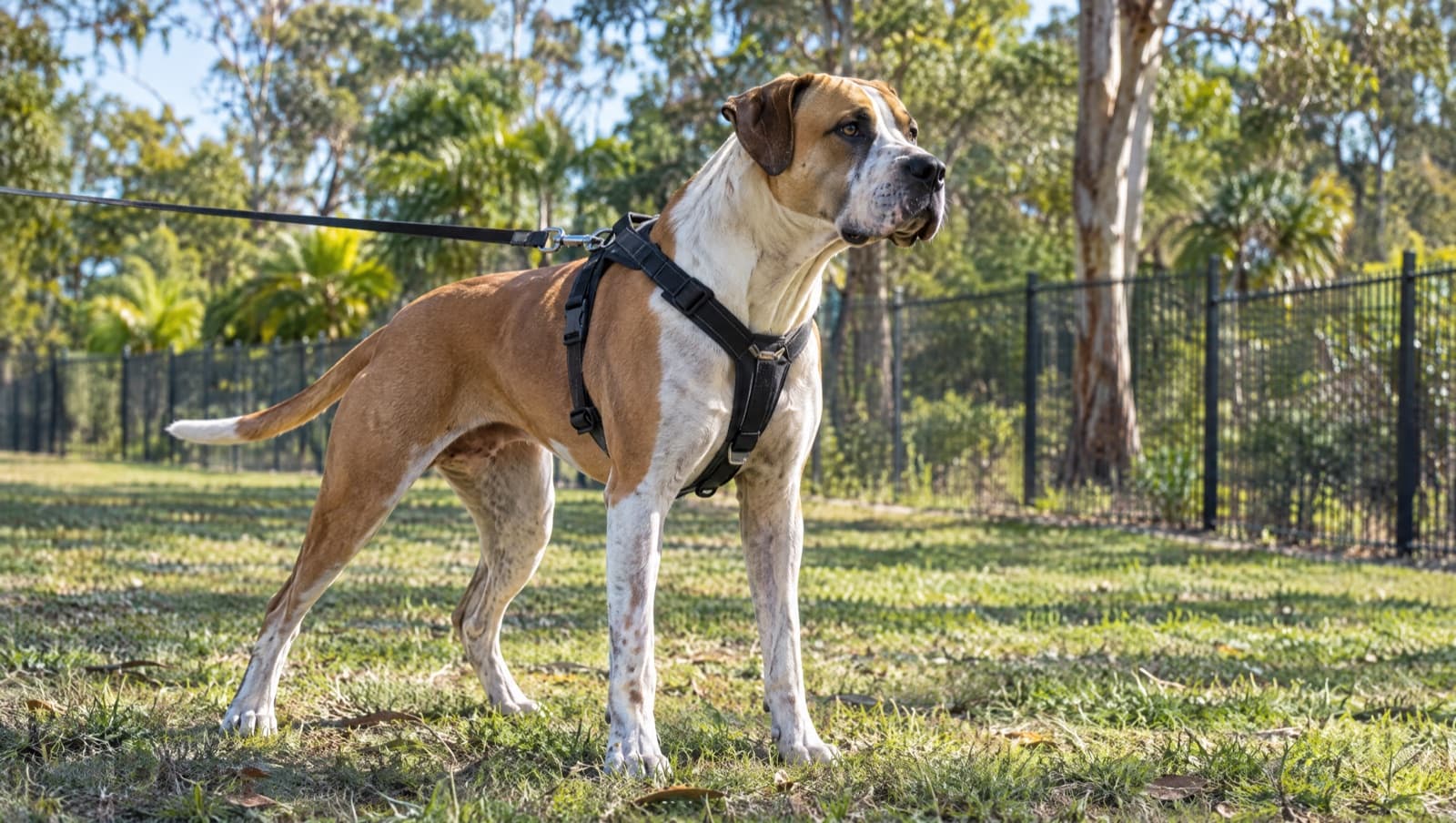
In practice, a well-fitted harness and a long line let a Bull Arab stretch out, sniff and move while you keep control in open spaces. Save genuine off-lead freedom for a fully fenced dog off-leash area, where a failed recall cannot end on a road or in wildlife. The City of Gold Coast maintains around 165 Dog Off-Leash Areas, and Pizzey Park at Mermaid Waters is a well-known fenced example, but zones and fencing change, so check the current status on the City of Gold Coast Dog Off-Leash Areas index before you rely on any one park. Open bushland, coastal reserves and beaches near wildlife are lead-only country for this breed. A Bull Arab is a poor candidate for casual off-lead freedom, and accepting that is part of owning one responsibly.
Force-free training and giving the drive a job
You manage a prey drive, you do not punish it out of a dog. Aversive tools like shock, prong or choke collars are the wrong path with a large, driven Bull Arab: they raise arousal, can worsen reactivity or aggression, and damage the trust the dog places in you, all without changing the instinct underneath. The approach that works is engagement over correction. Build a strong recall and simple focus behaviours with reward-based methods and high-value food, so checking in with you becomes the dog's default. The RSPCA Knowledgebase is a good reference on why reward-based training outperforms punishment.
Just as important, give the drive somewhere legal to go. Scent work, snuffle mats, food puzzles, tracking games and structured play channel the hunting brain on your terms and tire a Bull Arab far more than a plain walk. A working dog with a job settles; a working dog with nothing to do turns the fence, the couch and the neighbour's cat into its own entertainment. A Gold Coast force-free trainer experienced with working breeds is a genuinely worthwhile investment for a first Bull Arab, and the Australian Veterinary Association is a sound starting point for general welfare and behaviour guidance.
Bull Arabs, cats and small pets
This is where honesty matters most. Because the Bull Arab was bred to chase, cats, rabbits, chickens, guinea pigs and other small animals can be a real risk, and even a Bull Arab raised with a cat can be unreliable once the instinct fires. That does not mean every dog is unsuitable for every home, but it does mean the household has to fit the dog.
If you already have a cat or small pets, be upfront with the rescue, look specifically for a dog assessed as cat-tolerant in foster care, and treat any introduction as slow, gradual and fully supervised, with the dog on lead and safe exits for the cat. A foster-based rescue's notes are especially valuable here, because a carer has watched how the individual dog actually behaves around other animals in a home. If your household includes small pets and you cannot manage strict separation, a different breed, or a dog with a proven small-animal history, is the fairer choice for everyone.
Meet a Bull Arab on the Gold Coast
If you can offer secure fencing, an active routine and force-free training, a Bull Arab is a loyal, capable companion, and an overlooked one that badly needs a home. Browse Bull Arabs and Bull Arab crosses in Gold Coast and Queensland rescue, with foster notes on temperament and prey drive.
See Available Bull Arabs →Heat, humidity and ticks for a high-drive dog
A high-drive Bull Arab wants to work, and the Gold Coast climate means you have to be deliberate about when and how. Summers regularly reach the low-to-mid 30s with high humidity, and a big, keen dog can overheat quickly on exercise. Do the hard work in the cool of the early morning and evening, keep water up, check the pavement with your hand before you set off, and never leave a dog in a parked car. On very hot, humid days, swap a hard run for indoor enrichment; scent games and puzzles tire the drive without cooking the dog. Humidity also drives ear and skin issues, so keep an eye on both.
The most important SEQ health point is paralysis ticks. The Australian paralysis tick is endemic along the eastern seaboard, and because Gold Coast winters are mild it is a broadly year-round danger, especially in bushland-fringe and coastal suburbs. Tick paralysis can be fatal. For a dog that noses through scrub after every interesting scent, search the coat thoroughly after bushland walks and use a vet-recommended tick preventive all year, and never guess at products yourself. The RSPCA Knowledgebase covers ticks, and it is worth knowing your nearest 24-hour emergency hospital in advance, such as the Animal Emergency Centre at Varsity Lakes or SASH Gold Coast at Robina.
Not restricted, but often mistaken
It is worth stating plainly, because it worries prospective owners: the Bull Arab is not a restricted breed in Queensland and is legal to own and rehome normally. Under the Animal Management (Cats and Dogs) Act 2008, the restricted list covers only five breeds: the American Pit Bull Terrier, Dogo Argentino, Fila Brasileiro, Japanese Tosa and Perro de Presa Canario. The Bull Arab is not one of them, though its bull-breed heritage and powerful build mean it is sometimes wrongly assumed to be, and it can be mistaken visually for a pit-bull type.
Queensland also uses dangerous and menacing dog declarations, but those apply to an individual dog after an incident, of any breed, rather than to the Bull Arab as a breed. Where the drive and the label can catch owners out is in everyday bias: some rental agents and insurers are wary of big bull-type dogs, so be ready to explain the breed. For anything specific to your suburb or property, confirm the current rules with City of Gold Coast animal management. This is general information, not legal advice. Like any dog on the Gold Coast, a Bull Arab must be microchipped and registered with the council, and a desexed, microchipped dog pays a substantially reduced registration fee.
If you are still weighing up whether a Bull Arab fits your life, our Bull Arab adoption guide for the Gold Coast covers where to look and what it costs, and the Bull Arab health and care guide covers keeping one well in the SEQ climate.
Frequently Asked Questions
Why does a Bull Arab have such a strong prey drive?
Because it was bred for it. The Bull Arab is an Australian landrace developed from the 1970s for pig hunting, by crossing bull breeds, mastiff or Great Dane, and pointer or other scent and sight hounds. It was built to find, chase, hold and bail large game, so a genuine, hard-wired drive to pursue moving animals is part of the package. Day to day that shows up as fixation on cats, wildlife and small dogs, a fast switch into high arousal, and a recall that falls apart the moment a chase begins. It is not a training failure or a bad temperament. It is the working instinct the breed was created around, and living with a Bull Arab well means managing it rather than expecting to erase it.
Can you let a Bull Arab off the lead on the Gold Coast?
Rarely, and only in the right place with realism about the breed. A Bull Arab in full chase does not hear you, so open bushland, beaches and unfenced parkland near wildlife or other dogs are not safe places to trust one off lead. The honest position is that secure containment plus a long line is the safety net for a high-prey-drive hunting type, not a perfect recall. If you want off-lead running, use a fully fenced dog off-leash area, and confirm the current zones on the City of Gold Coast Dog Off-Leash Areas index rather than assuming any one park is enclosed. Everywhere else, a long line lets the dog stretch out while you stay in control.
What kind of fencing does a Bull Arab need?
Tall, solid and genuinely escape-proof. A Bull Arab is a large, powerful athlete that can jump, dig and push through a weak boundary, and a driven dog that spots a cat or a possum on the other side will test it hard. Aim for a fence around 1.8 metres in good repair, with no gaps a big dog can force, nothing beside it to climb on, and a base a digger cannot get under. Gate discipline matters as much as the fence: a self-closing, latched gate and a household habit of checking it prevents the classic bolt through an open gate. Good containment is not just about keeping the dog home. For a prey-driven breed it protects neighbouring cats, wildlife and the dog itself from roads.
Are Bull Arabs good with cats and small pets?
Often not, because of the prey drive, and you have to be honest about this before you adopt. The Bull Arab was bred to chase, so cats, rabbits, chickens, guinea pigs and other small animals can be a genuine risk, and even a Bull Arab raised alongside a cat can be unreliable when the instinct kicks in. This does not make every dog unsuitable for every home, but it does mean you must match the individual dog to your household. If you have small pets, tell the rescue plainly, look for a dog specifically assessed as cat-tolerant in foster care, and manage any introduction slowly and under control. With other dogs many Bull Arabs are sociable, but the individual dog and a careful introduction still decide it.
How do you build recall in a high-prey-drive dog?
Patiently, with reward-based training, and with realistic expectations. Start recall young or from day one of the adoption, using high-value food rewards so coming back always pays better than the environment. Practise first inside a securely fenced area with no distractions, then add mild ones gradually, and use a long line in open spaces so a failed recall never becomes a bolt. Reward every single return, generously, and never punish a dog that comes back late. Crucially, treat recall as a managed skill rather than a guarantee: even a well-trained Bull Arab can be overridden by a strong chase, which is exactly why secure fencing and the long line stay in the plan for life.
Do you need a shock collar or prong collar to control a Bull Arab prey drive?
No. Aversive tools such as shock (e-collar), prong or choke collars are not the answer, and they carry real risks with a large, driven dog: they can raise arousal and aggression, damage your relationship with the dog, and suppress warning signals without changing the underlying drive. The effective approach is management plus force-free, reward-based training. Contain the dog securely, manage the environment with a long line, teach an incompatible behaviour like a strong recall or a hand target, and give the drive a legal outlet through scent work and structured games. A Gold Coast force-free trainer experienced with working breeds is a sound investment. The RSPCA supports reward-based methods for exactly these reasons.
How much exercise and enrichment does a Bull Arab need?
A lot of both. This is a working breed with real stamina, so an adult needs an hour or more of proper activity a day, plus mental work to settle. Physical exercise alone will not tire a working brain. Scent games, food puzzles, training sessions and having a job to do are what actually calm the breed at home, and they double as a healthy outlet for the hunting drive. A bored, under-exercised Bull Arab becomes destructive and harder to contain, which is where a lot of surrenders begin. Give the drive somewhere to go, on your terms, rather than leaving the dog to find its own outlet through the fence.
Is exercising a Bull Arab different in the Gold Coast heat?
The timing changes, not the commitment. South East Queensland summers regularly reach the low-to-mid 30s with high humidity, and a big, keen dog can overheat fast, so shift hard exercise to the cool of the early morning and evening, carry water, check the pavement for heat before you walk, and never leave a dog in a parked car. On very hot, humid days lean on mental enrichment indoors instead of hard running. There is also a year-round health point that matters for a scrub-nosing dog: paralysis ticks are effectively year-round in SEQ and can be fatal, so search the coat after every bushland walk and use a vet-recommended tick preventive all year.
Is a Bull Arab a restricted or dangerous breed in Queensland?
No. The Bull Arab is not a restricted breed in Queensland and is legal to own and rehome normally. Under the Animal Management (Cats and Dogs) Act 2008, the restricted list covers only five breeds: the American Pit Bull Terrier, Dogo Argentino, Fila Brasileiro, Japanese Tosa and Perro de Presa Canario. The Bull Arab is not among them, though its bull-breed heritage and powerful build mean it is sometimes wrongly assumed to be, and it can be mistaken visually for a pit-bull type. Queensland also has dangerous and menacing dog declarations, but those apply to an individual dog after an incident, of any breed, not to the Bull Arab as a breed. For anything specific to your suburb, confirm with City of Gold Coast animal management. Like any dog, a Bull Arab must be microchipped and registered with the council.
Where can I safely exercise a Bull Arab on the Gold Coast?
The safest choice is a fully fenced dog off-leash area, because it lets the dog run without the risk of a chase ending on a road or a possum. The City of Gold Coast maintains around 165 Dog Off-Leash Areas, and Pizzey Park at Mermaid Waters is a well-known fenced example, but zones and fencing change, so confirm the current status on the City of Gold Coast Dog Off-Leash Areas index before you rely on any one park. Away from a fenced space, a long line on a well-fitted harness gives a Bull Arab room to move while you keep control. Reserve open bushland and coastal reserves for lead-only walks, where wildlife is exactly what the breed is built to chase.
Keep reading
Adoptable Bull Arabs on the Gold Coast
Live listings of Bull Arabs and Bull Arab crosses, with foster notes on temperament and prey drive.
Bull Arab Adoption on the Gold Coast
Where to look, why so many need homes, real costs, and whether one suits your household.
Bull Arab Health and Care
Keeping a hardy working breed well in the SEQ heat, humidity and year-round tick season.
Dog Adoption on the Gold Coast
Every adoptable dog we track across the Gold Coast and South East Queensland, updated regularly.