The short answer
Bull Arabs are among the most common large dogs in Queensland rescue, and adopting one is inexpensive and genuinely lifesaving. Fees run $300 to $600 for an adult, all-inclusive, and many wait a long time because the breed is unfashionable. Look on the Gold Coast through Animal Welfare League Queensland, whose Gold Coast rehoming centre is at Coombabah, RSPCA Queensland, foster-based and bull-breed rescues, and PetRescue. What they ask for is an experienced, active home. A Bull Arab is a large, powerful Australian working crossbreed with a strong prey drive and real energy, so it needs secure high fencing, a lot of exercise and a job, careful socialisation, and real caution around cats and small animals. It is not a first-dog or apartment breed. And to be clear, a Bull Arab is not a restricted breed in Queensland, though its build means it is sometimes mistaken for one. Meet those needs and you get a loyal, affectionate, capable companion, and you give an overlooked dog a home it badly needs.
What a Bull Arab is
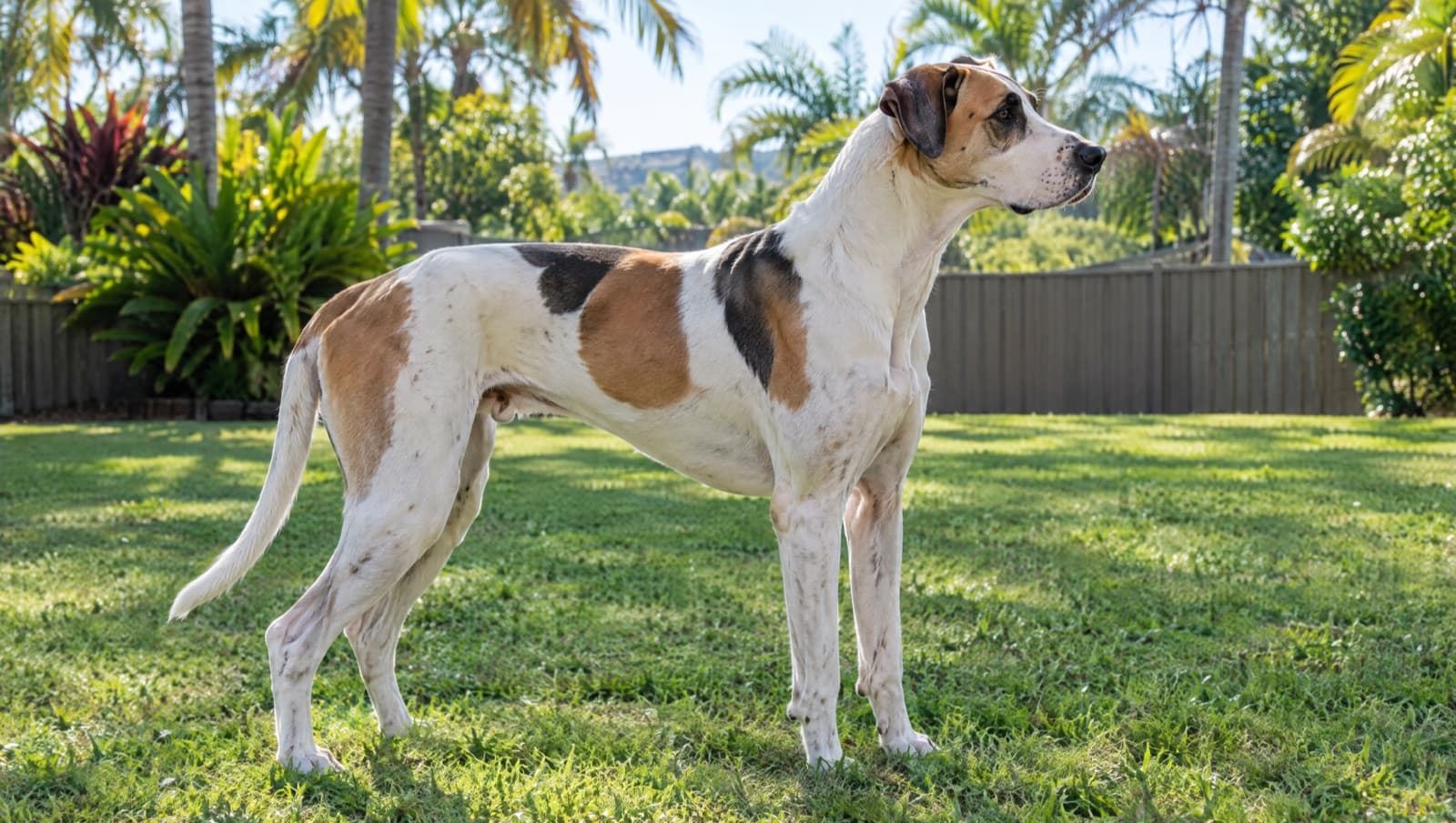
The Bull Arab is a distinctly Australian creation, developed from the 1970s for pig hunting by crossing bull breeds and Staffordshire types with a sighthound such as a Greyhound or Saluki for speed, and mastiff or pointer lines for size and scenting. The result is a large, athletic, short-coated dog built for the chase, with a powerful prey drive, real stamina and a capable working brain. Because it is a landrace working type rather than a standardised pedigree breed, Bull Arabs vary a fair bit in size and appearance, and you will also see the names Australian Bull Arab and Aussie Bull Arab used for the same dog. Most are big, lean-muscular and driven, and many are white with patches.
At home, a well-raised, well-socialised Bull Arab is loyal, affectionate and often surprisingly calm and gentle with its family. It bonds deeply and wants to be part of the household. But this is a serious dog with serious needs, and understanding what it was bred to do is the key to living with it well. Because lineage varies so much from dog to dog, the temperament, size and health of the individual dog matter more than any breed average, which is exactly why a rescue vet check and a foster carer's notes are worth so much. The detail on day-to-day care and what to watch for is in the Bull Arab health and care guide.
Why Bull Arabs fill Queensland rescue
Understanding why so many Bull Arabs end up in rescue is the best preparation for adopting one, and it is a story about supply and misjudged expectations rather than about bad dogs.
- Oversupply. Bull Arabs are widely and often casually bred across regional Queensland for hunting and working, which produces a steady surplus of puppies, far more than there are suitable homes. Those surplus dogs flow into pounds and rescues.
- Underestimated size and drive. A Bull Arab puppy grows into a large, strong, high-drive adult, and owners who were not ready for that reality surrender when the dog outgrows their capacity to handle it. The prey drive, in particular, catches out households with cats or small pets.
- Being unfashionable. Because the Bull Arab is not a trendy breed, the dogs that do reach rescue are frequently overlooked in favour of doodles and designer crosses, so they wait far longer than most, and in regional pounds many run out of time simply for lack of a home.
- Housing bias. The Gold Coast has a lot of high-rise and body-corporate housing, and some schemes and landlords are wary of large bull-type dogs, so an owner who moves sometimes cannot keep the dog even though the breed is not restricted.
The dogs themselves are almost always loyal, sound and affectionate. What a rescue Bull Arab needs is an experienced, active owner with a secure yard, not a different temperament. Ask the rescue how the dog is with other animals, how much exercise it needs, and how it copes with being contained.
Where to adopt a Bull Arab on the Gold Coast
Bull Arabs come into rescue steadily, so a wide net catches the right dog. Set up alerts on every rescue you would consider, and do not overlook regional Queensland pounds, where many of these dogs wait longest.
- Animal Welfare League Queensland (AWLQ). A long-running South East Queensland no-kill charity whose flagship Gold Coast rehoming centre is at Coombabah, with further centres at Willawong, Warra and Beenleigh and community vet clinics. Big working-type dogs including Bull Arabs and Bull Arab crosses appear regularly, and every adoption includes desexing, vaccination, microchipping, a vet check and a behavioural assessment. Listings at awlq.org.au.
- RSPCA Queensland. The state body handles Gold Coast adoptions through its statewide network, including a Gold Coast Adoption Centre, with its main Animal Care Campus at Wacol in Brisbane, and every adoption is all-inclusive with a behavioural assessment. Browse at rspcaqld.org.au.
- A Queensland large-breed or bull-breed rescue. Foster-based rescues that focus on big working types understand the breed's prey drive and exercise needs and assess homes carefully. Because the dog lives in a foster home, the notes on temperament, energy and how it is with cats and other dogs tend to be detailed and honest.
- PetRescue. The fastest way to scan many Queensland rescues at once, a national aggregator that lists animals from hundreds of member rescue organisations in one searchable place, at petrescue.com.au.
Beyond these, regional Queensland council pounds hold many Bull Arabs. Whatever the source, verify any rescue through a real address, a current adoptable-dog list and charitable status before sending money, and browse the current Bull Arabs and Bull Arab crosses on the Gold Coast Bull Arab listings.
The cost comparison, rescue against a private sale
Bull Arabs are rarely bred by responsible registered breeders. Almost all are working-litter or private-sale pups, often advertised cheap or free, so the honest comparison is a rescue dog against a private-sale or working-litter dog, not against a show breeder. The upfront price of a private-sale pup can look tiny, but the all-inclusive rescue fee usually works out cheaper across the first year, because a rescue dog is already desexed, vaccinated, microchipped and vet-checked, and comes with a temperament assessment. Real first-year costs on the Gold Coast:
| First-year cost | Rescue Bull Arab | Private sale / working litter |
|---|---|---|
| Adoption fee or purchase price (adult) | $300 to $600 | $0 to $300 |
| Desexing (large breed) | Included | $350 to $700 |
| Microchipping | Included | $60 to $80 |
| First-year vaccinations | Included | $250 to $400 |
| Initial vet check | Included | $100 to $200 |
| Council registration (reduced fee if desexed and microchipped) | Set by your council | Set by your council |
| Year 1 food (large breed) | $800 to $1,500 | $800 to $1,500 |
| Secure high fencing / gear (bed, lead, harness, long line) | $400 to $900 | $400 to $900 |
| Parasite prevention (paralysis tick, flea, worm, heartworm) | $350 to $650 | $350 to $650 |
| Training / socialisation | $250 to $600 | $250 to $600 |
| Pet insurance (optional) | $600 to $1,200 | $600 to $1,200 |
| Year 1 total (excluding council fee) | $2,700 to $5,450 | $3,160 to $6,530 |
Two lines matter most for this breed: secure high fencing, because a large, athletic Bull Arab needs containment it cannot jump or push through, and training, which is not optional for a strong, high-drive dog. Both are covered in the Bull Arab prey drive and containment guide. One cost the adoption fee does not cover is council registration, a separate legal step under the Animal Management (Cats and Dogs) Act 2008: a dog must be microchipped before 12 weeks of age or before it changes hands, and registered with your local council from 12 weeks, with a reduced rate for a desexed and microchipped dog. Check the current figure on the City of Gold Coast page rather than assuming a single Queensland fee.
Browse adoptable Bull Arabs on the Gold Coast
Bull Arabs are common in Queensland rescue and often overlooked. Browse live listings across the Gold Coast and SEQ, and give a loyal, capable dog the home it needs.
See Available Bull Arabs →Restricted breeds, misidentification and the regulated-dog rules
This is worth getting right, because bull-type dogs attract more confusion than any other. The Bull Arab is not a restricted breed in Queensland. Under the Animal Management (Cats and Dogs) Act 2008, only five breeds are restricted: the American Pit Bull Terrier, Dogo Argentino, Fila Brasileiro, Japanese Tosa and Perro de Presa Canario. Those five are prohibited from import and cannot be sold or given away, which is exactly why they never appear on adoption lists. The Bull Arab is not on the list and is legal to own and rehome normally.
Where owners can still run into trouble is identification rather than law. Because a Bull Arab shares bull-breed heritage and a powerful, blocky build with pit bull types, it is sometimes visually taken for one by the public, and occasionally questioned. Identifying a crossbreed by appearance is a judgement, not a DNA test, so it can be contested. The restriction targets the American Pit Bull Terrier specifically, not any strong dog that looks similar. Queensland also uses a wider umbrella called regulated dogs, which covers three separate things: dangerous and menacing dogs, which a council can declare about any dog of any breed after a serious incident, and restricted dogs, which is the breed-based list above. If you ever have a doubt about how a particular dog is classified, contact City of Gold Coast animal management to confirm rather than relying on assumptions. In practice, what matters for a Bull Arab is the same as for any dog on the Gold Coast: microchip it, register it with the council, and be a responsible owner who keeps it socialised and securely contained.
Bull Arabs and Gold Coast living
A Bull Arab suits an active Gold Coast household with the right setup rather than an apartment. A few practical points specific to the city and the SEQ climate:
- Space and fencing. A secure yard with a solid, high fence is close to essential for a large, driven dog. If you live under a body corporate, its pet rules apply too, so check them before you apply, and be ready for the occasional rental or insurance bias against big bull-type dogs even though the breed is not restricted.
- Exercise venues. Fully fenced or well-contained off-lead spaces suit a Bull Arab far better than open bushland, given the prey drive. The City of Gold Coast maintains around 165 dog off-leash areas. Confirm the current zone and rules for any spot on the City of Gold Coast dog off-leash area index rather than assuming, and use a long line anywhere small animals or wildlife are about.
- Heat and humidity. South East Queensland summers regularly reach the low-to-mid 30s with high humidity, and a large, keen dog can overheat fast on exercise. Walk in the cool of the morning or evening, keep water up, watch hot pavement, and never leave the dog in a parked car. Humidity also drives ear and skin problems, so keep an eye on both.
- Paralysis ticks, year-round. This is the single most important SEQ health point. The Australian paralysis tick is endemic along the eastern seaboard, and because SEQ winters are mild it is a broadly year-round danger, especially in bushland-fringe and coastal suburbs. Tick paralysis can be fatal. For a high-prey-drive dog that noses through scrub, search the coat thoroughly after every bushland walk and use a vet-recommended tick preventive all year. See the RSPCA Knowledgebase on ticks, and know your nearest round-the-clock emergency hospital, such as AEC Gold Coast at Varsity Lakes or SASH Gold Coast at Robina.
- Other parasites. Fleas and intestinal worms stay active year-round in the warm climate, and heartworm, spread by mosquitoes, is present in Queensland, so ask your vet about a complete prevention plan. Never medicate on your own guess; a vet will match the products to your dog and your suburb.
Is a Bull Arab right for your Gold Coast home?
For all its needs, a Bull Arab in the right home is a wonderful dog. They are deeply loyal and bond closely with their family, and a well-socialised one is often calm, affectionate and gentle at home once its exercise needs are met. Many are good with children they are raised with, and intelligent enough to enjoy training and a job to do. They are not a breed that suits being left idle.
The other side is the size, the strength and above all the prey drive, which mean an experienced owner, real socialisation, secure fencing, and honest caution around cats and small animals. This is a dog for an active household with space and some dog knowledge, rather than an apartment or a first-time owner wanting an easy pet. Whatever the breed, the first month home is a decompression period. The 3-3-3 rule is a useful guide: roughly three days to decompress, three weeks to start showing personality, three months to fully settle. If you are weighing up whether you have the space and lifestyle for a big working dog, our guide to large dogs for adoption on the Gold Coast is a good next read, and the Australian Veterinary Association is a sound starting point for general welfare and care guidance once you have chosen your dog.
Adopting safely and avoiding scams
Adoption through a verified rescue is the safest path, but if you are scanning classifieds for a Bull Arab, know the Queensland rules. Anyone who sells, gives away or advertises a dog born on or after 26 May 2017 must display a supply number that identifies the dog's origin, and every dog must be microchipped before it changes hands. Queensland does not run a Victorian-style register for every give-away ad, so the practical safeguards are the microchip and the supply number. A Gumtree or Facebook Marketplace “free or cheap Bull Arab” advertised with neither a microchip number nor a supply number is a clear red flag, and worth cross-checking against Scamwatch. With a breed this common and this easy to come by, there is rarely any reason to take a risk on an unverified seller when a wonderful rescue dog is waiting.
Frequently Asked Questions
Where can I adopt a Bull Arab near me on the Gold Coast?
Start with the big South East Queensland shelters and foster-based rescues. Animal Welfare League Queensland runs its flagship Gold Coast rehoming centre at Coombabah, and RSPCA Queensland handles Gold Coast adoptions through its statewide network including a Gold Coast Adoption Centre, with its main Animal Care Campus at Wacol in Brisbane. Add a Queensland large-breed or bull-breed rescue, foster-based rescues, and the national aggregator PetRescue.com.au, which lists dogs from many smaller Queensland rescues in one place. Bull Arabs and Bull Arab crosses are among the most common large dogs in Queensland rescue, so they appear regularly, and they also fill regional council pounds across the state, where many wait a long time for homes. Because they are so common and so often overlooked in favour of trendier breeds, a wonderful Bull Arab is usually available. Set alerts across the rescues, be open to a cross, and adopting one of these dogs genuinely saves a life.
What is a Bull Arab?
The Bull Arab is an Australian working crossbreed developed from the 1970s for pig hunting, by crossing bull breeds and Staffordshire types with a sighthound such as a Greyhound or Saluki for speed, and mastiff or pointer lines for size and scenting. It is a landrace working type, not a formally standardised pedigree breed, so lineage and look vary a lot from dog to dog, but most are large, lean-muscular, short-coated and built for the chase, with a strong prey drive and real stamina. They are intensely loyal to their family and, well raised and socialised, are calm and affectionate at home, but this is a serious dog that needs an experienced, active owner.
How much does it cost to adopt a Bull Arab on the Gold Coast?
Adoption fees run about $300 to $600 for an adult and $400 to $800 for a puppy across the main Queensland rescues, and regional pounds are sometimes lower. That fee already covers desexing, vaccination, microchipping, worm and flea treatment and a vet check. On top of the fee, budget for council registration, where a desexed and microchipped dog gets a substantially reduced fee set by the City of Gold Coast, plus secure high fencing (an important cost for a large, driven dog), a strong harness and lead, and general setup. Ongoing yearly costs sit around $1,500 to $2,500 for food, routine vet care, year-round parasite prevention and the occasional larger bill. A Bull Arab is a big dog, so feeding and any medical costs scale with the size.
Why are there so many Bull Arabs in Queensland rescue?
Oversupply and underestimation. Bull Arabs are widely bred across regional Queensland for pig hunting and working, which produces a surplus of pups, and their size and drive mean plenty of owners cannot cope once the dog matures. As a result they fill pounds and rescues across the state, and because they are not a fashionable breed, they are often overlooked and wait far longer than trendier dogs. None of this reflects the dogs, which are usually loyal, sound and affectionate. It is exactly why adopting a Bull Arab is such a good thing to do: these are capable, devoted dogs that simply need the right experienced home.
Is a Bull Arab a restricted breed on the Gold Coast?
No. The Bull Arab is not a restricted breed in Queensland and is legal to own and rehome normally. Under the Animal Management (Cats and Dogs) Act 2008, Queensland's restricted-breed list covers five specific breeds: the American Pit Bull Terrier, Dogo Argentino, Fila Brasileiro, Japanese Tosa and Perro de Presa Canario. The Bull Arab is not among them. What catches some owners out is that a Bull Arab's bull-breed heritage and powerful build mean it is sometimes visually mistaken for a pit bull type by the public, and identifying a crossbreed by look is a judgement rather than a DNA test, so it can be contested. The restriction targets the American Pit Bull Terrier specifically. If you ever have a question about how a particular dog is classified, contact City of Gold Coast animal management to confirm. Like any dog on the Gold Coast, a Bull Arab must be microchipped and registered with the council.
Are Bull Arabs good family dogs?
With the right home, yes. A well-socialised Bull Arab is loyal, affectionate and often gentle and calm with its own family, and many are good with children they are raised alongside. The cautions are size, strength and prey drive rather than temperament: this is a large, powerful dog, so supervision around small children is sensible, and the strong instinct to chase means real care around cats, small animals and livestock. A Bull Arab suits an active household with room, time and some dog experience, rather than an apartment or a first-time owner who wants an easy dog. Queensland rescues assess each dog and note how it is with children and other animals.
Do Bull Arabs get on with cats and small animals?
Often not, because of the prey drive. The Bull Arab was bred to find and chase, so many have a strong instinct that makes cats, rabbits, chickens and other small animals a genuine risk, and even a Bull Arab raised with a cat can be unreliable. This does not mean every dog is unsuitable, but it does mean you must be honest about your household and be guided by the individual dog assessment. If you have small pets, discuss it frankly with the rescue, look for a dog specifically assessed as cat-friendly, and manage introductions very carefully. With other dogs, many Bull Arabs are sociable, but as always the individual dog matters.
How much exercise and space does a Bull Arab need?
A lot of both. The Bull Arab is a working breed with real stamina, and it needs substantial daily exercise plus mental work to stay settled, ideally an hour or more of activity a day for an adult. A bored, under-exercised Bull Arab can become destructive and hard to manage given its size and strength. It suits a home with a secure yard and an active owner who enjoys the outdoors, rather than an apartment. In the SEQ climate, time hard exercise around the heat and humidity, and keep it to the cool of the morning or evening in summer. Secure fencing matters, because a large, driven dog that is not properly contained or stimulated will find its own entertainment.
Should I adopt an adult Bull Arab or a puppy?
For most people an adult is the wiser choice, and with a large working breed it is doubly true. Because the Bull Arab is a crossbreed with variable lineage, a puppy gives you no reliable read on its adult size, energy or prey drive, whereas an adult has a temperament a rescue can assess, established manners, a known size and a lower adoption fee, so you can see whether this individual dog suits your home. Rescues evaluate each dog in foster or shelter care and match carefully, which matters for a breed where handling and containment are everything. Adopting an adult whose needs are already known is a real advantage.
Is it worth adopting an overlooked Bull Arab?
Absolutely, and it may be the single most rewarding adoption you can make in Queensland. Because they are so common and so unfashionable, Bull Arabs are among the dogs that wait longest in pounds and rescues, and many are put to sleep simply for lack of a home rather than for any fault. They are loyal, capable, affectionate dogs that bond deeply with an owner who gives them structure, exercise and a secure home. If you have the experience, the space and the active lifestyle the breed needs, adopting an overlooked Bull Arab genuinely saves a life and gives you a devoted companion in return.
Keep reading
Adoptable Bull Arabs on the Gold Coast
Live listings of Bull Arabs and Bull Arab crosses, with filters for age, size and household compatibility.
Bull Arab Prey Drive & Containment
Managing a strong prey drive, secure high fencing, recall and exercise for a driven working dog.
Bull Arab Health & Care
Crossbreed health, keeping a large active dog lean, and day-to-day care in the SEQ climate.
Gold Coast Adoption Resources
Guides on adopting, costs, council rules and settling a rescue dog on the Gold Coast.