The short answer
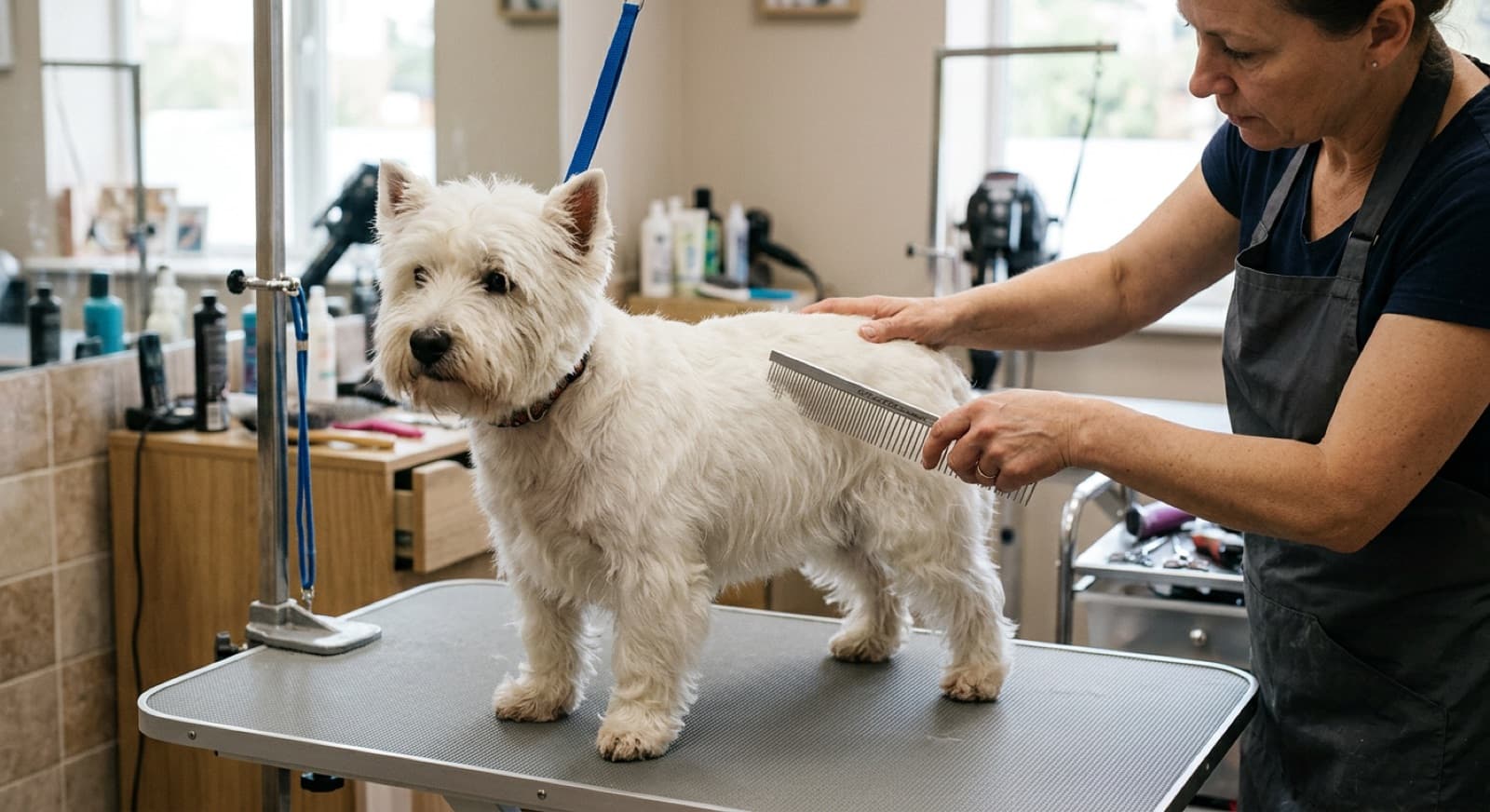
Westie care is two jobs in one. The coat is a harsh white double coat that is low-shedding, so it has to be clipped or hand-stripped every 6 to 8 weeks or it overgrows and mats, plus a brush two or three times a week at home. The skin is the standout. Westies are famously allergy-prone, so grooming is skin management: do not over-bathe or use harsh shampoos, rinse and dry the coat thoroughly, and rinse allergens off after Sydney grass walks. Hand-stripping keeps the protective harsh coat, clipping is easier but softens it, and both can suit a pet depending on the dog's skin. Medical treatment of allergies goes to your vet. This guide is the grooming and skin-hygiene routine that supports it.
The harsh white double coat
The West Highland White Terrier coat is not the soft, fluffy thing it looks like from across the park. A proper Westie coat is a double coat with two very different layers. On top is a harsh, wiry, weather-resistant outer coat, the part that was bred to shrug off Scottish rain and mud while the dog worked. Underneath is a soft, dense undercoat that insulates. That harsh outer layer is doing a job. It protects the skin, sheds water and dirt, and it is a big part of why the coat behaves the way it does.
The harsh coat is also low-shedding. Instead of dropping around the house, the dead hair stays put in the coat. That keeps white hair off your furniture, but it means the coat cannot clean itself out the way a Labrador's does. Left alone it simply keeps growing, gets woolly, and mats. So a Westie needs its coat managed for it, either stripped or clipped, roughly every 6 to 8 weeks, plus a brush two or three times a week at home to lift out the dead hair, grass seeds and dirt.
Here is why the coat matters so much for this breed in particular. The Westie is one of the most allergy-prone dogs going, and the skin under that white coat is often the real problem area. How you look after the coat directly affects the skin. Keeping it clean, dry and free of trapped allergens is not just about a tidy dog. It is a core part of keeping an itchy Westie comfortable. That is the thread running through this whole guide: for a Westie, grooming and skin care are the same job.
Hand-stripping versus clipping
This is the big decision with any harsh-coated terrier, and there is no wrong answer for a pet, so ignore anyone who says there is only one right way. The two methods do genuinely different things to the coat, and with a Westie the choice touches the skin as well as the look.
Hand-stripping is the traditional method. A groomer plucks the dead, ready-to-shed hairs out of the wiry topcoat by hand, or with a stripping knife, a few at a time. Done properly on a coat that is ready, it does not hurt the dog. Stripping keeps the topcoat's harsh, weather-resistant texture, because it lets the proper coat grow back in rather than cutting it off. Many people feel the harsh coat also suits the skin better, since it stays airy and protective rather than soft and dense against the body. The trade-offs are that it takes longer, costs more, and fewer groomers offer it, so you may need to search around Sydney for one who does.
Clipping shaves the coat down with electric clippers instead. It is quick, cheaper, pain-free, and every groomer can do it, which is why most pet Westies are clipped. The trade-off is texture. Clipping cuts through the harsh topcoat, so over months and years the coat grows back softer and woollier. Some owners and groomers argue that a softer, denser coat can hold moisture and warmth closer to the skin, which is not ideal for a dog already prone to yeast and irritation. Others find their clipped Westie has perfectly happy skin. It varies with the individual dog.
So how do you choose? If your Westie has healthy, easy skin, clipping every 6 to 8 weeks is completely fine, practical and normal, and it is what most rescued Westies get. If your dog is prone to skin trouble, it is genuinely worth raising the coat question with your groomer and your vet, and considering whether keeping more of the harsh coat through hand-stripping helps this particular dog. Pick based on the look you want, the budget you have, and above all the dog's skin, not on what a breed purist insists on.
The skin: grooming as skin management
This is the part that sets the Westie apart from other little white dogs. West Highland White Terriers are famously prone to allergies and atopic skin, meaning skin that overreacts to everyday things like pollen, grass, dust and certain foods. That is why so much of Westie grooming is really about the skin. You are not just tidying a coat. You are managing the barrier that keeps an itchy dog comfortable. Get the routine right and you can genuinely reduce flare-ups. Get it wrong and you can trigger them.
The single most important rule is do not strip the skin of its natural oils. That means:
- Do not over-bathe. Frequent washing dries out and irritates already-sensitive skin. Bathe when the dog actually needs it, not on a rigid weekly schedule, unless your vet has set a specific medicated plan.
- Do not use harsh shampoos. Cheap or heavily perfumed products damage the skin barrier. Use a gentle, sensitive-skin dog shampoo, or the exact product your vet recommends for an allergic dog.
- Rinse everything out. Shampoo residue left in the coat is a direct cause of itch. Rinse until the water runs completely clear.
- Dry thoroughly. A damp coat is the enemy. Warm, wet fur breeds yeast and bacteria, so towel well and dry down to the skin, especially the belly, armpits, paws and under the chin.
The other half of skin management is allergen control, and this is where Sydney comes in. Much of what a Westie reacts to is picked up on walks: grass, pollen, dust. After a walk through the park, a plain water rinse of the belly, legs and paws, or a wipe-down with a damp cloth, clears a lot of that off the coat before the dog licks and scratches at it. It is a small habit that makes a real difference through the pollen-heavy warmer months.
Then there are the spots to check every few days. Look at the skin folds, run your hands over the belly and armpits, and pay attention to the paws and the ears. Paw-licking and chewing, red or brown-stained paws, recurring ear infections, scabs, hot spots or a musty smell are all classic signs of an allergic Westie whose skin needs attention. Grooming lets you catch these early. What it does not do is treat them. A medical allergy needs a vet, and the treatment side, from diet trials to prescribed skin care, belongs to the Westie health issues guide. This article is the hygiene routine that supports whatever your vet advises. The RSPCA Australia Knowledgebase has useful general guidance on skin health and grooming for dogs.
Keeping a white coat white
A bright white coat is the whole point of a Westie, and it also shows every single mark. Tear staining around the eyes, saliva staining around the mouth, and rusty-brown patches on the paws and legs all stand out against the white. Some of this is simply the cost of owning a white dog. A daily wipe of the face, a clean of the paws after walks, and keeping up the regular bathing and brushing keep the worst of it at bay.
But staining is also a useful early-warning system on a Westie. Brown saliva staining on the paws almost always means the dog has been licking and chewing there, which is a red flag for itchy, allergic skin rather than just dirt. Heavy tear staining can point to eye or tear-duct irritation. So do not just scrub the stains away and move on. Treat sudden or worsening staining as a clue to look closer, and if the dog is also scratching, chewing or restless, mention it to your vet.
Ears, nails, feet and that small-mouth dental job
The Westie ears are small, pricked and prone to infection, especially in an allergic dog whose whole skin system runs sensitive. Check inside each ear once a week, keep any hair around the canal managed, and dry the ears thoroughly after every swim and bath, because trapped moisture is what tips a healthy ear into an infected one. Sydney dogs swim a lot in summer, at the beach, the river and the backyard pool, so make ear-drying part of the after-swim routine. Redness, a bad smell, dark discharge, head-shaking or scratching at the ears all mean a vet visit, not just a clean.
The feet need attention too. The hair between the paw pads grows long and traps grass seeds, dirt and moisture, so keep it trimmed or ask the groomer to. Grass seeds are a real Sydney problem in spring and summer and can burrow into the skin between the toes, so check the paws after walks. And because paws are a favourite target for an itchy Westie, keeping them clean, dry and seed-free is part of the skin routine as much as the coat routine.
Trim the nails regularly, or have the groomer do it, so they do not click on the floor or catch and tear. Finally, do not skip the teeth. Small terriers like the Westie have a lot of teeth crammed into a small mouth and are prone to dental disease, so brush the teeth with a dog toothpaste daily or as often as you can manage, and have your vet check them at the annual visit. Regular dental care saves a great deal of pain and cost later on.
Bathing done right
Bathing deserves its own note because it is the thing owners most often get wrong with a Westie. The instinct is to bathe a white dog often to keep it looking clean. For a normal coat that is fine, but for allergy-prone skin, too-frequent bathing with the wrong product is a direct cause of irritation. For many Westies, a bath every four to eight weeks is plenty. A dog with diagnosed skin allergies may be on a specific medicated bathing schedule set by a vet, which overrides the general advice and should be followed exactly.
When you do bathe, use a gentle dog shampoo made for sensitive skin, or the product your vet has recommended. Wet the coat right through, work the shampoo down to the skin, then rinse and rinse again until the water runs completely clear, because leftover residue itches. Dry the coat thoroughly afterwards, down to the skin, and comb it out as it dries. A clean, well-rinsed, properly dried Westie is one of the simplest and most effective things you can do for its skin. Between baths, the spot-cleaning after walks does most of the day-to-day work.
Westies in the Sydney climate
Sydney adds two things to the Westie care picture. The first is humidity, and for this breed the humidity is arguably harder on the skin than the heat. Warm, damp air feeds the yeast and bacteria that thrive on allergic skin, so through the warmer, muggier months be extra vigilant. Dry the dog properly after swims and baths, rinse the coat after grassy walks, check the skin folds and paws more often, and do not let a Westie stay damp. If you are going to see a flare-up, a humid Sydney summer is when.
The second is heat. The double coat is warm, so do the harder exercise in the cool of early morning or the evening on hot days, carry water, and go easy in the middle of a hot, humid afternoon. Heat, not cold, is the real dog-safety risk in Sydney, and never leave any dog in a parked car. A sensible shorter summer clip helps a Westie stay comfortable, but do not shave a double coat right back to the skin, as the coat gives some protection from the sun. Ask your groomer for a practical summer length.
Then there are paralysis ticks, which are a year-round danger across the whole Sydney region and can be fatal. A white coat helps you spot a dark tick, but the coat and furnishings still hide them well, so a quick pat is not enough. Keep your Westie on a vet-recommended tick prevention product all year, and after any bushwalk part the coat and feel right down to the skin, especially around the head, ears, neck and legs. If you find a tick, or notice any weakness, wobbliness, or a change in your dog's bark or breathing, get to a vet straight away. Talk to your vet about the right prevention product for your dog. The Australian Veterinary Association has useful general guidance on parasite prevention. And whatever dog you bring home, register it with your council under the Companion Animals Act, which you can do through the NSW Pet Registry.
Browse adoptable Westies in Sydney
A Westie rewards an owner who keeps up the coat care and the skin routine. Browse live NSW listings and set an alert so you hear the moment one comes in.
See Available Westies →Is the grooming commitment right for you?
Put it together and the picture is clear. A West Highland White Terrier is a bright, sturdy, characterful little dog and a low-shedding one, but it comes with a real, ongoing care commitment that is as much about skin as about looks. The harsh coat has to be clipped or hand-stripped every 6 to 8 weeks because it does not shed out, plus regular brushing at home. And the allergy-prone skin means the bathing, drying and allergen-control routine is not optional, it is central to keeping the dog comfortable.
For the household that fits, a Westie is a wonderful companion: portable, tough, clever and full of terrier personality. If a dog that may need careful bathing, regular vet skin checks and a groomer every couple of months sounds like too much, that is worth being honest about before you adopt rather than after, because a neglected, matted or chronically itchy Westie coat is a genuine welfare problem. Rescues like RSPCA NSW, AWL NSW, Sydney Dogs and Cats Home, Monika's Doggie Rescue and Maggie's Rescue take in dogs of all breeds and crosses, know their dogs well, and can tell you honestly what a particular Westie's coat and skin are really like. Our Westie adoption guide covers where to adopt and what to expect.
Frequently Asked Questions
How often should I groom a Westie?
Brush a West Highland White Terrier two or three times a week, wipe the coat down after grassy walks, and book a full clip or hand-strip roughly every 6 to 8 weeks. The harsh white topcoat does not shed out much, so it needs a groomer to keep it in shape and stop it overgrowing. The regular brushing at home matters just as much, because it lifts out dead hair, grass seeds and allergens and lets you feel the skin for any hot spots, scabs or ticks under that white coat. For a Westie the grooming routine is also a skin routine. A dog that is itchy or has sensitive skin needs the coat and skin kept clean and checked far more closely than a dog with an easy hide, so build the habit early.
Should I hand-strip or clip my Westie?
Either is fine for a pet, and most Sydney owners clip. Hand-stripping is the traditional method, where a groomer plucks the dead wiry hair out of the topcoat by hand so the proper harsh, weather-resistant coat grows back. It keeps the true Westie texture and, some owners feel, suits the skin better because it preserves that protective outer layer. Clipping shaves the coat down instead. It is quicker, cheaper, pain-free and every groomer can do it, but over time it softens the texture and can make the coat woollier, which some people argue can trap moisture and irritation closer to allergy-prone skin. Neither is wrong for a pet. If your Westie has healthy skin, clip and enjoy the easier life. If the dog is prone to skin trouble, it is worth talking to your groomer and vet about whether keeping more of the harsh coat through stripping helps.
How do I care for my Westie's itchy skin?
Keep the skin clean, keep it dry, and do not strip it of its natural oils, because Westies are famously prone to allergies and itchy, irritated skin. Do not over-bathe or reach for harsh shampoos, as that damages the skin barrier and can make the itch worse. When you do bathe, use a gentle or vet-recommended product, rinse every trace out, and dry the coat right down to the skin, since a damp coat invites yeast and irritation. After walks through Sydney grass or pollen, a plain water rinse or a wipe-down helps clear allergens off the coat and paws before the dog licks and scratches at them. Check the skin folds, paws and ears regularly for redness or a bad smell. Grooming manages the skin, but it does not treat a medical allergy. If your Westie is constantly itchy, chewing its paws, losing hair or getting recurring infections, that is a vet conversation, and we cover it in the health guide.
How often should I bathe a Westie?
Bathe a Westie only when it genuinely needs it rather than on a fixed weekly schedule, because too-frequent bathing dries out and irritates already-sensitive skin. For many Westies that means every four to eight weeks, but a dog with skin allergies may be on a specific medicated bathing plan set by a vet, which is different and should be followed exactly. Use a gentle dog shampoo suited to sensitive skin, or the product your vet recommends, work it in properly, then rinse until the water runs completely clear so no residue is left to itch. Drying matters as much as washing. Towel well and dry the coat down to the skin, paying attention to the belly, armpits, paws and under the chin where damp lingers. A clean, well-rinsed, thoroughly dried coat is one of the simplest things you can do for Westie skin.
Why is my white Westie coat going yellow or stained?
A white coat shows every mark, so tear staining around the eyes, saliva staining around the mouth and paws, and general grubbiness from the ground all show up as yellow or rusty-brown patches. Some of it is just cosmetic and comes with owning a white dog in a world of mud and grass. Wipe the face and beard area daily, clean the paws after walks, and keep up the regular bathing and brushing to keep the worst of it down. But staining can also flag a problem underneath. Heavy tear staining can point to eye or tear-duct irritation, and brown saliva staining on the paws usually means the dog is licking and chewing there, which is a classic sign of itchy, allergic skin. So treat sudden or worsening staining as a clue to look closer rather than just a laundry problem, and mention it to your vet if the dog is also scratching or chewing.
How do I look after my Westie's ears, nails and teeth?
Check the ears weekly, keep the nails short, and brush the teeth as often as you can manage, because all three are easy to forget and all three cause trouble if you do. Westie ears are prone to infection, especially in an allergic dog, so look inside each ear once a week, keep any hair around the canal managed, and dry the ears thoroughly after every swim and bath. Redness, a bad smell, dark discharge or head-shaking means a vet visit, not just a clean. Trim the nails regularly so they do not click on the floor or catch and tear. And do not skip the teeth. Small terriers like the Westie are prone to dental disease, so daily or regular brushing with a dog toothpaste plus vet dental checks will save a lot of pain and cost down the track.
Does a Westie cope with the Sydney heat and humidity?
A Westie copes reasonably well but needs sensible summer care, and the Sydney humidity is actually harder on the skin than the heat. Warm, damp weather feeds the yeast and bacteria that thrive on allergic Westie skin, so be extra vigilant with drying, rinsing after walks and checking skin folds through the warmer months. Walk in the cool of early morning or evening on hot days, carry water, and never leave a dog in a parked car, because heat is the real dog-safety risk in Sydney. A shorter summer clip can help the dog stay comfortable, but do not shave a double coat right back to the skin, as the coat gives some protection from sun. Paralysis ticks are a year-round danger across Sydney and hide easily in a white coat, so keep your dog on a vet-recommended tick prevention product all year and check by hand down to the skin.
Do Westies shed, and are they hypoallergenic?
Westies are low-shedding, which keeps loose white hair off your couch, but low shedding is not the same as hypoallergenic and no dog truly is. The harsh double coat holds its dead hair rather than dropping it, which is why the coat has to be stripped or clipped instead of shedding out. That gives you a cleaner house in exchange for a standing grooming commitment every 6 to 8 weeks. On allergies, people react to dander and saliva as much as to hair, so a low-shedding Westie is not automatically safe for an allergy sufferer. If someone in the home has allergies, spend real time around a Westie before you commit rather than assuming the breed will be fine. And remember the flip side: the Westie itself is the one prone to allergies, which is the whole reason its skin needs such careful grooming.
Keep reading
Adoptable Westies in Sydney
Live listings of West Highland White Terriers and Westie crosses across Sydney and NSW rescues.
West Highland White Terrier Adoption in Sydney
Where to adopt, why Westies end up in rescue, and what adoption costs against a breeder.
West Highland White Terrier Health Issues in Sydney
Allergies and atopic skin, ears, and the other health areas to know, plus Sydney heat and year-round tick prevention.
All Sydney Adoption Guides
Browse every breed and how-to guide for adopting a rescue dog in Sydney.