The short answer
The defining thing about a Shiba Inu is independence. This is a clever, bold, dignified breed that bonds strongly but is aloof with strangers and does things on its own terms, not to please you, which is why people call it the most cat-like of dogs. That same independence means recall is unreliable, and combined with a strong prey drive and a real talent for escaping, it is why a Shiba should never be off-lead in unfenced areas: secure fencing, a well-fitted harness and long-line management are essential. Training works only with reward-based, patient methods, because harsh handling backfires badly. Expect the dramatic “Shiba scream” during things it dislikes, and lean on a rescue's honest assessment for how a particular Shiba does with cats, kids and other dogs. Adopt one only if that independent, opinionated temperament is what you actually want.
The cat-like dog
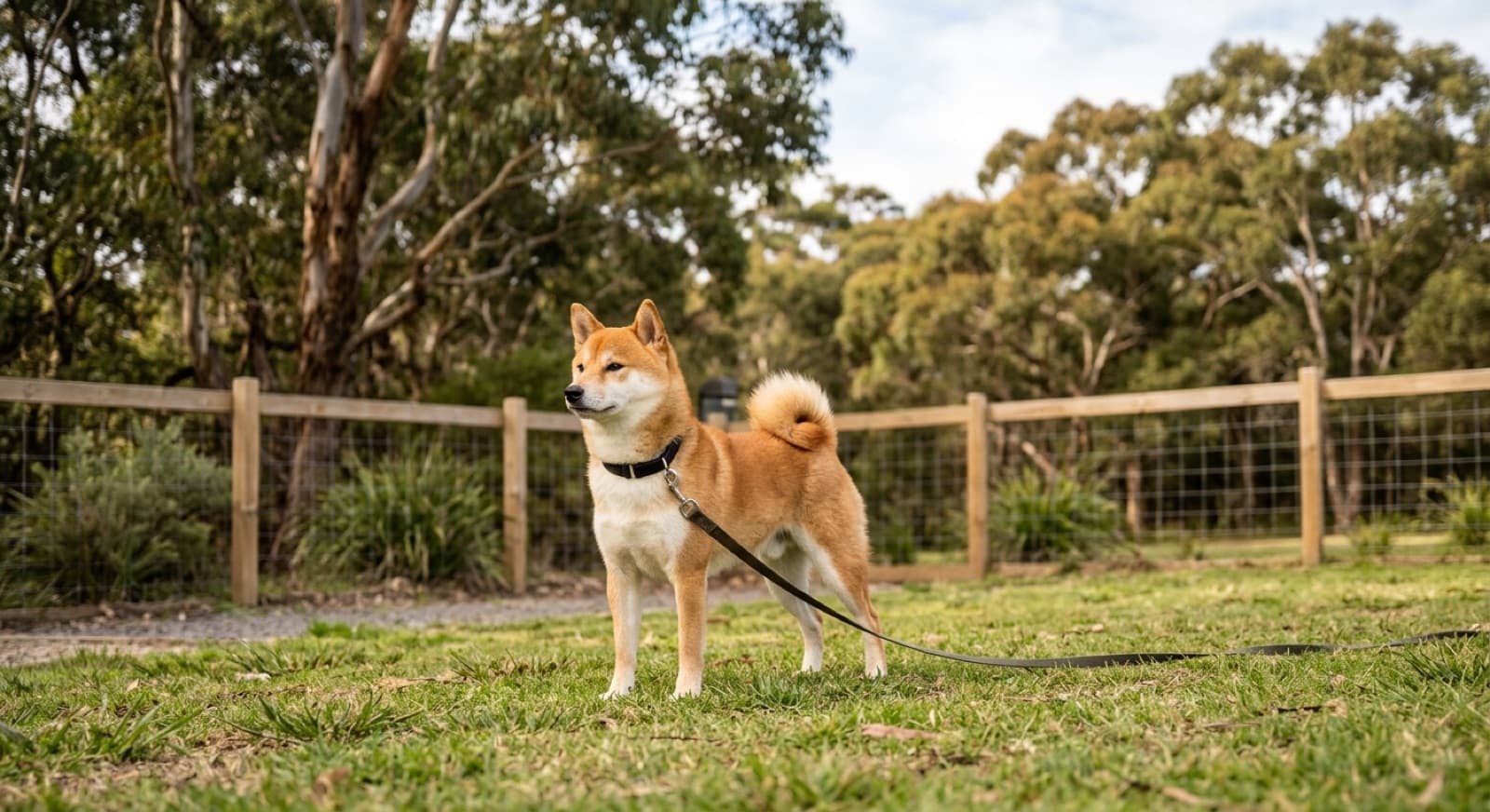
Ask anyone who has lived with a Shiba Inu to describe the breed and the word “cat-like” comes up almost every time. It is not a throwaway line. Shibas are famously clean, will often groom themselves, and carry a quiet, self-contained dignity that sets them apart from most dogs. They are alert and bold, curious about the world, and confident to the point of cheeky, but they are not the sort of dog that trails you from room to room begging for attention. A Shiba tends to be near you rather than on top of you, and it chooses its moments to be affectionate.
That temperament flows from the breed's history. The Shiba Inu is an ancient Japanese hunting dog, a primitive Spitz type developed to flush birds and small game through dense brush, often working at a distance from the hunter and making its own decisions. A dog bred to think and act independently in the field does not turn into a biddable, hang-on-your-every-word companion in the living room. It keeps that independent mind. Understanding this changes everything about how you set your expectations, because a Shiba is loyal and deeply rewarding, but it is loyal like a cat is, not like a Labrador is.
This is also the honest reason Shibas end up in rescue. They are strikingly beautiful, they blew up in popularity through memes and social media, and a lot of people bring one home for the look without reading the working temperament underneath. When the reality of an independent, high-drive, escape-prone dog collides with an owner who expected a cuddly starter pet, the dog is the one that suffers. The Shiba Inu breed page is upfront that the independent temperament is the most underestimated thing about the breed, and it is exactly that mismatch that fills foster carers' spare rooms.
Prey drive, escape and the off-lead rule
This is the part of the breed that matters most for safety, so read it carefully. Shiba Inus carry a strong prey drive from their hunting past, and they are notorious escape artists. Owners describe Shibas that climb fences, dig under them, squeeze through gaps you would swear were too small, and bolt through an open front door in a heartbeat. Put that escape talent together with the independent streak and you get the breed's real weak spot: recall you cannot rely on. A Shiba that spots a cat, a bird or an interesting scent may simply switch off and give chase, and Shibas are quick.
So here is the firm rule, and it is a safety position, not a nice-to-have: a Shiba Inu should not be off-lead in any open or unfenced area. In practice that means:
- Securely fenced areas only for off-lead running. Let a Shiba run free only inside a fully fenced dog park or a fenced yard. Check your council, because fenced off-lead areas and their rules vary across Sydney.
- A long-line and a well-fitted harness everywhere else. A long training line clipped to a harness lets a Shiba sniff, explore and stretch its legs while you keep control near roads and open ground.
- Genuinely secure fencing at home. Solid fencing with no climbable gaps, dig-proofing along the base, and gates that latch properly. Many Shibas need the fence height and security taken more seriously than the average dog.
- Door and gate discipline. Teach a solid wait at thresholds and use double gating or an airlock area near the front door, because a bolting Shiba near traffic is a genuine danger.
You should still train recall, because a reliable-as-possible recall makes daily life safer and better, but you train it for manners and for the fenced-park situation, never as the only thing standing between your Shiba and a road. Treat the fence and the long-line as the real safety net. The RSPCA Australia Knowledgebase has sound general guidance on recall training and safe management for high-prey-drive dogs.
The Shiba scream
Sooner or later you will meet the Shiba scream, and it is better to know about it first. It is a dramatic, high-pitched, almost human shriek that Shibas let out when they are startled, frustrated, or being handled in a way they object to. Nail trims, baths, being picked up against their will, or the vet doing something they do not like will often set it off. First-time owners are genuinely shocked the first time, because it sounds like the dog is being seriously hurt when it is not.
The key thing to understand is that the scream is normal breed behaviour and usually a protest, not a sign of pain. It is the Shiba being dramatic and telling you, loudly, that it does not consent to what is happening. The wrong response is to force through the handling anyway, because that teaches the dog that grooming and restraint are things to fight. The better approach is desensitisation and reward-based, cooperative handling: introduce nail trims, brushing and vet-style handling gradually, pair each small step with high-value treats, go slowly, and let the dog learn that these things predict good outcomes rather than a wrestle. A patient groomer or vet who understands the breed helps enormously. Over time most Shibas become far more tolerant, though a few will always give you their opinion on bath day.
Training a dog that thinks for itself
Shibas are intelligent, which people sometimes take to mean easy to train. It does not. A Shiba learns quickly, but it also decides for itself whether cooperating is worth its while, so training is less about teaching the dog what to do and more about making cooperating genuinely worthwhile. Get that right and Shibas do very well. Get it wrong and you hit a wall of quiet refusal.
The single most important rule is this: reward-based training only. Harsh, heavy-handed or punishment-based methods backfire badly with a Shiba. An independent, sensitive dog does not respond to force by complying, it responds by shutting down, digging in, or losing trust in you, and you can do real, lasting damage to the relationship. What works instead is positive, and consistent:
- High-value rewards. Find what your Shiba genuinely loves, usually a special food, and use it to make cooperating clearly the better deal.
- Short, interesting sessions. A few minutes of upbeat training beats a long drilling session. Shibas bore fast and switch off when a task feels pointless.
- Consistency and patience. Everyone in the house uses the same cues and the same rules. Mixed messages give a clever, opinionated dog room to argue.
- Recall on a long-line. Build recall gradually on a long training line in safe spots, rewarding heavily every time the dog comes back, and never punishing a slow return or the dog stops coming at all.
- Manage what you cannot train. Some Shiba instincts, like the prey drive, are managed with fences and lines rather than trained away. Knowing the difference saves a lot of frustration.
Early and ongoing socialisation matters just as much as obedience. Exposing a young or newly-adopted Shiba positively to lots of different people, dogs, sounds and situations builds a more confident, easier adult. The Australian Veterinary Association supports early positive socialisation and reward-based training as the modern standard, and it fits the Shiba temperament far better than any old-school dominance approach.
Resource guarding and getting an honest assessment
Some Shibas resource guard, meaning they tense up or snap over food, treats, toys or a favourite spot. It is not universal in the breed and it is not unique to it, but it turns up often enough to be worth checking for, especially in a home with children. Guarding comes from insecurity about losing something valuable, so the worst thing you can do is punish it or forcibly take things away, which confirms the dog's fear and can make it more intense and more dangerous.
The right approach is management plus positive training. Feed in a calm, quiet space, do not crowd or corner the dog over food or high-value items, teach children to leave the dog alone while it eats, and build positive swaps where the dog learns that giving something up earns something even better. For anything beyond a mild case, get a proper assessment and work with a force-free trainer experienced with primitive or Spitz breeds rather than trying to muscle through it. This is exactly where adopting through a foster-based rescue pays off. A good rescue has lived with the dog and can tell you honestly whether a particular Shiba guards, how it does with cats, kids and other dogs, and what home suits it. That individual read matters far more than the breed label.
Shibas with kids, cats and other dogs
The honest answer to “is a Shiba good with…” is always: it depends on the individual dog, and the foster assessment is your best guide. That said, some breed patterns hold true and are worth planning around.
With children, Shibas generally do better with respectful older kids than with toddlers. The breed does not always love being grabbed, cuddled or handled roughly, and a dog that dislikes rough handling paired with young children needs careful supervision and clear ground rules for the kids. With cats and small pets, the strong prey drive is the deciding factor. A Shiba raised with a confident cat can live happily with it, but many Shibas view small fast-moving animals as prey, so if you have a cat, look specifically for a Shiba assessed as cat-friendly, introduce slowly under management, and assume that rabbits, guinea pigs and birds are off-limits. With other dogs, Shibas can be selective, and same-sex dog aggression is a known tendency in the breed. Many live happily with a calm, well-matched housemate, often of the opposite sex, but some are picky, and early socialisation makes a real difference. If you already have a dog, a foster-based rescue can run a proper meet-and-greet before you commit. We go deeper into settling a rescued Shiba into your household in the Shiba Inu adoption guide.
A quick word on the coat
Shibas are clean, low-odour and largely self-grooming, so day-to-day coat care is easy, but there is one thing to plan for. The plush double coat “blows” heavily twice a year, shedding in serious quantity for a few weeks each time. During those periods you will need to brush the dog regularly to help the old coat come out and keep the house under control. The rest of the year a weekly brush is plenty. One firm rule for a double-coated breed: never shave the coat down, because it protects the dog from both heat and cold and does not grow back the same. For grooming, tick prevention and the health side of coat care, see the Shiba Inu health issues guide.
Browse adoptable Shiba Inus in Sydney
A Shiba rewards an owner who wants an independent, clever companion and can manage the escape risk and prey drive. Browse live NSW listings and set an alert so you hear the moment one comes into rescue.
See Available Shiba Inus →Is a Shiba Inu's temperament right for you?
Put it together and the honest picture is clear. A Shiba Inu is a clever, bold, dignified and strongly independent dog that bonds on its own terms, carries a real prey drive, is a talented escape artist, and needs patient reward-based handling and secure fencing rather than a firm hand. Meet that with the right setup and expectations and you get a loyal, elegant, endlessly characterful companion that many owners say they could never live without. Get a Shiba expecting a cuddly, easy, off-lead-at-the-park family dog and you will both be miserable, and the dog too often ends up back in rescue.
So the question is not whether you love how a Shiba looks, because almost everyone does. It is whether you actually want this temperament: an independent thinker with opinions, a dog that respects a secure fence more than a called recall, and a companion that shows affection like a cat rather than a Labrador. If that is your kind of dog, a Shiba is a wonderful adoption. Sydney and NSW rescues such as RSPCA NSW, AWL NSW, Sydney Dogs and Cats Home, Monika's Doggie Rescue and Maggie's Rescue assess their dogs in foster and shelter care, and can tell you honestly how a particular Shiba or Shiba cross does with cats, kids and other dogs and whether it suits your home. If you go ahead, register your adopted dog with your council through the NSW Pet Registry as required under the Companion Animals Act.
Frequently Asked Questions
Are Shiba Inus hard to train?
Yes, by most people's standards a Shiba Inu is harder to train than a typical family breed, and it helps to be honest about that before you adopt one. Shibas are very intelligent, but they are also strongly independent and not naturally eager to please, so they weigh up whether a command is worth their while rather than obeying on reflex. That is not stubbornness or stupidity, it is just how a primitive Spitz-type breed is wired. The training itself is not complicated, but it needs the right approach: reward-based methods only, short and interesting sessions, high-value food, and a lot of patience and consistency. Harsh or heavy-handed correction backfires badly with a Shiba and damages the bond, because the breed shuts down or digs in rather than complying. Keep it positive, make cooperating genuinely worthwhile, and manage the situations you cannot train your way out of, and most Shibas do very well.
Can I let my Shiba Inu off-lead in Sydney?
As a rule, no, a Shiba Inu should not be off-lead in any open or unfenced area, and this is a safety position rather than a training failure. Shibas have a strong prey drive and a genuinely independent streak, which means recall is unreliable even in a well-trained dog: if it spots a cat, a bird or a scent, it may simply switch off and bolt, and Shibas are fast. Combined with the breed's talent for escaping, that makes an off-lead Shiba near roads a real risk. The safe approach is to only ever let a Shiba run free inside a securely fenced dog park or fenced yard, and to use a long-line and a well-fitted harness everywhere else so the dog gets freedom to sniff and explore without the danger. Check your council, because off-lead rules and fenced-area availability vary across Sydney. Build recall for reliability and manners, but never trust it as the only thing between your Shiba and traffic.
Why does my Shiba Inu scream?
The Shiba scream is a dramatic, high-pitched vocalisation the breed makes when it is startled, frustrated or being handled in a way it dislikes, and it is normal breed behaviour rather than a sign of pain or a problem. Many Shibas will let out this piercing shriek during nail trims, baths, vet handling or when they are picked up against their wishes, and first-time owners are often shocked by how loud and human it sounds. It does not mean you are hurting the dog. It means the dog is objecting. The way to reduce it is not to force through the handling but to build the dog's tolerance gradually with desensitisation and reward-based handling: pairing nail trims and grooming with treats, going slowly, and letting the dog learn that these things predict good outcomes. A cooperative-care approach, and a patient groomer or vet who understands the breed, makes a big difference over time.
Are Shiba Inus good with cats?
It depends heavily on the individual dog, and you should be cautious, because the breed's strong prey drive makes some Shibas a poor match for cats and small pets. A Shiba raised with a confident cat from a young age can live happily alongside it, but many Shibas see small fast-moving animals as something to chase, and that instinct is hard to train out. This is exactly why a proper foster or shelter assessment matters so much for the breed. A good rescue will have watched how a particular Shiba reacts to cats and can tell you honestly whether that dog is safe in a cat home or not. If you already have a cat, look specifically for a Shiba that has been assessed as cat-friendly, introduce them slowly and under management, and never leave them unsupervised together until you are completely confident. With small pets like rabbits, guinea pigs or birds, assume the prey drive wins and keep them well apart.
Are Shiba Inus affectionate or aloof?
Shiba Inus are affectionate on their own terms, and the honest description is a dog that bonds strongly but is not a needy, in-your-face velcro dog. A Shiba tends to be dignified, self-contained and somewhat aloof with strangers, and even with its own family it often prefers to be near you rather than on top of you. That can be a lovely quality for people who want a clean, independent, cat-like companion, and a disappointment for people who wanted a dog that constantly wants cuddles. Many Shibas will choose their moments to be affectionate, then take themselves off to their own spot. They also tend to be famously clean and will often groom themselves. If your heart is set on a demonstrative, endlessly cuddly dog, a Shiba may not be the right pick, but if you value a loyal, elegant, low-fuss companion with a bit of an attitude, the breed can be deeply rewarding.
Do Shiba Inus resource guard?
Some Shiba Inus do show resource guarding, meaning they get tense or snappy over food, treats, toys or a favourite spot, and it is something to check for and manage rather than assume every Shiba has or does not have. Guarding is a normal dog behaviour rooted in insecurity about losing something valuable, and it is not unique to the breed, but it does turn up in some Shibas and is worth taking seriously, especially in a home with children. The wrong response is to punish it or to force the dog to give things up, because that confirms the dog's fear and can make the guarding worse and more dangerous. The right response is management plus proper training: feed in a quiet space, do not corner the dog over items, and teach positive swaps where giving something up earns something better. A good rescue will have assessed a Shiba for guarding, and for anything beyond mild cases, work with a qualified force-free trainer experienced with primitive breeds rather than trying to muscle through it.
Are Shiba Inus good with other dogs?
Shiba Inus can live well with other dogs, but they are often selective, and same-sex dog aggression is a known tendency in the breed that is worth planning around. Many Shibas get on fine with a calm, well-matched housemate, particularly one of the opposite sex, but some are picky about which dogs they tolerate and can be reactive at dog parks or with pushy strangers. Early and ongoing socialisation, exposing a young Shiba positively to lots of different dogs and situations, makes a big difference to how easy the adult dog is around others. If you already have a dog, a foster-based rescue can do a proper meet-and-greet and tell you whether a particular Shiba suits your existing dog. As with cats, the individual dog's assessed temperament matters far more than the breed label, so lean on the rescue's honest read of the dog in front of you.
Is a Shiba Inu a good first dog?
For most first-time owners, a Shiba Inu is not the easiest starter dog, and it is fairer to say so upfront than to let someone find out the hard way. The independence, the prey drive, the escape talent, the unreliable recall and the need for firm but gentle, reward-based handling all make the Shiba more demanding than a biddable, eager-to-please breed. None of that means a first-time owner cannot succeed with one, but it does mean going in with clear eyes: secure fencing, long-line management, patient training, early socialisation and a sense of humour about a dog with opinions. If you are drawn to the breed, talk honestly with a Sydney rescue about your experience and your setup, and let them match you with a Shiba whose temperament suits a newer owner. The right dog and realistic expectations matter more than years of experience, but the breed rewards preparation.
Keep reading
Adoptable Shiba Inus in Sydney
Live listings of Shiba Inus and Shiba crosses across Sydney and NSW rescues.
Shiba Inu Adoption in Sydney
Where to adopt, why Shibas end up in rescue, and what adoption costs against a breeder.
Shiba Inu Health Issues in Sydney
Allergies and skin, luxating patella and hips, eye conditions, plus double-coat care and year-round tick prevention.
All Sydney Adoption Guides
Browse every breed and how-to guide for adopting a rescue dog in Sydney.