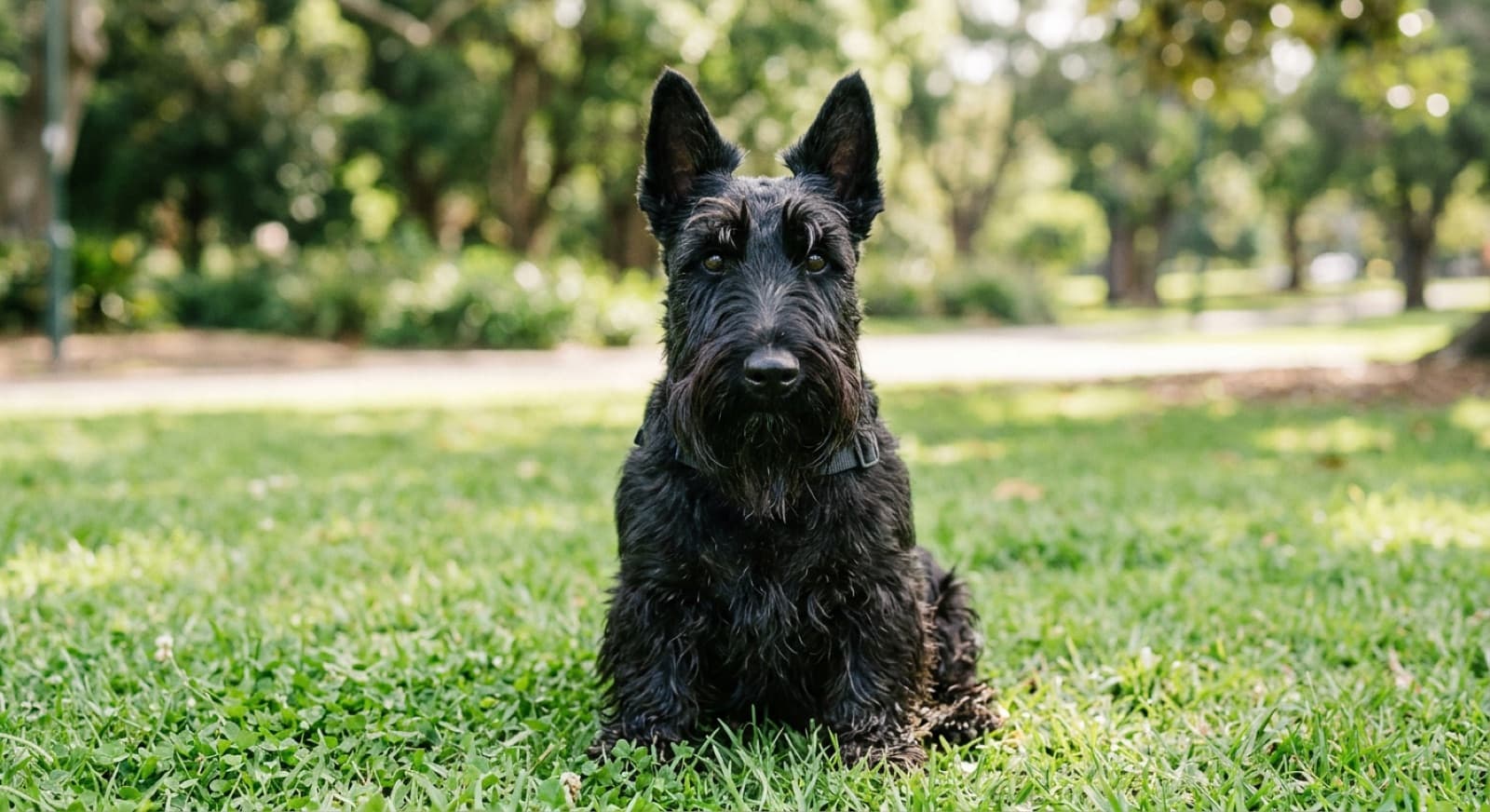
The short answer
The Scottish Terrier is generally a tough, long-lived little dog, but it has two health concerns worth understanding above the rest. It is one of the breeds most prone to bladder cancer, so recurring urinary signs in an older Scottie need proper investigation rather than repeat antibiotics. And it carries von Willebrand disease, an inherited bleeding disorder that matters before any surgery. Beyond those, know Scottie cramp (a harmless movement quirk), plus the usual small-breed joint, skin and thyroid issues. Learn the emergency signs for uncontrolled bleeding and for a dog unable to pass urine, because both need a vet fast.
Bladder and urinary cancer: the one to understand
If you understand one thing about Scottish Terrier health, make it this. The Scottie is one of the dog breeds most predisposed to bladder cancer, a tumour called transitional cell carcinoma, also known as urothelial carcinoma, that grows in the lining of the bladder and lower urinary tract. This is a genuinely distinctive fact about the breed, and it is the reason a Scottie owner should treat urinary signs more seriously than the owner of an average dog might.
Here is the trap. The early signs of this cancer look almost identical to a run-of-the-mill urinary infection. Straining to urinate, blood in the urine, frequent small wees, accidents from a previously reliable dog, and discomfort around toileting can all be a simple infection, and often are. But in a Scottie, and especially an older one, they can also be the first sign of something more serious. The danger is a pattern where a dog is treated for a urinary infection, seems to improve, then the signs return, or they never fully clear on a first round of treatment.
What this means for you. A urinary problem in a Scottish Terrier that keeps coming back, or does not resolve as expected, should be properly investigated rather than met with another course of antibiotics and a hope it settles. Ask your vet about a proper workup, which can include urine tests, imaging and other checks, and mention the breed link so it is on the table. Early detection gives the best range of options. Environmental chemical exposure, such as lawn and garden pesticides and herbicides, has been discussed as a possible risk factor, so it is sensible to keep your dog off freshly treated lawns and to rinse the feet after walks through sprayed areas. The RSPCA Australia Knowledgebase is a good general starting point on companion animal health, and your own vet is the person to plan the actual investigation with.
Von Willebrand disease and bleeding risk
The second distinctive Scottie concern is a bleeding disorder. The Scottish Terrier carries von Willebrand disease, an inherited condition in which the blood is missing enough of a clotting protein to clot normally. In plain terms, an affected dog can bleed more than you would expect from a small injury, and can struggle to stop.
The signs to know. Watch for prolonged bleeding from minor cuts or a broken nail, nosebleeds, bleeding gums, blood in the urine or stool, easy bruising, and heavier than normal bleeding after desexing or any operation. Some dogs never show an obvious problem until surgery brings it to light, which is exactly why it matters to know a dog's status ahead of any planned procedure. Your vet can advise on a blood test to check clotting and on precautions to take before an operation.
There is a quiet upside to adopting here. A rescue Scottie usually arrives already desexed, so any concerning bleeding tendency may well have surfaced under veterinary supervision during that procedure, and been noted. That is one more thing you tend to know about an adopted dog that a puppy buyer would not.
Emergency: uncontrolled bleeding or a bleeding crisis
Get to a vet immediately, day or night, if your Scottish Terrier has bleeding you cannot stop with firm pressure, is bleeding heavily from the nose, mouth, urine or a wound, or shows signs of internal bleeding such as pale or white gums, weakness, collapse, a racing heart or laboured breathing. Apply firm, steady pressure to any external bleeding on the way. Do not wait to see if it settles, because a dog with a clotting problem can lose a dangerous amount of blood quickly. Phone ahead so the team is ready, and if it is out of hours, head to a 24/7 hospital such as SASH, which offers round-the-clock emergency care in Sydney.
Scottie cramp: the quirk that looks scarier than it is
Scottie cramp is a movement disorder named after the breed, and it is usually benign. Excitement or hard exercise sets off a brief episode where the muscles stiffen and the dog moves with an awkward, hyperflexed, cramping gait. A dog mid-episode might arch its back, splay or overflex its legs, take stilted high steps, or briefly struggle to walk at all. Then it rests, and within a short time it recovers completely as if nothing happened.
The reassuring part is what it is not. It is not painful, the dog stays fully conscious and aware throughout, and it is not epilepsy or a seizure. It tends to appear in younger dogs and does not shorten a dog's life. It is worth recognising so a first episode does not send you into a panic, and it is worth mentioning to your vet, who can confirm it and tell it apart from other conditions that need different handling. Most owners simply learn to keep excitement and exertion at a sensible level, and their Scottie lives an entirely normal life.
Craniomandibular osteopathy: a puppy condition
Craniomandibular osteopathy, sometimes called lion jaw, is a bone condition of the skull and jaw seen in young terriers, including Scotties. Extra bone builds up around the jaw during puppyhood, which causes pain, firm swelling around the jaw, difficulty eating or opening the mouth, drooling, and sometimes a fever. It sounds alarming, and it is uncomfortable for the affected pup, but it is usually self-limiting, meaning it runs its course and settles as the dog reaches adulthood, when bone growth stops.
The practical point for most adopters is simple. This is a puppy condition, so a rescue Scottish Terrier adopted as an adult has already passed the age where it happens. It matters mainly if you take on a young puppy showing jaw pain or trouble eating, in which case a vet visit sorts out what is going on and how to keep the pup comfortable while it grows out of it.
Joints, skin, thyroid and liver
Patellar luxation. Like many small breeds, the Scottie can develop a slipping kneecap, where the patella pops out of its groove. You might see an occasional skip or hop in a back leg, or the dog holding a leg up for a stride or two before carrying on normally. Mild cases are managed with weight control and monitoring, while more serious ones sometimes need surgery. Mention any recurring hop to your vet so it can be graded.
Atopic skin allergies. Scottish Terriers are prone to atopic dermatitis, an itchy allergic skin condition triggered by things in the environment. It shows as licking, scratching and chewing, often at the paws and belly, along with recurrent ear or skin infections. It is a manageable, ongoing condition rather than a one-off, and your vet can build a plan to keep the itch and the flare-ups under control. Our Scottish Terrier grooming and coat care guide covers the coat and skin routine in more detail.
Hypothyroidism. An underactive thyroid gland is fairly common in the breed as dogs reach middle age. It slows the metabolism, so the signs are weight gain without extra food, a dull or thinning coat, flaky or infection-prone skin, low energy and sometimes a sad or sluggish demeanour. It is easy to miss because it comes on gradually, but it is diagnosed with a simple blood test and managed very well once found, so it is worth flagging any of those changes with your vet.
Liver shunt. A portosystemic shunt, usually called a liver shunt, is an abnormal blood vessel that lets blood bypass the liver, so toxins are not filtered out properly. It is uncommon, but it does occur in small terriers, and it tends to show in young dogs as poor growth, vague digestive upset, or odd or dull behaviour after meals. A young Scottie that fails to thrive, or seems disoriented, is worth a vet check, since a shunt is diagnosed with blood tests and imaging and can often be managed or corrected.
Why adopting a Scottie is not a health disadvantage
People sometimes worry that a rescue dog is a health gamble compared with a breeder puppy. For a Scottish Terrier the picture is more balanced than that. A Scottie adopted through a reputable Sydney rescue arrives desexed, vaccinated, microchipped, treated for parasites and vet-checked, with all of it included in the fee. You are not taking on an unassessed animal.
Adopting also means the conditions that matter most in this breed are often known upfront. A urinary history, a skin condition, or a bleeding tendency noticed at desexing is usually noted on the listing or shared by the foster carer, so you adopt with your eyes open on exactly the things a Scottie buyer would want to know. A foster carer who has lived with the dog can tell you how it has been day to day, which is real information a puppy cannot offer. If you are weighing it up, our Scottish Terrier adoption guide for Sydney covers where to look and what it costs. Sydney rescues worth watching include RSPCA NSW, AWL NSW, Sydney Dogs and Cats Home, Monika's Doggie Rescue and Maggie's Rescue.
Keeping a Scottish Terrier healthy: the checklist
Most of what keeps a Scottie well is routine and attention. The habits below do the heavy lifting, and the first one is the one that sets the breed apart.
- Watch the wee. Take any straining, blood, or recurring urinary trouble to your vet for a proper look rather than a wait-and-see, because the breed's bladder cancer risk makes early investigation worthwhile.
- Know the bleeding status before surgery. Ask your vet about testing for von Willebrand disease before any planned operation, so precautions can be taken.
- Keep the dog lean. Measure meals to a visible waist and go easy on treats, since a lean dog carries less strain on joints and lower overall health risk.
- Watch the skin. Look for licking, scratching and paw-chewing, and get a plan from your vet for allergic skin before it turns into infections.
- Look after the teeth. Regular tooth brushing and dental checks prevent painful disease in a small, crowded mouth.
- Note energy and coat changes. Gradual weight gain, a dull coat or new sluggishness can point to hypothyroidism, which a simple blood test picks up.
- Book regular vet checks. Annually while adult, then twice yearly for a senior, so issues get caught early.
- Stay on year-round tick prevention. Use a vet-recommended product every month without a gap, because the paralysis tick on the NSW coast is a fatal risk.
The Sydney paralysis tick point
One health risk has nothing to do with the breed and everything to do with where you live. The paralysis tick is native to the east coast of Australia, including the coastal and bushland areas around Sydney, and its bite releases a toxin that causes an ascending paralysis which is fatal without veterinary treatment. It is a year-round risk here, not just a summer one. Sydney summer heat brings its own separate risk, so walk your Scottie in the cooler hours and carry water.
The response is straightforward. Keep your Scottish Terrier on a vet-recommended tick prevention product every single month with no gaps, and after any walk through bush or long grass run your hands slowly over the whole dog, feeling for a lump. A Scottie's dense double coat, long beard and furry legs give ticks plenty of cover, so check carefully, under and inside the ear flaps, around the face and beard, under the collar, in the armpits and between the toes. If your dog develops a wobbly back end, a changed or weak bark, gagging or heavy breathing, treat it as an emergency and get to a vet at once. Your own vet can advise on the right prevention product for your dog.
Browse adoptable Scottish Terriers in Sydney
Adopting an adult lets you learn a dog's health history directly, including any urinary or bleeding background, with a vet check already done. Browse live NSW listings and set an alert so you hear the moment a Scottish Terrier comes in.
See Available Scottish Terriers →When to see the vet urgently
Most Scottish Terrier health issues are managed at a normal appointment. A few need a faster response. Get to a vet immediately, including out of hours, if you see any of these:
- Bleeding you cannot stop with firm pressure, heavy bleeding from the nose, mouth, urine or a wound, or signs of internal bleeding such as pale or white gums, weakness or collapse (possible bleeding crisis).
- A dog straining to urinate and passing nothing, crying, or with a tense painful belly (possible urinary blockage, which is life-threatening within a day).
- A red, painful or cloudy eye, or squinting and holding an eye shut (some eye problems can cost the eye quickly).
- A wobbly back end together with a changed or weak bark, gagging or heavy breathing (possible paralysis tick).
For the everyday things, such as blood or straining when weeing that keeps recurring, steady weight gain, an itchy skin flare, a hopping back leg, or a young pup with jaw pain, book a normal vet visit soon rather than waiting. Catching those early gives your Scottie the best outcome, and in this breed the recurring urinary sign is the one never to ignore. When in doubt, phone your vet or a 24/7 hospital and describe what you are seeing. They would far rather you called and it was nothing than the other way around. For a broader look at the breed before you commit, browse the full Sydney adoption resources hub, or talk to your own vet, whom the Australian Veterinary Association can help you find.
Frequently Asked Questions
What health problems do Scottish Terriers have?
The Scottish Terrier is a hardy breed, but it carries a distinctive set of health risks worth knowing. The most talked about is bladder and urinary cancer, because the Scottie is one of the breeds most prone to a tumour called transitional cell carcinoma, so recurring urinary signs in an older Scottie deserve proper investigation rather than repeat antibiotics. The breed also carries von Willebrand disease, an inherited bleeding disorder, which matters before any surgery. Then there is Scottie cramp, a mostly harmless movement quirk unique to the breed, and craniomandibular osteopathy, a puppy jaw condition an adult rescue has already grown out of. Add the small-breed staples of patellar luxation, hypothyroidism, itchy allergic skin and an occasional liver shunt, and you have the full picture. Most of it is manageable with a good vet, and Scottish Terriers often live around 12 to 15 years.
Are Scottish Terriers prone to cancer?
Yes, the Scottish Terrier is one of the dog breeds most predisposed to bladder cancer, specifically a tumour called transitional cell carcinoma or urothelial carcinoma that grows in the lining of the bladder. The catch is that its early signs look exactly like a urinary infection: straining to wee, blood in the urine, frequent small wees and accidents. That overlap is the single most useful thing for a Scottie owner to know, because a urinary problem in an older Scottie that keeps coming back, or does not clear with a first round of treatment, should be properly investigated rather than treated as just another infection. Early detection gives the best options. Lawn and garden chemical exposure has been discussed as a possible risk factor, so it is sensible to keep your dog off freshly treated lawns. If your Scottie shows urinary signs, see your vet and mention the breed link.
What is Scottie cramp?
Scottie cramp is a breed-specific movement disorder, usually harmless, in which excitement or hard exercise triggers a brief episode of muscle stiffening and an awkward, hyperflexed, cramping gait. A dog mid-episode may arch its back, splay or overflex its legs, and move stiffly or struggle to walk, then recover fully with a short rest. It is not painful, it is not epilepsy, and the dog stays conscious throughout. It usually shows up in young dogs and does not shorten life. It is worth recognising so you do not panic, and worth mentioning to your vet so it can be confirmed and told apart from other conditions. Most Scotties with it live normal lives, and owners simply learn to keep excitement and exertion at a sensible level.
Are Scottish Terriers prone to bleeding disorders?
Yes. The Scottish Terrier carries von Willebrand disease, an inherited condition in which the blood does not clot normally, so affected dogs can bleed more than expected. The signs are prolonged bleeding from minor cuts, nosebleeds, bleeding gums, blood in the urine or stool, and heavier than normal bleeding after desexing or any surgery. This is why it matters to know a dog's status before any operation, and your vet can advise on testing and precautions. A reputable rescue often has a Scottie already desexed, which means any concerning bleeding tendency may well have shown itself under veterinary supervision. Uncontrolled bleeding, or a dog with pale gums and weakness, is an emergency that needs a vet at once.
How long do Scottish Terriers live?
Scottish Terriers often live around 12 to 15 years, a solid lifespan for a small dog. Much of what troubles the breed is about management and early detection rather than being automatically life-shortening. The bladder cancer risk is the serious exception, which is exactly why urinary signs deserve prompt attention in this breed. A Scottie kept at a lean weight, with good dental care, year-round tick prevention, and a vet who knows the breed's cancer and bleeding tendencies, has every chance of a comfortable, active old age. Ask about the dog's health history when you adopt, keep up regular checks that become twice-yearly for a senior, and learn the emergency signs so you can act fast if they appear.
Do Scottish Terriers have joint or skin problems?
Some do. On the joint side, the Scottish Terrier can develop patellar luxation, where the kneecap slips out of its groove and causes an occasional skip or hop in the back leg, and craniomandibular osteopathy, a painful jaw-bone condition that affects puppies and usually settles by adulthood, so a rescue adult is past it. On the skin side, Scotties are prone to atopic dermatitis, an itchy allergic skin condition that shows as licking, scratching, chewing at the paws and recurrent ear or skin infections. They can also develop hypothyroidism, an underactive thyroid that causes weight gain, a poor coat, skin trouble and low energy, and which is diagnosed with a blood test and managed well once found. None of these are unique to the breed, but they are worth knowing so you can flag them early with your vet.
Do rescue Scottish Terriers come health checked?
Yes. A Scottish Terrier adopted through a reputable Sydney rescue arrives desexed, vaccinated, microchipped, treated for worms and fleas, and given a vet check before it is listed, with all of that included in the fee. Any known health issues, such as urinary trouble, a skin condition or a bleeding tendency noticed at desexing, are usually noted on the listing or shared by the foster carer. That is a genuine advantage in this breed, because the conditions that matter most in a Scottie, its urinary history and its bleeding tendency, are exactly the things you want to know before you commit. A foster carer who has lived with the dog can tell you how it has been day to day, which is information a puppy from a listing cannot offer.
How do I keep my Scottish Terrier healthy?
Keep the dog lean, stay alert to urinary changes, know its bleeding status before surgery, look after the teeth and skin, and stay on year-round tick prevention. The single most breed-specific habit is watching the wee, because in a Scottie any straining, blood or recurring urinary trouble deserves a proper vet look rather than a wait-and-see, given the breed's bladder cancer risk. Keep fresh water flowing and note any change in drinking or toilet habits. Brush the teeth, watch for itchy allergic skin, and book annual vet checks that become twice-yearly for a senior. Ask your vet about testing for von Willebrand disease before any planned operation, keep up a vet-recommended monthly paralysis tick product without gaps, and learn the emergency signs for uncontrolled bleeding and a urinary blockage so you can move fast.
Keep reading
Adoptable Scottish Terriers in Sydney
Live listings of Scottish Terriers across Sydney and NSW rescues.
Scottish Terrier Adoption in Sydney
Where to adopt a Scottie, why they end up in rescue, and what adoption costs against a breeder.
Scottish Terrier Grooming & Coat Care
The double coat, hand-stripping, beard care and skin routine that keeps a Scottie comfortable.
All Sydney Adoption Guides
Browse every breed and how-to guide for adopting a rescue dog in Sydney.