The short answer
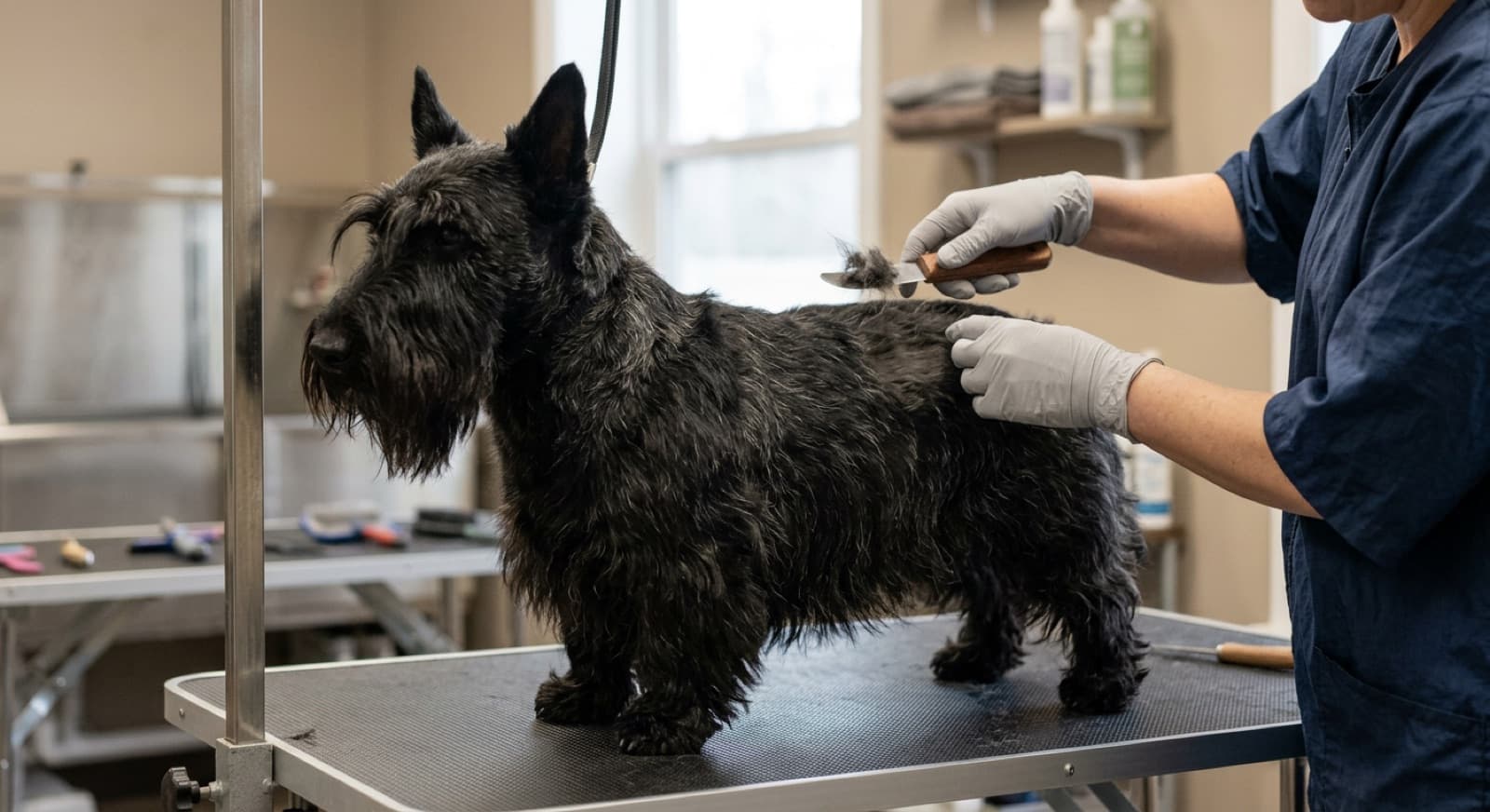
The Scottish Terrier coat is the real commitment. The harsh wiry double coat is low-shedding, but low shedding means the dead hair stays in the coat, so it has to be clipped or hand-stripped roughly every 6 to 8 weeks or it overgrows and mats. Hand-stripping keeps the harsh texture and the dark colour; clipping is easier and cheaper but softens and fades the coat over time, and both are fine for a pet. The beard, eyebrows and the long low skirt tangle and collect food, mud and grass seeds, so they need combing several times a week and the beard needs daily cleaning. The classic Scottie outline is a skilled trim, so take one on only if you will keep up the furnishing care, or budget for a groomer who knows the breed.
The wiry double coat and the Scottie silhouette
The first thing to understand about a Scottish Terrier is the coat, because it is not like a Labrador's or a doodle's. A Scottie has a double coat with two very different layers. On top is a harsh, wiry, weather-resistant topcoat, the part that gave this ratting terrier its protection out on the Scottish farms. Underneath is a softer, denser undercoat. The furnishings, meaning the beard, the eyebrows and the longer hair on the legs and belly, are softer again, and that softer hair behaves very differently from the harsh body coat.
What makes the Scottie instantly recognisable is how these are trimmed into a silhouette. The coat over the back and sides is kept short, a neat jacket, while the furnishings underneath are left long, forming the low skirt along the belly and the fringe down the legs. Add the beard and the eyebrows and you have the outline everyone pictures: compact, square, close to the ground, unmistakable. That outline is not natural, it is created and maintained by grooming, which is why keeping a Scottie looking like a Scottie takes ongoing work.
This split is the key to the whole grooming picture. The harsh jacket is low-shedding and fairly self-cleaning, and does not need much day-to-day work. The soft furnishings and the low skirt are the opposite. They grow, tangle, drag through mud and mat if you ignore them. So Scottie care is really two jobs: keeping the jacket in shape with a regular clip or strip, and keeping the beard, skirt and furnishings clean and combed at home.
The classic Scottie colours are black, wheaten, and brindle. Black is the one everyone pictures, and that dark colour lives mostly in the harsh topcoat, which matters when you get to the clip-versus-strip question below, because how you groom the coat affects how well that black holds over the years.
Hand-stripping versus clipping
This is the big decision with a Scottie coat, and there is no wrong answer for a pet, so ignore anyone who tells you there is only one right way. The two options are hand-stripping and clipping, and they do genuinely different things to the coat.
Hand-stripping is the traditional method. A groomer plucks the dead, ready-to-shed hairs out of the wiry topcoat by hand, or with a stripping knife, a few at a time. Done properly on a coat that is ready, it does not hurt the dog. Stripping keeps the topcoat's harsh, weather-resistant texture and its rich, dark colour, because it lets the proper wiry coat grow back in rather than cutting it off. It is the method that keeps a Scottie looking and feeling like a true Scottie, which is why show dogs are hand-stripped. The trade-offs are that it takes longer, costs more, and fewer groomers offer it, so you may need to search around Sydney for one who does.
Clipping shaves the coat down with electric clippers instead. It is quick, cheaper, pain-free, and every groomer can do it. The trade-off is texture and colour. Clipping cuts through the harsh topcoat, so over months and years the coat grows back softer, fluffier and often paler, as the wiry outer hair is repeatedly removed and the soft undercoat takes over. A clipped black Scottie often drifts towards a duller, greyer, woollier coat over time. In some dogs a clipped coat also sits closer to the skin and can make skin irritation worse, which matters for a breed that can be prone to skin allergies. For most dogs, though, it is purely cosmetic, and the dog is perfectly happy and comfortable either way.
For most Sydney pet owners, clipping every 6 to 8 weeks is the practical choice, and the vast majority of rescued Scotties are clipped. There is no shame in it. If you want the true wiry texture and dark colour, and you are happy with the extra time and cost, hand-stripping is the way, and it is worth finding an experienced groomer who does it well. Pick based on the look you want, your dog's skin, and the budget you have, not on what a breed purist insists on.
The beard and skirt need regular care
The beard is one of the most charming things about a Scottie and one of the biggest daily jobs. Think about where it sits: right at the front of the face, dragging through the food bowl, the water bowl, the grass and the dirt every single day. A Scottie eats and comes up with breakfast in its beard, drinks and comes up dripping, and sniffs the ground and picks up whatever is there. All of that ends up matted into the beard hair if you leave it.
The low skirt is the other problem area, and it is one the taller terriers do not have to the same degree. A Scottie stands low to the ground, so the long belly and leg hair hangs down into the grass, the mud and the puddles on every walk. It collects dirt, burrs and grass seeds, and in a wet Sydney week it comes home soaked and muddy. A beard or skirt that is left wet and dirty does three things: it starts to smell, it stains a darker brown or red, and it can irritate the skin underneath. The fix is simple and quick once it is a habit:
- Wipe the beard after meals and drinks. A damp cloth or a quick rinse clears the food and water before it dries in.
- Comb the skirt and legs after walks. This clears the mud and, more importantly, lets you find grass seeds before they burrow into the skin.
- Comb the beard through regularly. The soft beard hair tangles, so a daily or near-daily comb keeps it from matting, especially right under the chin.
- Wash them properly when they get grubby. Use a dog shampoo, rinse well, and comb both out as they dry so they do not knot.
- Watch the skin underneath. If it goes red, sore or the smell will not shift with washing, get a vet to check for a skin infection.
Some Sydney owners keep the beard and skirt trimmed a little shorter, especially over summer, to cut down on the mud, the mess and the heat. That is a completely reasonable choice, and your groomer can shape it. A shorter skirt still looks like a Scottie and is far less work when the dog lives near the beach or a muddy off-lead park.
Eyebrows, feet, nails and the small mouth
The eyebrows are pure Scottie, but they need a little management. Left to grow they hang down into the eyes and cause irritation and watering, so comb them forward and let the groomer shape them at each visit. A quick wipe of the eye corners with a damp cloth clears any gunk. If you ever see a red, sore, weepy or squinting eye, get it checked, as that is different from routine tidying.
The leg furnishings collect grass seeds, mud and burrs on a walk, and the hair between the paw pads grows long and traps the same, so keep the feet tidy or ask the groomer to. Trim the nails regularly so they do not click, catch or splay the toes. Scotties dig, which files the front nails a little, but the back and dewclaw nails still grow and need doing.
Do not skip the teeth. The Scottish Terrier has a small mouth for its sturdy body, and small breeds are prone to dental disease, with crowded teeth that trap plaque and tartar. Brush the teeth with a dog toothpaste as often as you can manage, ideally daily, and have your vet check them at the annual visit. The RSPCA Australia Knowledgebase has useful general guidance on grooming and dental care for dogs.
Bathing, skin and drying off
Bathe a Scottish Terrier when it actually needs it rather than on a rigid schedule, and more often if it has come home caked in mud or rolled in something at the park. Use a dog shampoo, rinse thoroughly so no residue is left to irritate the skin, and comb the beard, skirt and furnishings out as they dry so they do not mat. Dry the dense coat and the skirt properly, because a Scottie sitting damp in a warm, humid Sydney summer is a recipe for skin trouble. Over-bathing can dry out the skin, and if you hand-strip, frequent washing and softening products can loosen the harsh coat, so let the dog's actual grubbiness guide you.
Scotties can be prone to itchy skin and allergies, and a dirty, damp or matted coat makes any skin problem worse, which is one more reason the beard and skirt routine matters. Keeping the coat clean and dry is grooming; a dog that is genuinely itchy, losing hair, or has sore, flaky or smelly skin needs a vet, not just more washing. We cover the medical side, including skin allergies and the other health areas to watch, in the Scottish Terrier health issues guide.
Scottish Terriers and the Sydney climate
The Sydney climate shapes Scottie care in a couple of ways. First, heat and humidity. The double coat is warm, and the humidity is hard on a dense coat and a low skirt that stays damp, so do the harder exercise in the cool of early morning or the evening, carry water, and go easy in the middle of a hot, humid summer day. Heat, not cold, is the real dog-safety risk in Sydney, and a shorter summer clip and a shorter beard and skirt genuinely help. Do not shave a double coat right back to the skin though, as the coat gives some protection from sun and heat, so ask your groomer for a sensible summer length. Never leave any dog in a parked car.
Second, paralysis ticks. These are a year-round danger across the whole Sydney region and they can be fatal, so keep your Scottie on a vet-recommended tick prevention product all year and do a physical tick check after any bushwalk or trip through long grass. The dense wiry coat, the beard and the low skirt hide ticks well, so a quick pat is not enough. Part the coat and feel right down to the skin, especially around the head, ears, neck, legs and under the skirt, and if you find one or notice any weakness, wobbliness or a change in your dog's bark or breathing, get to a vet straight away. Talk to your vet about the right prevention product for your dog. The Australian Veterinary Association has useful general guidance on parasite prevention.
On living space, a Scottish Terrier suits a Sydney apartment or a small yard well as long as it gets its daily walk, its grooming and its company. The flat itself is rarely the problem, and the low-shedding coat keeps the place cleaner than many breeds. Check your building and strata rules on pets, and register your dog with your council as required under the Companion Animals Act, which you can do through the NSW Pet Registry.
Browse adoptable Scottish Terriers in Sydney
A Scottie rewards an owner who keeps up the beard care, the skirt combing and the every-6-to-8-week groom. Browse live NSW listings and set an alert so you hear the moment one comes in.
See Available Scottish Terriers →Is a Scottish Terrier right for you?
Put it together and the picture is clear. A Scottish Terrier is a dignified, characterful, low-shedding little dog, and it is also a real commitment on the coat front. The wiry jacket has to be clipped or hand-stripped every 6 to 8 weeks because it does not shed out. The beard needs daily cleaning, the low skirt needs combing after walks, and the eyebrows and leg furnishings need regular attention. The classic Scottie outline is a skilled trim, so a groomer who knows the breed is worth finding. Take one on only if you will actually do the beard and skirt care, or you are happy to budget for a regular groomer to keep the silhouette right.
For the household that fits, a Scottie is a brilliant companion: loyal, funny, sturdy, and clean around the house thanks to that low-shedding coat. If the daily beard routine, the muddy skirt and the every-6-to-8-week groom sound like too much, that is worth being honest about before you adopt rather than after, because a matted, neglected Scottie coat is a real welfare problem. Rescues like RSPCA NSW, AWL NSW, Sydney Dogs and Cats Home, Monika's Doggie Rescue and Maggie's Rescue take in dogs of all breeds and crosses, know their dogs well, and can tell you honestly what a particular Scottie's coat and temperament are really like.
Frequently Asked Questions
How often should I groom a Scottish Terrier?
Brush a Scottish Terrier a few times a week, pay daily attention to the beard, and give the whole coat a full clip or hand-strip roughly every 6 to 8 weeks. The harsh jacket over the back does not need much day to day, but the softer furnishings, meaning the beard, the eyebrows and the long skirt and leg hair underneath, tangle and mat if you leave them, so a quick comb through those areas every couple of days is the real home job. The beard also collects food, water and mud at every meal, drink and sniff, so it needs wiping and the occasional wash. The low skirt drags through grass and puddles and picks up burrs and dirt, so check and comb it after walks. Skip the routine and the furnishings knit into mats that usually have to be clipped off.
Should I hand-strip or clip my Scottie?
Either is fine for a pet, and most Sydney owners clip. Hand-stripping is the traditional way to groom a Scottish Terrier. A groomer plucks out the dead wiry topcoat by hand, which keeps the coat's harsh weather-resistant texture and its dark colour and lets the proper wiry coat grow back. Clipping shaves the coat down with clippers instead, which is quicker, cheaper and pain-free, but over time it softens the texture and can fade a black Scottie to a duller, greyer, woollier coat, and in some dogs a clipped coat sits closer to the skin and can make skin problems worse. Neither is wrong. Hand-stripping suits owners who want the true Scottie coat and the crisp classic outline, often show dogs. Clipping every 6 to 8 weeks is completely normal and practical for a pet, and it is what most rescued Scotties get. Pick based on the look you want, your dog's skin and the budget you have.
Do Scottish Terriers shed?
Scottish Terriers are low-shedding, which is a big part of their appeal, but that does not mean low-maintenance. The harsh wiry double coat holds onto its dead hair instead of dropping it around the house, so you see very little loose hair on the couch or the floor. The catch is that a coat which does not shed out has to be stripped or clipped instead, or it simply overgrows and mats. So low shedding buys you a cleaner house and trades it for a standing grooming commitment every 6 to 8 weeks, plus the daily furnishing care. Low shedding also does not mean hypoallergenic. No dog is truly hypoallergenic, and allergies react to dander and saliva as much as to hair, so do not choose a Scottie on the assumption it will be safe for an allergy sufferer without spending real time around the dog first.
How do I clean my Scottie's beard and skirt?
Wipe the beard after every meal and drink, comb the skirt and beard through regularly, and give both a proper wash with dog shampoo when they get grubby, then dry well. The beard sits right where the dog eats, drinks, sniffs and digs, so it constantly picks up food, water, mud and whatever is on the ground, and left wet and dirty it goes smelly and can stain and irritate the skin underneath. The long skirt hangs low and drags through grass, mud and puddles on every walk, collecting dirt, burrs and grass seeds. A damp cloth after meals keeps the beard clean day to day, and a comb through the skirt and legs after walks stops mats forming and lets you spot grass seeds before they burrow in. Wash both properly every so often and comb them out while they dry. If the skin under the beard or skirt ever looks red, sore or angry, get your vet to check for a skin infection rather than just washing harder.
Do Scottish Terriers need professional grooming?
Most Scottish Terriers need a professional groom roughly every 6 to 8 weeks, because the coat keeps growing and will not shed out on its own. A groomer clips or hand-strips the jacket, shapes the signature Scottie outline of a short back over a long skirt, tidies the beard, eyebrows and leg furnishings, trims the feet and cleans up around the face and rear. The classic Scottie silhouette is a skilled trim to get right, more so than a plain clip-off, so it is worth finding a groomer who knows the breed. You can learn to do a lot at home with clippers and a comb, and plenty of owners do, but the true outline takes practice. Budget for the groomer as an ongoing cost of the breed, not a one-off. Between visits, the daily beard and skirt care is on you regardless of who does the clipping.
How do I look after my Scottie's eyebrows and ears?
Keep the eyebrows combed and lightly shaped so they do not hang into the eyes, and keep the hair around the ears managed and the ears dry. The bushy eyebrows are part of the Scottie look, but if they grow long and drop into the eyes they cause irritation and watering, so comb them forward and let the groomer shape them each visit. The prick ears are more open than a drop-eared breed, but the coat still grows hair around them, so keep it tidy and check the ears weekly for redness or a bad smell. Sydney dogs swim a lot in summer, so dry the ears after every swim and bath. If the eyes look sore or weepy beyond routine tidying, or an ear is red, smelly or the dog keeps shaking its head, that is a vet visit, not a home job.
How do I care for a Scottish Terrier's teeth and nails?
Trim the nails regularly and brush the teeth as often as you can manage, because small breeds like the Scottie are prone to dental disease. The Scottish Terrier has a small mouth for its sturdy body, and crowded small-breed teeth trap plaque and tartar, so daily or near-daily brushing with a dog toothpaste is the single best thing you can do at home. Have your vet check the teeth at the annual visit and follow their advice on professional cleaning. On nails, trim them or have the groomer do it so they do not click on the floor, catch or splay the toes. Scotties dig, which files the front nails a little, but the back and dewclaw nails still grow and need doing. Keep the hair between the paw pads trimmed too, as it grows long and traps grass seeds and dirt.
Do Scottish Terriers cope with the Sydney heat?
Scottish Terriers cope reasonably well but still need sensible summer care, because their dense double coat is warm and heat is the real dog-safety risk in Sydney. Walk in the cool of early morning or the evening on hot, humid days, carry water, and never leave a dog in a parked car. A shorter summer clip helps the dog stay comfortable, and trimming the beard and skirt a little shorter over summer cuts down on the mess and the heat. Do not shave a double coat right back to the skin though, as the coat gives some protection from sun and heat, so talk to your groomer about a sensible length. Paralysis ticks are a year-round danger across Sydney and a dense wiry coat and a low skirt hide them well, so keep your dog on a vet-recommended tick prevention product all year and feel right down to the skin, including through the beard and skirt, when you check.
Keep reading
Adoptable Scottish Terriers in Sydney
Live listings of Scottish Terriers and Scottie crosses across Sydney and NSW rescues.
Scottish Terrier Adoption in Sydney
Where to adopt, why Scotties end up in rescue, and what adoption costs against a breeder.
Scottish Terrier Health Issues in Sydney
Skin allergies, Scottie cramp, bladder health and the other areas to know, plus Sydney heat and year-round tick prevention.
All Sydney Adoption Guides
Browse every breed and how-to guide for adopting a rescue dog in Sydney.