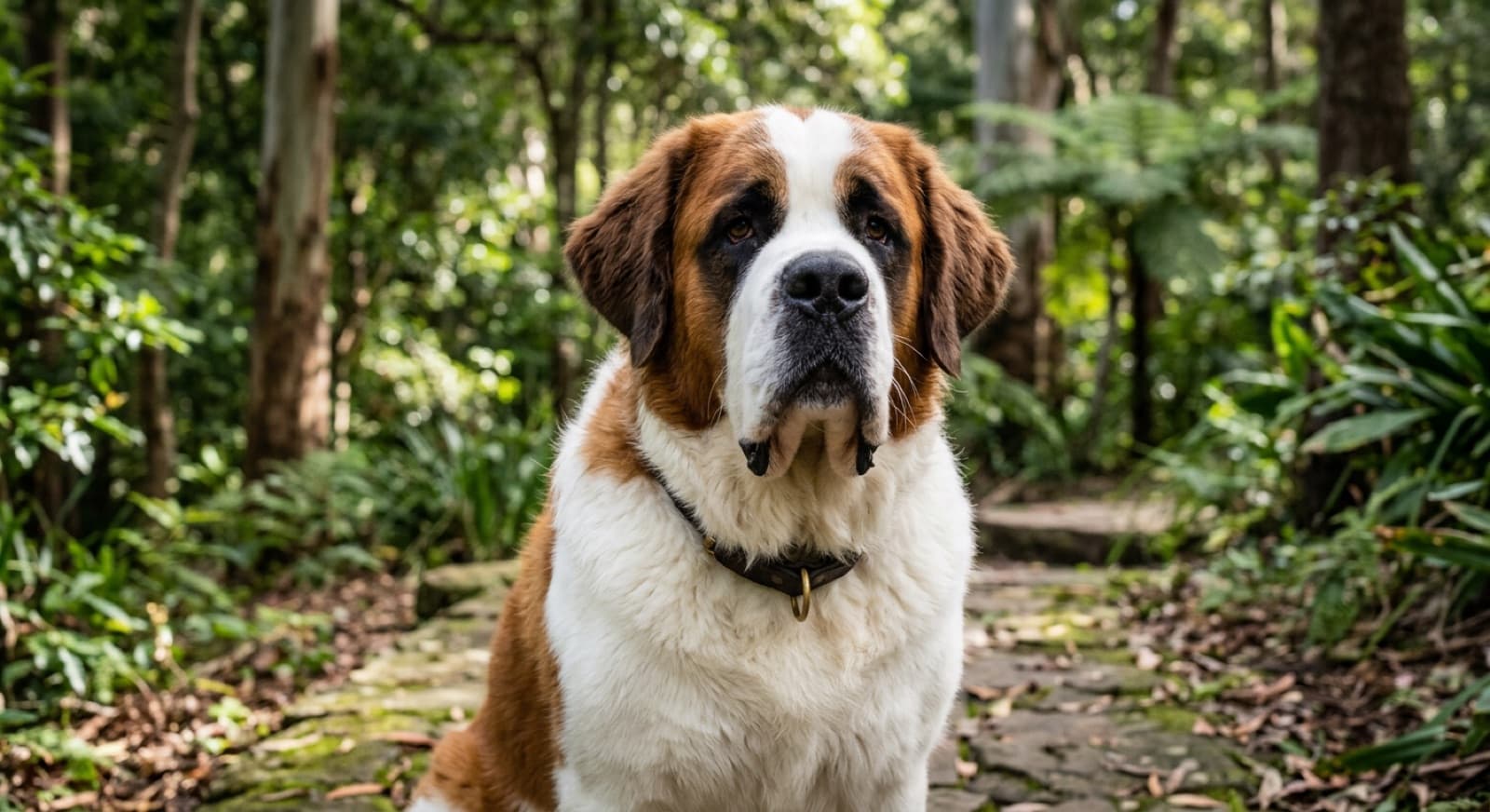
The short answer
The Saint Bernard is a giant breed whose defining health emergency is bloat, or gastric dilatation and volvulus (GDV), where a swollen belly with unproductive retching is life-threatening within hours. As a huge, deep-chested dog it also faces hip and elbow dysplasia, heart disease including dilated cardiomyopathy, the eyelid conditions entropion and ectropion, osteosarcoma (bone cancer), and epilepsy. The thick Alpine coat struggles badly in Sydney warmth, so heatstroke is a real second risk. Keep year-round tick prevention, have any heart murmur or lingering limp investigated, keep the dog lean, and get to a vet at the first signs of trouble.
Emergency: bloat (GDV) in a deep-chested Saint Bernard
This is the one Saint Bernard emergency every owner must know. Bloat, or gastric dilatation and volvulus (GDV), is where the stomach fills with gas and can twist on itself, cutting off blood flow. It is rapidly life-threatening, and as a giant deep-chested breed the Saint Bernard is among the highest-risk dogs of all. Get to a vet or a 24/7 hospital immediately if your Saint Bernard has a swollen or hard belly, is trying to retch or vomit but bringing nothing up, is drooling, pacing and restless, or collapses. Minutes matter, so do not wait to see if it settles. Phone ahead so the team is ready, and if it is out of hours head to a 24/7 hospital such as SASH, which offers round-the-clock emergency care in Sydney. To lower the risk, feed smaller meals, avoid vigorous exercise right after eating, use a slow feeder if your dog gulps, and ask your vet about a gastropexy at desexing.
Bloat: the Saint Bernard emergency
If there is one thing to learn before you bring a Saint Bernard home, it is the signs of bloat. Deep-chested giant breeds sit at the top of the risk list, and the Saint Bernard is right there. The stomach fills with gas and, in the dangerous form, twists on itself so that nothing can escape and the blood supply is cut off. From the outside you may see a belly that looks swollen or feels tight and hard, a dog that keeps trying to be sick but brings nothing up, heavy drooling, and obvious distress: pacing, unable to settle, looking at its own flank. As it worsens the dog weakens and can collapse.
There is no home remedy and no waiting it out. Bloat can kill within hours, so the only right response is to get to a vet or a 24/7 emergency hospital straight away, phoning ahead so they can prepare. The prevention steps are worth building into daily life from day one. Feed two or three smaller meals across the day rather than one large one, slow down a fast eater with a slow feeder or a puzzle bowl, and keep things calm for an hour or so around meals rather than heading out for vigorous exercise on a full stomach. Many owners of high-risk breeds also discuss a preventive gastropexy with their vet, a surgery that tacks the stomach in place so it cannot twist, often done at the same time as desexing. Your vet is the person to advise whether it suits your dog.
Hip and elbow dysplasia and joint health
As one of the largest and heaviest of all breeds, the Saint Bernard carries a real load on its joints, and hip and elbow dysplasia are common giant-breed concerns. Dysplasia is where the joint does not fit together smoothly and wears unevenly over time, leading to arthritis and pain. The signs are stiffness after rest, a reluctance to jump, climb stairs or get up, a bunny-hopping run, limping, and slowing down on walks. Cruciate ligament injury in the knee and a developmental joint problem called osteochondrosis are other issues worth knowing about in big, fast-growing dogs.
Two things protect a Saint Bernard's joints more than anything else. Keeping the dog lean takes a huge amount of pressure off every joint, and steady, sensible exercise beats repetitive high-impact pounding on hard ground. There is one point specific to the breed as a puppy: a growing giant-breed puppy must not be over-exercised, because too much impact and jumping while the bones and joints are still developing can cause lasting harm. Let a Saint Bernard puppy grow at its own pace on soft ground before you ask for long walks or games that involve leaping. A vet can assess sore joints, confirm what is going on with imaging, and advise on management, which ranges from weight and exercise through to medication and, in some cases, surgery.
Heart disease
Saint Bernards can develop heart disease, and the main concern is dilated cardiomyopathy, where the heart muscle weakens and the chambers enlarge so the heart pumps less effectively. Because a big dog naturally takes exercise more slowly, early heart trouble can hide as a dog that simply seems to be getting old. The signs to watch for are tiring quickly and struggling with exercise, coughing, faster or laboured breathing, a swollen belly from fluid, and any fainting or collapse.
Often the first clue is a heart murmur, an extra sound the vet hears through the stethoscope during a routine check. A murmur in a Saint Bernard should never be brushed aside. It warrants a proper cardiac workup, which may include imaging of the heart, so the vet can grade how significant it is and advise on management and safe exercise. Keeping the dog lean takes strain off the heart, and regular checks give the best chance of catching a problem early. General welfare and health guidance is available from the RSPCA Australia Knowledgebase, and your vet is the right person to assess a suspected heart problem. Treat any fainting or collapse as an emergency.
Eye problems: entropion and ectropion
The loose, droopy face that gives the Saint Bernard its gentle expression also brings eye trouble, and the two conditions to know are entropion and ectropion. Entropion is where the eyelid rolls inward, so the eyelashes rub against the surface of the eye. That causes irritation, redness, squinting and discharge, and if left it can damage the eye, so it often needs a straightforward surgery to correct. Ectropion is the opposite, where the lower lid sags outward and leaves part of the eye exposed. Those drooping lower lids also act as little pockets that collect dust, grass seeds and debris, which then irritate the eye further.
The signs of both are red or weepy eyes, a lot of discharge, squinting, and a dog that paws or rubs at its face. None of it should be left to run on, because ongoing rubbing and exposure can harm the surface of the eye and cause real discomfort. If you notice persistent eye redness, discharge or squinting, book a vet. These conditions are diagnosed and managed by a vet, and where surgery is needed it is a well-established procedure that makes a big difference to the dog's comfort. A daily wipe of the face folds and lower lids with a clean, damp cloth also helps keep debris out of the eyes.
Osteosarcoma: a giant-breed cancer risk
Osteosarcoma, a bone cancer, is a condition that giant breeds like the Saint Bernard carry an elevated risk of, and it most often shows up in the long bones of the legs. The tricky part is that it can begin looking like an everyday sprain, a limp that you might reasonably expect to settle in a day or two. The signs are lameness that does not go away, a firm and painful swelling over a part of a limb, and sometimes a bone that fractures with little or no cause.
The practical message is simple: do not assume a lingering limp is nothing. Any lameness that lasts more than a few days, or any hard swelling on a leg, in a big dog, especially an older one, is worth having a vet check, which may include imaging to see what is happening in the bone. Osteosarcoma is a serious diagnosis, but outcomes are far better when it is caught early, so a prompt vet visit for a limp that will not clear up is time well spent rather than something to wait out.
Heat intolerance: a serious Sydney risk
The Saint Bernard was bred to work in the snow and cold of the Swiss Alps, and everything about the dog reflects that. It carries a thick coat over a large, heavily built body, which is superb insulation against cold and a serious liability in the warmth. On a hot, humid Sydney day, a Saint Bernard overheats far more readily than most dogs, so heat management is a genuine health point for the breed here, not a comfort nicety. Sydney summers average around 26 degrees in January with occasional days above 35, and even a mild, muggy day is hard work for a coat built for a mountain winter.
Heatstroke is a real risk, and it can turn deadly fast. The signs are heavy or frantic panting, drooling even more than usual, bright red gums, weakness and wobbliness, vomiting, and collapse. If you suspect heatstroke, move the dog to shade, start cooling it with cool (not icy) water over the body, offer water to drink, and get to a vet immediately, phoning ahead. Prevention is straightforward and non-negotiable for this breed. Exercise only in the cool of early morning or evening, keep the dog indoors with air-conditioning or good airflow on hot days, always provide shade and fresh water, and never leave the dog in a car even for a minute. Never shave the coat down to the skin, because it insulates against heat as well as cold and protects the skin from sunburn. More on coat care and daily life with a giant breed in Sydney sits in our Saint Bernard drool, heat and giant-care guide.
Epilepsy and the giant-breed lifespan
Saint Bernards can be prone to epilepsy, a condition where the dog has recurring seizures. A seizure can look frightening, with the dog collapsing, stiffening or paddling its legs, sometimes drooling or losing bladder control, and then being dazed for a while afterwards. A first-ever seizure, a seizure that lasts more than a few minutes, or several seizures close together all warrant an urgent vet visit. Epilepsy is diagnosed and managed by a vet, and many dogs live full lives with ongoing care once it is under control. If your dog has a seizure, keep calm, clear the area around it so it cannot hurt itself, do not put your hands near its mouth, note the time, and contact your vet.
There is also a reality worth naming plainly. Saint Bernards typically live around 8 to 10 years, which is short compared with a smaller dog. That is simply the giant-breed trade-off, and it is not a reason to avoid the breed, but it is something to go in with eyes open. Those years are wonderful ones with a well-managed Saint Bernard, and good care, a lean weight, and staying on top of the heart, joints and eyes give the dog the best chance of a comfortable, full life.
Why adopting a Saint Bernard is not a health disadvantage
People sometimes worry that a rescue dog is a health gamble next to a breeder puppy. For a Saint Bernard the picture is more balanced than that. A Saint Bernard adopted through a reputable Sydney rescue arrives desexed, vaccinated, microchipped, treated for parasites and vet-checked, with all of it included in the fee. You are not taking on an unassessed animal.
Adopting also means the conditions that matter most in this breed are often known upfront. A good rescue will usually flag a heart murmur, stiffness in the joints, eye trouble, or a history of a seizure, either on the listing or through the foster carer. A carer who has lived with the dog can tell you how it moves, how its appetite and energy are, and whether it seems comfortable, which a puppy simply cannot offer. If you are weighing it up, our Saint Bernard adoption guide for Sydney covers where to look and what it costs, and the drool, heat and giant-care guide covers what living with the breed is really like. Sydney rescues worth watching include RSPCA NSW, AWL NSW, Sydney Dogs and Cats Home and Monika's Doggie Rescue.
Keeping a Saint Bernard healthy: the checklist
Most of what keeps a Saint Bernard well is routine, and knowing the early signs of the breed's conditions is the rest. The habits below do the heavy lifting.
- Learn the bloat signs. A swollen hard belly, unproductive retching, drooling, restlessness or collapse is a get-to-a-vet-now emergency.
- Feed to lower bloat risk. Smaller meals rather than one big one, a slow feeder if your dog gulps, and no vigorous exercise right after eating. Ask your vet about a gastropexy at desexing.
- Keep the dog lean and moving. A lean weight protects the heart and joints, and steady exercise beats repetitive high-impact pounding.
- Do not over-exercise a puppy. A growing giant-breed pup needs its joints protected from too much impact and jumping.
- Take heart murmurs seriously. Ask your vet to investigate any murmur properly, and watch for tiring quickly, coughing, breathlessness or fainting.
- Mind the eyes. Wipe the face folds and lower lids daily, and see a vet for red, weepy or squinting eyes.
- Watch for lingering limps. A lameness that lasts more than a few days or a hard swelling on a leg is worth a vet check.
- Manage the heat. Walk in the cool hours, provide water and shade, use air-conditioning on hot days, never leave the dog in a car, and never shave the coat to the skin.
- Stay on year-round tick prevention. Use a vet-recommended product every month without a gap, because the paralysis tick on the NSW coast is a fatal risk.
The Sydney paralysis tick point
One health risk has nothing to do with the breed and everything to do with where you live. The paralysis tick is native to the east coast of Australia, including the coastal and bushland areas around Sydney, and its bite releases a toxin that causes an ascending paralysis which is fatal without veterinary treatment. It is a year-round risk here, not just a summer one, though the peak runs through the warmer months. That sits alongside the heat point above, so on a warm Sydney day you are managing both a heavy coat and a tick season at the same time.
The response is straightforward. Keep your Saint Bernard on a vet-recommended tick prevention product every single month with no gaps, and after any walk through bush or long grass run your hands slowly over the whole dog, feeling for a lump. The Saint Bernard's dense coat makes ticks especially hard to find, so be thorough: check under and inside the ear flaps, around the face and folds, under the collar, in the armpits and between the toes, parting the heavy fur as you go. If your dog develops a wobbly back end, a changed or weak bark, gagging or heavy breathing, treat it as an emergency and get to a vet at once. Your own vet can advise on the right prevention product for your dog, and the Australian Veterinary Association can help you find a local clinic.
Browse adoptable Saint Bernards in Sydney
Adopting an adult lets you learn a dog's health history, including any heart murmur or joint trouble, and see how it moves directly, with a vet check already done and known issues flagged. Browse live NSW listings and set an alert so you hear the moment a Saint Bernard comes in.
See Available Saint Bernards →When to see the vet urgently
Most Saint Bernard health issues are managed at a normal appointment. A few need a faster response. Get to a vet immediately, including out of hours, if you see any of these:
- A swollen or hard belly with unproductive retching, drooling, pacing or collapse (possible bloat, which is life-threatening within hours).
- Heavy panting, bright red gums, weakness and collapse on a warm day (possible heatstroke, so cool the dog and get to a vet at once).
- Fainting, collapse, or sudden severe breathlessness (possible serious heart problem).
- A first-ever seizure, a seizure lasting more than a few minutes, or several seizures close together (possible epilepsy).
- A wobbly back end together with a changed or weak bark, gagging or heavy breathing (possible paralysis tick).
For the everyday things, such as stiffness in the joints, a lingering limp, red or weepy eyes, or a heart murmur picked up at a check-up, book a normal vet visit soon rather than waiting. Catching those early gives your Saint Bernard the best outcome. When in doubt, phone your vet or a 24/7 hospital and describe what you are seeing. They would far rather you called and it was nothing than the other way around. For more on living with the breed, see our giant-care guide, or browse the full Sydney adoption resources hub.
Frequently Asked Questions
What health problems are Saint Bernards prone to?
Saint Bernards are prone to a set of giant-breed conditions, and the one that tops the list is bloat. As a huge, deep-chested dog the Saint Bernard is among the highest-risk breeds for bloat, also called gastric dilatation and volvulus (GDV), which is a life-threatening emergency. On top of that the breed faces hip and elbow dysplasia and other joint problems, heart disease including dilated cardiomyopathy, the eyelid conditions entropion and ectropion in its loose, droopy face, osteosarcoma (bone cancer), and epilepsy. Two things specific to a big cold-climate breed living in Sydney round out the picture: serious heat intolerance under a thick coat, and a fairly short lifespan of around 8 to 10 years. Most of it is manageable with regular vet checks, keeping the dog lean, and year-round tick prevention. The emergency to learn above all others is bloat.
Can Saint Bernards get bloat?
Yes, and bloat is the emergency every Saint Bernard owner must understand. Bloat, also called gastric dilatation and volvulus or GDV, is where the stomach fills with gas and can twist on itself, cutting off blood flow. It is rapidly life-threatening, not something to watch overnight, and deep-chested giant breeds like the Saint Bernard are among the highest risk of any dog. The signs are a swollen or hard belly, trying to vomit or retch but bringing nothing up, drooling, pacing and restlessness, and collapse. If you see these, get to a vet or a 24/7 emergency hospital immediately, because minutes matter. To lower the risk you can feed smaller meals rather than one large one, avoid vigorous exercise right after eating, use a slow feeder if your dog gulps, and ask your vet about a preventive stomach-tacking surgery called a gastropexy, which is sometimes done at the same time as desexing.
Can Saint Bernards cope with the Sydney heat?
Not easily, and heat is a genuine safety issue for the breed in Sydney. The Saint Bernard was built for the cold Alpine mountains, with a thick coat and a heavy body, so it overheats far more readily than most dogs on a warm, humid Sydney day. Heatstroke is a real risk. The signs are heavy or frantic panting, drooling even more than usual, bright red gums, weakness, vomiting, and collapse, and it can become life-threatening fast. Manage it by exercising only in the cool of early morning or evening, always providing shade and fresh water, and never leaving the dog in a car even for a minute. Never shave the coat down to the skin, because it insulates against heat as well as cold and protects against sunburn. If you suspect heatstroke, start cooling the dog with cool water and get to a vet immediately.
Are Saint Bernards prone to heart problems?
Yes. Saint Bernards can develop heart disease, and the main concern is dilated cardiomyopathy, where the heart muscle weakens and the chambers enlarge, so the heart pumps less effectively. The signs to watch for at home are tiring quickly and struggling with exercise, coughing, faster or laboured breathing, and any fainting or collapse. Often the first clue is a heart murmur, an extra sound the vet hears through the stethoscope during a routine check, so a murmur in a Saint Bernard should always be investigated with a proper cardiac workup rather than dismissed. If you notice exercise intolerance, coughing or breathlessness, book a vet, and treat any fainting or collapse as an emergency. Keeping the dog lean takes strain off the heart, and regular checks give the best chance of catching trouble early.
Do Saint Bernards have eye problems?
Yes. The loose, droopy face that gives the Saint Bernard its gentle look also brings eye trouble, and the two conditions to know are entropion and ectropion. Entropion is where the eyelid rolls inward so the lashes rub on the eyeball, causing irritation, redness, squinting and discharge, and it often needs surgery to correct. Ectropion is the opposite, where the lower lid sags outward and leaves the eye exposed, and those drooping lower lids also collect dust, grass seeds and debris that irritate the eye. Both can cause ongoing discomfort and, if left, damage to the surface of the eye. The signs are red or weepy eyes, squinting, pawing at the face, and a lot of eye discharge. If you see these, book a vet, because these conditions are diagnosed and managed by a vet and sometimes need a straightforward surgery to make the dog comfortable.
How long do Saint Bernards live?
Saint Bernards typically live around 8 to 10 years, which is on the shorter side and is the reality for most giant breeds, since very large dogs simply do not live as long as small ones. It is worth going into ownership with that expectation, because it shapes both the joy and the responsibility of the breed. Quality of life across those years depends heavily on management. A Saint Bernard kept lean, with its heart, joints and eyes monitored and regular vet checks booked, has the best chance of comfortable years. Because bloat, joint disease and bone cancer are part of the breed picture, knowing the early signs and acting on them protects both length and quality of life. Ask about the dog's health history when you adopt, keep up year-round tick prevention, and learn the bloat emergency signs.
Do rescue Saint Bernards come health checked?
Yes. A Saint Bernard adopted through a reputable Sydney rescue arrives desexed, vaccinated, microchipped, treated for worms and fleas, and given a vet check before it is listed, with all of that included in the fee. A good rescue also notes any known issues, and for a breed with joint, heart and eye concerns that history is genuinely useful. Any heart murmur, sign of stiffness, eye trouble, or history of a seizure is usually flagged on the listing or shared by the foster carer, so you adopt knowing what you are taking on. A foster carer who has lived with the dog can tell you how it has been day to day, including its energy, appetite and how it moves. For a giant breed where health management matters so much, that is a real advantage over an unassessed puppy of unknown background.
What is osteosarcoma in Saint Bernards?
Osteosarcoma is a bone cancer that giant breeds like the Saint Bernard carry an elevated risk of, most often appearing in the long bones of the legs. The signs are lameness that does not go away, a firm and painful swelling on a limb, and sometimes a bone that breaks with little cause. Because early lameness can look like an ordinary sprain, the important message is not to assume, and to have any limp that lasts more than a few days, or any hard swelling on a leg, checked by a vet. Persistent limb lameness or swelling in a big older dog always warrants investigation, which may include imaging. Osteosarcoma is serious, and outcomes are far better when it is caught early, so a prompt vet visit for a lingering limp is time well spent rather than something to wait out.
Keep reading
Adoptable Saint Bernards in Sydney
Live listings of Saint Bernards across Sydney and NSW rescues.
Saint Bernard Adoption in Sydney
Where to adopt a Saint Bernard, why they end up in rescue, and what adoption costs against a breeder.
Saint Bernard Drool, Heat and Giant Care
Drool, coat care, feeding, space and beating the heat with a giant breed in a Sydney home.
All Sydney Adoption Guides
Browse every breed and how-to guide for adopting a rescue dog in Sydney.