The short answer
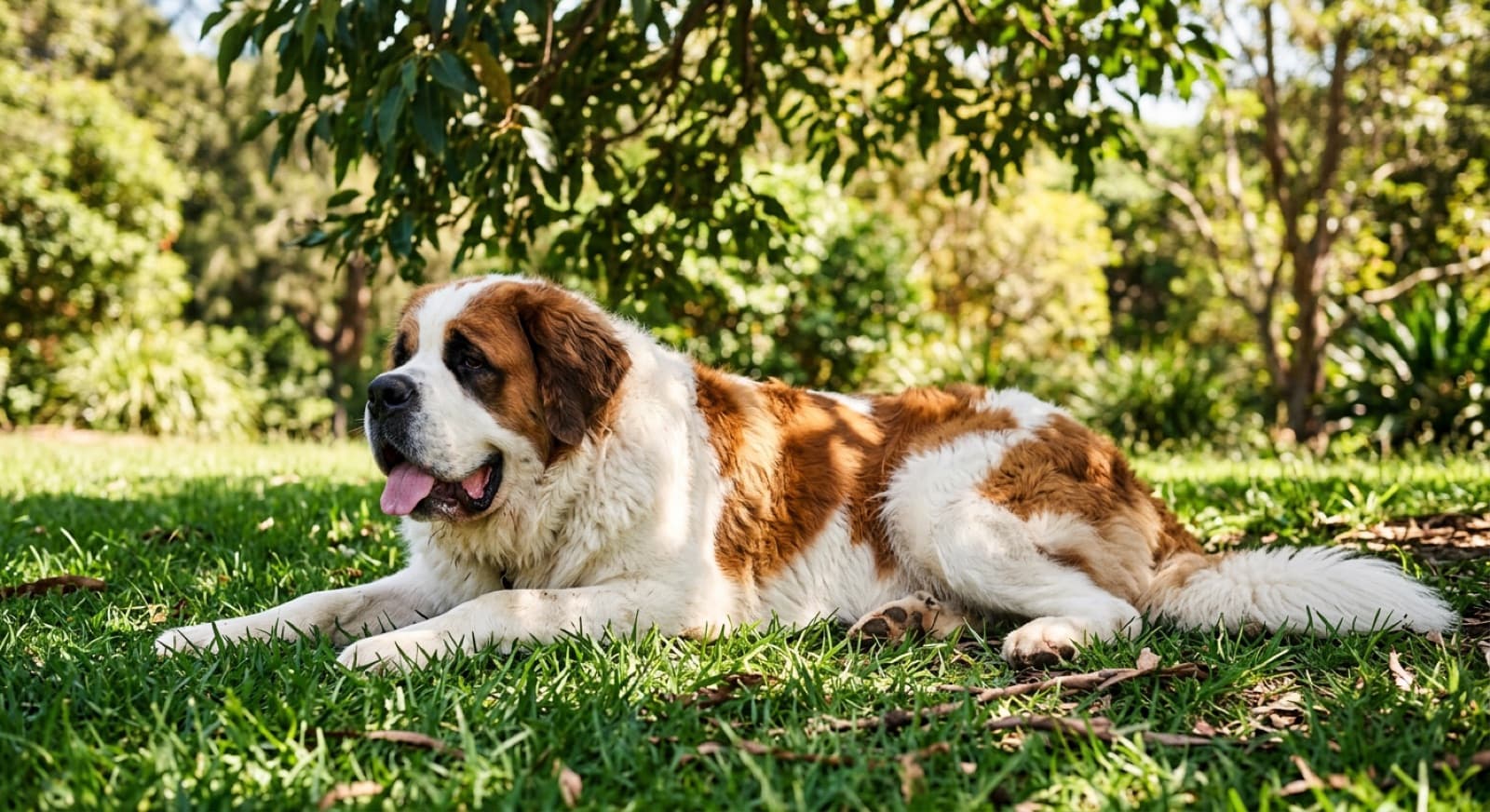
A Saint Bernard is one of the sweetest, most devoted dogs you can adopt, and it is a giant, alpine breed that takes real planning to own well in Sydney. Expect serious drool from those loose jowls, and keep drool towels everywhere. The thick double coat needs brushing several times a week and must never be shaved. The single biggest challenge here is heat: this is a snow dog, so it overheats fast, which means exercising only in the cool hours, keeping the dog in shade with water and air-conditioning, and never leaving it in a hot car or house. Add the giant-breed realities of scaled-up food and vet costs, the space and strength of a dog you cannot out-muscle, a short lifespan of around 8 to 10 years, and year-round tick prevention. Get all that right and you have a magnificent, loyal companion.
The drool is real, so let us be honest about it
Start with the thing people underestimate most. Saint Bernards drool, heavily, and it is part of the deal. The breed has loose, heavy jowls, known as flews, and those flews collect and sling saliva. It is most noticeable right after the dog drinks or eats, when it is hot, and when it gets excited. A Saint Bernard can fling a rope of slobber onto a wall, a window, the ceiling, your sofa or your good trousers with a single happy shake of the head. This is not a training problem you can fix. It is anatomy, and it comes with the breed.
The way owners handle it is simple and practical rather than squeamish. Keep drool towels within reach in every room and in the car, and wipe the dog's jowls after it drinks. Keeping the flews and facial folds clean and dry is not just about the mess. It also protects the skin, because a warm, damp fold left dirty can become irritated and start to smell. A quick daily wipe keeps the dog comfortable and the house liveable.
Be honest with yourself before you adopt. If slobber on the walls and your clothes would genuinely upset you, this may not be your breed, and that is a fair thing to know now rather than after the dog is home. If you can shrug it off as part of life with a gentle giant, then the drool is a small price for a wonderful dog. The Saint Bernard breed page is upfront that this is a big commitment, and the drool is one honest part of why.
Sydney heat: the single biggest thing to get right
This is the part that matters more than any other for a Saint Bernard in Sydney. The breed was developed in the snowy Alps, with a thick double coat and a heavy body built to hold warmth. Drop that dog into a city where summer daily maximums average around 26C and hot days push past 35C, and heat becomes a genuine welfare issue. A Saint Bernard overheats far faster than a thin-coated local breed, so heat management here is not a nice-to-have. It is central to keeping the dog safe.
The practical rules for a Sydney Saint Bernard are straightforward:
- Exercise only in the cool. Walk in the early morning and the evening. Never exercise a Saint Bernard in the middle of a hot day.
- Shade and water, always. The dog needs constant access to deep shade and fresh, cool water whenever it is outside.
- Cool the house. Use cooling mats and run air-conditioning on hot days. A Saint Bernard in an un-airconditioned home through a Sydney heatwave is a genuine welfare risk.
- Never leave it in a car. Not for a minute. A hot car is lethal to any dog, and far more so to a heavy, thick-coated giant.
- Watch for overheating. Know the warning signs and treat any suspected overheating as the emergency it is. The detail on heatstroke lives in the health guide.
Say the hard part plainly. If you cannot reliably keep a large, thick-coated dog cool through a Sydney summer, a Saint Bernard is not the right breed for your home. That is not alarmism, it is honesty. Plenty of Saint Bernards live happy, comfortable lives in Sydney with owners who plan around the heat, and the dogs that suffer are the ones whose owners underestimated it. The RSPCA Australia Knowledgebase and the Australian Veterinary Association both stress heat safety for dogs in the Australian climate, and it applies to this breed more than almost any other. The acute medical detail on heatstroke sits in the Saint Bernard health issues guide.
The coat: brush it often, never shave it
Saint Bernards come in two coat types, a short smooth coat and a long rough coat, and both are double coats that need regular care. Plan on brushing several times a week, more for the long coat, with extra work during the seasonal periods when the dog blows its dense undercoat and sheds heavily. Mats form most readily behind the ears, in the armpits and around the back legs, so those spots need careful, regular attention. On a dog this size, grooming is a real time commitment, and professional grooms are a larger, pricier job that many owners supplement with plenty of home maintenance in between.
Here is the rule that matters most, and the one giant-breed owners most often get wrong in a warm climate. Never shave a Saint Bernard, even in a Sydney summer. It is tempting to think a thick coat must make the dog hotter and that shaving would help. It does the opposite. The double coat insulates against heat as well as cold and shields the skin from the sun, so shaving can leave the dog hotter, expose it to sunburn, and raise the risk of heatstroke. Shaving can also damage the coat so it grows back patchy or never returns to normal.
The correct way to help a Saint Bernard stay comfortable is to keep the coat clean, well brushed and free of mats, so air can move through it and it can do its insulating job. A matted coat traps heat and moisture against the skin and causes problems. A well-kept one actually helps the dog regulate its temperature. To keep the dog cool, manage the environment with shade, water, cooling mats and air-conditioning, not the clippers. If you are ever unsure how to manage the coat in summer, ask your vet or a groomer experienced with double-coated breeds, but the principle does not change. Keep it brushed, do not shave it.
Everything is bigger, including the bills
A Saint Bernard is a genuinely giant breed, and almost every cost of ownership grows with the dog. A dog that big eats a lot, so food is a real ongoing expense, not a rounding error. The bed, the crate, the car you need to fit the dog into, the harness and lead, and a boarding kennel that can house a giant all cost more than the mid-sized equivalents. Professional grooming on a big double coat is a large job and is priced to match.
The cost that catches people out most is veterinary care. Many medications, anaesthetics and some treatments are dosed and priced by body weight, which means a routine procedure on a giant can cost far more than the same procedure on a mid-sized dog. That is not a hidden fee. It is simple biology, and it applies across the dog's whole life. Because of that, pet insurance is worth considering for a giant breed to spread the risk of a large, unexpected bill. Australian insurers such as Bow Wow Meow and Petplan Australia offer dog cover, and it is worth comparing options rather than assuming you can absorb a giant-breed emergency out of pocket.
None of this is a reason to avoid the breed. It is a reason to budget honestly. Adopting through a rescue keeps the up-front adoption fee modest compared with a breeder, but the day-to-day and lifetime costs of a giant dog are what they are. Go in planning for them and you will enjoy the dog far more than someone who is constantly surprised by the size of the bills.
Space, strength and the calm giant next to your child
A Saint Bernard needs room. Not a mansion, but genuine space to stretch out, a home where a very large dog can move around comfortably, and ideally a secure yard with shade. Even the calmest giant takes up a lot of floor, and a small, warm apartment is a poor fit for a dog of this size that also has to stay cool in summer.
Strength matters as much as space. A Saint Bernard is famously gentle and good-natured, but it is also enormously strong, and even a friendly, well-meaning dog can knock over a small child or an elderly person by accident with a happy turn or a lean. You cannot physically overpower a dog this heavy, so control comes from training, not muscle. That is why calm, reward-based training and good lead manners matter so much with a giant breed. Teach loose-lead walking, a reliable settle, and basic obedience early, using reward-based methods, so a dog you cannot out-muscle is a dog that listens.
The good news is that Saint Bernards are known for a sweet, patient, biddable temperament, which makes the training work rewarding. Start early, keep it positive, and a Saint Bernard becomes a superbly mannered companion. The RSPCA Australia Knowledgebase has sound general guidance on humane, effective reward-based training, and a Sydney force-free trainer experienced with large breeds can help you build the manners a giant dog needs from puppyhood or from the day a rescued adult comes home.
The short years are part of the deal
This one is harder to talk about, but it belongs in an honest guide. Giant breeds do not live as long as smaller dogs, and a Saint Bernard typically lives around 8 to 10 years. That is simply the trade-off that comes with a dog this size. It is worth knowing before you adopt, not because it should put you off, but because it shapes the commitment you are making.
Going in with your eyes open means being ready for the greater health care a giant breed needs as it ages, and being clear-eyed that your time together will be precious and shorter than with a small dog. Almost everyone who has loved a Saint Bernard says the years were more than worth it. The point is to choose the breed knowing this, so it is never a shock, and so you can give an older Saint Bernard the comfortable, well-supported senior years it deserves.
Sensible exercise and year-round tick prevention
Exercise needs are lower than people expect for such a large dog. A couple of short daily walks plus some gentle play suit an adult Saint Bernard well. This is a calm, steady breed, not a marathon dog. In Sydney the timing matters far more than the distance: keep activity to the cool of the morning and evening in warm weather and let the dog set an easy pace. Giant-breed puppies need special care, because their joints and growth plates are still developing. Keep young Saint Bernards to gentle, controlled activity and avoid forced runs, long hikes and repetitive jumping until they have matured, so you protect the joints they will rely on for the rest of their lives.
Tick prevention is the other year-round essential in this climate, and the thick coat makes it more important, not less. The paralysis tick is native to the New South Wales coast and bushland, and its bite can cause a fatal ascending paralysis without treatment. On a heavy double coat with deep folds, a tick is easy to miss, so a quick visual glance is never enough. Use a vet-recommended preventative all year, and run your fingers through the coat and over the skin by hand after any walk in bush or long grass, checking the folds, the ears and between the toes. If you find a tick, or your dog seems wobbly, weak or off its food, treat it as an emergency and get to a vet straight away. Speak to your vet about which preventative suits your dog, and register your dog with your council through the NSW Pet Registry as part of settling a new arrival in.
Browse adoptable Saint Bernards in Sydney
A Saint Bernard rewards an owner who plans for the drool, the coat and above all the Sydney heat. Browse live NSW listings and set an alert so you hear when a gentle giant comes into rescue.
See Available Saint Bernards →Is a Saint Bernard right for your Sydney home?
Put it together and the honest picture is clear. A Saint Bernard is a gentle, devoted, wonderful giant, and living with one in Sydney is a serious commitment. It drools, so drool towels become part of the furniture. Its thick alpine coat needs brushing several times a week and must never be shaved. It costs more across the board, from food to weight-dosed vet care. It needs room to stretch out, calm reward-based training because you cannot out-muscle it, and awareness that even a friendly giant can knock someone over by accident. It lives a shorter giant-breed life of around 8 to 10 years. And above all, in this climate, it needs careful, planned heat management.
If you can provide the space, the budget, the cool summer routine and the grooming, a Saint Bernard gives back one of the sweetest, most loyal temperaments in the dog world. If any of those needs is a stretch for your home, especially the heat, it is far kinder to both of you to choose a breed that fits your life better. Adopting a giant is a big yes or an honest no, not a maybe.
Sydney and NSW rescues such as RSPCA NSW, AWL NSW, Sydney Dogs and Cats Home, Monika's Doggie Rescue and Maggie's Rescue assess their dogs in foster and shelter care. Saint Bernards and Saint Bernard crosses come into rescue less often than smaller breeds, so setting an alert is the best way to hear when one is available, and a good rescue will tell you honestly whether a particular dog suits your home and your Sydney climate. For where to adopt and what it costs, read the Saint Bernard adoption guide.
Frequently Asked Questions
Do Saint Bernards drool a lot?
Yes, Saint Bernards are heavy droolers and it is one of the biggest lifestyle adjustments people underestimate. The breed has loose, heavy jowls, called flews, and those flews hold and fling saliva. Expect ropes of drool, especially after the dog drinks or eats, when it is hot, and when it is excited. A single head shake can send slobber onto walls, windows, the ceiling, your furniture and your clothes. There is no way to train it away, because it is anatomy, not behaviour. Owners who love the breed keep drool towels in every room and in the car and simply wipe the dog down as part of daily life. Keeping the jowls and facial folds clean and dry also matters for skin health. If a bit of slobber around the house would genuinely upset you, be honest with yourself about that before you adopt, because it is part of the deal with this breed.
Can a Saint Bernard cope with the Sydney heat?
It can, but only with serious, planned heat management, because this is a thick-coated alpine breed built for snow and it overheats fast in a warm climate. Sydney summers average around 26C with occasional days above 35C, which is demanding for a Saint Bernard. The rules are non-negotiable: exercise only in the cool of early morning or evening, never in the middle of a hot day; provide constant deep shade and fresh water; use cooling mats and run air-conditioning on hot days; and never leave the dog in a car, even for a minute. A Saint Bernard in an un-airconditioned home through a Sydney heatwave is a real welfare risk. This is not a reason the breed cannot live here, but heat has to be a central, daily part of how you plan life with the dog. If you cannot reliably keep a large, heavy-coated dog cool through summer, this is not the right breed for your home.
Should I shave my Saint Bernard in summer?
No, you should never shave a Saint Bernard, even in a hot Sydney summer, and it is one of the most common and harmful mistakes giant-breed owners make. The thick double coat is not only insulation against cold. It also insulates against heat and shields the skin from the sun, so shaving it can leave the dog hotter, expose it to sunburn, and raise the risk of heatstroke. Shaving can also damage the coat so that it grows back patchy or never returns to normal. The correct approach is the opposite of shaving: keep the coat clean, well brushed and free of mats so air can circulate through it and it can do its insulating job. To help the dog stay cool, manage the environment instead, with shade, water, cooling mats and air-conditioning. If you are unsure, ask your vet or a groomer experienced with double-coated breeds, but the rule holds. Keep it brushed, do not shave it.
How much does it cost to own a Saint Bernard?
Far more than a mid-sized dog, because almost everything scales with the dog. A Saint Bernard is a giant breed, so it eats a lot and food is a real ongoing expense. A giant bed, a large crate, a car big enough to fit the dog, and boarding priced as a big-dog job all cost more up front and over time. The cost that catches people out most is veterinary care, because many medications, anaesthetics and treatments are dosed and priced by body weight, so a routine procedure on a giant costs considerably more than the same procedure on a small dog. Professional grooming for a big double coat is also a larger job. Pet insurance is worth considering to spread the risk of a large unexpected bill. Adopting through a rescue keeps the up-front fee modest compared with a breeder, but the lifetime costs of a giant are what they are, so budget generously and go in with your eyes open.
How much grooming does a Saint Bernard need?
A lot, and it is a real ongoing commitment. Saint Bernards come in two coat types, a short smooth coat and a long rough coat, and both need regular brushing, several times a week, with the long coat needing more. During seasonal periods when the dog blows its dense undercoat, the shedding is heavy and daily brushing helps. Mats form most readily behind the ears, in the armpits and around the back legs, so those areas need particular attention. The facial folds and jowls need wiping to stay clean and dry, which also helps prevent skin irritation and smell. Never shave the coat; keep it well brushed instead. Bathing a dog this size is a big job, and professional grooming is priced accordingly, so many owners learn to do much of the maintenance at home between grooms. A neglected coat becomes matted and uncomfortable and turns into a genuine skin and welfare problem.
How much exercise does a Saint Bernard need?
Less than you might expect for such a large dog. Saint Bernards have low to moderate exercise needs, and a couple of short daily walks plus some gentle play usually suits an adult well. This is a calm, steady breed, not a high-energy one. In Sydney the timing matters far more than the distance: keep walks to the cool of the morning and evening in warm weather and let the dog set an easy pace. Giant-breed puppies are a special case and must not be over-exercised while their joints and growth plates are still developing, so keep young dogs to gentle, controlled activity and avoid forced runs, long hikes and repetitive jumping until they mature. Over-exercising a giant puppy can damage the joints it will rely on for life. For an adult Saint Bernard in this climate, short and cool beats long and hot every time.
How long do Saint Bernards live?
Around 8 to 10 years, which is shorter than smaller dogs and is a hard reality of giant-breed ownership. Very large dogs simply do not live as long as small and medium ones, and the Saint Bernard is firmly in the giant category. It is worth knowing before you adopt, because it shapes the whole commitment. You are choosing a shorter time with a dog you will love completely, and signing up for the greater health costs and care a giant breed needs as it ages. None of that is a reason not to adopt one, but it is part of the honest picture. Many people who have loved a Saint Bernard say the shorter years were more than worth it, and go on to adopt another gentle giant.
Do Saint Bernards need tick prevention in Sydney?
Yes, year-round paralysis tick prevention is essential for any dog in the Sydney area, and the thick coat of a Saint Bernard makes it even more important. The paralysis tick is native to the New South Wales coast and bushland, and its bite can cause a fatal ascending paralysis without veterinary treatment. On a dog with a heavy double coat and deep folds, ticks are easy to miss, so you cannot rely on a visual scan alone. Use a vet-recommended preventative all year and run your fingers through the coat and over the skin by hand, especially after any bushwalk, checking the folds, ears and between the toes. If you ever find a tick or your dog seems wobbly, weak or off its food, treat it as an emergency and get to a vet straight away. Speak to your vet about the right preventative for your dog.
Keep reading
Adoptable Saint Bernards in Sydney
Live listings of Saint Bernards and Saint Bernard crosses across Sydney and NSW rescues.
Saint Bernard Adoption in Sydney
Where to adopt, why Saint Bernards end up in rescue, and what adoption costs against a breeder.
Saint Bernard Health Issues in Sydney
Giant-breed joints, heart and bloat, the double coat in the heat, heatstroke signs, and year-round tick prevention.
All Sydney Adoption Guides
Browse every breed and how-to guide for adopting a rescue dog in Sydney.