The short answer
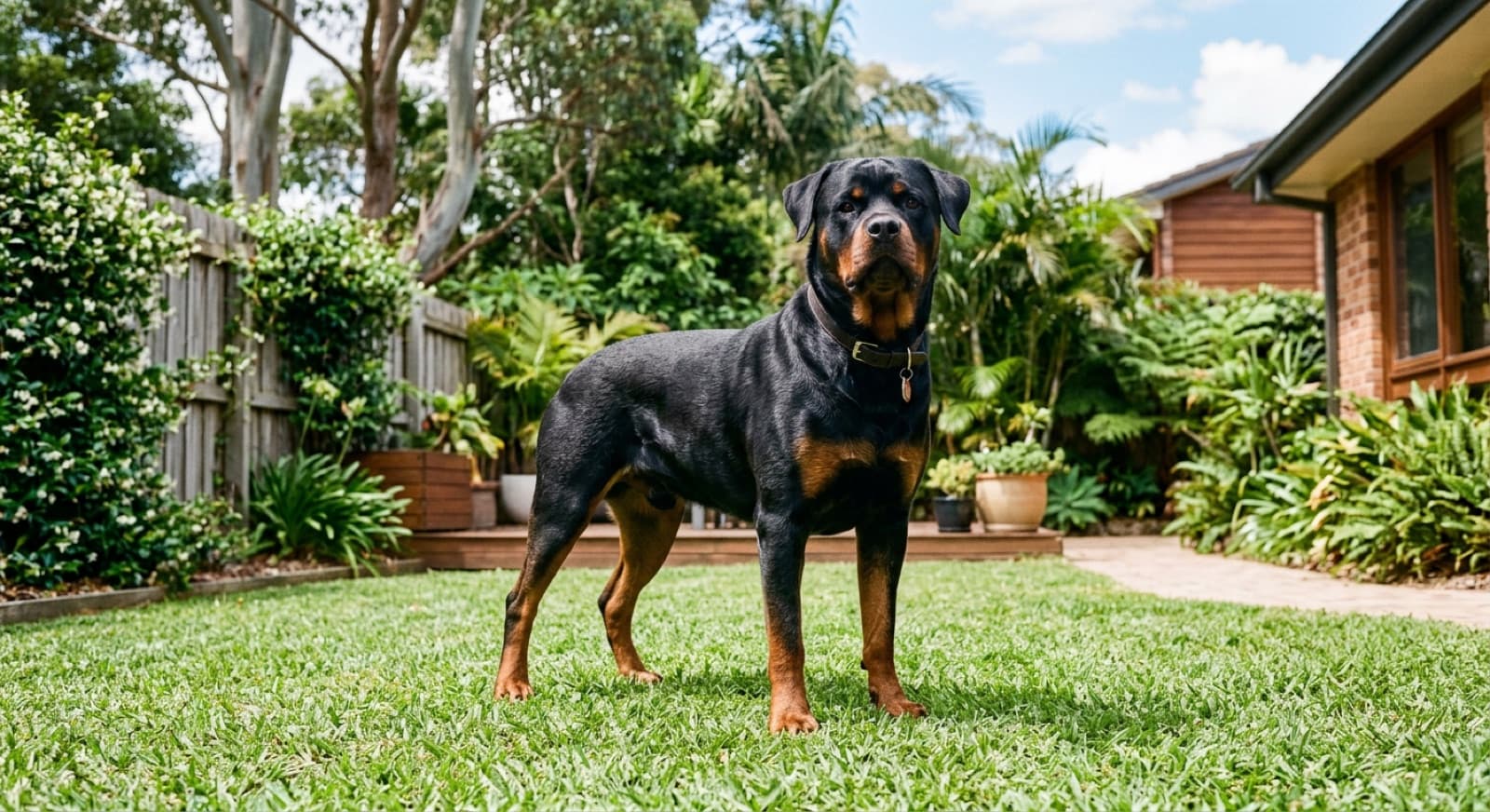
The Rottweiler is a large breed with a real health profile, and the honest headline is a shorter-than-average lifespan (around 8 to 10 years) and some significant risks. The two the breed is especially prone to are bone cancer (osteosarcoma), a leading cause of death, and a heart condition called subaortic stenosis. On top of those sit the general large-breed issues: hip and elbow dysplasia, cruciate ligament injury, and bloat, the deep-chested-dog stomach emergency to know cold. Keeping the dog lean, prompt vet checks for any lameness or swelling, a heart check, and year-round paralysis tick prevention cover most of what you can do. Given all this, pet insurance is much closer to essential than optional. Go in informed, not surprised.
A note on this guide. This is general breed information to help you plan, not veterinary advice. It is written for adopters and checked against the RSPCA Knowledgebase and Australian Veterinary Association guidance. Every dog is different. Always see your own vet for diagnosis, treatment and any decision about your Rottweiler's care, and never medicate a dog based on an article.
Cancer: the most important thing to know
The single most important health fact about the breed is that Rottweilers are notably predisposed to osteosarcoma, an aggressive bone cancer. It is a leading cause of death in the breed and a major reason the average lifespan is shorter than for many dogs, so going in aware of it matters.
Osteosarcoma typically shows as lameness or a firm swelling on a limb, often in middle-aged or older dogs, and it can come on without an obvious injury. The practical takeaway is simple: any persistent limp, or a bony swelling that does not resolve, deserves prompt veterinary assessment rather than a wait-and-see, because early diagnosis gives the best options. This is not something you can prevent, but it is the strongest single argument for pet insurance with this breed, since cancer treatment at a specialist hospital is expensive. It is a hard subject, but an honest one that every prospective Rottweiler owner should understand.
Bloat: the sudden emergency
Bloat, or gastric dilatation-volvulus (GDV), is the most important sudden emergency in any large, deep-chested dog, and the Rottweiler build puts it squarely in that group. The stomach fills with gas and can twist on itself, cutting off blood supply, and it becomes rapidly life-threatening without emergency surgery.
Learn the signs cold: a swollen or hard belly, unproductive retching (trying to vomit but bringing nothing up), restlessness and pacing, excessive drooling, and obvious distress. If you see them, do not wait; treat it as an immediate emergency and get to a vet straight away, calling ahead so they are ready. As sensible precautions for a deep-chested dog, feed smaller meals rather than one large one, and avoid heavy exercise right before and after eating. Knowing the signs before you ever need them is one of the most life-saving things a Rottweiler owner can do.
Joints and the heart
Joints. As a large, heavy, active breed, the Rottweiler is prone to hip and elbow dysplasia and to cruciate ligament rupture in the knee, and its size and weight add to joint stress over a lifetime. Keeping the dog lean is the biggest lever you control, along with sensible, regular exercise rather than occasional hard bursts. See your vet for stiffness, limping or difficulty rising, and if orthopaedic surgery is ever needed, a Sydney referral hospital such as the Small Animal Specialist Hospital (SASH) is where advanced care happens.
The heart. Rottweilers are predisposed to subaortic stenosis, a narrowing below the aortic valve that makes the heart work harder, one of the more common inherited heart conditions in the breed. It ranges from mild and symptomless to serious, and a vet may pick it up as a heart murmur, sometimes referring to a veterinary cardiologist. Signs of a significant problem can include tiring easily, fainting or weakness. A first-visit check that includes listening to the heart is worthwhile with this breed, and any collapse or unusual exercise intolerance should be checked promptly.
The Sydney essentials: tick and heat
Two things apply to every Sydney dog. The paralysis tick is native to NSW bushland and can be fatal, so year-round prevention is essential, with your vet recommending a suitable monthly product, plus a thorough physical tick search over the whole body after any bush or long-grass outing, because ticks can hide even in a short coat. Heat is a lesser concern for the Rottweiler than for flat-faced or heavy-coated breeds, thanks to the normal muzzle and short coat, but it is still a large, muscular dog that can overheat, so exercise in the cool hours through summer, carry water, and never leave a dog in a hot car or shadeless yard.
For plain-language guidance on tick prevention and summer heat safety, the RSPCA Knowledgebase and the Australian Veterinary Association are both reliable, non-commercial starting points.
Meet an adoptable Rottweiler in Sydney
Rescue Rottweilers arrive already desexed, vaccinated, microchipped and vet-checked. Browse live listings across Sydney and NSW.
See Available Rottweilers →Budgeting and insurance
Routine yearly costs for a Rottweiler in Sydney are higher than for a small dog, around $2,000 to $3,000 covering food for a big dog, an annual check, dental care, tick and parasite prevention and training. The bigger consideration is the potential for large one-off bills, because the breed carries real risks: cancer treatment, orthopaedic surgery, bloat surgery and cardiac care can each run well into four or five figures at a specialist hospital.
That is why pet insurance is much closer to essential than optional with a Rottweiler. Enrol while the dog is young and healthy, before any issue becomes a pre-existing exclusion, and compare a few Australian providers on cover, the annual limit and the excess. It can be the difference between affording treatment and facing an impossible choice. For the full adoption picture and everyday life with the breed, see our companion guides, Rottweiler Adoption in Sydney and the training and socialisation detail in our Rottweiler training and socialisation guide.
Frequently Asked Questions
What are the main health issues in Rottweilers?
As a large, powerful breed, the Rottweiler carries the significant large-breed health risks and a couple of conditions it is particularly prone to. The main areas are the joints (hip and elbow dysplasia and cruciate ligament injury), bloat (the deep-chested-dog stomach emergency), cancer (the breed is notably predisposed to bone cancer, osteosarcoma), and the heart (a condition called subaortic stenosis appears in the breed). Obesity worsens the joint issues, and there are a few rarer hereditary conditions. Lifespan is shorter than average at around 8 to 10 years, largely because of the cancer and joint burden. A rescue Rottweiler arrives vet-checked, and going in informed lets you budget, insure and watch for the right things.
Are Rottweilers prone to cancer?
Yes, and it is the most important health fact to know about the breed. Rottweilers are notably predisposed to osteosarcoma, an aggressive bone cancer, which is a leading cause of death in the breed and a major reason the average lifespan is shorter than for many dogs. It typically shows as lameness or a swelling on a limb, often in middle-aged or older dogs, and any persistent limp or bony swelling that does not resolve deserves prompt veterinary attention rather than waiting. This is not something you can prevent, but early veterinary assessment of any unexplained lameness matters, and it is a strong argument for pet insurance, because cancer treatment at a specialist hospital is expensive.
What is bloat and are Rottweilers at risk?
Bloat, or gastric dilatation-volvulus (GDV), is the most important sudden emergency in any large, deep-chested dog, and the Rottweiler build puts it in that group. The stomach fills with gas and can twist, cutting off blood flow, and it is rapidly life-threatening without emergency surgery. The signs to know are a swollen or hard belly, unproductive retching (trying to vomit but bringing nothing up), restlessness, drooling and distress. If you see these, treat it as an immediate emergency and get to a vet straight away. As precautions, feed smaller meals rather than one large one and avoid heavy exercise right around mealtimes. Knowing the signs before you need them is genuinely life-saving.
Do Rottweilers have hip and joint problems?
They can, as large, heavy, active breeds are prone to. Hip and elbow dysplasia (malformed joints leading to arthritis) and cruciate ligament rupture in the knee all occur in Rottweilers, and the breed's size and weight add to joint stress over time. Keeping the dog lean is the single most protective thing you can do, because every extra kilo loads already vulnerable joints. Sensible, regular exercise rather than occasional hard bursts, and ramps to avoid repeated jarring, help too. See your vet for stiffness, limping or difficulty rising. Advanced orthopaedic care, if needed, happens at a Sydney referral hospital such as the Small Animal Specialist Hospital.
Do Rottweilers have heart problems?
The breed is predisposed to subaortic stenosis, a narrowing below the aortic valve that makes the heart work harder, which is one of the more common inherited heart conditions in Rottweilers. It ranges from mild and symptomless to serious, and a vet may detect it as a heart murmur on examination, sometimes prompting referral to a veterinary cardiologist for assessment. Signs of a significant heart problem can include exercise intolerance, fainting or weakness, though many affected dogs show little at first. A first-visit veterinary check that includes listening to the heart is worthwhile with this breed, and any collapse, fainting or unusual tiring on exercise should be checked promptly.
Is paralysis tick a risk for Rottweilers in Sydney?
Yes, as for any dog in Sydney, and it is not optional to manage. The paralysis tick is native to the NSW east coast and its bushland fringes, and its neurotoxin can be fatal without veterinary treatment. Every Sydney dog needs year-round tick prevention, and your vet will recommend a suitable product. On a large dog with a dense short coat, ticks can still be missed, so a thorough physical search over the whole body after any bush or long-grass outing is a sensible habit on top of the monthly preventative. A wobbly back end, a changed bark, vomiting or breathing trouble is an emergency, so go straight to a vet.
How does a Rottweiler cope with the Sydney heat?
Reasonably, thanks to a normal muzzle and short coat, far better than flat-faced or heavy-coated breeds, but it is still a large, muscular dog that can overheat if worked hard in the heat, and Rottweilers can be sensitive to high temperatures. Exercise in the cool of the morning and evening through summer rather than the heat of the day, provide constant shade and water, and test hot pavement with your hand before walking. Never leave a dog in a hot car or a shadeless yard. Watch for heavy panting, drooling, weakness or distress, which are signs of heat stress and a veterinary emergency. Sensible timing and water manage almost all of it.
Should I get pet insurance for a Rottweiler?
For this breed, it is one of the clearer decisions. Rottweilers carry real, documented risks, cancer treatment, orthopaedic surgery for hips or cruciate ligaments, bloat surgery, and cardiac care, and each can run well into four or even five figures at a Sydney specialist hospital. Enrol while the dog is young and healthy, before anything becomes a pre-existing exclusion, and compare a few Australian providers on chronic and hereditary cover, the annual limit and the excess, reading the product disclosure statement rather than just the headline price. For a large breed with the Rottweiler's health profile, insurance is much closer to essential than optional, and it can be the difference between affording treatment and an impossible choice.
How long do Rottweilers live, and how do I support a good life?
Around 8 to 10 years on average, shorter than many breeds, largely because of the cancer and joint burden that comes with a large guardian breed. Good care improves both length and quality of life considerably: keeping the dog lean is the most powerful lever, along with sensible exercise, prompt veterinary assessment of any lameness or swelling, a heart check, and staying up to date on dental and preventative care. A rescue Rottweiler, especially a young adult, still has many good years ahead, and a well-cared-for one is a healthy, vigorous, dignified companion. Going in aware that this is a shorter-lived breed helps you make the most of the time.
Keep reading
Rottweiler Adoption in Sydney
Where to adopt, what it costs, and why these powerful guardians end up in rescue.
Rottweiler Training & Socialisation
Raising a powerful guardian well: socialisation, reward-based training and responsible ownership.
Adoptable Rottweilers in Sydney
Live listings of Rottweilers and Rottweiler crosses, with filters for age, size and compatibility.
How to Adopt a Dog in Sydney
The full Sydney adoption process, paperwork, vet questions and home-check tips.