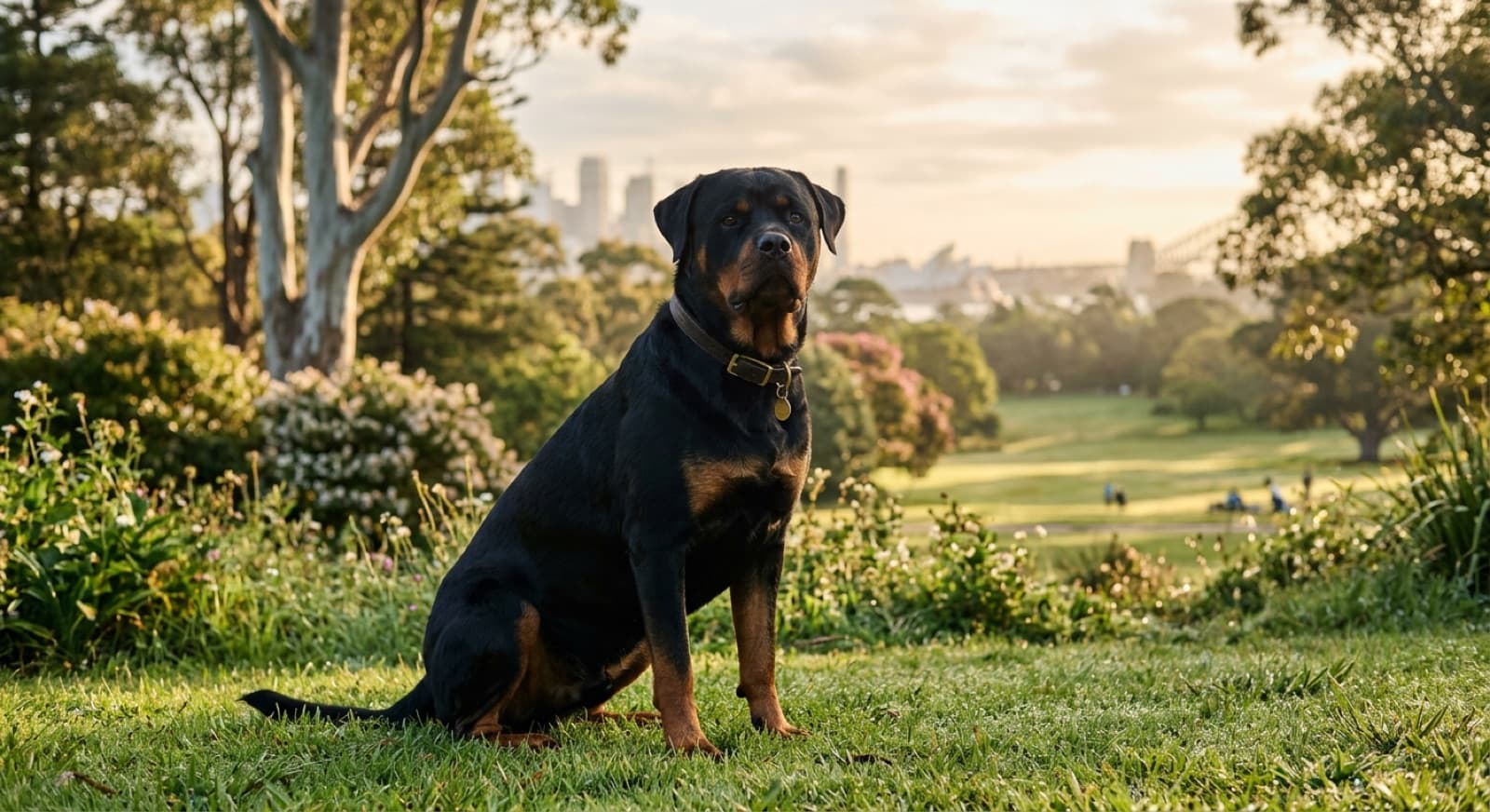
The short answer
Rottweilers come into Sydney rescue steadily, and adopting one is inexpensive: fees run $300 to $600 for an adult, all-inclusive. The Rottweiler is not a restricted breed in NSW and is legal to own and rehome normally. What it asks for is an experienced home. This is a large, powerful, intelligent guardian breed that needs committed training, early and ongoing socialisation, secure fencing and a confident owner, and it is not a first-dog breed for most people. Check any rental or strata rules, because some are cautious about large breeds, and budget for a big dog with real health risks that make insurance worthwhile. Meet those needs and a Rottweiler is a calm, devoted, steady companion of real character.
Why Rottweilers end up in Sydney rescue
Understanding why Rottweilers reach rescue is the best preparation for adopting one, and the reasons are mostly about mismatched expectations rather than bad dogs.
Underestimated needs. A Rottweiler is a large, strong, intelligent guardian that needs serious training, ongoing socialisation and a confident owner. People who took one on without appreciating that reality often struggle as the dog matures into a powerful adult, and surrender when they cannot manage it.
Housing. Many rentals and strata schemes are wary of large guarding breeds, so an owner who moves into a place that will not accept the dog sometimes has to give it up out of necessity rather than choice. Large breeds are among the first to lose their homes when housing changes.
Perception and cost. Public wariness of the breed, the expense of a big dog, and the commitment a guardian breed demands all contribute, and ordinary life changes account for the rest.
The dogs themselves, when well raised, are loyal, affectionate and steady. What a rescue Rottweiler needs is an experienced, committed home with the training knowledge, space and time the breed requires, not a different temperament. Ask the rescue about the dog's temperament, its socialisation and training history, and how it is with people and other animals.
Where to adopt a Rottweiler in Sydney
Rottweilers come into rescue steadily, and careful matching matters with a powerful breed. Set up alerts on every rescue you would consider, and seek out breed-focused and large-breed rescues too. For a fuller directory, see our guide to the best dog rescues in Sydney.
1. RSPCA NSW
The Sydney Adoption Centre at Yagoona plus regional NSW centres see Rottweilers and Rottweiler crosses regularly. Every adoption already includes desexing, vaccination, microchipping, a vet workup and a behavioural assessment, and the team can tell you honestly how a particular dog is with people and other animals and what handling it needs. Apply at rspcansw.org.au.
2. Animal Welfare League NSW
AWL NSW runs the Kemps Creek Shelter plus around a dozen volunteer branches across the state, and large breeds including Rottweilers appear on the roster. Adult adoption fees sit around $450 and include desexing, vaccination, microchipping and a vet check. Current listings on awlnsw.com.au.
3. Sydney Dogs and Cats Home
The city's oldest shelter, founded in 1946, at Strathfield South. Takes a broad mix of dogs through owner surrender and council contracts, including Rottweilers and Rottweiler crosses. Adoption includes desexing, vaccination, microchipping, parasite treatment and a vet check. More at sydneydogsandcatshome.org.
4. Monika's Doggie Rescue
No-kill foster-based rescue at Doggiewood in Ingleside on the Northern Beaches. Because the dogs live in foster homes, the notes on a Rottweiler's temperament, training and how it is with people and other animals tend to be detailed and accurate, which matters a great deal for a guardian breed. Adoption fee is around $400 for most adult dogs, and the process includes a home check. Listings at doggierescue.com.
5. Maggie's Rescue
Inner West rescue based in Marrickville, running a foster-to-adopt model with a two-week trial built into every adoption, which is genuinely useful when matching a large guardian breed to a home. Listings are published through the SavourLife portal. Adoption fees range $250 to $750. Information and application links at maggiesrescue.org.
Beyond these, breed-focused Rottweiler and large-breed rescues in NSW place dogs through foster networks and understand the breed deeply, which is valuable for a guardian dog. Whatever the source, verify any rescue through a real address, a current adoptable-dog list and charitable status before sending money. Browse the current Rottweilers and Rottweiler crosses on the Sydney Rottweiler listings.
How much does Rottweiler adoption cost in Sydney?
Adoption fees run about $300 to $600 for an adult Rottweiler and $400 to $800 for a puppy. Every fee already includes desexing, C5 vaccination, microchipping, worm and flea treatment and a vet check, which would cost far more if you paid for them separately after a private purchase.
On top of the fee, budget for the NSW Pet Registry lifetime registration (around $84 for a desexed dog, via the NSW Pet Registry), secure fencing suited to a large, strong dog, a sturdy harness and lead, and general setup. Ongoing yearly costs are higher for a big dog, around $2,000 to $3,000, covering food, routine vet care, tick and parasite prevention and training. The Rottweiler also carries some real health risks, so pet insurance taken out while the dog is young is genuinely worthwhile, and we cover the medical picture in our Rottweiler health guide.
Browse adoptable Rottweilers in Sydney
Rottweilers come into NSW rescue steadily and need experienced homes. Browse live listings across Sydney and NSW, and give a loyal guardian the home it needs.
See Available Rottweilers →The Rottweiler reality, in brief
You cannot adopt a Rottweiler responsibly without respecting the guardian breed underneath, so here is the short version, with the detail in our companion guides. A Rottweiler needs committed, reward-based training and early and ongoing socialisation, a confident and experienced owner, secure fencing suited to a large strong dog, and a good hour of daily exercise plus mental work. It is generally aloof with strangers and devoted to its family, and it thrives on having a job and a purpose. It is not a dog to leave idle, and it is not, for most people, a first dog.
None of this makes a Rottweiler a dangerous or difficult dog; it makes it a serious, capable breed that rewards a knowledgeable home. We cover the training, socialisation and responsible-ownership side in depth in our Rottweiler training and socialisation guide, and the medical picture in our Rottweiler health guide.
What a Rottweiler is like to live with
For an experienced owner, a well-raised Rottweiler is a magnificent companion. They are calm, confident and steady, deeply loyal and affectionate with their family, and often gentle and protective with their own children. Intelligent and eager to work, they thrive on training and a sense of purpose, and a good Rottweiler is a dog of real character and dignity that bonds closely and profoundly with its people. They are natural guardians, watchful and aloof with strangers while devoted at home.
The other side is the responsibility that comes with a large, powerful guarding breed: the training, the socialisation, the secure containment, and being a considerate owner in public and around housing rules. This is a dog for a committed, experienced household with space, not for someone wanting a low-effort pet. Match the breed to your genuine experience and lifestyle, and a rescue Rottweiler will repay you with years of steady, devoted, dignified companionship.
Frequently Asked Questions
Where can I adopt a Rottweiler near me in Sydney?
Start with the five main NSW rescues: RSPCA NSW (Sydney Adoption Centre at Yagoona), Animal Welfare League NSW (Kemps Creek plus regional branches), Sydney Dogs and Cats Home (Strathfield South), Monika's Doggie Rescue (Ingleside) and Maggie's Rescue (Marrickville). Rottweilers and Rottweiler crosses come through regularly, and there are breed-focused Rottweiler and large-breed rescues in NSW that place through foster homes and understand the breed well. Because a Rottweiler is a powerful dog that needs the right match, careful assessment matters more than speed, so set alerts across the rescues and be ready with an honest picture of your experience, housing and lifestyle. The right rescue will want to match the individual dog to a home that suits it.
Why do Rottweilers end up in rescue?
Mostly because their needs are underestimated. A Rottweiler is a large, strong, intelligent guardian breed that requires committed training, early and ongoing socialisation, and a confident owner, and people who took one on without that reality often cannot cope as the dog matures. Housing is another big factor: many rentals and strata schemes are wary of large guarding breeds, so owners who move sometimes cannot keep the dog. Add public perception, the cost of a big dog, and ordinary life changes, and a steady number reach NSW rescue. The dogs themselves are usually loyal, affectionate and steady when well raised; the problem is almost always a home that could not meet the breed's needs.
How much does it cost to adopt a Rottweiler in Sydney?
Adoption fees run about $300 to $600 for an adult Rottweiler and $400 to $800 for a puppy, and that fee already covers desexing, vaccination, microchipping, worm and flea treatment and a vet check. On top of the fee, budget for the NSW Pet Registry lifetime registration (around $84 for a desexed dog), secure fencing suited to a large, strong dog, a sturdy harness and lead, and general setup. Ongoing yearly costs sit around $2,000 to $3,000 for a big dog, with food and any medical care scaling with the size, and Rottweilers carry some real health risks that make pet insurance genuinely worthwhile. A large guardian breed is a significant financial as well as time commitment.
Are Rottweilers good family dogs?
Well-bred and well-socialised Rottweilers are calm, affectionate and deeply loyal family dogs, often devoted to and gentle with their own children, and their steady, confident temperament is a big part of the breed's appeal. The key words are socialisation and training: a Rottweiler raised from early on with clear, kind guidance and plenty of positive exposure becomes a wonderful family companion, while an under-socialised guarding dog of this size and strength is a real responsibility. Supervision around young children and visitors is always sensible given the size, and the breed suits an active family with the experience, time and space it needs rather than a first-time owner wanting an easy pet.
Are Rottweilers restricted in NSW?
No. The Rottweiler is not on the NSW restricted-breed list and is legal to own and rehome normally. The restricted list under the Companion Animals Act 1998 covers five specific breeds (the American Pit Bull Terrier, Dogo Argentino, Japanese Tosa, Fila Brasileiro and Perro de Presa Canario), and the Rottweiler is not among them. Like any dog in NSW it must be microchipped and registered on the NSW Pet Registry. That said, as a large, powerful guarding breed, a Rottweiler benefits from a responsible owner who prioritises training, socialisation and secure containment, and you should check any rental or strata rules, because some landlords and buildings are cautious about large breeds even where the law allows them.
Do Rottweilers get on with other dogs and pets?
It depends on the individual and on socialisation. Many well-socialised Rottweilers live happily with other dogs and with cats they are raised alongside, but some, particularly with dogs of the same sex, can be less tolerant, and the breed's size and strength mean any conflict is serious. Early and ongoing socialisation makes a big difference, and a good rescue assesses each dog and tells you honestly how it is with other animals. If you have a resident dog or cat, look for a Rottweiler specifically assessed as compatible, manage introductions carefully, and be guided by the rescue's read of the individual dog rather than by breed generalisations.
How much exercise does a Rottweiler need?
Moderate to high, with mental work as important as physical. An adult Rottweiler needs a good hour or so of daily exercise, walking, play and secure activity, plus training and enrichment to occupy the intelligent, working mind, and a bored, under-exercised Rottweiler can become difficult to manage given its size. This is an intelligent working breed that thrives on having a job and a purpose, so obedience training, structured activities and problem-solving games matter as much as the walk. It is not a dog to leave idle in a yard. An active owner who enjoys training and spending time with their dog will find the exercise commitment rewarding rather than a chore.
Should I adopt an adult Rottweiler or a puppy?
For most people an adult is the wiser choice, and with a large guardian breed it is doubly true. An adult Rottweiler has a temperament a rescue can properly assess, established manners, a known size and a lower adoption fee, and you can see whether this individual dog suits your home and experience, which matters enormously for a breed where temperament and handling are everything. A Rottweiler puppy is a lot of powerful dog to raise well and gives you no reliable read on its adult character. Rescues evaluate each dog in foster or shelter care and match carefully, so adopting an adult whose real temperament is known is a genuine advantage, not a compromise.
Is a Rottweiler a good first dog?
Generally, no, and it is better to be honest about that. A Rottweiler is a large, powerful, intelligent guarding breed that needs experienced, confident handling, committed training and consistent socialisation, and it is a lot of dog for a first-time owner to get right. That is not to say it is impossible: a dedicated first-time owner who has genuinely researched the breed, is committed to training and socialisation classes, has suitable housing and space, and ideally works with a good trainer can succeed and find the breed hugely rewarding. But the stakes are higher than with an easier breed, so if this is your first dog, go in with real preparation and support, and be guided by a rescue that will match you carefully.
Keep reading
Adoptable Rottweilers in Sydney
Live listings of Rottweilers and Rottweiler crosses, with filters for age, size and household compatibility.
Rottweiler Training & Socialisation
Raising a powerful guardian well: socialisation, reward-based training, the guarding instinct and responsible ownership.
Rottweiler Health Issues in Sydney
The large-breed risks to plan for: hips, bloat, bone cancer and the heart, plus paralysis tick and heat in NSW.
How to Adopt a Dog in Sydney
The full Sydney adoption process, paperwork, vet questions and home-check tips.