The short answer
A Jack Russell needs at least an hour of real exercise a day plus mental work, and it comes with the classic terrier behaviours: barking, digging and a strong prey drive. The winning approach is to meet the needs and channel the instincts rather than fight them. Exercise and enrichment fix most problem barking and digging; a designated digging spot redirects the rest; and the prey drive is managed with a lead in open spaces, secure dig-proof fencing, and honest caution around cats and small animals. Give the clever brain a job through training and dog sports, and the barking, digging, destructive terrier simply does not appear. This is a big personality in a small body that rewards an active, engaged owner.
Why exercise and terrier instincts define ownership
Almost everything that goes right or wrong with a Jack Russell comes down to the gap between what people expect from a small dog and what a working terrier actually is. The Jack Russell was bred to hunt foxes and vermin, to be bold, tireless, clever and driven, and to bark, dig and chase as part of the job. Those traits do not switch off in a suburban home or a Sydney apartment.
In a home that meets the exercise needs and channels the instincts, the result is a wonderful, characterful companion. In a home that treats the Jack Russell as an easy little lap dog, the same traits become the barking, digging and destruction that lands so many in rescue. The dog is not being difficult; it is a terrier with unmet needs. The encouraging part is how directly the outcome follows the management, so once you understand and work with the breed rather than against it, most of the problems simply do not arise.
The exercise a Jack Russell needs
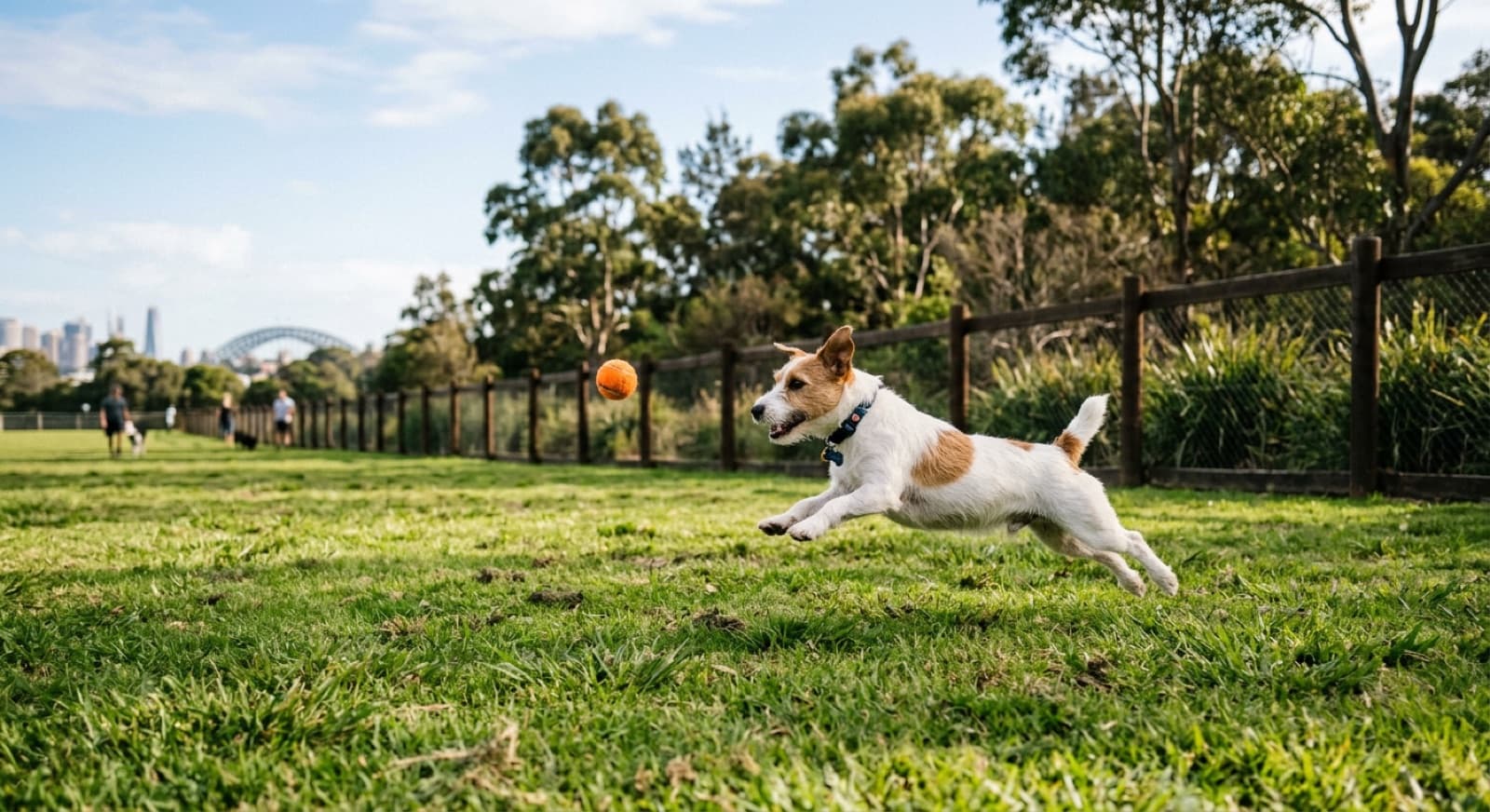
Plan on at least an hour a day of real activity for an adult Jack Russell, and understand that its needs are those of a much larger working dog crammed into a small frame. The breed wants to move and to think, so the ideal routine combines physical exercise, brisk walks, fetch, and secure off-lead running, with mental work, training, scent games and puzzle feeders. Mental stimulation is not optional with this breed; a Jack Russell that is walked but never mentally challenged is still a bored dog.
In the Sydney summer, front-load the physical exercise into the cool of the morning and evening and shift the mental work indoors on hot days. The pay-off is significant: a Jack Russell that is properly exercised in body and mind is a calm, settled, easy dog, while the barking, digging, destructive version is simply one whose energy has nowhere to go. Meeting the exercise need is the foundation everything else rests on.
Barking and digging: manage, do not fight
Barking. Jack Russells are naturally vocal, and barking is part of the breed rather than a fault, which is why it is one of the top reasons they are surrendered from apartments and strata. You cannot make a terrier silent, but you can greatly reduce excessive barking. Most of it comes from boredom, under-exercise or too much time alone, so meeting the exercise and enrichment needs is the first and biggest fix. Beyond that, reward quiet, avoid accidentally rewarding barking with attention, manage what the dog can see and hear from windows and fences, and do not leave it alone for long stretches. If you live in close housing, be honest with yourself and your neighbours before adopting.
Digging. The Jack Russell was bred to dig its way to burrowing animals, so digging is a deep instinct, not misbehaviour, and a bored terrier will happily excavate a garden. The kindest fix is to channel it: give the dog a designated digging spot such as a sandpit or a yard corner, and make it appealing by burying toys or treats there, while calmly discouraging digging elsewhere. Plenty of exercise reduces boredom-digging, and a dig-proof fence base stops the classic tunnelling escape.
The prey drive
The instinct to chase and catch small animals is strong in the Jack Russell, and it is the one terrier trait you manage rather than train away. In everyday life it means the dog may fixate on and pursue cats, rabbits, guinea pigs, chickens, birds and wildlife, and once the instinct fully engages, recall becomes unreliable. This is what the breed was made to do, not a temperament fault.
Managing it means setting the dog up so the drive is not triggered dangerously: a lead or long-line in any unfenced space, secure fencing at home, and honest caution around cats and small pets. For a home with small animals, a Jack Russell needs to be one a rescue has specifically assessed as suitable, with slow, supervised introductions, and even then some individuals are best as the only small-animal pet. On walks near bushland and wildlife, keep the dog on a lead, because a Jack Russell in full chase is hard to recall and can put itself in danger near roads.
Thinking about adopting a Jack Russell?
With the exercise, enrichment and terrier instincts channelled, a Jack Russell is a bright, funny, devoted companion. Browse adoptable Jack Russells across Sydney and NSW, and read the full adoption guide first.
Read the Jack Russell Adoption Guide →Channelling a clever working terrier
The single most effective way to keep a Jack Russell happy and settled is to give the clever brain a job. This is a breed that thrives on dog sports and structured activities: agility suits their speed and athleticism, scent work and nose games tap into the hunting instinct in a positive, controlled way, and trick training, flyball and earthdog activities all give the terrier mind a focus. Many Jack Russells are natural show-offs who love learning and performing.
You do not need formal dog sports to benefit from this, though. At home, puzzle feeders, hide-and-seek games with toys or food, and short, frequent, reward-based training sessions all engage the mind and drain mental energy. Reward-based training works far better than harsh methods with this sensitive, clever breed, and the RSPCA Knowledgebase has sound, force-free training guidance to start from. The core insight is that a Jack Russell is not simply a body to be walked but a mind to be engaged, and an owner who enjoys teaching and playing with their dog will find the breed endlessly rewarding, while getting a calm, well-behaved companion in return.
Frequently Asked Questions
How much exercise does a Jack Russell actually need?
Far more than the size suggests, and this is the single most important thing to be honest about. Plan on at least an hour a day of real activity for an adult Jack Russell, split between physical exercise and mental work, and understand that a slow walk around the block does not meet the need. This is a working terrier with real stamina and a busy brain, so it needs both a body workout and a mind workout: brisk walks, fetch, secure off-lead running, plus training, scent games and puzzle feeders. An under-exercised Jack Russell becomes a barking, digging, destructive one, and the good news is the reverse holds too. A properly exercised, mentally satisfied Jack Russell is a calm, delightful companion.
Why do Jack Russells bark so much, and can I stop it?
Jack Russells are naturally vocal, bred to be bold and to alert, so barking is part of the package rather than a flaw, and it is one of the most common reasons the breed is surrendered from apartments and strata. You cannot train a terrier to be silent, but you can reduce excessive barking a great deal. Most problem barking comes from boredom, under-exercise, or being left alone too long, so meeting the exercise and enrichment needs is the first fix. Beyond that, rewarding quiet, not inadvertently rewarding barking with attention, managing what the dog can see and hear, and not leaving it alone for long stretches all help. If you live in close housing, be honest about the noise before you adopt.
Why does my Jack Russell dig, and how do I manage it?
Digging is hardwired: the Jack Russell was bred to go to ground after burrowing animals, so digging is a deep instinct rather than misbehaviour. A bored terrier will excavate a garden with real enthusiasm. Rather than trying to eliminate it, the kindest approach is to channel it. Provide a designated digging spot, such as a sandpit or a corner of the yard, and encourage the dog to dig there by burying toys or treats, while gently discouraging digging elsewhere. As with barking, plenty of exercise and mental stimulation reduces the drive to dig out of boredom. Also make sure your fencing goes below ground or is otherwise dig-proof, because a determined Jack Russell can tunnel out.
How strong is a Jack Russell’s prey drive?
Strong, because the breed was made to hunt and catch small animals. In practice this means a Jack Russell may fixate on and chase cats, rabbits, guinea pigs, chickens, birds and wildlife, and once the instinct engages, recall becomes unreliable. It is not aggression and it is not fixable by training alone; it is what the dog was bred to do. Manage it rather than expecting to remove it: real caution and honest assessment around cats and small pets, a lead or long-line in any unfenced space, secure fencing, and awareness on walks near wildlife. For homes with small animals, look for a Jack Russell a rescue has specifically assessed as suitable, and manage introductions slowly and carefully.
Can a Jack Russell be trusted off-lead in Sydney?
Only in a fully fenced, secure area, and even then knowing that a strong scent or a small animal can override the recall. The prey drive and the terrier boldness mean a Jack Russell off-lead in open ground may take off after wildlife or a cat and not come back when called, which near roads is a real danger. Use securely fenced off-leash dog parks for free running, a securely fenced yard at home, and a lead or a long-line everywhere else, including bush trails and beaches outside fenced areas. A reliable recall in the face of a strong prey trigger is not something most Jack Russell owners can count on, so manage it with fencing and leads rather than hoping.
What activities and jobs suit a Jack Russell?
Anything that channels the clever, energetic brain. Jack Russells excel at dog sports and thrive when given a job: agility suits their speed and agility beautifully, scent work and nose games tap into the hunting instinct in a positive way, and trick training, flyball and earthdog activities all give the terrier mind a focus. Even at home, puzzle feeders, hide-and-seek games, and short frequent training sessions help drain mental energy. The key insight is that a Jack Russell is not just a body to be walked but a mind to be engaged, and giving it a job to do is one of the most effective ways to keep the breed settled, happy and out of trouble.
What happens if a Jack Russell does not get enough exercise or stimulation?
It becomes the barking, digging, destructive dog that fills rescues. A Jack Russell with unspent energy and a bored brain will bark excessively, dig up the garden, chew and destroy things, and generally make its own entertainment, none of which is the dog being bad; it is a working terrier with nothing to do. The reassuring flip side is how directly behaviour follows management: a Jack Russell that is properly exercised and mentally engaged is usually a calm, affectionate, easy housemate. Meeting the exercise and enrichment needs is the single biggest thing you can do for a happy Jack Russell and a happy household, and it is the difference between the breed thriving and being surrendered.
Is a Jack Russell a good first dog?
It can be, but only for someone active and prepared to put in the work, and it is not the easy small dog many first-time owners imagine. A committed first-time owner with an active lifestyle, time for daily exercise and training, and a realistic understanding of the barking, digging and prey drive can do very well with the breed and find it hugely rewarding. Someone wanting a low-effort, quiet lap dog will struggle, and that mismatch is exactly what lands so many Jack Russells in rescue. If you are new to dogs, talk honestly with a rescue about your lifestyle, and consider an adult whose temperament and energy you can actually see rather than gambling on a puppy.
How do I keep a Jack Russell from escaping the yard?
Take fencing seriously, because a Jack Russell is small, clever and a determined digger. Make sure the fence has no gaps a small dog can squeeze through, and dig-proof the base by burying mesh or running a solid barrier below ground, because tunnelling out is the classic Jack Russell escape. Check that gates sit flush and latch securely, and remove anything the dog could climb. As with every terrier behaviour, meeting the exercise and enrichment needs reduces the motivation to escape in the first place, because a satisfied dog is far less driven to dig its way to adventure than a bored one. Supervise a new dog in the yard until you know what it can do.
Keep reading
Jack Russell Adoption in Sydney
Where to adopt, what it costs, and why so many small terriers end up in rescue.
Jack Russell Health Issues in Sydney
A hardy, long-lived breed: the eye, knee and dental issues to know, plus paralysis tick in NSW.
Adoptable Jack Russells in Sydney
Live listings of Jack Russells and Jack Russell crosses, with filters for age, size and compatibility.
How to Adopt a Dog in Sydney
The full Sydney adoption process, paperwork, vet questions and home-check tips.