The short answer
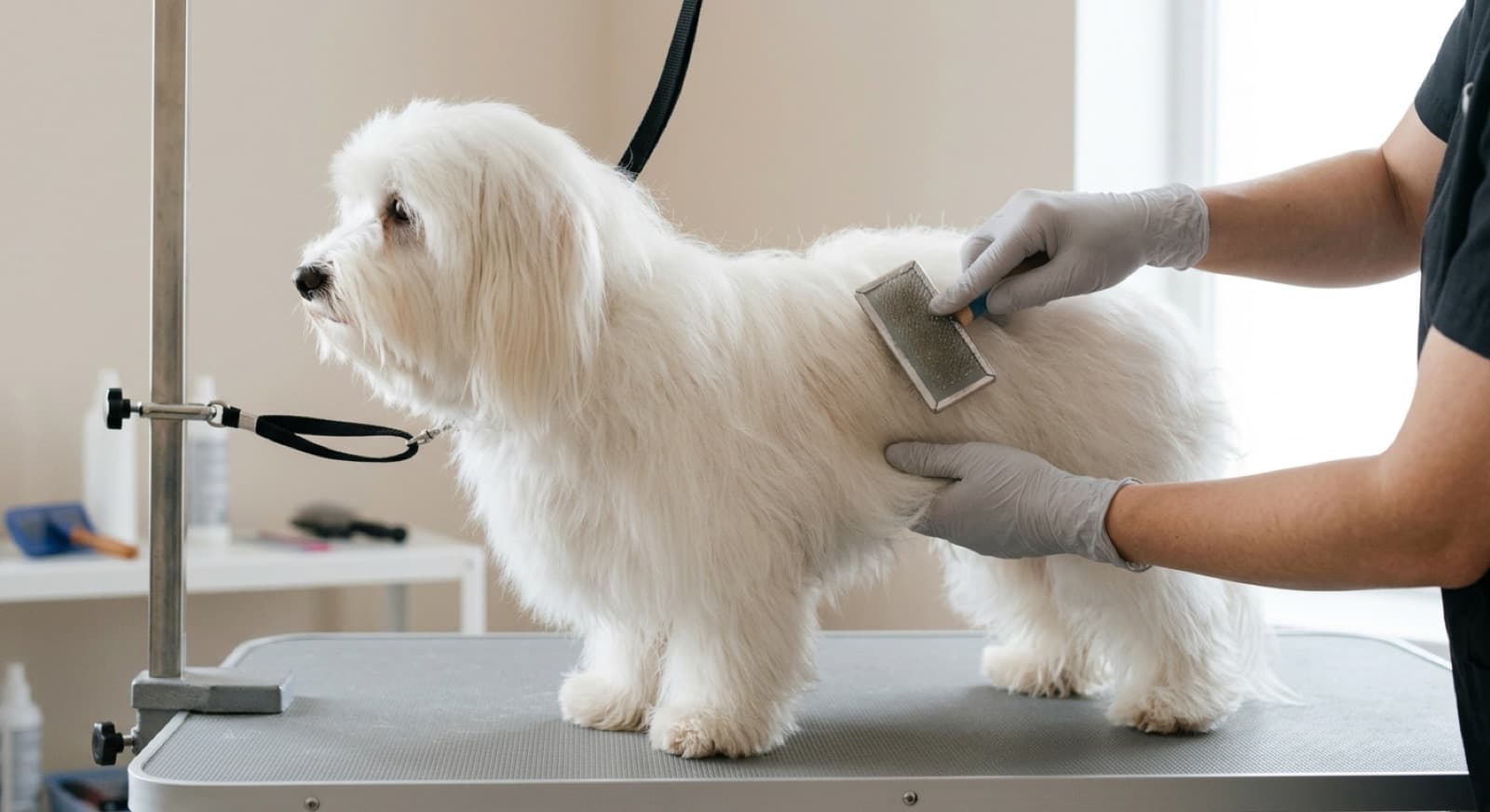
A Coton de Tuléar has a long, soft, fine, single cotton coat that sheds almost nothing but tangles and mats very easily, so it is low-shedding and high-maintenance at the same time. In full coat you need to brush and comb all the way to the skin most days, targeting the spots that mat first: behind the ears, the armpits, the backs of the legs, the beard and the sanitary area. Most Sydney pet owners are better off with a short puppy clip, which keeps the soft coat and low mess while dropping the grooming to a few times a week and staying cooler in the heat. Keep the white face clean daily, bathe every few weeks and always dry the coat fully to prevent matting and hot spots, and check by hand through the coat for paralysis ticks and grass seeds year-round.
The cotton coat, and why it is the whole story
You cannot understand grooming a Coton de Tuléar without understanding the coat, because the coat is literally the breed's name. Coton is French for cotton, and the breed, which comes from the port city of Tuléar in Madagascar, was named for the extraordinary texture of its coat. It is long, soft, fine and light, closer to cotton wool or fine human hair than to a typical dog's fur. Crucially, it is a single coat. There is no harsh, water-shedding outer layer and no dense woolly undercoat, just the one soft, cottony layer that keeps growing.
That single, soft structure is exactly what makes the Coton such a lovely dog to live with and such a demanding coat to maintain. Because the hair keeps growing and barely sheds, a Coton is a low-shedding, low-allergen, low-mess companion. You will not find drifts of dog hair on your couch. But the flip side is the catch every new owner needs to hear plainly: low-shedding does not mean low-maintenance. In a shedding breed, loose and dead hair falls out onto the floor. In a Coton, that same loose hair has nowhere to go. It stays tangled in the surrounding coat, and soft fine hair that is left to sit knits itself together into mats. The very thing that keeps your house clean is the thing that turns into a matted mess against your dog's skin if you skip the brushing.
So the honest headline is this. A Coton in full coat is one of the higher-maintenance small breeds you can own, on a par with a Maltese, a Shih Tzu or a Poodle for coat work. It is not a wash-and-go dog. Going in expecting an easy-care fluffball is how Cotons end up with painful, pelted coats, and it is one reason some reach rescue in the first place.
Why the cotton coat mats, and where
A mat is loose hair, dirt and friction working together. Because the Coton coat is soft, single and non-shedding, loose hairs stay put and tangle around the growing coat, and anywhere the coat rubs against itself the tangles compress into felt. Once a mat forms it tightens over time, pulls on the skin, traps moisture and dirt underneath, and becomes a home for irritation and hot spots. This is why prevention matters so much more than cure.
Mats do not form evenly. They start in the friction and moisture zones, and knowing exactly where lets you head them off. The usual trouble spots on a Coton are:
- Behind and under the ears. The ear leather rubs constantly against the neck coat, and this is where most owners find their first mat.
- The armpits and chest. The legs move all day and the coat under the front legs rubs itself into knots, made worse by a harness.
- The backs of the legs and the britches. High-friction areas that also collect debris from the ground.
- The beard and muzzle. Food, water and saliva keep this area damp, and damp cotton mats and stains fast.
- The sanitary area under the tail and the belly. Moisture and soiling make this a matting and hygiene hot spot.
- The whole coat during the puppy coat change. This is the big one. Somewhere between roughly eight and fifteen months a Coton's soft puppy coat is replaced by the denser adult coat, and while both coats are present the whole dog mats heavily and fast. Many owners get caught out here, thinking they can ease off just as the coat needs the most work. Expect near-daily brushing through this phase, and do not skip a day.
How to brush and comb a full-coat Coton
The single most important principle is that you groom to the skin, not across the surface. The most common grooming mistake with any long single-coated breed is running a slicker brush over the top of the coat, which glides across the outer layer and leaves the mats forming underneath, right against the skin, completely untouched. A month of surface brushing can hide a solidly pelted coat next to the skin.
The technique that actually works is line brushing. Work in small sections. Part the coat with your fingers or a comb so you can see the skin, brush the exposed layer at the part line downward all the way to the skin with a slicker brush or pin brush, then move the part along a centimetre and repeat. Work methodically over the whole dog, giving extra time to the friction zones above. Then, and this is the step people skip, go back over each section with a metal comb. The comb is the test. If the comb slides cleanly from skin to tip with no drag, the section is truly mat-free. If it snags, there is a tangle the brush missed. A brush alone will never tell you the coat is clear; only the comb will.
A few rules keep it comfortable for the dog. Brush the coat dry, not wet, because water tightens tangles. Use a light mist of dog detangling or conditioning spray to reduce static and breakage rather than dragging through dry knots. When you meet a small tangle, hold the hair at the base near the skin so you are not pulling the follicle, and tease the mat apart gently with your fingers and the end of the comb before combing it out. Keep sessions short, calm and positive, especially with a rescue dog that may never have been handled this way, and finish on a good note with a treat so grooming stays something the dog tolerates rather than dreads.
The puppy clip: the sensible Sydney option
Here is the part that takes the pressure off, and there is no judgement in it. You do not have to keep your Coton in the long, flowing show coat. A great many pet Cotons, probably most, live happily in a puppy clip, an even short trim over the whole body that keeps the soft cotton texture but at a length that barely mats. A professional groomer maintains it roughly every six to eight weeks, and your daily job drops from a to-the-skin brush-out to a quick tidy a few times a week.
For Sydney specifically, the short clip has real advantages beyond convenience. A long cotton coat holds heat, and Sydney summers regularly reach the high twenties with humid, sticky days and the odd heat spike above thirty-five degrees. A shorter coat is simply cooler and more comfortable for a small dog in that climate. It dries far faster after a bath, a swim or a rainy walk, which matters because a damp full coat is a matting and hot-spot risk in humidity. And a short coat is dramatically easier to check by hand for paralysis ticks and grass seeds, both of which are serious year-round risks here and both of which love to hide in a thick coat.
Keep the full coat only if you genuinely enjoy the daily grooming ritual or you intend to show. For everyone else, a tidy puppy clip is kinder to the dog and to your schedule, and it keeps the low-shedding, low-mess benefit that drew you to the breed in the first place. Whichever you choose, keep the face, feet and sanitary area tidy, because even a short-clipped Coton needs those functional trims.
Keeping the coat white and the face clean
The classic Coton is white, which looks beautiful and shows every stain. Two areas need daily attention. The first is tear staining under the eyes, the reddish-brown tracks that develop when the eyes weep and the moisture sits in the pale hair. The second is the beard and muzzle, which pick up food, water and saliva at every meal and stain and mat if left damp.
The daily routine is simple. Wipe the area under the eyes and the beard with a damp cloth or a pet-safe eye wipe, and dry the beard after meals and drinks so it is not sitting wet. Keep the hair around the eyes trimmed short or tied up out of the way so it does not wick moisture onto the skin or scratch the eye. A gentle whitening or brightening dog shampoo at bath time helps lift staining between grooms, but clean, dry hair does most of the work. One important note: if tear staining appears suddenly, worsens, or comes with redness, squinting or discharge, do not treat it as cosmetic. See your vet, because it can signal a blocked tear duct, an eye irritation or an ingrown lash rubbing the eye. The RSPCA Australia Knowledgebase has good general guidance on eye care and when a change warrants a vet visit.
Bathing, drying, and not over-doing it
A Coton needs a bath every few weeks, roughly every three to four, adjusted for how grubby your dog gets. Two rules matter more than the frequency. First, always brush and comb the coat completely out before the bath, never after it has matted, because water shrinks and tightens tangles into solid felt, and you will turn a brushable tangle into a mat you have to cut out. Never wash a matted coat. Second, do not over-bathe. Washing too often strips the natural oils from the coat and skin, leaving the skin dry and itchy and the coat brittle, so more is genuinely not better with this breed.
For a Coton, drying is as important as washing, and this is doubly true in Sydney. A soft cotton coat left to air-dry mats as it dries, and worse, in the local humidity a coat that stays damp against the skin traps moisture and can trigger hot spots, a yeasty smell or a skin infection. Towel the dog well first, then blow-dry on a cool or warm setting, never hot, while you brush the coat straight down to the skin as it dries. The goal every single time is a fully dry, brushed-out coat, not a towel-dried, faintly damp one. If you find bathing and drying a full coat a struggle, that is another good reason to keep the coat in a short clip, which dries in a fraction of the time.
Nails, ears, teeth and paws
The coat gets all the attention, but the routine basics matter just as much for a comfortable, healthy dog. Nails need a trim or grind every few weeks. A simple test: if you can hear the nails clicking on tiles or timber, they are too long, and overgrown nails splay the toes and change how the dog stands. Ears need a weekly check, because the Coton has hair growing around and inside the ear canal that traps wax and moisture, and Sydney humidity raises the risk of ear infections in any hairy-eared breed. Wipe the outer ear with a vet-approved cleaner, keep the ear hair managed, and see your vet if you notice odour, redness, discharge or head shaking rather than treating it yourself.
Teeth are easy to forget and important, as small breeds are prone to dental disease. Brush several times a week with a dog toothpaste and let your vet check the teeth at the annual visit. Finally, keep the hair between the paw pads trimmed and tidy. Long pad hair collects grass seeds, moisture, mud and matting between the toes, and in a Sydney context those trapped grass seeds can burrow into the skin and cause a painful abscess, so a quick pad-and-paw tidy at each groom is worth the minute it takes. For general preventive-care advice, the Australian Veterinary Association is a reliable starting point.
Grooming a Coton for the Sydney climate
A few Sydney-specific realities shape how you groom this breed. Humidity and heat come first. The combination of a warm, sticky climate and a thick, moisture-holding coat is a recipe for matting and skin trouble, so thorough drying after every wash or swim is non-negotiable, and a shorter clip through the summer keeps a small dog cooler and more comfortable. Walk in the cooler parts of the day, early morning or evening, and never leave a dog in a parked car, because heat, not cold, is the dog-safety risk in Sydney.
Second, and this is where grooming becomes a health check, is the paralysis tick. The paralysis tick is native to the entire east coast of Australia and is present across Sydney's coastal and bushland areas, with the highest risk in the warmer months but a genuine year-round threat here. A paralysis tick can be fatal without veterinary treatment, and a thick white coat is the perfect place for one to hide. Every dog in Sydney should be on a vet-recommended year-round tick preventive, and after any walk in bush, long grass or coastal scrub you should run your fingers slowly through the coat all the way to the skin, over the whole dog, feeling for the tick or the small crater it leaves. On a Coton you are checking by hand because you often cannot see the skin through the coat, which is one more reason a shorter clip makes life safer. The same hands-on search catches grass seeds, the barbed seeds that work into the coat, ears, eyes and between the toes in the drier months and can burrow into the skin. The RSPCA NSW and your local vet can advise on the right tick product for your dog.
Browse adoptable Coton de Tuléars in Sydney
Rescue Cotons often arrive clipped short after intake and grow their cotton coat back with regular brushing. Browse live NSW listings and set an alert so you hear when one comes in.
See Available Coton de Tuléars →Matted rescue Cotons and starting fresh
If you adopt a Coton de Tuléar, be ready for the coat to arrive in rough shape. A dog that has been surrendered, dumped or neglected has usually gone a long time without proper brushing, and a soft single coat mats into a pelt quickly when it is ignored. Rather than subject the dog to hours of painful de-matting, a responsible rescue or vet will typically clip a badly matted Coton short on intake. That is the humane choice, not a failure, and the cotton coat grows back over the following months.
So do not be put off by a rescue Coton in a short, uneven or growing-out clip. It is a clean slate. From here you decide whether to grow the long coat back with daily line brushing, or simply keep the low-effort puppy clip going with a groomer every six to eight weeks. Either way, the smart move with a rescue dog is to build a gentle, positive grooming habit from day one: short sessions, calm handling, plenty of treats, and stopping before the dog gets anxious. A dog that never learned to accept brushing needs patience to get there, but a Coton that tolerates grooming is a far happier dog than one that dreads it, and that habit protects the coat for the rest of its life. To understand why this dog reached rescue and what else to plan for, read our Coton de Tuléar adoption guide, and for the medical side, including skin, eyes and the conditions the breed is prone to, see the Coton de Tuléar health guide. For the full directory of Sydney rescues, visit our adoption resources hub.
Frequently Asked Questions
How often should I groom a Coton de Tuléar?
If your Coton is in full coat, plan on brushing and combing right to the skin most days, and realistically every day through the puppy coat change. The cotton coat is long, soft and single, with no harsh outer layer to hold it apart, so loose hair stays trapped in the coat and knits into mats within a day or two if you skip it. A quick surface brush is not enough. You need a comb that reaches the skin, working in sections. If you keep the coat clipped short in a puppy trim, the job drops to a thorough brush a few times a week plus a professional clip every six to eight weeks. Add a weekly check of the face, ears, feet and sanitary area, a bath every few weeks, and nails, ears and teeth on their own schedules. In short, a full-coat Coton is a daily commitment and a clipped Coton is a manageable few-times-a-week one.
Do Coton de Tuléars shed?
Very little, and that is exactly why they are so much work. The Coton has a single, non-shedding cotton coat, so the hair that a shedding breed would drop onto your floor instead stays in the coat. That makes them a low-allergen, low-mess dog to live with, but it also means every loose hair has to be brushed and combed out by you, or it mats. Low-shedding is not the same as low-maintenance. People hear non-shedding and picture an easy-care dog, then meet a coat that needs daily attention to stay comfortable. If the shedding is what appeals to you but the grooming load worries you, the honest answer is to keep the coat in a short puppy clip, which keeps the low-mess benefit while cutting the brushing right down.
Should I keep my Coton in a puppy clip or full coat?
For most Sydney pet homes the puppy clip is the sensible choice, and there is no judgement in picking it. The long, flowing show coat is beautiful but it is a genuine daily job to keep mat-free, and it holds heat, grass seeds and moisture in a warm, humid climate. A puppy clip, an even short trim over the whole body, keeps the soft cotton texture and the low-shedding benefit while dropping the brushing from daily to a few times a week. It is cooler through a Sydney summer, quicker to dry after a bath or a swim, and far easier to check for ticks and grass seeds. Keep the full coat only if you genuinely enjoy the daily grooming ritual or you plan to show. Otherwise a short pet trim is kinder to both of you, and a groomer can maintain it every six to eight weeks.
How do I stop a Coton's coat matting?
The only reliable prevention is regular brushing and combing all the way to the skin, before the tangles form, not after. Use a comb as well as a brush, because a slicker brush glides over the surface while mats form underneath against the skin. Work in small sections with a technique called line brushing: part the coat, brush the layer at the part line down to the skin, then move the part along. Pay special attention to the friction zones where mats start first: behind and under the ears, the armpits and chest, the backs of the legs and the britches, the beard and muzzle, and the sanitary area under the tail. Keep the coat dry when you detangle, work gently with your fingers and a little detangling spray rather than ripping, and never bathe a matted coat, because water tightens mats into felt. If a coat is already badly matted, the kind thing is a short clip to start fresh rather than hours of painful de-matting.
How do I keep a Coton de Tuléar white and clean?
Keep the face clean daily and the whole coat brushed, and bathe every few weeks with a gentle dog shampoo made for white or light coats. The classic Coton is white, so tear staining under the eyes and food or saliva staining around the beard show up easily. Wipe the face and beard daily with a damp cloth or a pet-safe eye wipe, dry the beard after meals and drinks, and keep the hair around the eyes trimmed or tied back so it does not wick moisture and irritate. If tear staining is heavy or sudden, see your vet, because it can point to a blocked tear duct, an eye irritation or an ingrown lash rather than just cosmetics. A whitening shampoo helps between grooms, but clean, dry hair and daily face care do most of the work.
How often should I bathe my Coton de Tuléar?
Every three to four weeks is a reasonable guide, adjusted for how dirty your dog gets, and always brush the coat out fully before the bath, never after it has matted. Over-bathing strips the coat and skin of natural oils and can leave the skin itchy, so more is not better. Critically for a Coton, drying matters as much as washing. A damp cotton coat mats fast, and in Sydney humidity a coat that is left to air-dry can trap moisture against the skin and set off hot spots or a yeasty smell. Towel well, then blow-dry on a cool or warm setting while brushing the coat straight, right down to the skin. A fully dry, brushed-out coat is the goal every single time.
What about nails, ears and teeth on a Coton?
These are the easy-to-forget basics that matter as much as the coat. Trim or grind the nails every few weeks so they do not click on the floor or splay the toes, and if you can hear them on tiles they are too long. Check the ears weekly, because the hair around and inside the ear canal traps wax and moisture, and Sydney humidity makes ear infections more likely in a hairy-eared breed, so wipe the outer ear with a vet-approved cleaner and see your vet if you notice odour, redness or head shaking. Brush the teeth several times a week with dog toothpaste, since small breeds are prone to dental disease. Keep the hair between the paw pads trimmed too, as it collects grass seeds, moisture and mud.
Do rescue Cotons arrive matted, and what happens then?
Often yes, and a good rescue handles it before you take the dog home. A Coton that has been surrendered or neglected has usually gone a long time without proper brushing, so the coat is frequently matted, sometimes badly. Rather than put the dog through hours of painful de-matting, most rescues and vets will clip a badly matted Coton short on intake, which is the humane choice, and the cotton coat grows back. So do not be surprised if a rescue Coton comes to you in a short clip or with a patchy, growing-out coat. It is a fresh start, not a permanent state. From there you decide whether to grow the full coat back with daily brushing or simply maintain the easy-care puppy clip, and starting a rescue dog off with a gentle, positive grooming routine builds the tolerance it may never have learned.
Keep reading
Adoptable Coton de Tuléars in Sydney
Live listings of Coton de Tuléars and Coton crosses across Sydney and NSW rescues.
Coton de Tuléar Adoption in Sydney
Where to adopt one, why they reach rescue, and what adoption costs against a breeder.
Coton de Tuléar Health Issues in Sydney
The health risks the breed is prone to, plus Sydney heat and year-round paralysis tick prevention.
All Sydney Adoption Guides
Browse every breed and how-to guide for adopting a rescue dog in Sydney.